Why Bahía de Loreto National Park stands out
Bahía de Loreto National Park is best known for its extraordinary marine mammal populations and winter whale migration. The park serves as a critical breeding and calving ground for blue whales during the winter months, when these massive cetaceans travel from colder northern waters to the warm Gulf of California for reproduction. The resident sea lion colonies, particularly visible on Isla Coronados, represent another major draw, with large populations of California sea lions (Zalophus californianus) regularly basking on the islands' shores. The park is also recognized as Mexico's most important marine mammal sanctuary, hosting more than 60 percent of all marine mammal species found in Mexican waters. Additionally, the five volcanic islands provide important nesting habitat for seabirds and support numerous endemic species found nowhere else on Earth.
Bahía de Loreto National Park history and protected-area timeline
Bahía de Loreto National Park was established through a federal decree published in Mexico's Official Diary of the Federation on July 19, 1996. The decree designated the area as a National Park with the primary objectives of protecting and restoring the environmental conditions of Loreto Bay and ensuring the sustainable development of the region's natural resources. The legislation specifically recognized the ecological importance of the coastal habitats, biological communities, and physiographic characteristics that distinguished this portion of the Gulf of California.
Prior to national park designation, the Loreto area had long been recognized for its ecological value. The surrounding Gulf of California had been studied extensively by marine biologists and ecologists who documented its remarkable biodiversity, particularly the presence of numerous marine mammal species. The establishment of the protected area reflected a growing movement in Mexico during the 1990s to strengthen marine conservation and establish more effective protections for critical coastal and offshore ecosystems.
The park's protected status was further enhanced in 2004 when it was designated a Ramsar Wetland of International Importance, recognizing its significance as a coastal wetland ecosystem. This designation brought additional international attention and obligations related to wetland conservation. In 2005, the park became part of the UNESCO World Heritage Site "Islands and Protected Areas of the Gulf of California," a listing that encompassed numerous protected areas throughout the Gulf in recognition of the region's outstanding universal value as a marine ecosystem.
The management framework for the park has evolved over time, with CONANP implementing management plans that balance conservation objectives with sustainable use. The proximity of the town of Loreto, which abuts the park's boundaries, has required careful coordination between conservation authorities and local communities to manage the impacts of tourism and development while maintaining the ecological integrity of the protected area.
Bahía de Loreto National Park landscape and geographic character
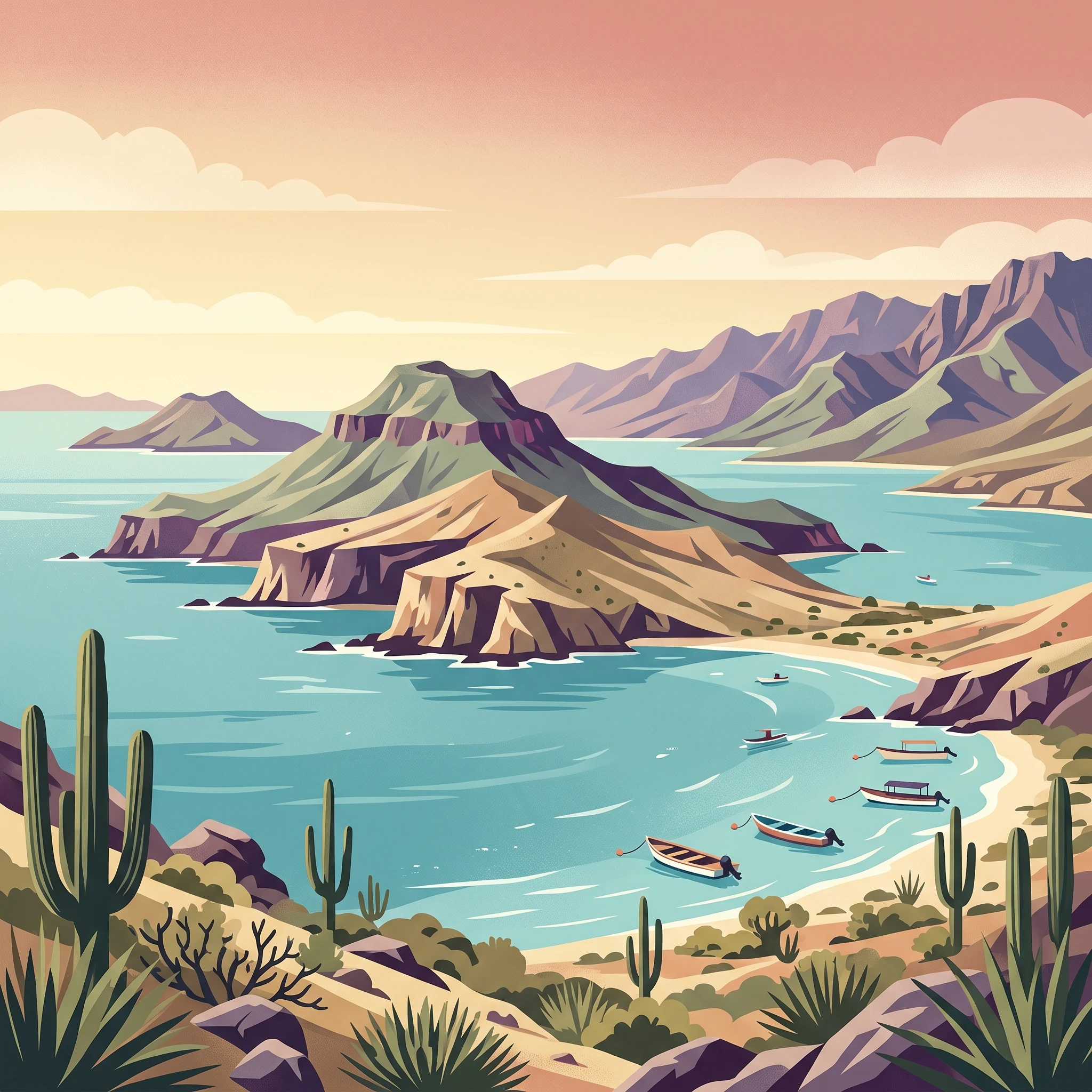
The landscape of Bahía de Loreto National Park encompasses a striking combination of marine and terrestrial environments defined by the geological history and physical geography of the central Gulf of California. The marine portion of the park, which comprises approximately 88 percent of the total area, includes the waters of Loreto Bay and the surrounding Sea of Cortez. These waters range from relatively shallow coastal zones near the shoreline and islands to deeper areas with submarine canyon systems that descend into the deep waters of the gulf.
The five major islands within the park are all of volcanic origin, though they vary in their specific geological characteristics. Isla Coronados, perhaps the most frequently visited due to its proximity to Loreto, features dramatic sea cliffs and rocky shores where California sea lions gather in substantial colonies. The islands generally lack high elevation peaks but display varied terrain including volcanic slopes, rocky outcrops, and sandy beaches where waves and currents have created pockets of sediment along their shores.
Along the mainland coast, the Sierra de la Giganta rises steeply behind the bay, creating a magnificent backdrop of desert mountains. The foothills and lower slopes of this mountain range include lomeríos (gently rolling hills), laderas (mountain slopes), planicies (plains), and the deep camos and cañadas (canyons and gorges) that carve through the terrain. These mountainous areas are characteristically arid, with desert vegetation covering the slopes in stark contrast to the productive marine waters below. The interaction between the desert landscape of the mainland and the marine environment of the bay creates a visually dramatic interface where arid hills meet the sea.
The coastal zone includes sandy beaches, sea cliffs, and areas where mangroves and other wetland vegetation occur in the sheltered coves and estuaries. The combination of volcanic island terrain, mainland mountain backdrop, and diverse marine environments produces a landscape of considerable visual and ecological variety.
Bahía de Loreto National Park ecosystems, habitats, and plant life
The ecological character of Bahía de Loreto National Park is defined by the remarkable productivity of the Gulf of California and the diversity of habitats found within its boundaries. The park encompasses marine environments ranging from shallow coastal waters to deeper offshore zones, island landscapes with their own distinct flora and fauna, and coastal areas where mangroves and other wetland systems provide critical habitat functions.
The marine ecosystems support extraordinary biodiversity. The Gulf of California is recognized as one of the world's most productive marine environments, home to nearly 900 species of fish and countless invertebrates, marine mammals, and other organisms. Within this rich context, the waters of Bahía de Loreto stand out for their particularly well-preserved state and the exceptional concentration of marine mammals they support.
The terrestrial and coastal vegetation reflects the arid to semi-arid climate of the Baja California Peninsula. The islands and coastal areas support desert scrub and cactus communities adapted to the limited rainfall. Mangrove stands occur in sheltered coastal areas, with several species present including black, red, white, and button mangroves. These mangrove communities provide important ecological functions including nursery habitat for fish and crustaceans, shoreline stabilization, and nutrient cycling.
The islands themselves, though relatively small and lacking extensive freshwater sources, support specialized plant communities adapted to the harsh island environment. The volcanic soils and exposed conditions shape vegetation patterns, with desert species dominating but with differences in species composition reflecting the specific characteristics of each island. The surrounding marine environments include coral reef communities and extensive kelp beds in certain areas, adding to the habitat complexity and biodiversity of the protected area.
Bahía de Loreto National Park wildlife and species highlights
Bahía de Loreto National Park hosts an extraordinary concentration of marine wildlife that distinguishes it as one of Mexico's most important marine conservation areas. The park supports 30 species of marine mammals, representing the highest diversity of any protected area in Mexican waters. This includes numerous species of dolphins, whales, sea lions, and other cetaceans that either reside year-round in the gulf or pass through its waters during seasonal migrations.
The winter months bring one of the park's most spectacular wildlife phenomena: the annual migration of blue whales to the warm waters of the Gulf of California for breeding and calving. These enormous cetaceans, among the largest animals ever to exist on Earth, travel south from their feeding grounds in colder northern waters to give birth in the relatively protected waters of the gulf. Whale watching during this season has become a major attraction for visitors to the park, offering opportunities to observe these magnificent animals in their natural environment.
Sea lion colonies are a постоянный feature of several islands within the park, with Isla Coronados being particularly well known for its large populations of California sea lions. These charismatic marine mammals can be observed hauled out on rocks and beaches, swimming in the shallows, or interacting with visitors in what has become one of the park's signature wildlife experiences. The resident populations are supplemented by seasonal movements as individuals move between different locations throughout the Gulf.
The marine environment supports diverse fish communities with species including pargo (snapper), cabrilla (grouper), mojarra, mero (sea bass), tuna, and dorado. Larger marine species including various rays, sharks, and sea turtles also occur throughout the park's waters. The islands provide important nesting habitat for seabirds including brown pelicans, yellow-footed gulls, and various tern species. The coastal zones support populations of shorebirds and waterfowl, particularly in areas with mangrove habitat.
Bahía de Loreto National Park conservation status and protection priorities
Bahía de Loreto National Park represents a cornerstone of marine conservation in Mexico, protecting one of the most biologically significant areas of the Gulf of California. The park's multiple designations as a National Park, Ramsar Wetland, and UNESCO World Heritage Site reflect its outstanding ecological value and the international recognition of the need to safeguard its natural resources.
The protection of marine mammal populations stands as a particularly important conservation achievement. With 30 species of marine mammals documented within the park, including endangered species such as the blue whale, the protected waters provide critical habitat for species that face significant threats throughout their ranges. The park's designation as the area with the highest marine mammal diversity in Mexico underscores its importance for cetacean conservation in the eastern Pacific.
The islands within the park support numerous endemic species, making them priorities for conservation action. The isolation of island ecosystems has allowed unique species to evolve in isolation, and these endemic populations are often particularly vulnerable to introduced species, habitat modification, and other threats. Protecting the islands as part of the national park ensures that these unique biological communities receive formal conservation status and management attention.
The park's management approach emphasizes maintaining ecological integrity while allowing sustainable use. Research activities contribute to scientific understanding of the gulf's ecosystems, while carefully managed tourism provides economic benefits to local communities while minimizing impacts on sensitive species and habitats. The integration of conservation objectives with sustainable development reflects a management philosophy that recognizes the long-term benefits of maintaining healthy ecosystems for both biodiversity and human communities.
Bahía de Loreto National Park cultural meaning and human context
Bahía de Loreto National Park is intimately connected to the historical and cultural heritage of the Baja California Peninsula. The park shares a boundary with the town of Loreto, which holds outsized significance in the history of the region as the first capital of the Californias and the site where Spanish colonial presence was first firmly established on the peninsula.
The town was founded at the site of the Jesuit mission Mision de Nuestra Senora de Loreto Concho, established in 1697. This mission served as the spiritual and administrative center for the Spanish missionary effort that expanded throughout the peninsula over the following decades. The mission's presence transformed Loreto into the most important settlement in the region during the colonial period, though its prominence declined after the mission system ended and the capital was moved to La Paz.
The cultural landscape surrounding the park reflects centuries of human presence and use of the marine environment. Traditional fishing practices by local communities have shaped relationships with the sea, and the sustainable use of marine resources has been part of the regional economy for generations. More recently, sustainable tourism has emerged as an important economic activity, with boat tours, kayaking, diving, and whale watching providing livelihoods for local residents while creating incentives for environmental protection.
The relationship between the town of Loreto and the protected area creates both opportunities and challenges for conservation. The proximity facilitates visitor access and provides infrastructure for park operations, while also requiring careful management to ensure that development and tourism activities remain compatible with conservation objectives. The historical significance of Loreto adds cultural depth to the park experience, allowing visitors to connect the natural landscape with the human history of the region.
Top sights and standout views in Bahía de Loreto National Park
Bahía de Loreto National Park offers visitors exceptional opportunities to experience one of the world's most biologically rich marine environments. The winter whale migration, when blue whales arrive in the gulf to breed and give birth, represents a wildlife spectacle of global significance. Observing these massive creatures in their natural environment, often with calves swimming alongside their mothers, provides unforgettable encounters with marine wildlife.
The sea lion colonies on Isla Coronados and other islands offer another highlight, with opportunities to observe these playful and curious marine mammals both on land and in the water. Snorkeling and diving experiences reveal the underwater diversity of the gulf, including colorful fish communities, sea turtles, rays, and the occasional shark. The clear waters and relatively protected conditions of Loreto Bay make it an accessible destination for visitors with varying levels of underwater experience.
The five islands of the park each offer distinct experiences, from the dramatic sea cliffs of Coronados to the more rolling terrain of other islands. Kayaking among the islands provides opportunities for quiet exploration, while boat tours offer broader perspectives on the park's marine and island landscapes. The contrast between the desert mountains of the Sierra de la Giganta and the blue waters of the gulf creates a visually striking backdrop that enhances the visitor experience.
Best time to visit Bahía de Loreto National Park
The best time to visit Bahía de Loreto National Park depends on the experiences visitors seek. The winter months from December through March represent the peak season for whale watching, as blue whales migrate into the warm waters of the Gulf of California during this period. This is when the park's most celebrated wildlife spectacle occurs, and visitors during these months have the highest likelihood of encountering these massive cetaceans.
The summer months bring warmer water temperatures that favor swimming, snorkeling, and diving activities. Water conditions are generally calm during the summer, making this a good period for kayaking and other non-motorized water sports. However, the summer also corresponds to the rainy season in the region, and while precipitation is generally limited, occasional storms can affect sea conditions.
Year-round visitors can enjoy the resident wildlife including sea lion colonies, dolphins, and various seabirds. The park's marine environments support wildlife throughout the year, though specific species encounters vary with seasonal changes in ocean conditions and the presence of migratory species. The semi-arid climate means that even the cooler winter months are generally pleasant for outdoor activities, with temperatures typically remaining comfortable for boat excursions and shore-based exploration.