Mori Atlas logo
National parkBasaseachic Falls National Park

Discover the mapped boundaries and regional context of this Mexican national park.

Basaseachic Falls National Park: Protected Landscape and Geographic Atlas

(Parque Nacional Cascada de Basaseachic)

Basaseachic Falls National Park represents a significant protected natural area within Ocampo Municipality, Mexico. This page offers an atlas-focused exploration of its protected landscape, detailing its geographic scope and mapped boundaries. Understand the park's place within the regional geography and discover its unique natural terrain through detailed atlas-style context, providing a factual foundation for exploring Mexico's protected areas.

WaterfallCanyonPine-Oak ForestMountain LandscapeProtected AreaSierra Madre Occidental

Basaseachic Falls National Park

National park

Park overview

Structured park overview, official facts, and landscape profile for Basaseachic Falls National Park

Basaseachic Falls National Park park facts, protected area profile, and essential visitor context
Review the core facts for Basaseachic Falls National Park, including designation, size, terrain, visitor scale, habitats, and operating context in one park-focused overview.

About Basaseachic Falls National Park

Basaseachic Falls National Park occupies a remarkable position in the Sierra Madre Occidental, protecting a landscape of exceptional geological and ecological significance. The park's defining feature, Basaseachic Falls, cascades 246 meters into Candameña Canyon, creating one of Mexico's most iconic natural spectacles. The canyon itself, carved over millions of years by the Basaseachic River, reaches depths that rank among the greatest in the Sierra Tarahumara region. The terrain exhibits dramatic vertical relief, with cliff walls rising to 1,640 meters above the canyon floor, a testament to the powerful tectonic forces that shaped this landscape through deep fractures and rising rifts. The park's ecological character is defined by its pine-oak forests, which vary with elevation and benefit from the numerous microclimates created by the complex topography. This ecological diversity supports both significant plant and animal life, making the park an important conservation area within northern Mexico's mountain systems.

Quick facts and research context for Basaseachic Falls National Park

Located in Ocampo Municipality, Chihuahua, in the Sierra Madre Occidental mountain range. The park protects Basaseachic Falls, Mexico's second-highest waterfall at 246 meters, which empties into Candameña Canyon. Established February 2, 1981 under President José López Portillo. The park features dramatic canyon walls up to 1,640 meters high, two major rivers (Basaseachic and Duraznos), and a remarkable diversity of flora supported by multiple microclimates. The area was historically inhabited by the Tarahumara people prior to European discovery in the 18th century.

Park context

Deeper park guide and search-rich context for Basaseachic Falls National Park

Basaseachic Falls National Park history, landscape, wildlife, and travel context
Explore Basaseachic Falls National Park through its history, landscape character, ecosystems, wildlife, conservation priorities, cultural context, and seasonal travel timing in a structured park guide built for atlas discovery and search intent.

Why Basaseachic Falls National Park stands out

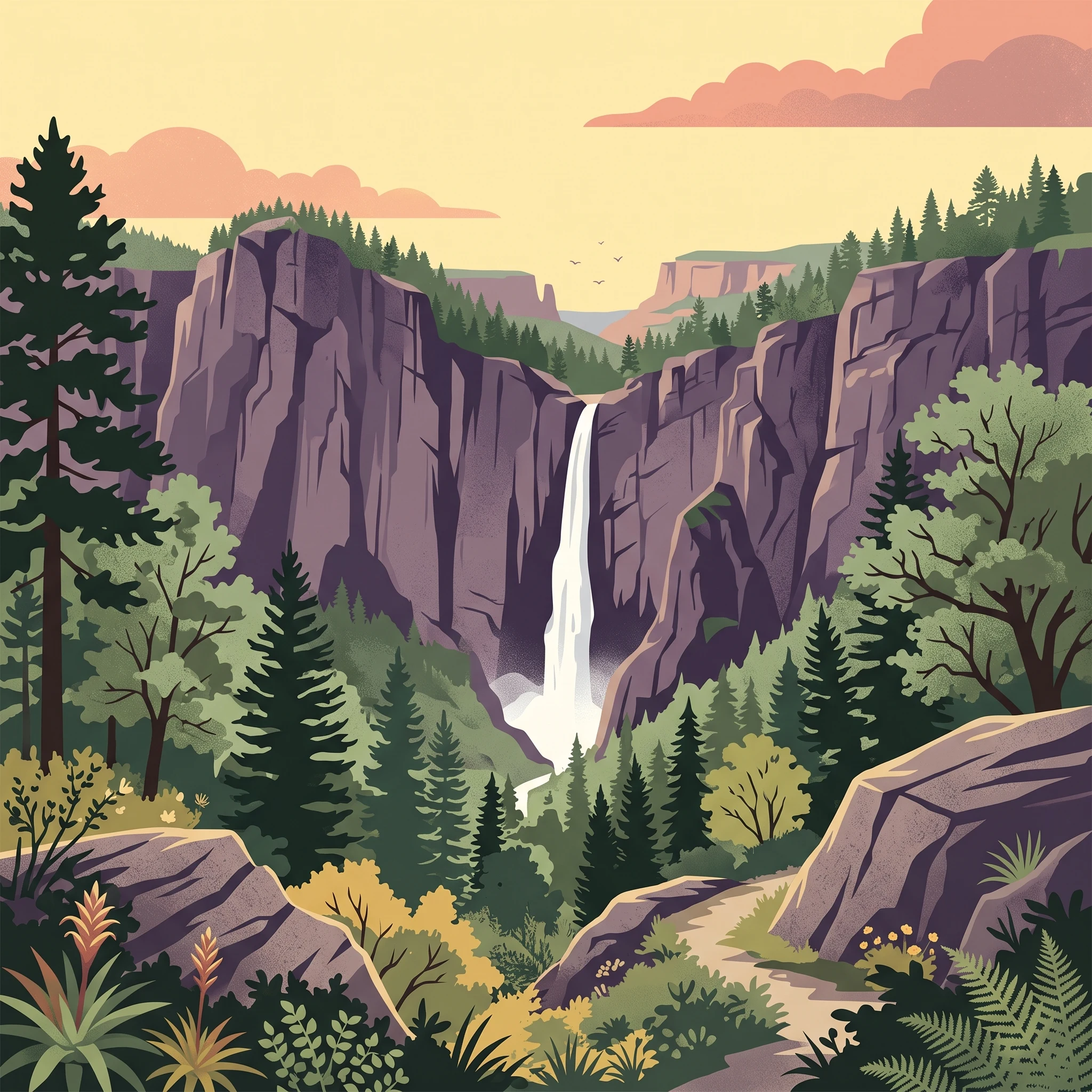
Basaseachic Falls National Park is best known for housing Mexico's second-tallest waterfall, which drops 246 meters into the dramatic Candameña Canyon. The park's dramatic alpine scenery, with towering 1,640-meter cliffs and deep canyon formations, represents some of the most spectacular terrain in the Sierra Madre Occidental. The protected pine-oak forest ecosystem supports remarkable biodiversity, including the endangered mountain trogon, known locally as the Mexican flag bird for its red, white, and green coloring. The park also preserves the cultural heritage of the Tarahumara people, who have inhabited this region for centuries.

Basaseachic Falls National Park history and protected-area timeline

The area now protected as Basaseachic Falls National Park has a rich human history predating European contact. The region was inhabited for centuries by the Tarahumara people, known in their own language as the Rarámuri, whose presence is reflected in the park's name, which derives from their language meaning place of the wolves. European discovery of Basaseachic Falls occurred sometime in the 18th century, and the falls quickly became one of the most popular tourist attractions in Chihuahua. The first known European settlement in the area was Misión de Tomochi, located near the town of Cajurichi and under the legal jurisdiction of the mission. Following the 18th century, the area attracted settlers due to the discovery of abundant natural resources, including minerals and high-quality timber. Basaseachic Falls National Park was formally established by the Mexican federal government on February 2, 1981, under President José López Portillo, encompassing 5,803 hectares to protect the falls and the surrounding Candameña Canyon environment within the Sierra Madre Occidental.

Basaseachic Falls National Park landscape and geographic character

The landscape of Basaseachic Falls National Park is characterized by extraordinary vertical relief and dramatic topography shaped by geological forces over millions of years. The Sierra Madre Occidental, one of Mexico's major mountain ranges, created the foundational terrain through tectonic plate movements that produced large fractures and rising rifts. The violence of these earth movements resulted in the deep canyons and high mountains that define the park today. Candameña Canyon, carved by the Basaseachic River, represents one of the deepest canyons in the Sierra Tarahumara, with walls reaching heights of 1,640 meters. The park encompasses two primary river systems, the Basaseachic River and the Duraznos River, both of which feed into Basaseachic Falls before ultimately flowing into the Candameña River. Wind erosion and ongoing river action have further sculpted the terrain over thousands of years, creating the complex array of ridges, cliffs, and valleys that characterize this mountainous protected area.

Basaseachic Falls National Park ecosystems, habitats, and plant life

The ecological diversity of Basaseachic Falls National Park is remarkable, owing largely to the dramatic elevation changes and resulting microclimates found throughout the park. The Sierra Madre Occidental's vegetation varies significantly with altitude, and at elevations above 2,000 meters, the characteristic pine-oak forest dominates. The park contains 92 species of conifers and 76 species of oaks, representing an extraordinary botanical wealth. These forests provide habitat for diverse plant genera including Pinus, Quercus, Ficus, Vachellia, Ipomoea, Acacia, Lysiloma, Bursera, Vitex, Tabebuia, Sideroxylon, Cordia, Fouquieria, and Pithecellobium. The presence of multiple microclimates, resulting from the complex terrain and varying elevations, enables this exceptional plant diversity to thrive within a relatively compact protected area.

Basaseachic Falls National Park wildlife and species highlights

Basaseachic Falls National Park supports a rich variety of wildlife, with notable populations of mammals, reptiles, and birds inhabiting its diverse habitats. Mammals found in the park include Mexican fox squirrel, antelope jackrabbit, raccoon, hooded skunk, wild boar, collared peccary, white-tailed deer, and cougar. The reptile community is represented by three primary species: Texas horned lizard, rock rattlesnake, and black-tail rattlesnake. The birdlife is particularly significant, featuring species such as Mexican jay, Steller's jay, acorn woodpecker, canyon towhee, mourning dove, broad-billed hummingbird, Montezuma quail, turkey vulture, and the endangered mountain trogon. The mountain trogon holds special significance in Mexican culture, known as the Mexican flag bird because its red, white, and green coloring resembles the Mexican flag.

Basaseachic Falls National Park conservation status and protection priorities

Basaseachic Falls National Park serves as an important conservation unit within Mexico's protected area system, designated under IUCN Category II as a national park. The protected area preserves critical habitat within the Sierra Madre Occidental, one of Mexico's most significant mountain ecosystems. The park's protection extends to the watershed systems of both the Basaseachic and Duraznos Rivers, ensuring the ecological integrity of the waterfall and canyon system. The protection of the pine-oak forest ecosystem safeguards 92 conifer species and 76 oak species, representing significant botanical heritage. The presence of the endangered mountain trogon underscores the park's importance for species conservation, while the overall habitat preservation supports populations of large mammals including cougars and diverse reptile species.

Basaseachic Falls National Park cultural meaning and human context

The cultural landscape of Basaseachic Falls National Park is deeply intertwined with the heritage of the Tarahumara people, known in their own language as the Rarámuri. This indigenous group inhabited the Sierra Tarahumara region long before European contact, and their presence in the area predates the 18th-century discovery of the falls by European explorers. The etymology of the park's name, Basaseachic, originates from the Rarámuri language, with basachí being the term used to call coyotes, and the full name translating to place of the wolves. Following Spanish colonial contact, the area around what is now the park fell under the jurisdiction of Mission Tomochi near Cajurichi. The region subsequently attracted settlers in the post-18th century period due to abundant natural resources including minerals and timber, changing the human landscape while preserving the deep cultural connections to the land.

Top sights and standout views in Basaseachic Falls National Park

The park's most prominent highlight is Basaseachic Falls, Mexico's second-tallest waterfall at 246 meters, which plunges dramatically into Candameña Canyon. The canyon itself, with walls reaching 1,640 meters, ranks among the deepest in the Sierra Tarahumara and provides spectacular scenic views. The protected pine-oak forest supports exceptional botanical diversity with 92 conifer species and 76 oak species. Wildlife highlights include the endangered mountain trogon, known as the Mexican flag bird, plus cougars, white-tailed deer, and diverse bird species. The Tarahumara cultural heritage adds historical depth to the natural landscape.

Best time to visit Basaseachic Falls National Park

The best time to visit Basaseachic Falls National Park depends on the experience sought, as the park's high elevation and varied terrain create distinct seasonal characteristics. Winter brings snowfall to the higher elevations of the Sierra Madre Occidental, creating dramatic winter scenery with snow-dusted pines and oak trees. Spring and summer offer warmer conditions and fuller water flow at the falls, though summer thunderstorms are possible. The park's many microclimates mean that weather conditions can vary significantly between the canyon floor and the higher elevations. Visitors seeking to experience the full power of Basaseachic Falls should consider the wetter seasons when water flow is strongest, while those preferring clearer skies and comfortable hiking temperatures may find spring and fall optimal.
Park location guide

Geography guide, regional context, and park location map for Basaseachic Falls National Park

Basaseachic Falls National Park park geography, regions, and map view in Mexico
Understand where Basaseachic Falls National Park sits in Mexico through a broader geographic reading of the surrounding landscape, nearby location context, and its mapped position within the national park landscape.

How Basaseachic Falls National Park fits into Mexico

Mexico, officially the United Mexican States, is a country in North America spanning the Sierra Madre mountain ranges, coastal plains, and tropical regions. It borders the United States to the north, Guatemala and Belize to the southeast, and has coastlines along the Pacific Ocean, Gulf of Mexico, and Caribbean Sea. With a population exceeding 130 million, Mexico is home to one of the world's most significant concentrations of Indigenous languages alongside Spanish.

Wider geography shaping Basaseachic Falls National Park in Mexico

Mexico occupies a land area of 1,972,550 km2, making it the thirteenth-largest country in the world. The terrain is highly diverse, featuring the Sierra Madre Occidental and Sierra Madre Oriental mountain ranges, the Mexican Plateau, coastal lowlands along the Pacific and Gulf/Caribbean margins, and the Yucatan Peninsula. The country spans multiple climate zones from desert in the north to tropical rainforest in the south.

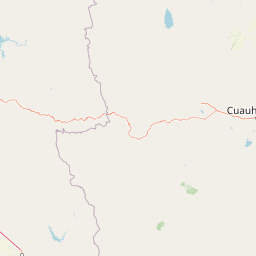
Map view of Basaseachic Falls National Park

Use this park location map to pinpoint Basaseachic Falls National Park in Mexico, understand its exact geographic position, and read its mapped placement within the surrounding landscape more clearly.

Pigeon | © OpenStreetMap contributors

Location context for Basaseachic Falls National Park

ChihuahuaOcampo Municipality
Park atlas

Explore the Sierra Madre Occidental's diverse protected landscapes, mapped canyon geography, and regional park comparisons.

Discover Other National Parks and Protected Areas Near Basaseachic Falls National Park
Browse a curated list of national parks and protected areas geographically connected to Basaseachic Falls National Park, encompassing the rugged Sierra Madre Occidental mountain range. Compare similar canyon landscapes, dramatic waterfall features, and diverse pine-oak forest ecosystems across northern Mexico, enriching your understanding of regional park geography.
National parkChihuahua

Cumbres de Majalca National Park: National Park Discovery and Geographic Context in Chihuahua

Mapped protected landscape exploration in Chihuahua.

Delve into the protected landscape of Cumbres de Majalca National Park, a national park situated in the Chihuahua region of Mexico. This entry provides essential geographic context and details on its mapped boundaries, serving as a key point for atlas-based exploration of Mexico's protected areas. Understand its specific contribution to the regional geography and conservation landscape.

Area
47.72 km²
Established
1939
IUCN
II
Relief
Mountain
National parkBaja California Sur

Bahía de Loreto National Park: National Park Protected Landscape and Geographic Identity

Explore its mapped boundaries and regional context.

Bahía de Loreto National Park offers a distinct focus on its protected natural landscape and geographic features within Baja California Sur. This destination provides detailed mapping and regional context, enabling a focused exploration of its boundaries and natural environment. It is ideal for users seeking to understand the specific protected area identity and its geographical placement as part of a broader atlas of conservation landscapes.

Area
2,065.81 km²
Established
1996
IUCN
II
Relief
Mixed relief
National parkBaja California

San Lorenzo Marine Archipelago National Park: Protected Area and Mapped Landscape Geography

Explore its national park status and regional context in Baja California.

Delve into San Lorenzo Marine Archipelago National Park, a key protected area contributing to Baja California's diverse geography. As a national park, its mapped boundaries and unique landscape characteristics provide essential data for atlas exploration and understanding regional conservation efforts. This entry focuses on the park's identity as a mapped protected entity, ideal for researchers and explorers seeking structured geographic insights into natural reserves.

Area
504.42 km²
Established
2005
IUCN
II
Relief
Upland
National parkBrewster County

Big Bend National Park: National Park, Mapped Protected Landscape, and Regional Geography

Explore Brewster County's protected natural terrain.

Big Bend National Park is a prominent national park defined by its protected landscape and geographic features within Brewster County. This destination provides users with detailed atlas-style information, focusing on the park's mapped boundaries and its contribution to the understanding of regional natural geography. Delve into the specific context of this protected area to enhance your geographic discovery.

Area
3,242.19 km²
Established
1944
IUCN
II
Visitors
568.1K annual
National parkPima County

Saguaro National Park: Discover Its Protected Landscape Geography and Mapped Boundaries

Explore the natural terrain and regional context of this national park.

Saguaro National Park offers a focused exploration of a specific protected landscape, highlighting its unique geographic features and mapped boundaries within Pima County. This detail page provides an atlas perspective, allowing for a deep dive into the park's natural terrain and its regional significance. Understand the protected area's identity and its place within the wider geographical context.

Area
371.16 km²
Established
1994
IUCN
II
Visitors
946.4K annual
National parkCulberson County

Guadalupe Mountains National Park: Mapped Boundaries and Protected Landscape Identity

Explore the geography and terrain of this Texas national park.

Guadalupe Mountains National Park is a key protected area within Culberson County, West Texas. This national park offers a distinct geographic focus, allowing for detailed exploration of its mapped boundaries and the unique natural landscapes that define its protected status. Understanding its place within the Trans-Pecos region provides valuable context for regional geography and atlas-based discovery of conservation lands in Texas.

Area
349.51 km²
Established
1972
IUCN
II
Visitors
206.4K annual
National parkBaja California Sur

Cabo Pulmo National Park: National Park Atlas and Protected Landscape Discovery

Explore its mapped geographic boundaries and regional context.

Cabo Pulmo National Park represents a vital protected natural landscape offering unique atlas exploration opportunities. Understand its specific geographic placement within Baja California Sur and explore its mapped boundaries as a national park. This destination provides a focused look at protected natural areas and their significance in regional geography.

Area
71.11 km²
Established
1995
IUCN
II
Relief
Lowland
National parkNew Mexico

White Sands National Park: National Park with Unique Dune Landscape in New Mexico

Explore its protected boundaries and desert geography.

White Sands National Park is a protected national park renowned for its stunning gypsum dunes, offering a unique landscape within New Mexico's geography. This page provides detailed information on its mapped protected area, serving as a valuable resource for understanding the park's specific geographic context and its identity as a significant protected natural landscape.

Area
601.3 km²
Established
2019
IUCN
V
Visitors
729.1K annual

Common questions about visiting, size, designation, and location context for Basaseachic Falls National Park

Basaseachic Falls National Park FAQs for park facts, access, geography, and protected area context
Find quick answers about Basaseachic Falls National Park, including protected-area facts, park geography, trail and visitor context, and how the park fits into its surrounding country and regional landscape.
MoriAtlas Explorer

Continue Your Protected Areas Search Across the Global Atlas

Deepen your exploration by continuing the structured search for national parks and protected areas worldwide. Utilize the comprehensive filtering capabilities to compare different conservation landscapes and refine your understanding of global park geography. Discover more about the distribution and characteristics of protected natural areas.

Global natural geography