Why Barool National Park stands out
Barool National Park is best known for its tall eucalyptus forests that blanket the highlands of northern New South Wales. The park represents a significant area of intact temperate forest in a region where much of the original vegetation has been cleared for agricultural purposes. Its birdlife, with twenty-nine species recorded, provides notable value for wildlife observation and contributes to the park's ecological significance within the broader Northern Tablelands region.
Barool National Park history and protected-area timeline
Barool National Park was established in 1999 through the formal declaration of the area as a national park under the National Parks and Wildlife Act of New South Wales. The park was created to protect the significant forest values of the region, which had survived largely intact despite surrounding land clearing for agriculture and grazing. The area came under the management of the National Parks and Wildlife Service, the statutory body responsible for managing New South Wales protected areas. The establishment of the park represented a conservation outcome that preserved connective habitat between other protected areas in the northern part of the state. Prior to national park declaration, the land had been managed under various tenure arrangements, and its inclusion in the protected area network marked a formal commitment to long-term conservation of its natural values.
Barool National Park landscape and geographic character
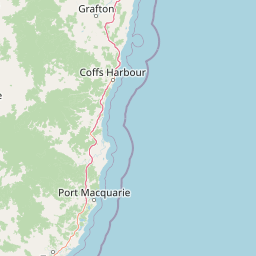
Barool National Park occupies a dissected landscape of ridges and valleys characteristic of the Northern Tablelands of New South Wales. The terrain rises and falls across the protected area, with eucalyptus forests covering the slopes and ridgelines. The forest canopy is dominated by various eucalypt species adapted to the cooler highland environments of the region. Valleys and drainage lines carry water toward the Mann River, which forms a natural boundary to the south of the park. The landscape presents a largely forested appearance, with the dense tree cover visible from surrounding areas and from tracks within the park. The combination of elevation, aspect, and soil conditions creates a mosaic of forest types across the terrain.
Barool National Park ecosystems, habitats, and plant life
The nature of Barool National Park centers on its tall eucalyptus forest ecosystems that represent some of the more intact forest cover remaining in the Northern Tablelands region. These forests provide habitat structure for a range of native species and contribute to ecological processes including water cycling, soil maintenance, and carbon storage. The park's forest environments support understory species adapted to shaded conditions beneath the eucalypt canopy, as well as species that utilize the forest edges and more open woodland areas. The recorded presence of twenty-nine bird species indicates the park's value as habitat for avian fauna, though the full species complement likely exceeds this count as comprehensive surveys continue.
Barool National Park wildlife and species highlights
Barool National Park supports wildlife populations within its eucalyptus forest environments, with birdlife representing a notable component of the park's fauna. Twenty-nine bird species have been recorded within the park boundaries, reflecting the habitat value provided by the intact forest landscapes. The forest ecosystems support both cavity-nesting bird species that require mature trees and understory bird species that inhabit the shrub layers. Mammals, reptiles, and invertebrates also occur throughout the park, though detailed species inventories may not be comprehensively documented. The preserved forest habitats provide refuge for wildlife in a landscape where surrounding areas have been extensively modified for agriculture.
Barool National Park conservation status and protection priorities
Barool National Park contributes to biodiversity conservation in northern New South Wales by protecting a relatively intact forest ecosystem in a region that has experienced significant vegetation clearing. The park forms part of a network of protected areas that maintain connectivity for wildlife movement and support ecological processes across the broader landscape. The preservation of tall eucalyptus forests within the park protects habitat for forest-dependent species and maintains ecosystem services including watershed function and soil stability. The national park designation provides statutory protection that limits potentially damaging activities such as logging, mining, and subdivision, securing the area for long-term conservation.
Barool National Park cultural meaning and human context
Barool National Park lies within the traditional country of Aboriginal peoples who have inhabited the Northern Tablelands region for thousands of years. The forested landscapes of the area would have provided resources for Indigenous communities including food, materials, and cultural values. The specific Aboriginal connections to the land now within the park may be documented in heritage records and traditional knowledge, though detailed information on cultural context may require reference to local Aboriginal organizations and cultural heritage assessments. The broader region contains places of Aboriginal significance, and the establishment of national parks in recent decades has increasingly recognized the importance of engaging with Traditional Owners in park management.
Top sights and standout views in Barool National Park
Barool National Park offers tall eucalyptus forests, birdwatching opportunities with twenty-nine recorded species, relatively remote bushland access, and a landscape of ridges and valleys typical of the Northern Tablelands. The park provides a conservation-protected environment where visitors can experience intact forest ecosystems away from more heavily developed areas. Walking tracks allow exploration of the forested terrain, with scenic values enhanced by the park's elevation and forest canopy.
Best time to visit Barool National Park
The best time to visit Barool National Park depends on seasonal conditions in northern New South Wales. Autumn and spring typically offer mild temperatures comfortable for bushwalking and outdoor exploration. Summer months can bring warm to hot conditions, while winter may experience colder temperatures typical of elevated tableland environments. Visitors should check current conditions and park access arrangements before traveling, as road access and facilities may vary seasonally.