

Mori Atlas logo
National parkButterleaf National Park

Explore the mapped boundaries and regional terrain context of this significant protected area.

Butterleaf National Park: National Park Protected Landscape and Geographic Identity in New South Wales

Butterleaf National Park stands as a designated national park within the diverse geography of New South Wales, Australia. This page offers an atlas-focused exploration of its protected landscape, detailing its specific mapped boundaries and situating it within the regional context of eastern Australia. Understand the park's unique geographic identity and its role as a distinct natural area for discovery and conservation landscape analysis.

Old-growth forestArboreal marsupialsNorthern NSWHollow-bearing treesProtected areaEucalypt forest

Butterleaf National Park

National park

Park overview

Structured park overview, official facts, and landscape profile for Butterleaf National Park

Butterleaf National Park park facts, protected area profile, and essential visitor context
Review the core facts for Butterleaf National Park, including designation, size, terrain, visitor scale, habitats, and operating context in one park-focused overview.

About Butterleaf National Park

Butterleaf National Park protects a significant tract of old-growth forest in northern New South Wales, an area that has been largely cleared for agricultural purposes. The park's establishment in 1999 reflected growing recognition of the importance of preserving remaining old-growth forest patches in the New England region, which had suffered extensive deforestation over the preceding century. The park is characterised by tall eucalypt forest with a complex canopy structure and an understory of native shrubs and grasses. The large hollow-bearing trees that dominate the forest provide microhabitats for a variety of species, includingarboreal marsupials, cavity-nesting birds, and invertebrates. These old-growth forests store significant amounts of carbon and play a role in maintaining water quality in local catchments. The park is part of a broader network of protected areas in northern NSW that contribute to regional biodiversity conservation.

Quick facts and research context for Butterleaf National Park

Butterleaf National Park is located in northern New South Wales, Australia, established in 1999 with an area of 30 square kilometres. The park is managed by the NSW National Parks and Wildlife Service and protects old-growth forest ecosystems characterised by large trees with natural hollows. The area supports notable populations of powerful owls, yellow-bellied gliders, and greater gliders, all of which rely on hollow-bearing trees for habitat. The park sits approximately 491 kilometres north of Sydney.

Park context

Deeper park guide and search-rich context for Butterleaf National Park

Butterleaf National Park history, landscape, wildlife, and travel context
Explore Butterleaf National Park through its history, landscape character, ecosystems, wildlife, conservation priorities, cultural context, and seasonal travel timing in a structured park guide built for atlas discovery and search intent.

Why Butterleaf National Park stands out

Butterleaf National Park is best known for its old-growth forest containing massive trees with natural hollows that provide essential habitat for arboreal marsupials and nocturnal birds. The park supports populations of powerful owls, yellow-bellied gliders, and greater gliders, species that have declined significantly across much of their former range due to habitat loss and forest fragmentation. The hollow-bearing trees represent a critical resource in the landscape, as these features take decades to develop and are scarce in younger forests. This makes the park's old-growth stands particularly valuable for biodiversity conservation in the New England region.

Butterleaf National Park history and protected-area timeline

Butterleaf National Park was established in 1999 as part of the expansion of NSW national parks that occurred during the late 1990s. The park was created to protect remaining old-growth forest remnants in the New England region, an area that had experienced extensive land clearing for agriculture. The NSW National Parks and Wildlife Service assumed management responsibility for the park at its establishment. The selection of this area for protection reflected scientific surveys that identified significant biodiversity values, particularly the presence of hollow-dependent wildlife species. The park represents a relatively recent addition to the NSW protected area network compared to many older parks that were established in the mid-twentieth century or earlier.

Butterleaf National Park landscape and geographic character

The landscape of Butterleaf National Park consists of gently undulating terrain with tall eucalypt forest covering the slopes and valleys. The forest features large, mature trees with thick bark and expansive canopies, many of which contain natural hollows formed through decades of growth and decay. The forest floor supports a layer of leaf litter, fallen branches, and native grasses, with scattered shrubs providing additional structural complexity. The landscape reflects the broader characteristics of the New England region, which features a mix of cleared agricultural land and remaining forest patches on steeper or less productive terrain.

Butterleaf National Park ecosystems, habitats, and plant life

The park protects old-growth eucalypt forest that represents a diminishing ecosystem type in the New England region. The forest contains a mix of eucalypt species adapted to the local climate and soil conditions. The complex vertical structure of the old-growth forest, with multiple canopy layers and accumulated dead wood, supports diverse ecological communities. The hollow-bearing trees are the most distinctive feature of the forest, providing essential habitat for species that cannot survive in younger forest stands. The park contributes to regional biodiversity by protecting a rare ecosystem type that has been largely eliminated from surrounding landscapes.

Butterleaf National Park wildlife and species highlights

Butterleaf National Park is notable for supporting populations of three hollow-dependent species: the powerful owl, yellow-bellied glider, and greater glider. The powerful owl is one of Australia's largest owl species and relies on large tree hollows for nesting. The yellow-bellied glider is a small arboreal marsupial that feeds on nectar, pollen, and insects, using tree hollows for shelter during daylight hours. The greater glider is a larger marsupial that also depends on hollow-bearing trees for shelter and maintains relatively small home ranges within suitable forest habitat. These species represent a guild of hollow-dependent fauna that depends on the presence of mature trees with suitable cavities.

Butterleaf National Park conservation status and protection priorities

The protection of Butterleaf National Park contributes to the conservation of old-growth forest ecosystems in the New England region, an area that has experienced significant habitat loss. The park provides protected habitat for hollow-dependent species that require large, mature trees with natural cavities, a resource that is limited in younger forests and agricultural landscapes. The old-growth forest also stores carbon and provides ecosystem services including water regulation and soil protection. The park forms part of the NSW protected area network managed by the NSW National Parks and Wildlife Service, which aims to maintain biodiversity and ecosystem integrity across the state's protected lands.

Top sights and standout views in Butterleaf National Park

Butterleaf National Park protects critical old-growth forest habitat featuring hollow-bearing trees that support populations of powerful owls, yellow-bellied gliders, and greater gliders. The park represents one of the few remaining old-growth forest remnants in the extensively cleared New England region. The tall eucalypt forest with its complex canopy structure and accumulated dead wood provides essential habitat for cavity-nesting birds and arboreal marsupials. The park's establishment in 1999 reflects recognition of the ecological importance of preserving these remaining forest remnants.
Park location guide

Geography guide, regional context, and park location map for Butterleaf National Park

Butterleaf National Park park geography, regions, and map view in Australia
Understand where Butterleaf National Park sits in Australia through a broader geographic reading of the surrounding landscape, nearby location context, and its mapped position within the national park landscape.

How Butterleaf National Park fits into Australia

Australia is a constitutional monarchy and federal parliamentary democracy comprising six states and ten territories. With a population of nearly 28 million, it is one of the world's most urbanised countries, with most people concentrated on the eastern seaboard. The country has a high Human Development Index and is known for its cultural diversity, ancient Aboriginal heritage, and unique wildlife.

Wider geography shaping Butterleaf National Park in Australia

Australia occupies the entire Australian continent, the island of Tasmania, and numerous smaller islands. It is the world's flattest and driest inhabited continent, featuring vast deserts in the interior (the Outback), tropical rainforests along the eastern coast, and a coastline bordering the Indian and Pacific Oceans.

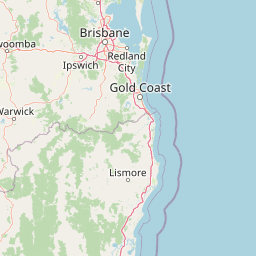
Map view of Butterleaf National Park

Use this park location map to pinpoint Butterleaf National Park in Australia, understand its exact geographic position, and read its mapped placement within the surrounding landscape more clearly.

Pigeon | © OpenStreetMap contributors

Location context for Butterleaf National Park

New South Wales
Park atlas

Explore diverse protected landscapes and regional park geography surrounding Butterleaf National Park

Discover Other National Parks Near Butterleaf National Park in Northern New South Wales
After exploring Butterleaf National Park's old-growth eucalypt forests, trace the wider network of national parks and protected areas across the New England region of New South Wales. Compare adjacent conservation landscapes and understand their collective role in preserving critical wildlife habitat and mature forest stands within the broader Australian geography.
National parkNew South Wales

Capoompeta National Park National Park: Protected Landscape and Regional Geography

Explore mapped boundaries and natural terrain in New South Wales.

Capoompeta National Park represents a key protected landscape entity within New South Wales, Australia. This detail page provides focused geographic information, emphasizing its status as a national park and its contribution to the regional atlas. Users can investigate the park's mapped terrain, understand its protected land characteristics, and grasp its geographical setting within the Australian context.

Area
39 km²
Established
1999
IUCN
II
Relief
Mountain
National parkNew South Wales

Barool National Park: National Park Discovery and Geographic Context

Mapped protected area within New South Wales.

Barool National Park is identified as a protected national park, contributing to the rich tapestry of natural landscapes across New South Wales. Understanding its specific location and mapped boundaries is essential for appreciating its role within the regional geography of Australia. This entry provides a factual basis for exploring the park's identity as a defined protected area, offering a unique point of reference for geographic discovery.

Area
112.44 km²
Established
1999
IUCN
II
Climate
Temperate
National parkNew South Wales

Washpool National Park National Park: Protected Area Atlas and New South Wales Geography

Explore the mapped boundaries and natural landscape context.

Washpool National Park represents a significant protected area within the geographic landscape of New South Wales. This entry provides a structured exploration of its identity as a national park, focusing on its mapped boundaries, regional distribution, and the natural terrain it encompasses. Understand its role within a broader atlas of protected lands and its unique geographic characteristics.

Area
587 km²
Established
1983
IUCN
II
Relief
Mountain
National parkNew South Wales

Nymboida National Park: A Protected National Park in New South Wales with Mapped Geographic Context

Explore its protected landscape and regional park geography

Nymboida National Park is a key protected area within the state of New South Wales, Australia. This page provides essential details for atlas exploration, focusing on its mapped boundaries and the geographic context it occupies. Understand the park's identity as a national park and its contribution to the protected landscape of the region, offering insights into its natural terrain and regional distribution.

Area
316 km²
Established
1980
IUCN
Ib
Relief
Mountain
Watercolor illustration of rolling hills, green forests, and pink flowering trees
National parkNew South Wales

Guy Fawkes River National Park: National Park Geographic Context and Mapped Boundaries

Explore the protected landscape and regional geography of this New South Wales national park.

Gain a structured understanding of Guy Fawkes River National Park, a key national park in New South Wales, Australia. This entry provides detailed insights into its mapped geographic boundaries, its role as a protected landscape, and its contribution to the broader regional context for atlas exploration. Examine the park's place within the natural terrain of New South Wales for a clearer picture of conservation lands.

Area
1,005.9 km²
Established
1972
IUCN
Ib
Relief
Highland
National parkNew South Wales

Kings Plains National Park: National Park Protected Area and Geographic Context

Explore mapped boundaries and landscape details for this New South Wales park.

Kings Plains National Park represents a distinct protected area entity within New South Wales, Australia. This national park serves as a focal point for understanding specific geographic features and its mapped boundaries. Users engaging with this park profile can uncover its regional landscape context and explore its significance as part of a larger atlas of protected natural areas. The focus remains on its geographic identity and atlas-based discovery value.

Area
57 km²
Established
1988
IUCN
II
Access
Moderate access
National parkNew South Wales

Basket Swamp National Park: New South Wales National Park and Protected Landscape Mapping

Geographic context and mapped boundaries within Australia.

Basket Swamp National Park represents a significant protected area within New South Wales, Australia. This page offers a geographic exploration of its specific location, mapped boundaries, and its role as a national park. Delve into the landscape context and atlas-level understanding of this natural reserve, distinct within the broader regional geography.

Area
28.2 km²
Established
1999
IUCN
II
Relief
Lowland
National parkNew South Wales

Ramornie National Park: National Park Discovery and Geographic Mapping in New South Wales

Explore its mapped boundaries and regional protected landscape identity.

Ramornie National Park stands as a distinct national park within New South Wales, offering users a focal point for understanding protected area geography. This page provides essential atlas-level context, detailing the park's mapped outlines and its placement within the broader regional landscape of Australia. Engage with the core geographic identity of Ramornie National Park, designed for structured discovery and landscape analysis without any operational details.

Area
31.6 km²
Established
1999
IUCN
II
Relief
Lowland

Common questions about visiting, size, designation, and location context for Butterleaf National Park

Butterleaf National Park FAQs for park facts, access, geography, and protected area context
Find quick answers about Butterleaf National Park, including protected-area facts, park geography, trail and visitor context, and how the park fits into its surrounding country and regional landscape.
MoriAtlas Explorer

Continue Your Protected Areas Search Across the Global Atlas

Deepen your exploration by continuing the structured search for national parks and protected areas worldwide. Utilize the comprehensive filtering capabilities to compare different conservation landscapes and refine your understanding of global park geography. Discover more about the distribution and characteristics of protected natural areas.

Global natural geography