Why Cap Island Conservation Park stands out
Cap Island Conservation Park is best known as a seabird breeding and marine mammal refuge on the western Eyre Peninsula. Its cliffs and ledges support breeding populations of seabirds and provide haul-out habitat for Australian sea lions and New Zealand fur seals, giving a small offshore granite island an outsized ecological role in the region. Its distinctive geological structure, a granite base with a calcarenite cap, also defines both the visual character of the island and the kind of exposed, erosion-prone habitats where the native shrubland clings to thin soils.
Cap Island Conservation Park history and protected-area timeline
Cap Island Conservation Park has a relatively short but clearly documented formal protection history. Matthew Flinders, during his charting voyage along the southern Australian coast, named the island on 16 February 1802, referencing its topography, geology, and its distinctive cap-like profile when seen from the sea.
For more than a century and a half after that naming, the island remained outside any formal reserve system. In 1967 it was proclaimed a Fauna Conservation Reserve under South Australian legislation, recognising its importance as a wildlife refuge. Five years later, in 1972, the area was gazetted as Cap Island Conservation Park under the state's conservation park framework, consolidating its protection status and clarifying its management mandate.
The park is now classified as an IUCN Category Ia protected area, meaning it is managed as a strict nature reserve with conservation given primacy over other land uses. This long-running formal protection reflects the consistent recognition of the island's ecological value for seabird breeding and marine mammal haul-out habitat.
Cap Island Conservation Park landscape and geographic character
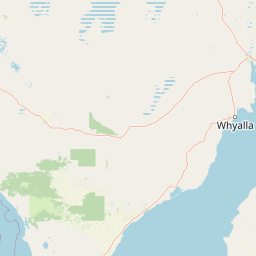
The landscape of Cap Island Conservation Park is dominated by a single, small offshore island rather than a broad terrestrial expanse. The island sits roughly 7.5 kilometres from the Eyre Peninsula coastline, west of Mount Misery, placing it firmly within the cold-water marine environment of the southern Great Australian Bight region.
Geologically, the island consists of a granite base overlain by a calcarenite mantle, a combination that results in a distinctive cap-like profile, the very feature that earned it its name. The margins of the island are steeply overhanging and heavily eroded, indicating active marine influence through wave undercutting and weathering. This rugged, sculpted edge gives the island sharp transitions between rocky shoreline, exposed cliff faces, and the open water surrounding it.
There are no inland water bodies, dunes, ridges, or forested zones; the island's topography is essentially compressed into one small rocky landmass. Its visual character is austere and exposed, with low shrub cover clinging to the plateau and slopes, and rocky outcrops dominating wherever vegetation thins. The result is a landscape defined less by scale than by contrast between the calm inland vegetation patterns and the active, erosive coastal perimeter.
Cap Island Conservation Park ecosystems, habitats, and plant life
Cap Island Conservation Park's ecological character is defined by the interaction of an exposed granite-and-calcarenite island with persistent marine influence. Soils are thin, salt-laden, and heavily affected by seabird nutrient enrichment, while freshwater input is minimal. These conditions produce a tightly adapted, halophyte-dominated plant community, with nitre bush shrubland as the most characteristic formation.
A modest range of salt-tolerant and coastal-adapted plant species has been recorded, including sea celery, rounded noon-flower, Australian sea-heath, thorny lawrencia, common ice plant, and other succulents and chenopods typical of South Australian offshore islands. Together, these species form a sparse but distinctive vegetation layer across the limited land surface.
The island's role within the broader Eyre Peninsula ecosystem is primarily as offshore refuge and breeding habitat. Its isolation from the mainland limits terrestrial predator pressure, while its cliff and ledge environments provide the structural habitat features needed by both seabirds and pinnipeds. This combination of isolation, exposure, and specialised vegetation gives the park a clear ecological identity as a marine-linked island ecosystem rather than a mainland terrestrial reserve.
Cap Island Conservation Park wildlife and species highlights
The wildlife profile of Cap Island Conservation Park is dominated by its role as an offshore breeding and resting site, with two clear faunal emphases: seabirds and marine mammals.
For marine mammals, Cap Island provides haul-out habitat used by both the Australian sea lion and the New Zealand fur seal. The combination of steep rocky margins, sheltered ledges, and nearby open water makes the island a predictable location for these species to come ashore, rest, and for sea lions in particular to maintain breeding groups.
On land and along the cliff faces, at least nine bird species have been recorded breeding or visiting the island. These include silver gull, sooty oystercatcher, welcome swallow, rock parrot, white-faced storm-petrel, white-fronted tern, fairy tern, common starling, and crested tern. The mix of terns, storm-petrels, and rocky-shore specialists underlines the island's function as a seabird breeding area, while the presence of species such as the rock parrot reflects the distinctive calcarenite habitat that the island provides.
The general absence of large terrestrial mammals and the dominance of seabird and pinniped activity mean wildlife observation from any nearby vessel or vantage point tends to focus on the airspace over the island and on animals hauled out along its rocky shoreline.
Cap Island Conservation Park conservation status and protection priorities
Cap Island Conservation Park was formally established to conserve an area of recognised ecological value, and its long conservation history underlines its role within South Australia's protected-area system. Originally proclaimed as a Fauna Conservation Reserve in 1967 and later re-gazetted as a conservation park in 1972, the area has been under formal protection for decades and is now classified as an IUCN Category Ia strict nature reserve, the highest level of protection in the IUCN system.
The park's conservation value centres on its function as a seabird breeding area and on the haul-out habitat it provides for Australian sea lions and New Zealand fur seals. These two marine mammal species are of considerable conservation interest, and the island's protected status helps shield the haul-out sites from activities that might disturb breeding or resting animals nearby.
Although the park is extremely small in area, its offshore island character, combined with the limited accessibility of its steep rocky margins, gives the reserve a high degree of natural protection. By formally securing this small fragment of coastal habitat, the park contributes to the broader conservation of seabird populations and pinniped habitat along the western Eyre Peninsula, where exposed granite islands provide only limited, scattered breeding and haul-out opportunities.
Cap Island Conservation Park cultural meaning and human context
Cap Island carries a modest but real cultural footprint through its place in the European charting history of the southern Australian coast. The island was named by Matthew Flinders on 16 February 1802 during his coastal survey voyage, with the name drawn directly from the island's topography, geology, and distinctive cap-like silhouette when seen from the sea. This makes the park part of the small group of South Australian geographic features whose naming is directly linked to early European maritime exploration.
The island's alternative name, Gap Island, and its older historical name, Rocky Island, suggest a long history of local and seafaring reference, with different communities and observers recording the same feature under different terms. There is limited source material describing deeper indigenous or community-level cultural associations with the island specifically, so the documented cultural context remains primarily navigational, explorative, and naming-based rather than narrative.
Top sights and standout views in Cap Island Conservation Park
Cap Island Conservation Park's standout quality is the disproportionate ecological value packed into a very small land area: it is simultaneously a seabird breeding reserve, a marine mammal haul-out, and the protected habitat of a geologically distinctive granite-and-calcarenite island.
Its flinders-named, cap-shaped profile, steeply eroded rocky margins, and nitre bush shrub cover collectively form an unusually concentrated example of South Australia's offshore island ecology. The combination of formal IUCN Category Ia protection, multi-decade reserve status, and a tightly adapted community of seabirds and pinnipeds makes the reserve a compact but representative example of marine-island conservation on the Eyre Peninsula.
Best time to visit Cap Island Conservation Park
The park is a remote offshore reserve, and the few visitors who see it typically encounter it from a vessel or from elevated coastal lookouts along the Eyre Peninsula. Conditions for any such viewing are best when seas are calmer, visibility is higher, and seabird and marine mammal activity is most likely to be observed at haul-out and breeding sites.
The southern Australian coastal climate means conditions can be highly variable, with stronger winds and rougher seas common in the cooler months. In general, milder conditions improve both offshore access and the chance of calm water close to the island's haul-out sites, although the park should be regarded primarily as a conservation reserve rather than a routine visitor destination.