Why Cape Rodney-Okakari Point Marine Reserve stands out
The reserve is best known for being New Zealand's first marine reserve, a pioneering step in marine conservation that has demonstrated how coastal ecosystems can recover when fishing and extraction are halted. Within its boundaries, visitors regularly encounter large numbers of fish such as Australasian snapper, particularly in the shallows around Goat Island, as well as kelp forests, sponge gardens, and dense populations of New Zealand sea urchins, known locally as kina. Beyond its role as a flagship conservation site, the reserve is renowned as a premier destination for accessible marine wildlife encounters. Snorkellers and divers can interact with strikingly tame fish in clear coastal waters, while the surrounding intertidal zone offers one of the richest rocky shore experiences in the country. The presence of the Leigh Marine Laboratory also gives the park a strong identity as a living classroom for marine science in New Zealand.
Cape Rodney-Okakari Point Marine Reserve history and protected-area timeline
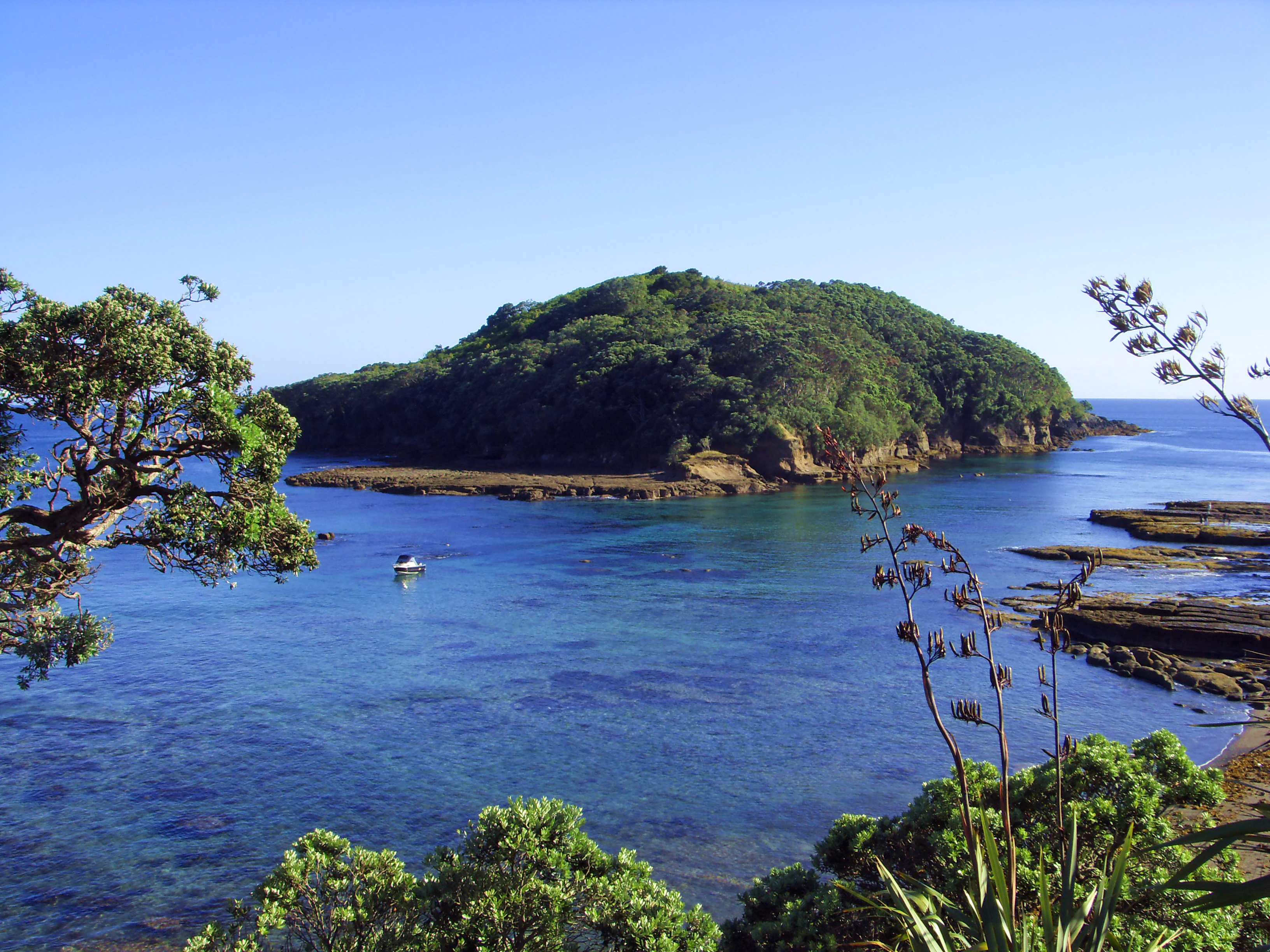
The coastline within and around the present reserve has a much older human history than its 1975 protection status suggests. Te Hāwere-a-Maki, also known as Goat Island or Motu Hāwere, holds deep significance for Ngāti Manuhiri, the iwi whose ancestral connections to the area trace back to the earlier tribal group Wakatūwhenua. According to tradition, those ancestors arrived with the Moekākara waka under the captain Tahuhunuiarangi. The island's name refers to Maki, the son of the founding ancestor Manuhiri, whose campaign during the late seventeenth century brought the wider area under Māori control. Members of the iwi later maintained a fortified pā on the island itself.
Ngāti Manuhiri continued to live, farm, and harvest from the coastal area for generations, including through the early period of European settlement in the nineteenth century. In 1901, the iwi received formal title over the island, recognising in modern legal terms a relationship with the place that had long existed. This continuing Māori connection forms an important part of the reserve's identity and is reflected in the dual name Te Hāwere-a-Maki / Goat Island that the island now carries.
The marine reserve itself was established in 1975, a decision that followed growing concern about the deteriorating condition of the local marine environment. By that point, extensive recreational and commercial harvesting had stripped large predatory fish and shellfish populations from the area, leaving expansive stretches of seafloor dominated by grazing sea urchins. The creation of the reserve as New Zealand's first marine protected area represented a deliberate test of whether excluding extraction could allow a temperate coastal ecosystem to recover. Subsequent decades showed that it could: populations of predatory fish and other species gradually rebuilt, and the reserve became a benchmark case for marine protection worldwide.
Cape Rodney-Okakari Point Marine Reserve landscape and geographic character
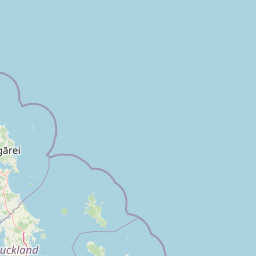
The reserve's landscape is best understood as a compressed cross-section of New Zealand's eastern coast. At its northern end, the rocky headland of Cape Rodney forms the boundary of the protected waters, with steep cliffs that drop into the sea and create an interface between land and ocean that shapes the local wave and current patterns. From there, the coastline transitions southward into a varied sequence of beach types and sheltered inlets, including the open white sand surf beach at Pakiri and the quieter, sediment-rich environment of Whangateau Harbour, where mudflats and mangrove forests fringe the shore.
These contrasting coastal forms produce very different conditions above and below the waterline. The rocky exposures around Cape Rodney and Te Hāwere-a-Maki support rich communities of invertebrates on boulders, in crevices, and across tide pools, while the sandy Pakiri beach represents a high-energy environment shaped by surf and shifting sand. In Whangateau Harbour, the gentler slope of the seafloor, the fine sediments, and the shelter provided by mangroves create a softer, more estuarine setting that contrasts strongly with the exposed outer coast.
Below the tideline, the reserve continues this diversity through different seabed types: boulders and cobble fields in some areas, coarse sand in others, and extensive stretches of mudstone terraces, pebblestone rock, and greywacke bedrock. Together, these materials create the structural complexity that allows so many different marine organisms to find a foothold, from encrusting life on hard surfaces to burrowing communities in softer sediments.
Cape Rodney-Okakari Point Marine Reserve ecosystems, habitats, and plant life
Ecologically, the reserve is defined less by a single dominant environment than by the close juxtaposition of several very different marine habitats. The protected waters include kelp forests anchored to hard reef, dense sponge gardens on rocky surfaces, beds of coralline turf, and patches of open sand and mud where other communities develop. Creeks running across the intertidal zone create deeper channels that accumulate their own distinctive assemblages of encrusting marine life and shelter mobile species.
On the shore and in the shallow subtidal zone, the reserve's mosaic of boulder, sand, mudstone, and pebblestone rock produces overlapping ecological worlds. The boulder fields host sea anemones, boulder crabs, and bristle-tails in shaded crevices. The coarse sand supports animals such as sand-hoppers and sea lice that thrive in shifting sediments. The mudstone terraces and pebblestone areas are particularly rich in grazing invertebrates, including snails, limpets, chitons, and whelks, alongside crabs, half-crabs, shrimps, starfish, small fish, sea-squirts, barnacles, tube worms, and oysters.
The sheltered harbour environments add a further ecological dimension. Mangrove forests around Whangateau Harbour stabilise fine sediments, filter nutrients, and serve as nurseries for juvenile fish and invertebrates, linking the inner estuarine system to the broader marine ecology of the reserve. This combination of reef, soft sediment, estuarine, and beach habitats within a single protected boundary gives the reserve a disproportionately rich ecological character for its size.
Cape Rodney-Okakari Point Marine Reserve wildlife and species highlights
The most conspicuous wildlife in the reserve is fish, particularly the Australasian snapper, which has become one of the species most closely associated with the park's identity. Within the protected waters, snapper populations are notably abundant and unnaturally curious around divers and snorkellers, a behavioural pattern linked to decades without fishing pressure. Rock lobster, which was historically overexploited outside the reserve, has also returned in numbers, and the recovery of these predatory species has reshaped the broader ecosystem.
New Zealand sea urchins, known locally as kina, are a defining presence in the reserve's underwater story. They were once so dominant that they grazed the seafloor down to barren rock, but the return of their predators has begun to rebalance the system. Their continuing role, as both part of the healthy ecosystem and a reminder of what it once was, makes them an important indicator species for the reserve.
The intertidal and shallow subtidal zones support a wide variety of smaller marine animals. Sea anemones cling to boulders and walls, crabs move through crevices, and shrimps, starfish, sea-quirts, and tube worms occupy microhabitats within the rock and sediment. Above the waterline, the harbour and rocky shore areas support their own communities, including mangrove-associated species in the sheltered inlets and shorebirds that use the mudflats and surrounding coast.
Cape Rodney-Okakari Point Marine Reserve conservation status and protection priorities
The reserve holds an outsize place in New Zealand conservation history because it was the country's first marine reserve and the proving ground for the idea that temperate coastal ecosystems could recover once extraction was halted. Its establishment in 1975 set a template for the broader network of marine reserves that New Zealand has since developed along its coast. The reserve's IUCN Category Ia designation as a strict nature reserve underscores the high level of protection it receives, with all fishing and any removal or disturbance of marine life or materials prohibited within its boundaries.
Its conservation importance lies as much in the recovery evidence it provides as in its current biodiversity. The shift from a kina-dominated, predator-poor seafloor to a system rich in snapper, rock lobster, and associated species is one of the most studied examples of marine ecosystem recovery in the Southern Hemisphere. The reserve has therefore become a reference point for debates about marine protected area design, the role of predator populations, and the long timescales over which coastal recovery operates.
The presence of the University of Auckland's Leigh Marine Laboratory inside the reserve strengthens its conservation role. Scientists there use the protected waters as a long-term observatory for marine ecosystem research, with deployments of monitoring equipment around the reserve that generate continuous data about how a fully protected coastal system functions. This combination of legal protection, ecosystem recovery, and active scientific study gives the reserve a distinctive place in New Zealand's conservation landscape.
Cape Rodney-Okakari Point Marine Reserve cultural meaning and human context
The cultural context of Cape Rodney-Okakari Point Marine Reserve is inseparable from the history of Ngāti Manuhiri and the island at its heart. Te Hāwere-a-Maki, or Goat Island, is woven into the ancestral narrative of the iwi: the story of Manuhiri and his son Maki, the arrival of the Moekākara waka under Tahuhunuiarangi, and the establishment of a pā on the island in the late seventeenth century all anchor the iwi's whakapapa to this coastline. The island's name preserves the memory of these figures, and the formal dual name used today reflects the partnership between customary knowledge and contemporary conservation practice.
Ngāti Manuhiri maintained active homes and farms along this coast well into the period of European settlement, with formal title over the island eventually returned to the iwi in 1901. That recognition, alongside the protection era that began in 1975, has shaped the reserve into a place where ecological conservation and Māori cultural heritage coexist. Managed jointly in spirit by the Department of Conservation and informed by the iwi's continuing relationship with the area, the reserve sits within a broader regional landscape of Māori coastal identity on the eastern North Island.
Top sights and standout views in Cape Rodney-Okakari Point Marine Reserve
Highlights of Cape Rodney-Okakari Point Marine Reserve include the recovery story of its fish populations, its exceptionally accessible shore snorkelling and diving around Te Hāwere-a-Maki / Goat Island, and the unusual concentration of distinct coastal habitats, from rocky headlands and boulder fields to white sand beaches and mangrove-lined mudflats. The long-running research presence of the Leigh Marine Laboratory gives the reserve a depth of scientific character unmatched by most other New Zealand marine sites.
The reserve also stands out for its position in New Zealand's conservation history as the country's inaugural marine reserve, a status that gives it both symbolic and practical weight. The transformation of its seafloor from kina barrens to kelp forest, sponge garden, and snapper-rich habitat is itself one of the park's defining features, offering visitors a visible record of what long-term protection can achieve.
Best time to visit Cape Rodney-Okakari Point Marine Reserve
The reserve can be visited year round, but conditions in the water change significantly with the seasons and the weather. Calm, settled days during the warmer months of late spring through early autumn generally offer the best visibility and sea conditions for snorkelling and diving, when light penetrates further into the water and the kelp forests are most biologically active. Summer conditions also make walkways and intertidal exploration more comfortable, and low spring tides at any time of year can reveal exceptionally rich rock pool life along the boulder shores.
Windy conditions, particularly easterly or north-easterly winds above about 20 knots, and easterly or north-easterly swells above roughly one metre, can make the water less suitable for in-water activities such as snorkelling, diving, and kayaking. During such periods, visiting the coastal walkways, exploring the rock pools at low tide, or viewing the area from land still offers much of the reserve's character. Visitors planning to spend time in the water generally benefit from checking local sea conditions in advance, since the reserve's accessibility by sea depends heavily on the prevailing wind and swell.