Mori Atlas logo
National parkCerro Hoya National Park

Discover the mapped boundaries and regional atlas details of this vital national park.

Cerro Hoya National Park: Panama's Protected Landscape and Geographic Context

(Parque Nacional Cerro Hoya)

Cerro Hoya National Park stands as a key protected area within Panama, offering a distinct focus for geographic discovery and atlas exploration. This page provides an in-depth look at the park's mapped boundaries, its place within the broader landscape of Panama, and the structured geographic information valuable for understanding protected lands across Central America. Explore the unique natural context of this national park, contributing to a richer understanding of regional conservation landscapes.

National ParkPanamaMontane ForestCloud ForestBird ConservationEndemic Species

Cerro Hoya National Park

National park

Park overview

Structured park overview, official facts, and landscape profile for Cerro Hoya National Park

Cerro Hoya National Park park facts, protected area profile, and essential visitor context
Review the core facts for Cerro Hoya National Park, including designation, size, terrain, visitor scale, habitats, and operating context in one park-focused overview.

About Cerro Hoya National Park

Cerro Hoya National Park occupies a distinctive position in Panama's protected area network as a wilderness preserve on the Azuero Peninsula in Veraguas Province. The park's creation in 1984 established protection for a landscape characterized by steep mountain terrain rising from coastal lowlands to the summit of Cerro Hoya at 1,559 meters. This elevation gradient, combined with the peninsula's geographic isolation, has produced a unique ecological situation where montane forest ecosystems exist as an isolated island surrounded by lower-elevation moist forests. The park's significance extends beyond its biological values to include its geographic position at the southernmost point of mainland North America, where the coastline at Punta Mariato represents a continental extremity. The protected area forms part of a broader conservation landscape that includes surrounding lands where the critically endangered Azuero parakeet persists, though much of the original forest cover on the Azuero Peninsula has been converted to agriculture and pasture.

Quick facts and research context for Cerro Hoya National Park

Cerro Hoya National Park is located in the Mariato District of Veraguas Province in southwestern Panama, occupying much of the Azuero Peninsula's southern portion. The park covers 333.4 square kilometers and was designated in 1984, receiving IUCN Category II protected area status. Its centerpiece is Cerro Hoya mountain at 1,559 meters elevation, while the coastline feature Punta Mariato marks the southernmost extent of mainland North America. The park encompasses two distinct ecoregions: Isthmian-Pacific moist forests in the lower elevations and Talamancan montane forests covering approximately 77 square kilometers above 950 meters. These montane forests represent an isolated outlier, separated by over 150 kilometers from the main montane forest block in the Central Cordillera.

Park context

Deeper park guide and search-rich context for Cerro Hoya National Park

Cerro Hoya National Park history, landscape, wildlife, and travel context
Explore Cerro Hoya National Park through its history, landscape character, ecosystems, wildlife, conservation priorities, cultural context, and seasonal travel timing in a structured park guide built for atlas discovery and search intent.

Why Cerro Hoya National Park stands out

Cerro Hoya National Park is best known for its remarkable avifauna and its unique status as the sole remaining habitat of the Azuero parakeet, a bird species found nowhere else on Earth. The park has been designated an Important Bird Area by BirdLife International and hosts approximately 225 recorded bird species, including populations of crested eagle, great green macaw, scarlet macaw, great curassow, three-wattled bellbird, and golden-winged warbler. The park is also notable for its geographic significance as the location of mainland North America's southernmost point at Punta Mariato, and for protecting an isolated pocket of montane cloud forest that is separated by a significant distance from the Central American highland forest systems.

Cerro Hoya National Park history and protected-area timeline

Cerro Hoya National Park was established in 1984 as Panama's response to growing recognition of the Azuero Peninsula's ecological significance and the need to protect its remaining forest areas. The park's designation came during a period when Panama was expanding its national park system, building upon earlier protected areas established in the 1960s and 1970s. The creation of the park provided formal protection for the montane forest ecosystems of Cerro Hoya, which had remained relatively intact compared to the extensive deforestation that had characterized much of the Azuero Peninsula's lowlands. The park's establishment also recognized the significance of the region for endemic species, particularly the Azuero parakeet that would later be identified as one of the most range-restricted parrot species in the Americas. The protected area has maintained its core wilderness character while surrounding landscapes have experienced continued agricultural expansion.

Cerro Hoya National Park landscape and geographic character

The landscape of Cerro Hoya National Park is defined by the mountainous terrain of Cerro Hoya and its surrounding slopes, rising dramatically from the coastal areas of the Azuero Peninsula. The park encompasses a complete altitudinal sequence from sea level at its coastal boundaries to the summit of Cerro Hoya at 1,559 meters, creating a diverse array of landforms including steep ridges, forested slopes, and small streams descending toward the Pacific coast. The terrain is characterized by rugged topography with significant elevation changes over relatively short distances. The park also includes coastal areas along the Pacific side of the peninsula, where the landscape transitions from forested slopes to shoreline. The presence of Punta Mariato, the southernmost point of mainland North America, represents a distinctive coastal feature where the peninsula extends into the Pacific Ocean. The montane forest zone above approximately 950 meters elevation covers approximately 77 square kilometers of the park and represents a distinct landscape character from the lower-elevation moist forests.

Cerro Hoya National Park ecosystems, habitats, and plant life

The nature of Cerro Hoya National Park centers on its role as a refuge for two distinct forest ecoregions within a relatively compact protected area. The Isthmian-Pacific moist forests cover the lowlands and foothills of the Azuero Peninsula, representing the broader regional forest type of this section of Panama. At higher elevations above 950 meters, the Talamancan montane forests create a dramatically different environment characterized by cloud forest conditions, epiphyte-laden trees, and cooler temperatures. This montane forest ecosystem is remarkable for its isolation, being separated from the main Talamancan montane forest block in the Central Cordillera of Panama and Costa Rica by over 150 kilometers of lower-elevation terrain. This isolation has allowed the evolution of distinct ecological communities and contributes to the high degree of endemism found in the park. The montane forests of Cerro Hoya represent a biodiversity island preserving species and ecological processes that cannot survive in the transformed lowland landscapes surrounding the park.

Cerro Hoya National Park wildlife and species highlights

Cerro Hoya National Park supports exceptional wildlife diversity, most notably illustrated by its bird fauna with approximately 225 species recorded within its boundaries. The park holds particular significance as the global stronghold for the Azuero parakeet, found only in this region with a total global range of approximately 700 square kilometers encompassing the park and surrounding areas. Notable bird species include the crested eagle, a large raptor of forest canopies, the great green macaw and scarlet macaw, both large parrots that depend on forest habitats, the great curassow, a ground-dwelling gamebird, the three-wattled bellbird, known for its distinctive call, and the golden-winged warbler, a migratory songbird. The park's mammal community includes several Neotropical species such as jaguar, puma, jaguarundi, and ocelot, representing the full complement of Middle American large cats. Primate species present include the Panamanian night monkey, Azuero howler, and Central American spider monkey. Smaller mammals include the Neotropical river otter, Panamanian spiny pocket mouse, and Darien harvest mouse. The amphibian fauna includes species such as Craugastor azueroensis, a frog species recorded within the park.

Cerro Hoya National Park conservation status and protection priorities

Cerro Hoya National Park represents a critical conservation stronghold in a region where extensive forest loss has occurred across the broader Azuero Peninsula. The park's designation as an Important Bird Area by BirdLife International acknowledges its global significance for bird conservation, particularly for species with restricted ranges or specialized habitat requirements. The protection of the montane forest ecosystem is especially important given that these forests exist as a geographically isolated island, meaning the park's conservation of this habitat is irreplaceable at a regional scale. The park provides essential refuge for the Azuero parakeet, one of the most endangered parrot species in the Americas, whose survival depends entirely on the protection of remaining forest habitat in this limited geographic area. Beyond species-specific conservation, the park preserves ecological processes and biodiversity patterns that cannot be replicated in degraded or converted landscapes, making its long-term protection essential for maintaining regional ecological integrity.

Cerro Hoya National Park cultural meaning and human context

The region encompassing Cerro Hoya National Park is part of the broader Azuero Peninsula, an area with historical significance in Panama's cultural and agricultural development. The park lies within the Mariato District, a relatively remote portion of Veraguas Province. The indigenous history of the Azuero Peninsula includes pre-Columbian populations, though the specific cultural context of the park's immediate area relates more to colonial and post-colonial land use patterns that led to widespread forest conversion across the peninsula. The establishment of the park provided recognition for the natural values of this mountainous terrain at a time when much of the surrounding lowlands had been transformed for agriculture and cattle ranching. The park exists within a landscape where local communities maintain connections to the land, though the protected status restricts resource extraction within the park boundaries. The geographic extremity of the region, at mainland North America's southernmost point, adds a cultural and symbolic dimension to the area's identity beyond its ecological significance.

Top sights and standout views in Cerro Hoya National Park

Cerro Hoya National Park stands out as a wilderness preserve protecting an isolated montane forest ecosystem at the southern tip of mainland North America. The park contains Cerro Hoya, the highest peak in Veraguas Province, and is the only known home of the Azuela parakeet, making it globally significant for parrot conservation. With 225 recorded bird species including crested eagle, great green macaw, and three-wattled bellbird, the park offers exceptional birdwatching opportunities in Central America. The montane cloud forests above 950 meters elevation represent a unique ecological island separated from the Central American highland systems, preserving biodiversity found nowhere else. Punta Mariato marks a geographic milestone as the southernmost point of the continental landmass, adding geographic significance to the park's ecological values. The park protects two distinct ecoregions within its boundaries, creating remarkable ecological diversity across its altitudinal range.

Best time to visit Cerro Hoya National Park

The optimal time to visit Cerro Hoya National Park corresponds to Panama's dry season, typically running from mid-December through April, when precipitation is minimal and trail conditions are most favorable for hiking and exploration. During this period, the montane forest environments are more accessible and wildlife viewing opportunities improve as animals concentrate around remaining water sources. The wet season from May through November brings heavy rainfall to the Azuero Peninsula, making trail conditions difficult and reducing visibility in the higher elevation cloud forest zones. Birdwatching can be productive year-round, though the dry season often provides better conditions for observing macaws and other conspicuous species. Visitors interested in the park's unique montane cloud forest should consider that these environments maintain high humidity and cloud cover throughout the year, creating consistently misty conditions above 950 meters regardless of season.
Park location guide

Geography guide, regional context, and park location map for Cerro Hoya National Park

Cerro Hoya National Park park geography, regions, and map view in Panama
Understand where Cerro Hoya National Park sits in Panama through a broader geographic reading of the surrounding landscape, nearby location context, and its mapped position within the national park landscape.

How Cerro Hoya National Park fits into Panama

Panama is a presidential republic located at the southern end of Central America in North America. It gained independence from Spain in 1821 and from Colombia in 1903, the latter enabling the construction of the Panama Canal under U.S. supervision between 1904 and 1914. The canal was transferred to Panamanian control in 1999 following the Torrijos-Carter Treaties. With a population of approximately 4.3 million and an area of about 75,400 km², Panama has a high-income economy driven primarily by canal tolls, banking, commerce, and tourism.

Wider geography shaping Cerro Hoya National Park in Panama

Panama is located at the southern end of the Central American isthmus, stretching from the Caribbean coast in the north to the Pacific coast in the south. The country shares land borders with Costa Rica to the west and Colombia to the southeast. The terrain consists of coastal plains, mountain ranges including the Cordillera Central and Cordillera de Talamanca, and river valleys. The Panama Canal bisects the country, connecting the Atlantic and Pacific Oceans.

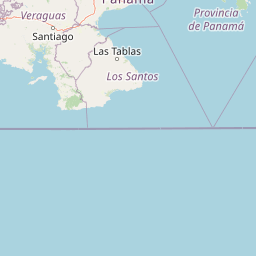
Map view of Cerro Hoya National Park

Use this park location map to pinpoint Cerro Hoya National Park in Panama, understand its exact geographic position, and read its mapped placement within the surrounding landscape more clearly.

Pigeon | © OpenStreetMap contributors

Location context for Cerro Hoya National Park

Mariato DistrictVeraguas Province
Park atlas

Expand your view from Cerro Hoya National Park to discover protected areas and diverse landscapes across its surrounding Panamanian geography.

Explore Nearby National Parks and Protected Areas Beyond Cerro Hoya National Park, Panama
After exploring Cerro Hoya National Park, browse other national parks and protected areas across Panama's Azuero Peninsula and its neighboring regions. Discover how these distinct protected landscapes compare geographically, revealing diverse forest types, coastal features, and critical conservation zones.
National parkPanamá Oeste Province

Altos de Campana National Park: National Park Protected Landscape and Geographic Context

Mapped boundaries and regional geography in Panamá Oeste Province.

Gain a structured understanding of Altos de Campana National Park, a designated national park located in Panamá Oeste Province. This page details its identity as a protected landscape, offering insights into its geographic placement and mapped boundaries for comprehensive atlas-style exploration. Understand its regional context and its contribution to Panama's network of protected areas.

Area
48.16 km²
Established
1966
IUCN
II
Relief
Mountain
National parkColón Province

Soberanía National Park: Panama National Park Atlas, Geography, and Protected Landscape Details

Explore the mapped boundaries and regional geography of this national park.

Investigate Soberanía National Park, a designated national park situated in Panama's Colón Province. This entry offers detailed geographic context, focusing on its mapped protected area, landscape character, and role within regional conservation. Understand the spatial distribution and atlas significance of this protected land, essential for a structured geographic discovery of Panama's natural heritage.

Area
220 km²
Established
1980
IUCN
II
Relief
Lowland
National parkPanamá Province

Chagres National Park: National Park Protected Landscape Atlas

Discover geographic boundaries and natural terrain context.

Chagres National Park is a crucial protected area situated in Panamá Province, Panama. This page serves as an atlas-style gateway to understanding its specific geographic identity, mapped boundaries, and the surrounding natural terrain. It is designed for users seeking detailed insights into the park's protected landscape and its contribution to regional geography and conservation mapping efforts.

Area
1,290 km²
Established
1985
IUCN
II
Relief
Upland
Marine protected areaBocas del Toro Province

Isla Bastimentos National Marine Park: Marine Protected Area Geography and Atlas Context

Explore the protected landscape within Bocas del Toro Province.

Isla Bastimentos National Marine Park represents a critical marine protected area offering essential geographic data for atlas-based research. Situated in Panama's Bocas del Toro Province, this entity provides a focal point for understanding protected marine territories and their mapped extent. Discover the park's specific location within the province, contributing to a detailed regional geography and a broader understanding of conservation landscapes.

Area
132.26 km²
Established
1988
IUCN
II
Relief
Lowland
National parkPuntarenas Province

Piedras Blancas National Park: Costa Rica National Park Protected Landscape

Explore Puntarenas Province's mapped protected areas and terrain.

Piedras Blancas National Park is a key protected area within Puntarenas Province, Costa Rica, identified for its national park status. This entry serves as a geographic anchor, detailing the park's mapped landscape and its contribution to the regional protected areas atlas. Understand its specific geographic setting and the importance of its protected boundaries for natural landscape exploration and research, contributing vital context to Costa Rica's conservation geography.

Area
140.19 km²
Established
1991
IUCN
II
Relief
Mountain
National parkCosta Rica

La Amistad International Park National Park: Mapped Protected Area in Costa Rica

Explore its geographic boundaries and landscape context.

La Amistad International Park represents a vital component of Costa Rica's protected land network. This detail provides an atlas-centric view, highlighting the park's mapped boundaries and its contribution to the regional geography. Understand the park's identity as a national park and explore its natural terrain context, crucial for any structured geographic discovery of protected areas within Central America.

Area
1,992 km²
Established
1988
IUCN
II
Relief
Mountain
National parkCosta Rica

Corcovado National Park National Park: Costa Rica's Protected Landscape Geography and Map

Explore its mapped protected area boundaries and terrain.

Corcovado National Park offers a deep dive into its identity as a protected national park within Costa Rica. This atlas entry focuses on its specific geographic placement, the visual representation of its park boundaries on maps, and the character of its natural terrain. It provides essential structured data for understanding the park's role in the national protected area network and its unique position within the regional geography.

Area
424 km²
Established
1975
IUCN
II
Relief
Mixed relief
National parkDarién Province

Darién National Park: Darién Province National Park Geographic and Map Exploration

Discover its protected landscape and regional geographic context.

Darién National Park serves as a key protected area within Darién Province, offering an essential focus for geographic and atlas-based discovery. This dedicated park detail page provides insights into its mapped boundaries and its significance as a national park. Users can explore the park's specific geographic footprint and its place within the regional landscape, facilitating a structured understanding of protected natural areas. Dive into the mapped terrain and conservation landscape context that defines Darién National Park for comprehensive atlas exploration.

Area
5,790 km²
Established
1980
IUCN
II
Relief
Mountain

Common questions about visiting, size, designation, and location context for Cerro Hoya National Park

Cerro Hoya National Park FAQs for park facts, access, geography, and protected area context
Find quick answers about Cerro Hoya National Park, including protected-area facts, park geography, trail and visitor context, and how the park fits into its surrounding country and regional landscape.
MoriAtlas Explorer

Continue Your Protected Areas Search Across the Global Atlas

Deepen your exploration by continuing the structured search for national parks and protected areas worldwide. Utilize the comprehensive filtering capabilities to compare different conservation landscapes and refine your understanding of global park geography. Discover more about the distribution and characteristics of protected natural areas.

Global natural geography