Mori Atlas logo
National parkSarigua National Park

Discover the mapped boundaries and regional setting of Sarigua National Park.

Sarigua National Park National Park: Protected Landscape and Geographic Context in Herrera Province

(Parque Nacional Sarigua)

Sarigua National Park stands as a protected landscape within the atlas of Panama's natural areas, situated in Herrera Province. This entry provides an authoritative overview of its identity as a national park, focusing on its geographic scope and mapped boundaries. Users can explore the park's specific place within the regional context, understanding its role as a distinct protected area for focused geographic discovery.

Desert landscapesArchaeological sitesPre-Columbian heritageDeforestation historyAzuero PeninsulaSemi-arid ecosystems

Sarigua National Park

National park

Park overview

Structured park overview, official facts, and landscape profile for Sarigua National Park

Sarigua National Park park facts, protected area profile, and essential visitor context

Review the core facts for Sarigua National Park, including designation, size, terrain, visitor scale, habitats, and operating context in one park-focused overview.

About Sarigua National Park

Sarigua National Park occupies a unique position in Panama's protected area system as the country's primary example of a desert environment created through historical deforestation. Located on the Azuero Peninsula in Herrera Province, the park sits approximately 240 kilometers southwest of Panama City, spanning an area that once supported dry tropical rainforest but now displays characteristics more typical of semi-arid desert landscapes. The transformation from forest to desert serves as a powerful ecological narrative about the consequences of unsustainable land use and provides important lessons about habitat preservation and restoration. Beyond its ecological significance, the park contains archaeological resources that speak to centuries of human presence in the region, with pre-Columbian sites yielding evidence of ancient settlements and cultural activity. The park's combination of environmental transformation, conservation challenges, and cultural heritage makes it a compelling destination for visitors interested in understanding the complex relationship between human communities and their landscapes.

Quick facts and research context for Sarigua National Park

Sarigua National Park sits on the Azuero Peninsula in Herrera Province, approximately 240 kilometers from Panama City. The park is notable for its desert environment in a country more commonly associated with tropical rainforests. It contains significant archaeological sites with pre-Columbian petroglyphs and rock art, reflecting centuries of human habitation before the landscape transformed. The area was historically forested but lost its tree cover to agricultural expansion and logging, creating the current arid conditions. The park represents an important case study in ecosystem degradation and the lasting impact of human activity on natural landscapes.

Protection and recognition

Verifying terrestrial boundaries and documented international conservation frameworks

Sarigua National Park Protection Status and Conservation Designation

Terrestrial protection status for Sarigua National Park establishes its documented management scope and official geographic boundaries within the global conservation network. Evaluating verified environmental records and transboundary datasets helps researchers map the factual conservation footprint of this unique landscape.

Protection details

Protection scope
Terrestrial
Transboundary protection
No
Park context

Deeper park guide and search-rich context for Sarigua National Park

Sarigua National Park history, landscape, wildlife, and travel context

Explore Sarigua National Park through its history, landscape character, ecosystems, wildlife, conservation priorities, cultural context, and seasonal travel timing in a structured park guide built for atlas discovery and search intent.

Why Sarigua National Park stands out

Sarigua National Park is best known for its unusual desert environment within Panama and for the dramatic ecological story of a former rainforest transformed into arid terrain through deforestation. The park also preserves important archaeological sites with pre-Columbian rock carvings and evidence of ancient settlements, making it significant for both ecological and cultural reasons. Its landscape of semi-arid hills, dry valleys, and sparse vegetation creates a striking visual contrast to the surrounding tropical regions of Panama, offering visitors a rare glimpse into how dramatically human activity can reshape an ecosystem.

Sarigua National Park history and protected-area timeline

The history of Sarigua National Park is fundamentally tied to the transformation of its landscape from forested terrain to desert. Before European colonization, the Azuero Peninsula supported dry tropical rainforest that provided resources for indigenous communities. The transformation began with the arrival of Spanish colonists and accelerated over subsequent centuries as forests were cleared for agriculture, livestock grazing, and timber extraction. By the time the area was formally protected as a national park, the original rainforest ecosystem had been largely lost, leaving behind the arid conditions that characterize the landscape today. The establishment of the park represented an effort to preserve what remained of the area's ecological character and to protect the significant archaeological sites found within its boundaries. The park's creation also reflected growing recognition of the need to address historical environmental degradation and preserve sites of cultural significance for future generations.

Sarigua National Park landscape and geographic character

The landscape of Sarigua National Park presents an unusual sight within Panama's generally verdant terrain. The terrain consists of rolling hills and dry valleys characterized by semi-arid conditions, sparse vegetation, and soils that show the effects of severe erosion following forest removal. Unlike the tropical rainforests that dominate much of Panama, the park's landscape features vegetation adapted to drought conditions, including cacti, dry scrub, and grasses that can survive with limited rainfall. The geology of the peninsula includes rock formations that have yielded archaeological artifacts, with the stony terrain contrasting sharply with the muddy river valleys found in other parts of Panama. The park's desert-like appearance creates an almost surreal environment that challenges visitors' expectations of what a tropical Central American landscape should look like, making the area both ecologically significant and visually striking.

Sarigua National Park ecosystems, habitats, and plant life

The nature of Sarigua National Park reflects its transformed state, with the ecosystem now representing a desert environment that exists in stark contrast to Panama's typical tropical rainforests. The park's flora consists of drought-resistant species adapted to semi-arid conditions, including various cacti species, thorny shrubs, and dry-season deciduous trees. The transformation from rainforest to desert illustrates the profound impact that deforestation can have on local ecosystems, fundamentally altering rainfall patterns, soil stability, and the species that can survive in an area. While the park no longer supports the diverse rainforest wildlife that once inhabited the area, the current ecosystem demonstrates ecological resilience and provides opportunities to study how species adapt to changing environmental conditions. The park's nature serves as a living demonstration of environmental change and the importance of forest conservation.

Sarigua National Park wildlife and species highlights

The wildlife of Sarigua National Park reflects the harsh conditions of its desert environment, with species composition differing significantly from the diverse fauna found in Panama's rainforest parks. The park supports wildlife adapted to semi-arid conditions, including various reptile species, small mammals, and bird species that have adapted to the sparse vegetation and dry climate. While the biodiversity is lower than what would be expected in a intact tropical forest, the park still provides habitat for species capable of surviving in challenging conditions. The contrast between Sarigua's wildlife and that of Panama's wetter protected areas highlights how dramatically ecosystem transformation affects animal communities, with the park serving as an important site for understanding how fauna respond to habitat change and environmental degradation.

Sarigua National Park conservation status and protection priorities

Sarigua National Park represents an important conservation case study in Panama, demonstrating both the challenges of restoring degraded ecosystems and the value of protecting areas with significant cultural and ecological value. The park's transformation from rainforest to desert illustrates the lasting consequences of deforestation and provides a stark example of why forest conservation is critical. Conservation efforts at the park focus on protecting the remaining archaeological sites and preventing further environmental degradation, though full ecosystem restoration remains difficult given the extent of historical forest loss. The park also serves an educational function, helping visitors and local communities understand the importance of sustainable land use and the long-term consequences of environmental destruction. Its designation as a national park reflects Panama's commitment to preserving sites of both ecological and cultural significance.

Sarigua National Park cultural meaning and human context

The cultural context of Sarigua National Park is defined by the significant archaeological evidence of pre-Columbian human activity in the area. Before the landscape transformed into its current desert state, the Azuero Peninsula supported indigenous communities whose presence is evidenced by rock carvings, pottery fragments, and other artifacts found throughout the park. These archaeological sites represent the cultural heritage of indigenous peoples who inhabited the region for centuries before Spanish colonization. The park provides an opportunity to preserve and study these cultural remains while also educating visitors about the history of human settlement on the Azuero Peninsula. The intersection of ecological transformation and cultural heritage makes Sarigua unique among Panama's protected areas, combining natural and historical significance in a single landscape.

Top sights and standout views in Sarigua National Park

The most compelling highlights of Sarigua National Park include its unusual desert landscape, which offers a rare example of semi-arid terrain within Panama's predominantly tropical environment. The park's archaeological sites featuring pre-Columbian rock carvings provide a tangible connection to the region's indigenous heritage and offer visitors the chance to explore ancient cultural artifacts. The park's story of ecological transformation from rainforest to desert serves as a powerful demonstration of human impact on natural ecosystems and provides important lessons about environmental stewardship. Visitors can experience a landscape that challenges typical expectations of Central American environments while learning about the historical processes that shaped the current terrain.

Best time to visit Sarigua National Park

The best time to visit Sarigua National Park coincides with Panama's dry season, which typically runs from mid-December through April. During these months, rainfall is minimal and visitors can explore the park's terrain more comfortably, though the desert environment means that temperatures can be warm even during the dry season. The dry conditions also provide better visibility for viewing archaeological sites and appreciating the landscape's distinctive character. The wet season from May through November brings increased rainfall that can make some trails difficult to navigate and may limit access to certain areas of the park. Planning a visit during the dry season allows for the most comfortable exploration of the park's unique combination of desert scenery and archaeological sites.
Monthly climate preview

Long-term monthly temperature and precipitation rhythm for Sarigua National Park

Sarigua National Park Climate Normals and Annual Temperature Patterns

Historical climate data reveals measured monthly temperature and precipitation cycles sampled across representative coordinates within Sarigua National Park. Reviewing the complete twelve-month normals provides detailed context on long-term thermal ranges and precipitation shifts throughout the protected area.
Annual mean26 °C
25 °C29 °C
Jan25°
Feb27°
Mar28°
Apr29°
May27°
Jun26°
Jul26°
Aug26°
Sep26°
Oct26°
Nov26°
Dec25°
Warmest month
April

28.5 °C

Coolest month
January

25.3 °C

Wettest month
September

8.5 mm/day

Driest month
February

0.3 mm/day

Park location guide

Geography guide, regional context, and park location map for Sarigua National Park

Sarigua National Park park geography, regions, and map view in Panama

Understand where Sarigua National Park sits in Panama through a broader geographic reading of the surrounding landscape, nearby location context, and its mapped position within the national park landscape.

How Sarigua National Park fits into Panama

Panama is a presidential republic located at the southern end of Central America in North America. It gained independence from Spain in 1821 and from Colombia in 1903, the latter enabling the construction of the Panama Canal under U.S. supervision between 1904 and 1914. The canal was transferred to Panamanian control in 1999 following the Torrijos-Carter Treaties. With a population of approximately 4.3 million and an area of about 75,400 km², Panama has a high-income economy driven primarily by canal tolls, banking, commerce, and tourism.

Wider geography shaping Sarigua National Park in Panama

Panama is located at the southern end of the Central American isthmus, stretching from the Caribbean coast in the north to the Pacific coast in the south. The country shares land borders with Costa Rica to the west and Colombia to the southeast. The terrain consists of coastal plains, mountain ranges including the Cordillera Central and Cordillera de Talamanca, and river valleys. The Panama Canal bisects the country, connecting the Atlantic and Pacific Oceans.

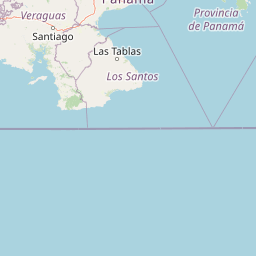
Map view of Sarigua National Park

Use this park location map to pinpoint Sarigua National Park in Panama, understand its exact geographic position, and read its mapped placement within the surrounding landscape more clearly.

Pigeon | © OpenStreetMap contributors

Location context for Sarigua National Park

Herrera Province
Park atlas

Compare surrounding protected landscapes and national parks near Sarigua National Park on the Azuero Peninsula, tracing Panama's diverse conservation geography.

Explore Nearby Protected Areas: Extending Your Discovery from Sarigua National Park

Browse other national parks and protected areas located geographically near Sarigua National Park, discovering regions with similar semi-arid landscapes or contrasting tropical environments across Panama. This regional park-list context allows for comparative exploration of diverse protected ecosystems, from archaeological sites to coastal zones, providing a deeper atlas understanding.
National parkPanama
About 64 km away#1 closest

North

Omar Torrijos "El Cope" National Park: Mapped Boundaries and Protected Landscape in Panama

Explore the geographic setting and natural terrain of this Panamanian national park.

Omar Torrijos "El Cope" National Park is a designated protected area offering rich opportunities for geographic discovery. Users can explore its mapped boundaries, understand its place within Panama's natural landscapes, and gain insight into the park's regional geographic context. This page provides a structured atlas-style view, highlighting the park's identity as a significant protected landform within Central America.

IUCN
II
Scope
Terrestrial
Wildlife reserveLos Santos Province
About 71 km away#2 closest

Southeast

Isla Iguana Wildlife Refuge: A Protected Island and Coral Reef Sanctuary in Los Santos Province

Mapping the terrestrial and marine boundaries of a key Panamanian wildlife refuge.

Isla Iguana Wildlife Refuge encompasses a unique blend of tropical dry forest and expansive coral reef systems. Located off the coast of the Los Santos Province, the refuge serves as an important Pacific habitat for nesting sea turtles and migratory whales. This detailed overview covers the island's layered coastal topography, reef structures, and its role as a critical protected area within the marine geography of Panama.

Area
0.53 km²
Established
1981
Relief
Lowland
Scope
Mixed
National parkPanama
About 87 km away#3 closest

South

Cerro Hoya National Park: Panama's Protected Landscape with Mapped Geographic Detail

Explore the national park's mapped boundaries and regional atlas context.

Cerro Hoya National Park presents a unique opportunity for geographic discovery, focusing on its role as a protected landscape within Panama. This park detail page allows for an in-depth atlas-style exploration of its mapped boundaries and its contribution to the regional geography of Central America. Understand the protected-area identity and the natural context that defines this significant national park, providing valuable data for landscape analysis and map-based research.

Area
333.4 km²
Established
1984
IUCN
II
Relief
Mountain
National parkPanamá Oeste Province
About 94 km away#4 closest

Northeast

Altos de Campana National Park: National Park Protected Landscape and Geographic Context

Mapped boundaries and regional geography in Panamá Oeste Province.

Gain a structured understanding of Altos de Campana National Park, a designated national park located in Panamá Oeste Province. This page details its identity as a protected landscape, offering insights into its geographic placement and mapped boundaries for comprehensive atlas-style exploration. Understand its regional context and its contribution to Panama's network of protected areas.

Area
48.16 km²
Established
1966
IUCN
II
Relief
Mountain
National parkColón Province
About 145 km away#5 closest

Northeast

Soberanía National Park: Panama National Park Atlas, Geography, and Protected Landscape Details

Explore the mapped boundaries and regional geography of this national park.

Investigate Soberanía National Park, a designated national park situated in Panama's Colón Province. This entry offers detailed geographic context, focusing on its mapped protected area, landscape character, and role within regional conservation. Understand the spatial distribution and atlas significance of this protected land, essential for a structured geographic discovery of Panama's natural heritage.

Area
220 km²
Established
1980
IUCN
II
Relief
Lowland
National parkPanama
About 146 km away#6 closest

Northeast

Metropolitan Natural Park: Urban Protected Area and Forest Geography in Panama

Tracing the boundaries of a rare city-based wildlife refuge

Metropolitan Natural Park offers a significant study of urban conservation in Panama, protecting 265 hectares of Pacific tropical dry forest. Situated along the Panama Canal watershed, the terrain provides essential forest connectivity and diverse microhabitats, serving as a critical sanctuary within the dense metropolitan fabric of Panama City.

Area
2.65 km²
Established
1985
IUCN
II
Relief
Upland
Wildlife reservePanama City
About 146 km away#7 closest

Northeast

Metropolitan Natural Park: Protected Tropical Forest in Panama City

Mapping the Pacific watershed and urban wildlife corridors

Metropolitan Natural Park stands as a rare wildlife refuge, protecting a dense secondary tropical dry forest ecosystem inside the capital. The park boundary encompasses forested slopes and ridgelines that look out over the Panama Canal, providing a unique intersection of intact biodiversity and urban geography.

Area
2.65 km²
Established
1985
Relief
Lowland
Climate
Tropical
National parkPanama
About 157 km away#8 closest

Southwest

Coiba National Park: Mapped Geography and Protected Landscapes in Panama

Tropical forest interiors and expansive marine boundaries

Coiba National Park protects a significant expanse of tropical forest and marine habitat off the coast of Panama. Its landscape, characterized by mountainous terrain and surrounding reef systems, provides a critical environment for endemic subspecies and diverse marine life within the Pacific gulf.

IUCN
II

Common questions about visiting, size, designation, and location context for Sarigua National Park

Sarigua National Park FAQs for park facts, access, geography, and protected area context

Find quick answers about Sarigua National Park, including protected-area facts, park geography, trail and visitor context, and how the park fits into its surrounding country and regional landscape.
MoriAtlas Explorer

Continue Your Protected Areas Search Across the Global Atlas

Deepen your exploration by continuing the structured search for national parks and protected areas worldwide. Utilize the comprehensive filtering capabilities to compare different conservation landscapes and refine your understanding of global park geography. Discover more about the distribution and characteristics of protected natural areas.

Global natural geography