Why Chae Son National Park stands out
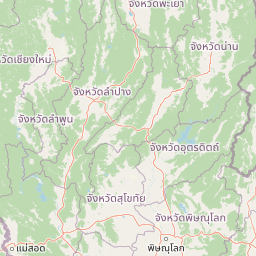
Chae Son National Park is best known for its dramatic six-tiered Chae Son Waterfall, one of the tallest cascades in northern Thailand, and its geothermal hot spring system with sulfurous pools reaching temperatures of 73°C. The park's location within the Khun Tan Range provides mountainous terrain with elevations reaching 2,000 meters, creating a scenic landscape of forested peaks and valleys. The combination of significant waterfalls, thermal springs, cave systems, and protected forest ecosystems makes this park a distinctive destination in Lampang Province.
Chae Son National Park history and protected-area timeline
Chae Son National Park was officially designated as Thailand's 58th national park on 28 July 1988, following its prior status as a forest park. The transition from forest park to national park reflected a formal recognition of the area's combined natural and scenic values, particularly the Chae Son waterfall, hot springs, and surrounding forest ecosystems. Prior to national park designation, the area had been managed as a forest park since approximately 1983, with initial surveys conducted to assess its suitability for enhanced protection status.
The establishment process involved coordination between the Royal Forest Department, Lampang Province, and various national government agencies. Development of the area as a protected space aligned with broader provincial tourism promotion efforts, with Lampang designated as a tourism promotion province in 1983. Following designation, the park was expanded in 2000 to include additional territory, increasing its total area to better protect the watershed and forest resources of the region.
Chae Son National Park landscape and geographic character
The terrain of Chae Son National Park consists of mountainous forest landscape within the Khun Tan Range, characterized by steep ridgelines, deep valleys, and numerous streams descending from higher elevations. The park's elevation reaches approximately 2,000 meters at its highest points, creating dramatic changes in topography across its extent. These mountains function as an important water source for the surrounding lowland areas, with streams originating within the park feeding into the Wang River system.
The landscape supports several distinct forest types distributed according to elevation and aspect. Mixed deciduous forest dominates lower elevations, while dipterocarp forests occur on more acidic soils. At higher elevations, coniferous species including Pinus latteri and Pinus kesiya appear. The combination of elevation range, consistent moisture from streams and waterfalls, and varied aspect creates visually diverse scenery throughout the park.
Chae Son National Park ecosystems, habitats, and plant life
The forests of Chae Son National Park support multiple distinct vegetation types adapted to the park's elevation range and moisture conditions. Mixed deciduous and dipterocarp forests cover substantial portions of the park, with tree species including Afzelia xylocarpa, Chukrasia velutina, Toona ciliata, various Diospyros species, and dipterocarps such as Dipterocarpus alatus and Dipterocarpus obtusifolius. Coniferous species including Pinus latteri, Pinus kesiya, and Pterocarpus macrocarpus occur at higher elevations, while mixed forest composition includes species such as Shorea obtusa and Shorea siamensis.
The park's ecological significance derives from its role as a protected watershed and its habitat diversity spanning elevations from lower slopes to montane zones. This environmental gradient supports multiple forest types and contributes to the park's function as a biodiversity corridor within the broader northern Thailand landscape.
Chae Son National Park wildlife and species highlights
Chae Son National Park supports diverse mammal species within its forest habitats. Notable mammals include Phayre's leaf monkey, sambar deer, Asian golden cat, and Southwest China serow. The park also hosts smaller mammals such as northern red muntjac, chevrotain, Siamese hare, Sunda flying lemur, Malayan porcupine, Finlayson's squirrel, wild boar, and northern treeshrew. This assemblage of species reflects the park's diverse forest habitats and elevation range.
Bird diversity includes numerous resident species common to northern Thailand forests, with representatives including white-rumped shama, red junglefowl, various woodpeckers, bulbuls, barbets, tailorbirds, green pigeons, warblers, babblers, and doves. The combination of forest types and water features throughout the park provides varied habitat for avian communities.
Chae Son National Park conservation status and protection priorities
Chae Son National Park plays a significant conservation role within northern Thailand's protected area network. The park protects substantial watershed areas that supply water to surrounding communities and agricultural lands, extending ecological benefits beyond its boundaries. Its elevation range and diverse forest types create habitat conditions for multiple conservation-relevant species, including several mammal species of concern.
The protection of the Chae Son waterfall, hot springs, and cave systems preserves geological and scenic features while maintaining associated ecological values. The park's management balances conservation objectives with controlled tourism access, allowing visitors to experience the natural features while minimizing impacts on sensitive ecosystems.
Chae Son National Park cultural meaning and human context
Chae Son National Park is situated in an area with historical connections to the broader Lampang region, though the park itself does not contain significant cultural heritage sites. The area's name derives from the local Thai name for the waterfall and surrounding area. Lampang Province has historical significance as a former center of trade and administration in northern Thailand, though the park's mountain forests and steep terrain limited intensive human settlement within the current protected area.
Top sights and standout views in Chae Son National Park
Chae Son National Park offers a compelling combination of waterfall scenery, geothermal features, and forest mountain landscape. The six-tiered Chae Son Waterfall represents the park's signature natural attraction, with its 150-meter cascade surrounded by forest-covered slopes. The geothermal hot springs provide a distinctly different experience, with sulfurous pools emitting mineral-rich waters at elevated temperatures. Several additional waterfalls, including Mae Peak and Mae Koon, expand the park's waterfall circuit, while cave systems offer subterranean exploration opportunities. The mountainous terrain within the Khun Tan Range provides scenic hiking opportunities and vantage points overlooking the forested landscape.
Best time to visit Chae Son National Park
Chae Son National Park can be visited throughout the year, though the optimal period generally spans the cool dry season from November through February when temperatures are moderate and rainfall minimal. The hot spring facilities remain accessible year-round, while waterfall flow is most impressive during and immediately following the rainy season from May through October. The transition months of March and April bring warmer conditions but still allow park access. Visitors planning extended hikes or extended stays should consider seasonal weather patterns and prepare for variable conditions in the mountainous terrain.