
Why Combe Grède stands out
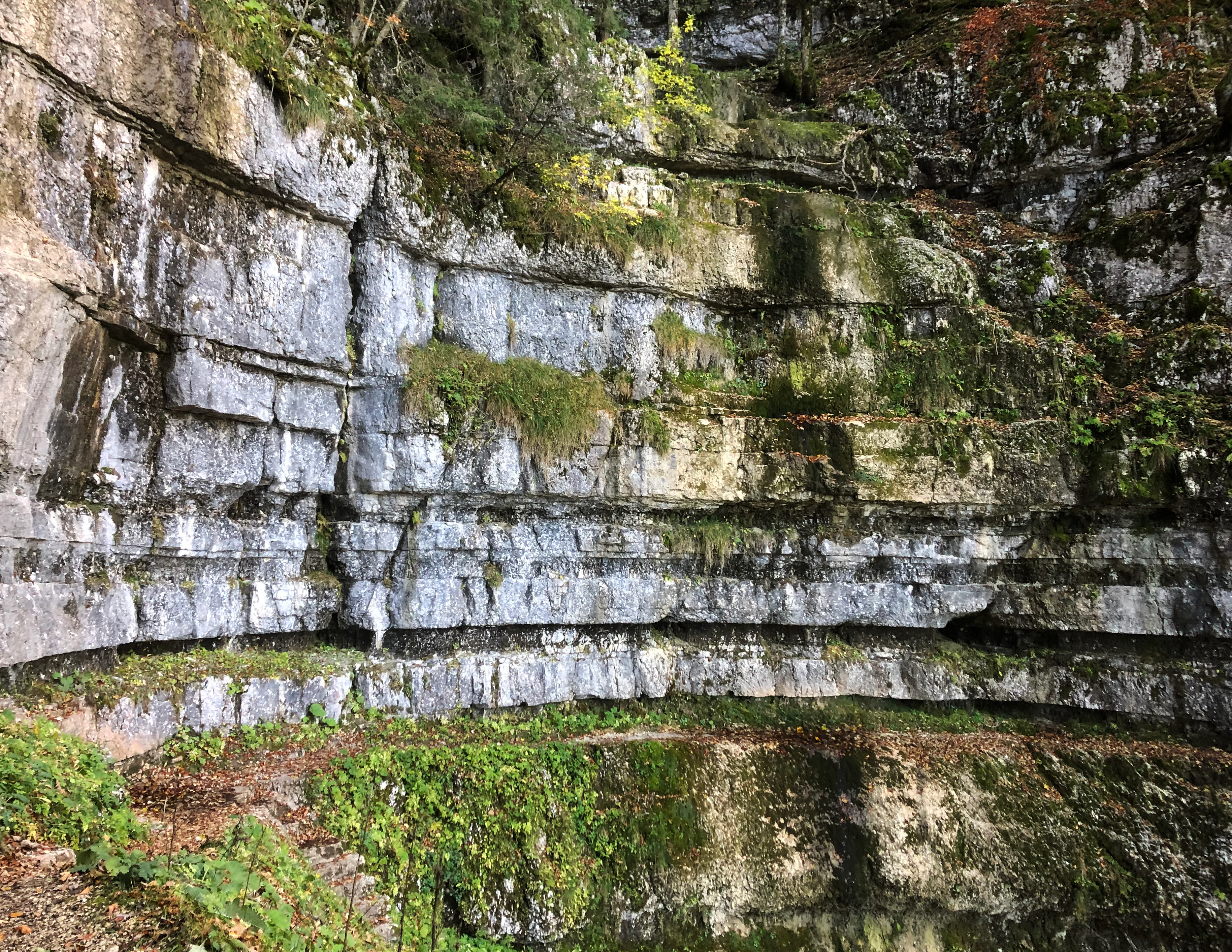
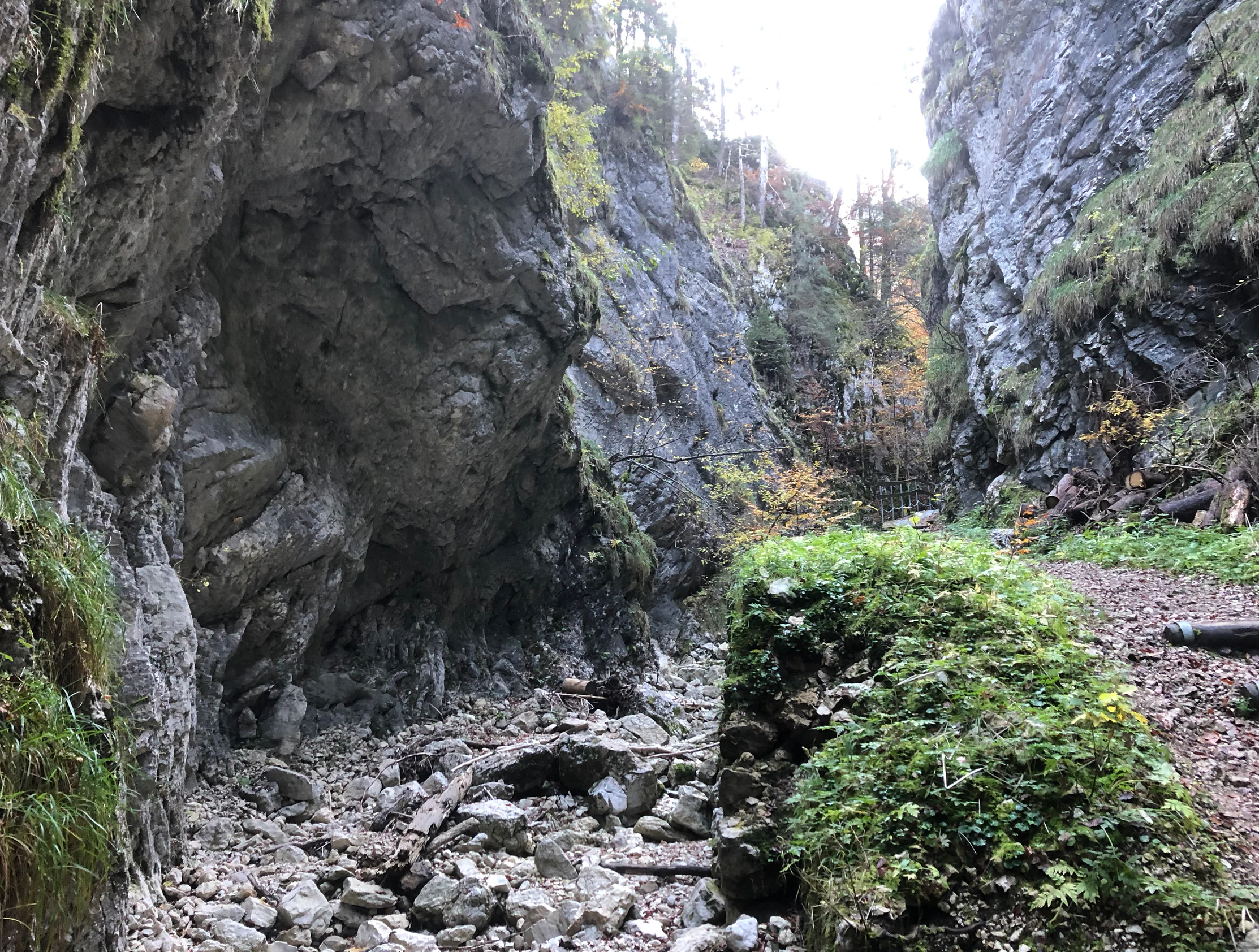
Combe Grède is known above all as a Jurassic geological showcase and a biodiversity island within an otherwise heavily used mountain landscape. Erosion has sliced through low anticlines running into the Chasseral thrust, exposing an instructive sequence of limestone and marl layers typical of the Folded Jura, while leaving a deep half-cluse with rock faces that rise up to roughly two hundred meters. The gorge is equally valued for its concentration of rare and relict vegetation, from Sesleria beech woods and the unusual Coronillo-Pinetum pine stands to dry alpine meadows with glacial relict species. Combined with habitats for chamois, marmots, capercaillie, peregrine falcons, golden eagles, and lynx, this mix of geology, morphology, and species richness gives Combe Grède a strong identity within Swiss protected-area networks.
Combe Grède history and protected-area timeline
The first recorded descent through the steep rocky passage in the upper part of the gorge dates to 1887. In 1904, the Chasseral subgroup of the Swiss Alpine Club's La Chaux-de-Fonds section built a demanding hiking trail from Villeret through the gorge up to the Chasseral, laying the foundations for long-distance use of the route. Today the Chemin de la Combe Grède remains a popular access from Villeret station onto the Chasseral and onto the Jura high trail, and forms part of the ViaBerna long-distance path; secondary trails cross the landscapes on either side of the gorge and lead to the 300-meter-high viewpoint of La Corne.
Conservation history began in 1931 with the founding of the association Parc jurassien de la Combe-Grède, which acted together with the Swiss League for the Protection of Nature (later Pro Natura) to defend the landscape and rare species against pressure from plant collectors. The following year, 1932, the upper gorge and surrounding area of around 700 hectares became the oldest nature reserve and hunting ban area of the Canton of Bern. In 1948 the protected zone was expanded southwestward to the cantonal border with Neuchâtel, adjoining the Neuchâtel reserve of Combe Biosse. A new cantonal protection order for the Combe Grède landscape was issued on 27 September 1957, and in 1972 the Forest Directorate of Bern placed the adjacent Pâturage de la Côte under protection as well. The Cantonal Forest Directorate established a 96-hectare strict forest reserve (Réserve forestière intégrale de la Combe-Grède/St-Jean) in 1982, including scientific monitoring of forest and biodiversity development; further possible extensions through additional forest areas were explored around 2003. The gorge trail itself is maintained by the local Groupement du sentier de la Combe-Grède in Villeret, which in 2000 received the 'Goldener Wegweiser' (Golden Signpost) award from Berner Wanderwege for exemplary path maintenance.
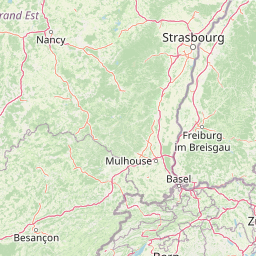
Combe Grède landscape and geographic character
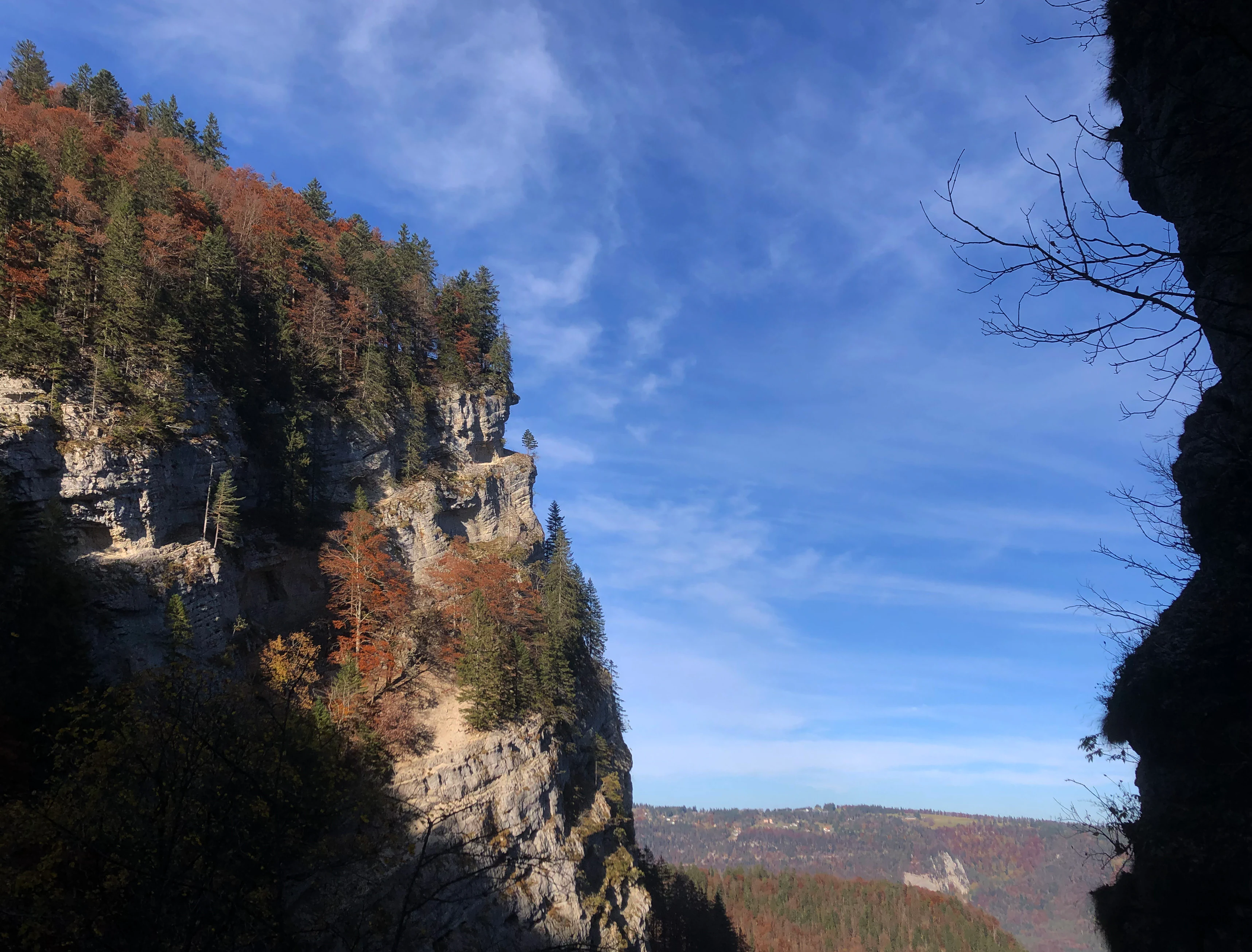
The Combe Grède landscape is defined by the dramatic contrast between the high, partially shaded cliffs of the Chasseral north face and the gentler pastureland and forest belt that lies below. Within the massif the gorge forms a weakly developed half-cluse, a deep cut shaped by water rather than by the full opening of an anticline. The upper part opens into a broad rock amphitheater between cliff faces that in places rise roughly two hundred meters above the streambed, while the lower section narrows into a steep rocky passage where the stream threads through the Villeret anticline.
On the surface the Chasseral is a karst massif, with much of its precipitation sinking into dolines rather than feeding visible streams. Combe Grède is unusual in retaining one of the few open watercourses, Le Bez, which tumbles through the gorge in cascades before spreading out over a debris cone and pastureland toward Villeret and the Schüss. The combination of exposed rock walls, talus, narrow gorge floor, wet cliff bases, and the surrounding forest belt creates a compact mosaic of microhabitats stacked into a relatively small area, with strong contrasts between sunny south-facing slopes, deeply shaded cliffs, wet streamside environments, and open alpine pastures higher up.
Combe Grède ecosystems, habitats, and plant life
The Combe Grède reserve is widely described as a biodiversity island within the Bernese Jura. Its ecological richness stems largely from the steep topographic relief and the resulting range of exposures: dry, sunlit south-facing rocks and slopes; cool, shaded north-facing cliffs; wet, humid zones along the stream; forest communities on the slopes; and alpine pastures above the gorge, each harboring different plant communities.
In the upper part of the reserve, the drier vegetation supports Sesleria beech woods (Seslerio-Fagetum), the rare pine association Coronillo-Pinetum, and a limestone-rock pioneer community in the Drabo-Seslerion alliance. The Pâturage de la Côte is one of the few sites in the Vallon de Saint-Imier where Scots pine (Föhre) survives as a glacial relict. Higher-quality dry meadows in the Petit Chasseral and Métairie de Saint-Jean area are listed in the Swiss Federal Inventory of Dry Meadows and Pastures of National Importance.
Along the stream in the lower part of the gorge, a moist ravine forest (Aceri-Fraxinetum) of beech, ash, and maple develops, with ferns including the mountain bladder fern, wild garlic, and round-leaved saxifrage; in some places a hart's-tongue maple woodland appears. The forest in and around the lower gorge was exploited with clear-cutting for charcoal production to supply the Jura ironworks, including the Von Roll ironworks, into the 19th century, and the present composition of spruce, maple, and elm stands partly reflects deliberate replanting. Forest use in the lower gorge continued until 1969, when a severe flood destroyed the access road near Villeret. Above the gorge, the Saint-Jean beech forest has been incorporated as a reference site in the ETH Zurich Swiss forest-monitoring program, used to track long-term changes in tree populations and biodiversity in strict forest reserves.
Combe Grède wildlife and species highlights
The mosaic of cliffs, forest, and pasture in and around Combe Grède supports a diverse range of fauna. The gorge and surrounding slopes are habitats for roe deer, chamois, marmots, capercaillie, peregrine falcons, and alpine foxes or hares, while the wider area lies within the territories of golden eagles and Eurasian lynx, species that have been focal to conservation attention in the Jura. From 1987 onward, bird surveys in the strict forest reserve documented 28 breeding bird species, with rock-nesting species such as the black redstart and the wallcreeper recorded in the high rock formations.
The combination of nesting cliffs, old-growth forest, and alpine pasture means that Combe Grède functions both as a breeding area and as a stepping stone in the larger Jura wildlife network. The presence of large predators and sensitive ground-nesting species such as capercaillie underlines the reserve's role beyond purely botanical protection, providing refuge for fauna strongly affected by disturbance and habitat fragmentation elsewhere in the region.
Combe Grède conservation status and protection priorities
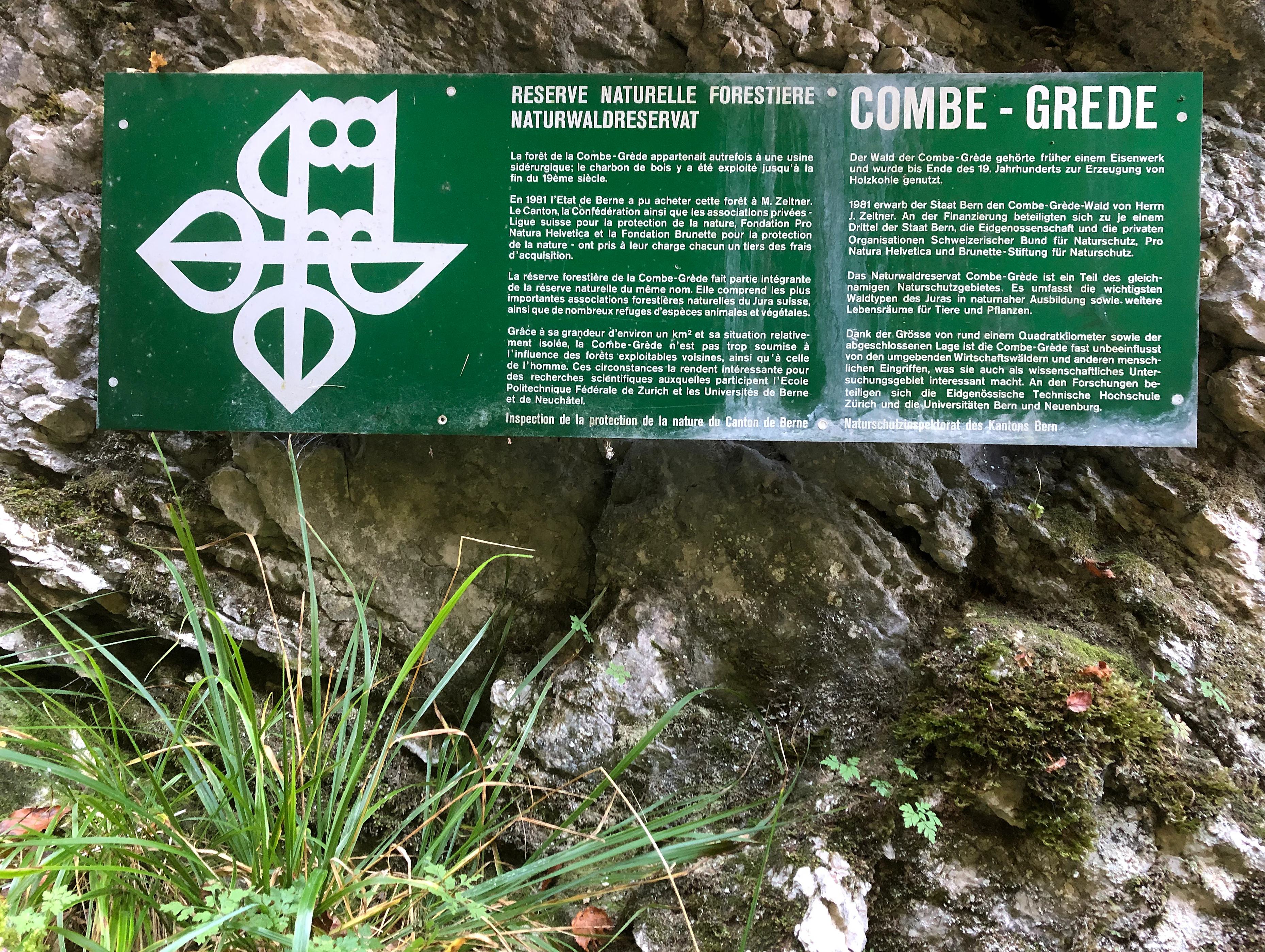
Combe Grède holds a foundational place in conservation history in the Canton of Bern. Designated in 1932, it is the oldest cantonal nature reserve and hunting ban area, established initially to defend the landscape and rare plants from the pressure of plant collectors organized under the Swiss League for the Protection of Nature. Successive enlargements in 1948 and 1957, followed by the 1972 protection of the adjoining Pâturage de la Côte, built the reserve into a multi-layered protection zone spanning parts of the municipalities of Villeret, Cormoret, and Saint-Imier, covering close to twelve square kilometers in total.
The reserve is recognized in the World Database on Protected Areas and sits within multiple national and regional protection frameworks: the Parc régional Chasseral, the BLN-listed Chasseral landscape (BLN object 1002), Pro Natura protection, and the strict 96-hectare Réserve forestière intégrale de la Combe-Grède/St-Jean established in 1982. The strict forest reserve has been the subject of long-term scientific monitoring of vegetation, avifauna, and forest dynamics, beginning with Bruno Kägi's 1985 vegetation mapping and Urs Schaffner's 1990 ornithological study, and continues to inform forest and biodiversity monitoring in Switzerland through the ETH-based program.
Combe Grède cultural meaning and human context
The name Combe Grède combines the French word 'combe', meaning valley, with the surname Grède, documented since the 16th century in Villeret and associated with families that held forest-use rights in the gorge. The site sits in a historical linguistic borderland between Swiss German and French-speaking regions, which is reflected in the now mostly superseded older German place name 'Combeloch' recorded for the same gorge into the early 20th century.
Industrial use for charcoal production tied the gorge economically to the Jura iron industry in the 19th century, and forest exploitation in the lower gorge continued, by some accounts, into the late 1960s. This working landscape was gradually transformed into one of Switzerland's earliest large nature reserves, with conservation associations, the Swiss Alpine Club, and local volunteer groups collectively shaping both the protection framework and the famous footpath that still runs from Villeret up through the gorge onto the Chasseral.
Top sights and standout views in Combe Grède
Combe Grède stands out for the combination of a deeply cut half-cluse gorge with continuous cliff faces up to roughly two hundred meters, exposed Cretaceous-to-Hauptrogenstein rock sequences that make it a teaching site for the geology of the Folded Jura, and a tightly packed mosaic of contrasting habitats including Sesleria beech woods, rare Coronillo-Pinetum pine stands, moist ravine forest with maples and ashes, and species-rich dry alpine meadows.
From a conservation perspective, the gorge's importance lies in being the oldest cantonal nature and hunting reserve of Bern, layered into a larger network that includes a strict forest reserve, Pro Natura protection, the Parc régional Chasseral, and the BLN-listed Chasseral landscape. Its built heritage, the historic mountaineering path from Villeret through the gorge to the Chasseral, adds a human dimension that connects the natural values of the reserve with the long tradition of Jura hiking and regional identity.
Best time to visit Combe Grède
The exploratory footpath through the gorge is open only in summer and is maintained by a local volunteer group, making the warm months the natural season for experiencing the full vertical sequence of the gorge. Late spring and early summer are typically favorable for the surrounding alpine meadows and forest reserves, when relic species in the dry meadows at Petit Chasseral and the pastures near Pré aux Auges are most evident, while summer high season offers the most reliable conditions for the climbing-assisted sections that use fixed ladders, chains, and steps along the rock walls.
Winter transforms Combe Grède into a colder, quieter environment: the shaded rock faces receive little sunlight, the cascades of Le Bez freeze into ice formations, and streamflow can drop sharply or cease altogether during dry spells. Heavy rainfall in any season can trigger debris flows that block paths in the narrows, so visitors should expect conditions in the gorge to reflect the volatility typical of steep karst terrain in the Jura.