Why Deh Akro-II Desert Wetland Complex stands out
Deh Akro-II is best known for its unusual combination of desert and wetland ecosystems within a single protected area. The site's interdunal valleys hold freshwater and brackish lakes amid sandy terrain, creating habitat conditions that support species often absent from arid landscapes. The complex is also recognized for its role in sustaining globally significant biodiversity, including over twenty thousand waterbirds, the endangered mugger crocodile, and the Indian hog deer. Its triple designation as a wildlife sanctuary, Ramsar site, and Important Bird and Biodiversity Area underlines its standing as one of the most ecologically important wetland complexes in Sindh.
Deh Akro-II Desert Wetland Complex history and protected-area timeline
Deh Akro-II has a relatively compact but layered protection history that reflects growing recognition of its environmental importance. Until the late twentieth century, the site functioned largely as an undifferentiated section of the central Sindh landscape, where arid terrain, irrigation-fed lakes, and local villages coexisted without a formal conservation identity.
In 1988, the area was officially declared a wildlife sanctuary, marking the first formal acknowledgment of its ecological value and placing it under the management of the Sindh Wildlife Department. This designation laid the groundwork for more systematic conservation interventions, although broader international recognition came only later.
A decisive step came in 2000, when WWF-Pakistan supported efforts to assess the site's suitability under international wetland criteria. By 2002, the complex had met Ramsar criteria 1 through 6 and criterion 8, leading to its designation as a Ramsar Wetland of International Importance. Two years afterward, in 2004, BirdLife International assessed the area as meeting IBA criteria A1 and A4iii, adding it to the global network of Important Bird and Biodiversity Areas.
Alongside these formal milestones, the sanctuary's hydrological history has been one of gradual contraction. The number of lakes within the complex declined from 45 in 1988 to 36 in 2003 and reportedly to 32 by 2021, a trajectory that has shaped ongoing conservation attention and reshaped how the surviving wetlands are valued.
Deh Akro-II Desert Wetland Complex landscape and geographic character
The landscape of Deh Akro-II is defined by the striking coexistence of sand and water. Sandy terrain shaped into dunes and broader desert patches dominates the visual geography, with average dune heights in the range of five to ten meters. These dry formations are interrupted by flat interdunal valleys, which act as natural collection points for water and wetland habitat.
Within these valleys, lakes form an irregular network of shallow waterbodies, combining freshwater and brackish systems. The freshwater lakes are limited in number, while most of the remaining lakes carry elevated salt levels from sustained evaporation and irrigation-driven mineral accumulation. Beyond their hydrochemical character, the lakes vary in size and permanence, with some contracting visibly across decades due to declining water inflows.
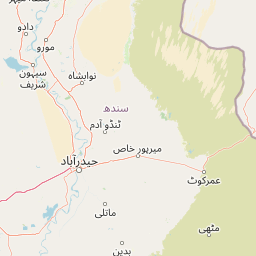
The broader landscape also incorporates substantial agricultural land and marshy areas, blending natural and human-shaped environments. Settlements within and around the complex, including Kunjwaro, Nathantal, Lalantar, Drigadaro, Pokhal-wari, and Husayfakir, are part of the geographical setting. To the northeast, the complex borders the Nara Desert, linking this protected wetland system to the wider Thar Desert landscape of Sindh. The terrain sits at a relatively low elevation of about fifty meters, reinforcing its character as a flat, arid-to-wetland transitional zone rather than a highland environment.
Deh Akro-II Desert Wetland Complex ecosystems, habitats, and plant life
Ecologically, Deh Akro-II functions as a transition zone where harsh, sandy desert conditions meet freshwater and brackish wetland systems. The juxtaposition of four distinct habitat types: marshlands, agricultural land, sandy desert, and open wetlands, defines the site's ecological identity. This variety allows species from very different environments to find refuge within the same protected boundary.
The wetlands are the ecological heart of the complex, supporting fish communities, aquatic reptiles, amphibians, and a remarkably dense waterbird population. The surrounding agricultural land adds feeding and roosting opportunities, while the dunes host reptiles and small mammals adapted to arid conditions. Together, these ecological layers produce one of the more biodiverse protected landscapes in Sindh despite the region's overall aridity.
The wetland ecosystem is fundamentally dependent on external water inputs from the Nara Canal and from rainfall, making the system sensitive to changes in irrigation flows and precipitation patterns. The long-term decline in the number of lakes, from forty-five in 1988 to thirty-two by 2021, reflects how tightly ecological integrity is tied to water availability in this environment.
Deh Akro-II Desert Wetland Complex wildlife and species highlights
Deh Akro-II supports a wide animal community shaped by the unusual overlap of desert and wetland habitats. The sanctuary hosts fourteen recorded fish species, sixteen reptilian species, eighteen mammalian species, and 101 avian species, with peak waterbird counts exceeding twenty thousand individuals. This rich fauna reflects the site's importance as both a refuge and a seasonal gathering point for wildlife.
Among the most ecologically significant animals is the mugger crocodile, Pakistan's national reptile, which inhabits the lakes, marshes, and swamps of the complex. Although historically a defining species of the area, the mugger population has suffered severe decline, with conservation assessments documenting roughly a ninety percent reduction over recent decades due to poaching, habitat loss, and water shortages. Smooth-coated otters also occupy the wetland margins, alongside waterfowl that use the lakes as feeding and breeding grounds.
Birds are arguably the most visible wildlife asset of the sanctuary. Notable species include the oriental darter, garganey, and black ibis, alongside recognized endangered visitors such as the ferruginous duck. Mammalian fauna ranges from desert specialists like the Balochistan gerbil, Indian desert jird, and desert wildcat to more habitat-flexible species such as the golden jackal, jungle cat, Indian hog deer, Indian hare, and Eurasian wild pig. Reptile diversity mirrors the dual desert-wetland nature of the site, combining desert lizards such as the Persian long-tailed desert lizard with aquatic reptiles like the spotted pond turtle and mugger crocodile.
Deh Akro-II Desert Wetland Complex conservation status and protection priorities
Conservation at Deh Akro-II operates across multiple overlapping designations that together reflect the site's ecological importance. Its 1988 declaration as a wildlife sanctuary provided the first formal protection framework, while its 2002 Ramsar designation brought international recognition of its wetland values, and its 2004 inclusion as an Important Bird and Biodiversity Area highlighted its ornithological significance. Managed by the Sindh Wildlife Department, the site benefits from this layered institutional backing.
The sanctuary's most pressing conservation concern is water availability. With lakes reduced from forty-five in 1988 to thirty-two by 2021, the ecological foundations of the site are increasingly vulnerable. The mugger crocodile has experienced one of the steepest declines, highlighting how species dependent on stable wetlands suffer first under hydrological stress.
Conservation significance at Deh Akro-II also extends to its rare and endangered species, including the Indian hog deer, ferruginous duck, and several waterbirds of global conservation concern. The site demonstrates how a single protected area can preserve both desert-adapted and wetland-dependent biodiversity, making it a valuable reference point for wetland conservation policy in arid regions of South Asia.
Deh Akro-II Desert Wetland Complex cultural meaning and human context
Deh Akro-II is closely integrated with the human geography of central Sindh. Several villages, including Kunjwaro, Nathantal, Lalantar, Drigadaro, Pokhal-wari, and Husayfakir, lie within or near the complex, with local communities historically tied to the same water systems that sustain the wetlands. The Nara Canal, a major Indus-fed irrigation artery, supports both agriculture and the sanctuary's lakes, binding local livelihoods and ecological processes together.
This shared hydrological foundation gives the site cultural as well as ecological meaning, embedding the wetland complex into the agricultural and rural identity of Shaheed Benazirabad District.
Top sights and standout views in Deh Akro-II Desert Wetland Complex
The Deh Akro-II Desert Wetland Complex stands out for the rarity of a Ramsar site that simultaneously protects desert dunes and functioning inland lakes. Within a single protected boundary, the site preserves marshes, agricultural land, sandy desert, and wetland lakes that collectively host more than twenty thousand waterbirds, eighteen mammal species, sixteen reptile species, and fourteen fish species.
Its triple recognition as a wildlife sanctuary, Ramsar site, and Important Bird and Biodiversity Area gives it international resonance, while the dramatic decline of the mugger crocodile within the complex has made it a symbol of the conservation challenges facing arid wetlands in South Asia. The integration of villages and irrigation-fed lakes also makes Deh Akro-II a notable example of a wetland shaped by both natural and human hydrological systems.
Best time to visit Deh Akro-II Desert Wetland Complex
The character of Deh Akro-II shifts notably with the seasons because the wetlands depend on rainfall and Indus-fed irrigation inflows. Cooler, drier months tend to offer more comfortable conditions for exploring the arid dunes and observing wildlife around the lakes, when water levels are more stable and visibility is better.
The post-monsoon period is often associated with fuller lakes and higher waterbird activity, as migrants and resident species concentrate around the remaining waterbodies. Extreme summer heat can make the desert sections harder to access comfortably, while unusually dry periods may expose reduced lake extents, affecting the overall landscape experience.