Why Dwunastak Nature Reserve stands out
The reserve is known for protecting a compact fragment of lowland oak-hornbeam forest (grąd) combined with riparian floodplain woodland (łęg) and mixed forest stands that retain natural community characteristics. Its position inside a landscape park and two Natura 2000 sites also makes it a notable reference point for forest conservation in the Wielkopolska region.
Dwunastak Nature Reserve history and protected-area timeline
The reserve was created on 5 May 1959 by order of the Minister of Forestry and the Wood Industry, with the official designation published in the Polish legal gazette later that year. The original founding document described the reserve as protecting a fragment of lowland oak-hornbeam forest, riparian floodplain forest, and mixed forest with natural community features, intended for scientific and educational use.
Since its establishment, the reserve has been reaffirmed through successive legal acts and announcements, and in 2007 a formal protection plan was introduced by the voivode of Wielkopolska. That plan established the reserve's active conservation regime, replacing the founding area figure with a slightly smaller official size, and organizing ongoing management by the regional environmental protection authority and the Jarocin Forest District.
Dwunastak Nature Reserve landscape and geographic character
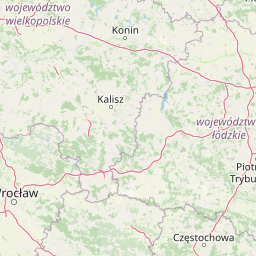
Dwunastak lies in the Kotlina Śremska, a lowland mesoregion shaped by the Warta river system and characterized by gentle relief, fertile post-glacial soils, and a mosaic of agricultural land, managed forests, and riverine corridors. Within this lowland setting, the reserve itself is a small, flat to gently undulating forested patch, defined by its woodland communities rather than dramatic topography.
The site sits within the wider landscape of the Żerkowo-Czeszewski Landscape Park, where the terrain alternates between broad agricultural plains, low moraine hills, river valleys, and extensive forest tracts. This surrounding landscape gives Dwunastak its broader geographic character, anchoring it within the larger natural setting of the middle Warta valley.
Dwunastak Nature Reserve ecosystems, habitats, and plant life
The reserve protects forest communities that are characteristic of the lowland Wielkopolska environment, especially lowland oak-hornbeam forest on more stable sites and riparian floodplain forest in moister, river-influenced positions. Mixed forest stands round out the community composition, and the combination reflects a forest mosaic considered representative of natural woodland patterns in central Poland.
The vascular plant flora of about 172 species suggests a relatively rich ground layer and understorey for such a compact forest area, supporting the site value for habitat-based conservation. The reserve's location within the Natura 2000 habitat site of Lasy Żerkowsko-Czeszewskie further reinforces its recognition as part of a broader habitat network.
Dwunastak Nature Reserve wildlife and species highlights
The reserve hosts at least 35 recorded bird species, including the common crane and the middle spotted woodpecker, both of which are indicators of mature, structurally diverse forest habitat. Its inclusion in the Dolina Środkowej Warty Natura 2000 bird area reflects broader ornithological significance beyond the reserve's small footprint.
Bats are also an important element of the reserve's fauna, with six recorded species including the western barbastelle, a species sensitive to forest structure and roost availability. The presence of both forest-dependent birds and a diverse bat assemblage underlines the conservation value of retaining natural forest character within an otherwise heavily managed lowland landscape.
Dwunastak Nature Reserve conservation status and protection priorities
Dwunastak is significant for conservation not only as a stand-alone reserve but as a component of a layered protection network. It sits inside the Żerkowo-Czeszewski Landscape Park and overlaps with two Natura 2000 sites, the habitat area PLH300053 (Lasy Żerkowsko-Czeszewskie) and the bird area PLB300002 (Dolina Środkowej Warty), giving it recognition within both Polish and European conservation frameworks.
The reserve operates under an active conservation plan established in 2007, and a surrounding buffer zone of about 14.14 hectares extends protective influence outward from the core 9.20 hectare area. This combination of small core, larger buffer, landscape park context, and Natura 2000 overlap reflects a tiered approach to protecting natural lowland forest communities in the Wielkopolska region.
Dwunastak Nature Reserve cultural meaning and human context
The reserve's cultural context is closely tied to the long history of forest management in the Wielkopolska lowlands and the role of protected forest fragments in scientific and educational work. By its founding charter, Dwunastak was intended not only for habitat protection but also for scientific study and teaching, reflecting the post-war Polish tradition of using small nature reserves as living laboratories for understanding native forest communities.
Top sights and standout views in Dwunastak Nature Reserve
A compact Wielkopolska forest reserve protecting lowland oak-hornbeam, riparian, and mixed woodland communities within a layered landscape park and Natura 2000 framework. Notable for its documented vascular plant richness, forest-dependent bird species such as the middle spotted woodpecker, and a bat fauna that includes the western barbastelle, all within a footprint of roughly nine hectares.