Mori Atlas logo
Nature reserveRezerwat przyrody Dwunastak

Understanding the woodland conservation value and riverine terrain of this Wielkopolska nature reserve.

Rezerwat przyrody Dwunastak: Geographic Map and Protected Forest Landscape Analysis

Rezerwat przyrody Dwunastak represents a vital protected forest enclave located in the Wielkopolska region of west-central Poland. This nature reserve, nested within the larger Żerkowo-Czeszewski Landscape Park and overlapping with international Natura 2000 ecological corridors, preserves lowland oak-hornbeam and riparian woodland communities. The site serves as a key reference for studying forest habitat conservation and floodplain ecological dynamics within the Kotlina Śremska lowland mesoregion.

forest reservelowland forestoak-hornbeam forestriparian forestmixed woodlandNatura 2000

Rezerwat przyrody Dwunastak

Nature reserve

Park overview

Structured park overview, official facts, and landscape profile for Dwunastak Nature Reserve

Dwunastak Nature Reserve park facts, protected area profile, and essential visitor context

Review the core facts for Dwunastak Nature Reserve, including designation, size, terrain, visitor scale, habitats, and operating context in one park-focused overview.

About Dwunastak Nature Reserve

Dwunastak Nature Reserve is a small protected forest area in the heart of the Wielkopolska lowlands, established to safeguard representative examples of natural lowland woodland on the scale allowed by its modest area. The reserve lies within the broader protective framework of the Żerkowo-Czeszewski Landscape Park, which provides a much larger surrounding matrix of protected landscape that helps buffer the small core area.

The protected forests of Dwunastak include elements of lowland oak-hornbeam forest, a community typical of fertile, well-drained lowland sites across much of central Poland, as well as riparian floodplain forest influenced by the Warta river system, and mixed woodland that retains natural community structure. The reserve is also part of two Natura 2000 areas, which gives it standing in the broader European network of protected habitats and bird sites.

Ecologically, the site has been documented as supporting a rich vascular plant flora, with around 172 species recorded, and a diverse fauna that includes at least 35 bird species and 6 bat species. These figures reflect how even a small forest reserve, when it retains natural community characteristics, can host disproportionately high biodiversity compared with surrounding managed woodlands.

Quick facts and research context for Dwunastak Nature Reserve

Dwunastak is a phytocenotic forest reserve of the forest community subtype, located in the Kotlina Śremska mesoregion of the Wielkopolska lowlands. It was established in 1959, covers approximately 9.20 hectares, and is surrounded by a buffer zone of about 14.14 hectares. Administratively it lies within the Żerkowo-Czeszewski Landscape Park and overlaps with Natura 2000 sites PLH300053 (Lasy Żerkowsko-Czeszewskie) and PLB300002 (Dolina Środkowej Warty). It is managed by the Jarocin Forest District under an active protection regime.

Park context

Deeper park guide and search-rich context for Dwunastak Nature Reserve

Dwunastak Nature Reserve history, landscape, wildlife, and travel context

Explore Dwunastak Nature Reserve through its history, landscape character, ecosystems, wildlife, conservation priorities, cultural context, and seasonal travel timing in a structured park guide built for atlas discovery and search intent.

Why Dwunastak Nature Reserve stands out

The reserve is known for protecting a compact fragment of lowland oak-hornbeam forest (grąd) combined with riparian floodplain woodland (łęg) and mixed forest stands that retain natural community characteristics. Its position inside a landscape park and two Natura 2000 sites also makes it a notable reference point for forest conservation in the Wielkopolska region.

Dwunastak Nature Reserve history and protected-area timeline

The reserve was created on 5 May 1959 by order of the Minister of Forestry and the Wood Industry, with the official designation published in the Polish legal gazette later that year. The original founding document described the reserve as protecting a fragment of lowland oak-hornbeam forest, riparian floodplain forest, and mixed forest with natural community features, intended for scientific and educational use.

Since its establishment, the reserve has been reaffirmed through successive legal acts and announcements, and in 2007 a formal protection plan was introduced by the voivode of Wielkopolska. That plan established the reserve's active conservation regime, replacing the founding area figure with a slightly smaller official size, and organizing ongoing management by the regional environmental protection authority and the Jarocin Forest District.

Dwunastak Nature Reserve landscape and geographic character

Dwunastak lies in the Kotlina Śremska, a lowland mesoregion shaped by the Warta river system and characterized by gentle relief, fertile post-glacial soils, and a mosaic of agricultural land, managed forests, and riverine corridors. Within this lowland setting, the reserve itself is a small, flat to gently undulating forested patch, defined by its woodland communities rather than dramatic topography.

The site sits within the wider landscape of the Żerkowo-Czeszewski Landscape Park, where the terrain alternates between broad agricultural plains, low moraine hills, river valleys, and extensive forest tracts. This surrounding landscape gives Dwunastak its broader geographic character, anchoring it within the larger natural setting of the middle Warta valley.

Dwunastak Nature Reserve ecosystems, habitats, and plant life

The reserve protects forest communities that are characteristic of the lowland Wielkopolska environment, especially lowland oak-hornbeam forest on more stable sites and riparian floodplain forest in moister, river-influenced positions. Mixed forest stands round out the community composition, and the combination reflects a forest mosaic considered representative of natural woodland patterns in central Poland.

The vascular plant flora of about 172 species suggests a relatively rich ground layer and understorey for such a compact forest area, supporting the site value for habitat-based conservation. The reserve's location within the Natura 2000 habitat site of Lasy Żerkowsko-Czeszewskie further reinforces its recognition as part of a broader habitat network.

Dwunastak Nature Reserve wildlife and species highlights

The reserve hosts at least 35 recorded bird species, including the common crane and the middle spotted woodpecker, both of which are indicators of mature, structurally diverse forest habitat. Its inclusion in the Dolina Środkowej Warty Natura 2000 bird area reflects broader ornithological significance beyond the reserve's small footprint.

Bats are also an important element of the reserve's fauna, with six recorded species including the western barbastelle, a species sensitive to forest structure and roost availability. The presence of both forest-dependent birds and a diverse bat assemblage underlines the conservation value of retaining natural forest character within an otherwise heavily managed lowland landscape.

Dwunastak Nature Reserve conservation status and protection priorities

Dwunastak is significant for conservation not only as a stand-alone reserve but as a component of a layered protection network. It sits inside the Żerkowo-Czeszewski Landscape Park and overlaps with two Natura 2000 sites, the habitat area PLH300053 (Lasy Żerkowsko-Czeszewskie) and the bird area PLB300002 (Dolina Środkowej Warty), giving it recognition within both Polish and European conservation frameworks.

The reserve operates under an active conservation plan established in 2007, and a surrounding buffer zone of about 14.14 hectares extends protective influence outward from the core 9.20 hectare area. This combination of small core, larger buffer, landscape park context, and Natura 2000 overlap reflects a tiered approach to protecting natural lowland forest communities in the Wielkopolska region.

Dwunastak Nature Reserve cultural meaning and human context

The reserve's cultural context is closely tied to the long history of forest management in the Wielkopolska lowlands and the role of protected forest fragments in scientific and educational work. By its founding charter, Dwunastak was intended not only for habitat protection but also for scientific study and teaching, reflecting the post-war Polish tradition of using small nature reserves as living laboratories for understanding native forest communities.

Top sights and standout views in Dwunastak Nature Reserve

A compact Wielkopolska forest reserve protecting lowland oak-hornbeam, riparian, and mixed woodland communities within a layered landscape park and Natura 2000 framework. Notable for its documented vascular plant richness, forest-dependent bird species such as the middle spotted woodpecker, and a bat fauna that includes the western barbastelle, all within a footprint of roughly nine hectares.

Monthly climate preview

Long-term temperature ranges and precipitation averages recorded at the representative coordinate

Rezerwat przyrody Dwunastak Climate Normals and Monthly Weather Patterns

Representative point records indicate measured mean monthly temperatures ranging from sub-zero winter lows to warm summer maximums alongside steady precipitation rates. Reviewing the complete twelve-month dataset clarifies long-term thermal rhythms and moisture distribution across the protected area.
Annual mean9 °C
-2 °C20 °C
Jan-2°
Feb-1°
Mar
Apr
May14°
Jun18°
Jul20°
Aug20°
Sep15°
Oct
Nov
Dec-1°
Warmest month
July

20.4 °C

Coolest month
January

-2.3 °C

Wettest month
July

2.5 mm/day

Driest month
April

1.1 mm/day

Park location guide

Geography guide, regional context, and park location map for Dwunastak Nature Reserve

Dwunastak Nature Reserve park geography, regions, and map view in Poland

Understand where Dwunastak Nature Reserve sits in Poland through a broader geographic reading of the surrounding landscape, nearby location context, and its mapped position within the national park landscape.

How Dwunastak Nature Reserve fits into Poland

Poland, officially the Republic of Poland, is a Central European country spanning from the Baltic Sea in the north to the Carpathian Mountains in the south. It borders Germany, Czech Republic, Slovakia, Ukraine, Belarus, Lithuania, and Kaliningrad Oblast. The country has a temperate climate, diverse landscapes, and is known for its rich history, cultural heritage, and strong economic position within the EU.

Wider geography shaping Dwunastak Nature Reserve in Poland

Poland occupies 312,696 km2 in Central Europe, extending from the Baltic Sea coast in the north to the Sudetes and Carpathian Mountains in the south. It borders Germany to the west, Czech Republic and Slovakia to the south, Ukraine and Belarus to the east, and Lithuania and Kaliningrad Oblast to the northeast. The landscape includes lowland plains, uplands, and mountain ranges.

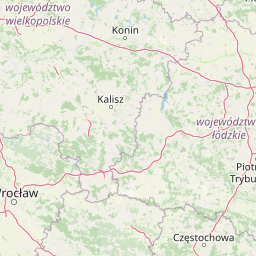
Map view of Dwunastak Nature Reserve

Use this park location map to pinpoint Dwunastak Nature Reserve in Poland, understand its exact geographic position, and read its mapped placement within the surrounding landscape more clearly.

Pigeon | © OpenStreetMap contributors
Park atlas

Compare regional forest reserves and connected lowland protected landscapes

Explore Other Parks and Protected Areas Near Rezerwat przyrody Dwunastak

Browsing nearby national parks and protected areas allows researchers to compare lowland forest ecosystems across the surrounding region. Extending the geographic review provides deeper insight into adjacent woodland habitats and regional conservation networks.
Protected landscapeGreater Poland Voivodeship
About 5 km away#1 closest

South

Żerkowsko-Czeszewski Park Krajobrazowy Protected Landscape: Map and Geographic Overview

Glacial river valleys and moraine hills in Greater Poland

The Żerkowsko-Czeszewski Park Krajobrazowy protects a diverse range of lowland terrains, from the broad Warta River floodplain to the elevated moraine ridges known locally as the Swiss Żerków. This protected area serves as a vital corridor for riparian forests and avian habitats, framed by historic cultural sites across the Greater Poland Voivodeship landscape. Access detailed geographic insights into the riverine networks, forest reserves, and moraine formations that define this notable Polish protected area.

Area
157.95 km²
Established
1994
Relief
Upland
Climate
Temperate
A soft watercolor painting of a serene wetland landscape with scattered deciduous trees, low grassy banks, and calm water, rendered in light green and muted earth tones against a white background.
Nature reserveGreater Poland Voivodeship
About 8.8 km away#2 closest

South

Dębno nad Wartą Nature Reserve: Geographic Profile and Protected Landscape Boundaries

Riparian forest sanctuary in the Warta river valley.

Located in the heart of the Greater Poland Voivodeship, this faunistic nature reserve protects a vital fragment of lowland floodplain forest. The site is defined by its complex oak, ash, and elm canopy, which supports rare invertebrate populations rarely found in the broader surrounding region. This atlas entry provides a detailed look at its protected boundaries, hydrologic landscape, and integral role within the Warta river corridor.

Area
0.217 km²
Established
1974
Relief
Lowland
Climate
Temperate
A horizontal watercolor painting depicting a wide river flowing through a lush landscape with distant rolling hills and a soft pink sky.
Nature reserveWielkopolska Voivodeship
About 20 km away#3 closest

West

Ostoja Rogalińska: Protected Nature Reserve and Glacial Terrain in Wielkopolska Voivodeship

Mapped riparian corridors, moraine ridges, and bird habitats.

Ostoja Rogalińska offers a detailed look at lowland glacial morphology, featuring twelve mapped lakes, wandering inland dunes, and the extensive Warta River floodplain. This protected area within Wielkopolska Voivodeship preserves ancient pedunculate oaks alongside diverse wetland and forest ecosystems, providing a clear geographic view of one of the region's most important Natura 2000 bird sanctuaries.

Area
217.63 km²
Established
2007
Relief
Lowland
Climate
Temperate
Nature reserveGreater Poland Voivodeship
About 27 km away#4 closest

North

Rezerwat przyrody Modrzew Polski w Noskowie: Protected Landscape and Regional Atlas

Floristic nature reserve in Greater Poland Voivodeship

Rezerwat przyrody Modrzew Polski w Noskowie stands as a landmark for botanical conservation in central Europe. The reserve protects a population of Polish larch within the lowland pine forests of the Wrzesnia Plain, providing a critical example of regional ecological protection efforts that have expanded significantly since the mid-twentieth century.

Area
0.01 km²
Established
1954
Relief
Lowland
Scope
Terrestrial
A soft, abstract watercolor painting showing rolling green hills, distant mountains, and a field under a white sky.
Protected areaGreater Poland Voivodeship
About 32 km away#5 closest

Northwest

Ostoja koło Promna Protected Area: Geography, Lakes, and Forest Habitat Map

A detailed look at the postglacial lowland landscape of Wielkopolska

Ostoja koło Promna serves as a primary example of protected lowland hydrology and broadleaf woodland in the Greater Poland Voivodeship. Integrating three distinct nature reserves, the site preserves essential aquatic and forest-interior habitats for rare amphibians and waterbirds. This overview provides a structured geographic analysis of the terrain and ecological boundaries forming this significant protected zone.

Area
13.99 km²
Established
2011
Relief
Lowland
Scope
Terrestrial
Watercolor painting of a calm pond with green trees on the banks, reeds in the foreground, and distant rolling hills.
Nature reservePoland
About 40 km away#6 closest

Southwest

Rezerwat przyrody Miranowo: Protected Peatland Ecosystem and Botanical Nature Reserve

A preserved wetland landscape in the Polish lake country

Located near the shores of Lake Dolskie Wielkie, Rezerwat przyrody Miranowo represents a significant protected area focused on the conservation of rare calcareous peatland habitats. The reserve sustains a dense collection of over 230 vascular plant species, offering a unique opportunity to study relict vegetation in a managed wetland environment within Poland.

Area
0.099 km²
Established
1972
Relief
Lowland
Climate
Temperate
National parkWielkopolska Voivodeship
About 44 km away#7 closest

West

Wielkopolski Park Narodowy: Protected Glacial Landscapes and Regional Geography in Poland

Post-glacial moraine systems and lake basins

Wielkopolski Park Narodowy captures a dense collection of post-glacial landforms, from rolling moraine uplands to clear kettle lakes and esker ridges. This protected area offers a deep look into the geomorphological history of the Wielkopolska region through its varied forest habitats and preserved terrain.

Area
75.84 km²
Established
1957
Visitors
1.2M annual
Relief
Lowland
Nature reserveGreater Poland Voivodeship
About 48 km away#8 closest

Northwest

Uroczyska Puszczy Zielonki: Protected Nature Reserve and Glacial Landscape Context

Key protected area in the Poznan Lake District, Poland

Uroczyska Puszczy Zielonki consists of four distinct enclaves that safeguard diverse aquatic and forest ecosystems. The geography is shaped by the Poznan Lake District, featuring a mix of calcareous fens, acidophilous oak woods, and eutrophic lake basins. This site serves as a critical conservation corridor, offering valuable insight into the glacial origins and hydrologic patterns of west-central Poland.

Area
14.96 km²
Established
2011
Relief
Lowland
Climate
Temperate

Common questions about visiting, size, designation, and location context for Dwunastak Nature Reserve

Dwunastak Nature Reserve FAQs for park facts, access, geography, and protected area context

Find quick answers about Dwunastak Nature Reserve, including protected-area facts, park geography, trail and visitor context, and how the park fits into its surrounding country and regional landscape.
MoriAtlas Explorer

Continue Your Protected Areas Search Across the Global Atlas

Deepen your exploration by continuing the structured search for national parks and protected areas worldwide. Utilize the comprehensive filtering capabilities to compare different conservation landscapes and refine your understanding of global park geography. Discover more about the distribution and characteristics of protected natural areas.

Global natural geography