

Mori Atlas logo
National parkGawler Ranges National Park

Discover the geographic identity and mapped park boundaries within this South Australian national park.

Gawler Ranges National Park: Explore South Australia's Mapped Protected Landscape

Gawler Ranges National Park represents a distinct protected landscape within the vast geography of South Australia. As a designated national park, its mapped boundaries offer a clear point of focus for understanding regional landforms and conservation areas. This page serves as an atlas-oriented entry to exploring the park's unique geographic setting, its place within the broader Australian landscape, and the opportunities for structured geographic discovery it provides.

Rock formationsSemi-arid rangelandAncient geologyBirdwatchingMarsupialsNational park

Gawler Ranges National Park

National park

Park overview

Structured park overview, official facts, and landscape profile for Gawler Ranges National Park

Gawler Ranges National Park park facts, protected area profile, and essential visitor context

Review the core facts for Gawler Ranges National Park, including designation, size, terrain, visitor scale, habitats, and operating context in one park-focused overview.

About Gawler Ranges National Park

Gawler Ranges National Park occupies a significant tract of northern Eyre Peninsula in South Australia, protecti ng an ancient landscape of extraordinary geological character and ecological resilience. The Gawler Ranges represent a mountainous region of Precambrian age, with rock formations among the oldest on the Australian continent. Over millennia, erosion and weathering have sculpted the terrain into dramatic ridges, rocky bluffs, and sheltered valleys that define the park's distinctive character. The landscape rises from relatively flat surrounding plains to form a rugged interior of steep-sided hills and granite outcrops, creating a sense of remote and ancient beauty.

The park's establishment in 2002 marked a transition from decades of pastoral use to formal conservation management. The land was formerly part of the Paney Station pastoral lease, encompassing approximately 1,200 square kilometres, to which an additional 420 square kilometres from the adjacent Scrubby Peak Station was added in 2001. This acquisition by the South Australian Government, with Australian Government support, created one of South Australia's largest national parks and preserved a landscape of considerable natural and cultural significance. The park is managed by the Department for Environment and Water and offers visitors relatively undeveloped camping experiences with minimal facilities, encouraging self-sufficiency and close engagement with the natural environment.

Visitors to Gawler Ranges National Park can explore a network of walking tracks that lead to the park's key geological features, including the Conical Hill Track and trails to the Organ Pipes and Yandinga Gorge. The park remains relatively remote, accessible via gravel roads from the towns of Kimba, Wudinna, or Minnipa, with high clearance two-wheel drive vehicles sufficient for most routes. Several campgrounds are available throughout the park, some with basic toilet facilities, though visitors are advised to carry adequate supplies of food, water, fuel, and firewood.

Quick facts and research context for Gawler Ranges National Park

Gawler Ranges National Park covers approximately 1,630 square kilometres on South Australia's northern Eyre Peninsula, positioned about 350 kilometres north-west of Adelaide. The park was established on 15 January 2002 and is classified as an IUCN Category VI protected area, meaning it is managed for sustainable use of natural resources. The landscape is dominated by ancient rock formations, rugged ridges, and deep gorges, with notable features including the Organ Pipes, Kolay Mirica Falls, Yandinga Gorge, and several prominent peaks such as Mount Sturt, Conical Hill, and Scrubby Peak. The area has been identified by BirdLife International as an Important Bird Area due to its significance for several threatened bird species.

Protection and recognition

Evaluating official terrestrial designation, management scope, and global conservation records.

Gawler Ranges National Park Protection Status and Terrestrial Designation

Gawler Ranges National Park is managed under a documented terrestrial protection framework designed to safeguard its regional environment. Reviewing the official conservation designation and management scope helps clarify the park's administrative standing within the global protected area network.

Protection details

Protection scope
Terrestrial
Transboundary protection
No
Park context

Deeper park guide and search-rich context for Gawler Ranges National Park

Gawler Ranges National Park history, landscape, wildlife, and travel context

Explore Gawler Ranges National Park through its history, landscape character, ecosystems, wildlife, conservation priorities, cultural context, and seasonal travel timing in a structured park guide built for atlas discovery and search intent.

Why Gawler Ranges National Park stands out

Gawler Ranges National Park is best known for its extraordinary ancient rock formations that dominate the landscape and create one of South Australia's most visually striking natural environments. The Organ Pipes, a remarkable cluster of vertical basalt columns, represents the park's most iconic geological feature, while the rugged peaks and ridges of the Gawler Ranges provide a dramatic backdrop characteristic of this semi-arid landscape. The park is also distinguished by Kolay Mirica Falls, a waterfall cascading through a rocky gorge, and the extensive network of hiking tracks that allow visitors to explore these geological wonders up close. Beyond its geological significance, the park is recognised for populations of yellow-footed rock-wallabies, a distinctive marsupial species that thrives among the rocky outcrops and cliff faces throughout the range.

Gawler Ranges National Park history and protected-area timeline

The land that now comprises Gawler Ranges National Park was originally part of the Paney Station pastoral lease, a large sheep grazing property that operated across the region for much of the twentieth century. This pastoral holding encompassed approximately 1,200 square kilometres of semi-arid rangeland, with the landscape shaped by decades of grazing activity and associated infrastructure development. In 2000, the South Australian Government acquired the Paney Station property with assistance from the Australian Government, marking the beginning of the transition toward protected area status. The following year, an additional 420 square kilometres from the neighbouring Scrubby Peak Station was acquired and incorporated into the developing national park, bringing the total area to approximately 1,630 square kilometres.

Gawler Ranges National Park was officially declared on 15 January 2002, establishing the area as South Australia's newest national park at that time. The park's creation reflected growing recognition of the region's geological significance, ecological values, and the importance of preserving large tracts of intact rangeland habitat. Within the park's boundaries, several historic sites from the pastoral era remain, including the Old Paney Homestead, Stone Dam, and the Pondanna Outstation, where early agricultural attempts occurred in the early twentieth century. These remnants of human occupation add cultural depth to the landscape and provide insight into the region's pastoral heritage. The establishment of the park also acknowledged the growing concern about the conservation status of species such as the yellow-footed rock-wallaby, which had persisted in the rocky terrain despite long-term pastoral pressure.

Gawler Ranges National Park landscape and geographic character

The Gawler Ranges present a landscape of remarkable geological antiquity and dramatic topographical variation. The ranges consist of ancient Precambrian rocks, among the oldest in Australia, that have been uplifted, eroded, and weathered over hundreds of millions of years to create the rugged terrain seen today. The park's signature geological feature is the Organ Pipes, a striking formation of vertical basalt columns rising from the landscape like the pipes of a vast organ, formed through ancient volcanic activity and subsequent erosion. These columns create a visually spectacular landmark that anchors the park's identity.

Beyond the Organ Pipes, the landscape encompasses a diversity of landforms including steep ridges and rocky bluffs, deep gorges such as Yandinga Gorge, and seasonal watercourses that cut through the terrain. Kolay Mirica Falls provides one of the few reliable water features in the park, cascading over rock faces into a shaded gorge pool. Prominent peaks including Mount Sturt, Conical Hill, Mount Allalone, and Scrubby Peak break the horizon and provide excellent vantage points for panoramic views across the range. The terrain is characterised by rocky outcrops and boulder-strewn slopes interspersed with areas of more subdued topography. This rugged, ancient landscape creates a sense of timelessness and remote beauty that distinguishes the Gawler Ranges from more familiar Australian pastoral country.

Gawler Ranges National Park ecosystems, habitats, and plant life

The Gawler Ranges National Park protects a semi-arid rangeland environment supporting surprisingly rich biodiversity adapted to harsh conditions. The park's vegetation reflects the transitional nature of the northern Eyre Peninsula, with Mallee woodlands and shrublands dominating the slopes and valleys, while saltbush and bluebush plains occur in lower-lying areas. The rocky outcrops and ridges support distinctive plant communities adapted to exposed conditions and shallow soils, including various endemic species that occur nowhere else. The Gawler Ranges represent an important refugium for plant species in a region where rainfall is limited and variable.

The park has been identified by BirdLife International as an Important Bird Area, recognising its significance for several bird species of conservation concern. The vulnerable malleefowl occurs in the park, a ground-dwelling bird that constructs large incubation mounds from leaf litter and soil. The Gawler Ranges subspecies of the short-tailed grasswren is also present, along with the rufous treecreeper, blue-breasted fairy-wren, purple-gaped honeyeater, and western yellow robin. In total, approximately 140 bird species have been recorded in the park, reflecting the diversity of habitats from rocky ridges to woodland valleys. The semi-arid environment supports plant and animal life adapted to drought and temperature extremes, creating resilient ecosystems shaped by the challenges of the Australian rangelands.

Gawler Ranges National Park wildlife and species highlights

Gawler Ranges National Park is home to a remarkable assemblage of wildlife, with 21 rare or endangered animal and plant species recorded within its boundaries. The park is particularly renowned for populations of yellow-footed rock-wallabies, a distinctive marsupial species that has adapted to life among the rocky outcrops and cliff faces throughout the Gawler Ranges. These agile wallabies navigate the steep terrain with remarkable confidence, feeding on grasses and shrubs in the sheltered valleys and retreating to rock shelters during the heat of the day. Their distinctive golden-brown fur and bold markings make them a highlight for visitors fortunate enough to observe them.

Another notable mammal species occurring in the park is the southern hairy-nosed wombat, a burrowing marsupial that inhabits the more open areas of the park. These nocturnal animals construct extensive burrow systems in suitable ground, emerging at night to feed on native grasses. The combination of rocky habitat for rock-wallabies and more open terrain for wombats reflects the diversity of microhabitats within the park. With approximately 140 bird species recorded, including the vulnerable malleefowl and several other birds of conservation significance, the park offers excellent birdwatching opportunities. Reptiles, insects, and other invertebrates complete the park's vertebrate fauna, contributing to the ecological richness of this semi-arid protected area.

Gawler Ranges National Park conservation status and protection priorities

Gawler Ranges National Park represents an important conservation outcome in South Australia's protected area network, preserving a large tract of intact rangeland and ancient geological terrain. The park's establishment in 2002 protected habitat for numerous species of conservation concern, including the yellow-footed rock-wallaby, which remains threatened by habitat loss, predation by introduced foxes and cats, and competition with feral goats. The southern hairy-nosed wombat, while not currently listed as threatened, benefits from the protection of extensive burrowing habitat within the park boundaries. The identification of the park as an Important Bird Area by BirdLife International further emphasises its conservation significance, particularly for the vulnerable malleefowl and the Gawler Ranges subspecies of the short-tailed grasswren.

The park's IUCN Category VI classification reflects its management approach that balances conservation with sustainable use, a model appropriate for the extensive semi-arid rangeland environment. The transition from pastoral use to national park status has allowed natural processes to resume across much of the area, though the legacy of grazing infrastructure and introduced species continues to present management challenges. Conservation management in the park focuses on protecting native wildlife populations, managing introduced predators and herbivores, and maintaining the geological and landscape values that define the Gawler Ranges. As one of South Australia's largest national parks, the Gawler Ranges provides a crucial refuge for arid-zone biodiversity in a region where large-scale protection is relatively uncommon.

Gawler Ranges National Park cultural meaning and human context

The Gawler Ranges National Park encompasses landscape with cultural significance extending beyond its recent history as pastoral leasehold. The park contains several historic sites from the pastoral era, including the Old Paney Homestead, Stone Dam, and the Pondanna Outstation, where early attempts at agriculture occurred in the early twentieth century. These sites provide insight into the human history of the region and the challenges of pastoral occupation in semi-arid environments. The naming of features such as Paney Bluff, Mount Sturt, and Conical Hill reflects the tradition of European exploration and surveying in the nineteenth century.

The broader Eyre Peninsula region has indigenous cultural heritage stretching back tens of thousands of years, though the Wikipedia source provides limited detail on specific indigenous associations with the Gawler Ranges themselves. The park's relatively recent establishment as a protected area, combined with the legacy of pastoral use, means that formal recognition of indigenous cultural values within the park continues to develop. Visitors exploring the park's historic sites can appreciate layers of human engagement with this ancient landscape, from traditional indigenous connection to the land through to European pastoral settlement and now contemporary conservation management.

Top sights and standout views in Gawler Ranges National Park

Gawler Ranges National Park offers visitors an opportunity to experience some of South Australia's most impressive ancient rock formations in a relatively remote and uncrowded setting. The Organ Pipes formation stands as the park's most iconic landmark, a striking cluster of basalt columns that draws visitors from across Australia and beyond. Walking trails such as the Conical Hill Track provide access to elevated vantage points offering panoramic views across the rugged range. Kolay Mirica Falls, cascading through a rocky gorge, provides a rare water feature in the semi-arid environment and a refreshing destination for hikers. The park's wildlife, particularly the yellow-footed rock-wallabies that inhabit the rocky outcrops, adds a living dimension to the ancient geological landscape. Several campgrounds throughout the park allow visitors to immerse themselves in the remote rangeland environment, away from the crowds characteristic of more accessible national parks.

Best time to visit Gawler Ranges National Park

The best time to visit Gawler Ranges National Park is during the cooler months of autumn and spring, from April through May and September through November, when daytime temperatures are moderate and comfortable for hiking and outdoor exploration. Summer temperatures in the Gawler Ranges can be extreme, often exceeding 40 degrees Celsius, making outdoor activity hazardous and camping uncomfortable. Winter brings cooler conditions but also occasional cold nights and the potential for wet weather, though this season remains suitable for visitors prepared for variable conditions. The park's semi-arid environment means that rainfall is limited and unpredictable throughout the year, with the landscape generally remaining greenest in the months following winter rain. Wildlife viewing can be productive year-round, though early morning and late afternoon hours offer the best opportunities to observe active animals as they retreat from the heat of the day.
Monthly climate preview

Examine long term temperature ranges and precipitation rhythm across twelve months

Gawler Ranges National Park Climate Normals and Annual Temperature Patterns

Representative coordinates record sustained summer heat alongside cooler winter months and consistent precipitation patterns throughout the year. Detailed monthly averages provide deeper context for analyzing annual thermal shifts across the protected landscape.
Annual mean18 °C
10 °C26 °C
Jan26°
Feb25°
Mar22°
Apr18°
May14°
Jun11°
Jul10°
Aug12°
Sep15°
Oct18°
Nov21°
Dec24°
Warmest month
January

25.8 °C

Coolest month
July

10.5 °C

Wettest month
June

1 mm/day

Driest month
March

0.4 mm/day

Park location guide

Geography guide, regional context, and park location map for Gawler Ranges National Park

Gawler Ranges National Park park geography, regions, and map view in Australia

Understand where Gawler Ranges National Park sits in Australia through a broader geographic reading of the surrounding landscape, nearby location context, and its mapped position within the national park landscape.

How Gawler Ranges National Park fits into Australia

Australia is a constitutional monarchy and federal parliamentary democracy comprising six states and ten territories. With a population of nearly 28 million, it is one of the world's most urbanised countries, with most people concentrated on the eastern seaboard. The country has a high Human Development Index and is known for its cultural diversity, ancient Aboriginal heritage, and unique wildlife.

Wider geography shaping Gawler Ranges National Park in Australia

Australia occupies the entire Australian continent, the island of Tasmania, and numerous smaller islands. It is the world's flattest and driest inhabited continent, featuring vast deserts in the interior (the Outback), tropical rainforests along the eastern coast, and a coastline bordering the Indian and Pacific Oceans.

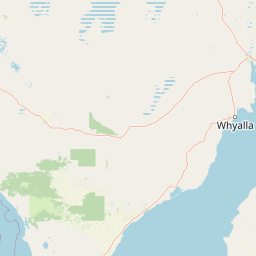
Map view of Gawler Ranges National Park

Use this park location map to pinpoint Gawler Ranges National Park in Australia, understand its exact geographic position, and read its mapped placement within the surrounding landscape more clearly.

Pigeon | © OpenStreetMap contributors

Location context for Gawler Ranges National Park

South Australia
Park atlas

Browse the diverse protected landscapes of the Eyre Peninsula region, comparing national parks and reserves.

Discover Other National Parks and Protected Areas Near Gawler Ranges National Park, South Australia

Expand your protected area exploration beyond Gawler Ranges National Park to trace the geographic spread of nearby national parks and reserves across South Australia's Eyre Peninsula. Compare their ancient geological formations, distinctive semi-arid environments, and conservation landscapes through this structured regional context.
Wildlife reserveSouth Australia
5.3 km away#1 closest

West

Gawler Ranges Conservation Park: Mallee Landscapes and Regional Protected Areas

Semi-arid habitat and rocky terrain of South Australia

Gawler Ranges Conservation Park protects a core area of tree mallee woodland and rocky rises near the southern fringe of the Gawler Ranges. This wildlife reserve serves as an essential anchor for regional biodiversity on the Eyre Peninsula, offering a look at the arid-adapted vegetation and weathered geological structures that define this remote section of South Australia.

Area
154.8 km²
Established
1993
IUCN
VI
Relief
Upland
State or regional parkSouth Australia
About 21 km away#2 closest

Southeast

Corrobinnie Hill Conservation Park: Mapped Protected Landscapes and Geological Features

A remote conservation site on the Eyre Peninsula

Corrobinnie Hill Conservation Park protects an exceptional granite outcrop that stands as a natural monument within the South Australian landscape. The site is characterized by its weathered rock formations and its geographic connection to the broader Pinkawillinie conservation estate, offering insight into the geological diversity of remote Eyre Peninsula pastoral country.

Area
2.08 km²
Established
1983
IUCN
III
Relief
Upland
National parkSouth Australia
29 km away#3 closest

North

Lake Gairdner National Park: National Park with Unique South Australian Geography and Mapped Boundaries

South Australian protected area with distinct landscape characteristics.

Lake Gairdner National Park serves as a key protected area within the geographic expanse of South Australia. This national park offers a unique focus for atlas exploration, highlighting its specific landscape features and mapped boundaries. Users can delve into the park's protected status and its contribution to the regional geography, providing valuable context for understanding Australia's diverse natural protected lands and their cartographic representation.

Area
5,531.77 km²
Established
1991
IUCN
VI
Relief
Lowland
Wildlife reserveSouth Australia
About 54 km away#4 closest

South

Cocata Conservation Park: Eyre Peninsula Protected Wildlife Reserve and Landscape Map

Geographic overview of South Australian conservation lands.

Cocata Conservation Park encompasses a vast semi-arid expanse on the Eyre Peninsula, characterized by gently undulating plains, calcrete-capped terrain, and open salt flats. Gain insights into the physical geography and habitat distribution of this important South Australian wildlife reserve through detailed regional mapping.

Area
167.62 km²
Established
1993
IUCN
VI
Scope
Terrestrial
Nature reserveSouth Australia
61 km away#5 closest

Southeast

Caralue Bluff Conservation Park: A Protected Nature Reserve on the Eyre Peninsula

Mapping regional landscape integrity in South Australia

Caralue Bluff Conservation Park encompasses a 21.5 square kilometre tract of land in South Australia, acting as a crucial element of the Eyre Peninsula landscape. Named for the nearby Caralue Bluff landform, this nature reserve safeguards essential bushland habitats within a highly developed rural setting. Analyze the park boundaries and terrain characteristics to better appreciate its function as a conserved natural refuge.

Area
21.57 km²
Established
1993
IUCN
VI
Scope
Terrestrial
Wildlife reserveSouth Australia
About 67 km away#6 closest

South

Dakalanta Sanctuary: A Private Wildlife Reserve on the Northern Eyre Peninsula

Mapped regional geography and conservation habitat profiles

Dakalanta Sanctuary provides a significant example of private land conservation in South Australia. Covering 130 square kilometres of low hills and stabilized dunes, this reserve focuses on restoring native vegetation after past pastoral use. The area is vital for safeguarding semi-arid habitats like mallee woodlands, playing an active role in regional biodiversity protection and habitat connectivity.

Area
130 km²
Established
2002
Relief
Upland
Access
Access unknown
Wildlife reserveSouth Australia
79 km away#7 closest

Southeast

Darke Range Conservation Park: A Protected Woodland Sanctuary in South Australia

Geographic landscape and regional habitat exploration

Located near Darke Peak, this wildlife reserve safeguards threatened native peppermint gum woodland. The park functions as an ecologically significant pocket of intact vegetation, providing a window into the natural ridge terrain of the Eyre Peninsula that remains distinct from the surrounding rural land.

Area
6.93 km²
Established
1985
IUCN
VI
Relief
Mountain
Nature reserveSouth Australia
About 82 km away#8 closest

Southeast

Carappee Hill Conservation Park: Atlas and Geographic Protected Area Profile

Nature reserve geography and Eyre Peninsula landscape context

Carappee Hill Conservation Park covers 8.5 square kilometres of rocky, elevated terrain in the locality of Darke Peak. As a designated conservation area and IUCN Category III site, it serves as a critical refuge for native vegetation, providing a clear map of protected landform heritage in central South Australia.

Area
8.5 km²
Established
1973
IUCN
III
Relief
Upland

Common questions about visiting, size, designation, and location context for Gawler Ranges National Park

Gawler Ranges National Park FAQs for park facts, access, geography, and protected area context

Find quick answers about Gawler Ranges National Park, including protected-area facts, park geography, trail and visitor context, and how the park fits into its surrounding country and regional landscape.
MoriAtlas Explorer

Continue Your Protected Areas Search Across the Global Atlas

Deepen your exploration by continuing the structured search for national parks and protected areas worldwide. Utilize the comprehensive filtering capabilities to compare different conservation landscapes and refine your understanding of global park geography. Discover more about the distribution and characteristics of protected natural areas.

Global natural geography