
Why Gemenc stands out
Gemenc is best known for being Hungary's last remaining tidal freshwater forest, an alluvial woodland where the Danube still regularly floods large tracts of land and reworks the landscape. The reserve's red deer population is internationally renowned for the outstanding quality of its antlers and genetic stock, with trophy specimens historically sought by hunters from across Europe. The forest also supports an unusually rich birdlife, including white-tailed eagles, saker falcons, black storks, heron colonies, and black kites, set against a backdrop of willow-poplar and oak-ash-elm forests intersected by oxbows and river islands.
Gemenc history and protected-area timeline
Gemenc has been shaped by centuries of interaction between the Danube and the people who lived along its banks, but its modern identity as a protected area begins in the twentieth century. Before that, the broader Sárköz region was historically dominated by the Kalocsa Archbishopric's estate system, which managed forests and hunting grounds here from the late 1700s through 1945. The 1953 Hungarian nature documentary film "Gyöngyvirágtól lombhullásig" ("From Blossom Time to Autumn Frost"), directed by István Homoki Nagy, brought Gemenc's wildlife to public attention through vignettes filmed across the seasons.
The forest's modern institutional history begins with the creation of state-managed forestry and game operations in the mid-twentieth century, when the Dunaártéri Állami Erdőgazdaság and the Gemenci Állami Vadgazdaság merged in 1968 to form the Gemenci Állami Erdő- és Vadgazdaság. In 1977 Gemenc itself received formal nature reserve status, cementing its conservation status amid a wider movement to protect Hungary's floodplain ecosystems. In 1993 the state forestry entity was reorganized into the modern Gemenc Erdő- és Vadgazdaság Zrt., which continues to manage forest and wildlife operations across a much broader estate than the strictly protected core.
In 1997 Gemenc received international recognition as a Ramsar Wetland, highlighting the global importance of its periodically flooded habitat. As the wider national park system evolved, Gemenc was incorporated into the Danube-Drava National Park, confirmed as part of one of Hungary's flagship conservation landscapes, with the Danube-Drava National Park Directorate taking over overall stewardship of the reserve.
Gemenc landscape and geographic character
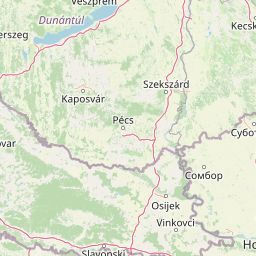
Gemenc is fundamentally a floodplain landscape. The Danube here runs through a very gentle gradient, causing it to slow and spread across a wide alluvial belt rather than cutting a single deep channel. The forested area forms a roughly 30 kilometer long strip averaging 5 to 7 kilometers in width, sometimes reaching 10 kilometers, between the river and the higher embankments of the flood protection system. This makes the area one of the most extensive intact floodplain forests in Hungary.
The terrain is defined by its water features. A network of oxbows reflects the Danube's meandering past, including the Gemenci Holt-Duna, the Decsi Nagy-Holt-Duna, the Rezéti Holt-Duna, the Forgó-tó, the Sulymos-tó, and others, alongside still-active branches that flow past named islands such as Veránka-sziget, Kádár-sziget, and Nagy-Pandúr-sziget. Between 1810 and 1872, extensive river regulation works along the right bank changed how the floodplain evolved, accelerating natural silting of older oxbows while limiting the formation of new ones; however, the right-bank alluvial forest between Keselyűs and Báta still periodically floods in its natural state within the dike-and-bed-protected area.
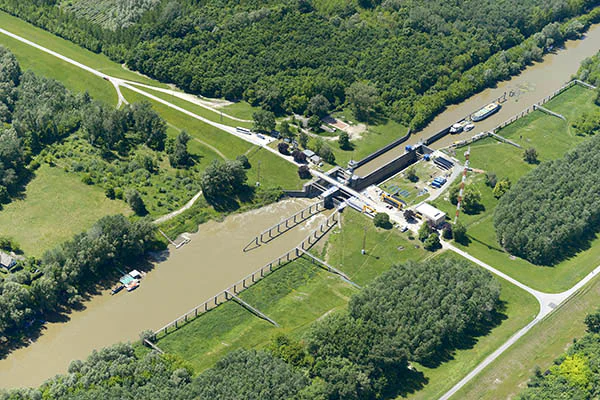
The 1968 to 1974 construction of the Keselyűsi torkolati zsilip (officially Sió-Árvízkapu), southeast of Bogyiszló, added a major piece of flood-management infrastructure to the landscape. The Sió canal enters the Danube here, an important hydrological feature for the broader region. Beyond the forests themselves, the setting includes the settlements and micro-region of Sárköz, with Pörböly, Báta, Bogyiszló, Dusnok, and Bátmonostor framing the edges of this otherwise densely wooded floodplain.
Gemenc ecosystems, habitats, and plant life
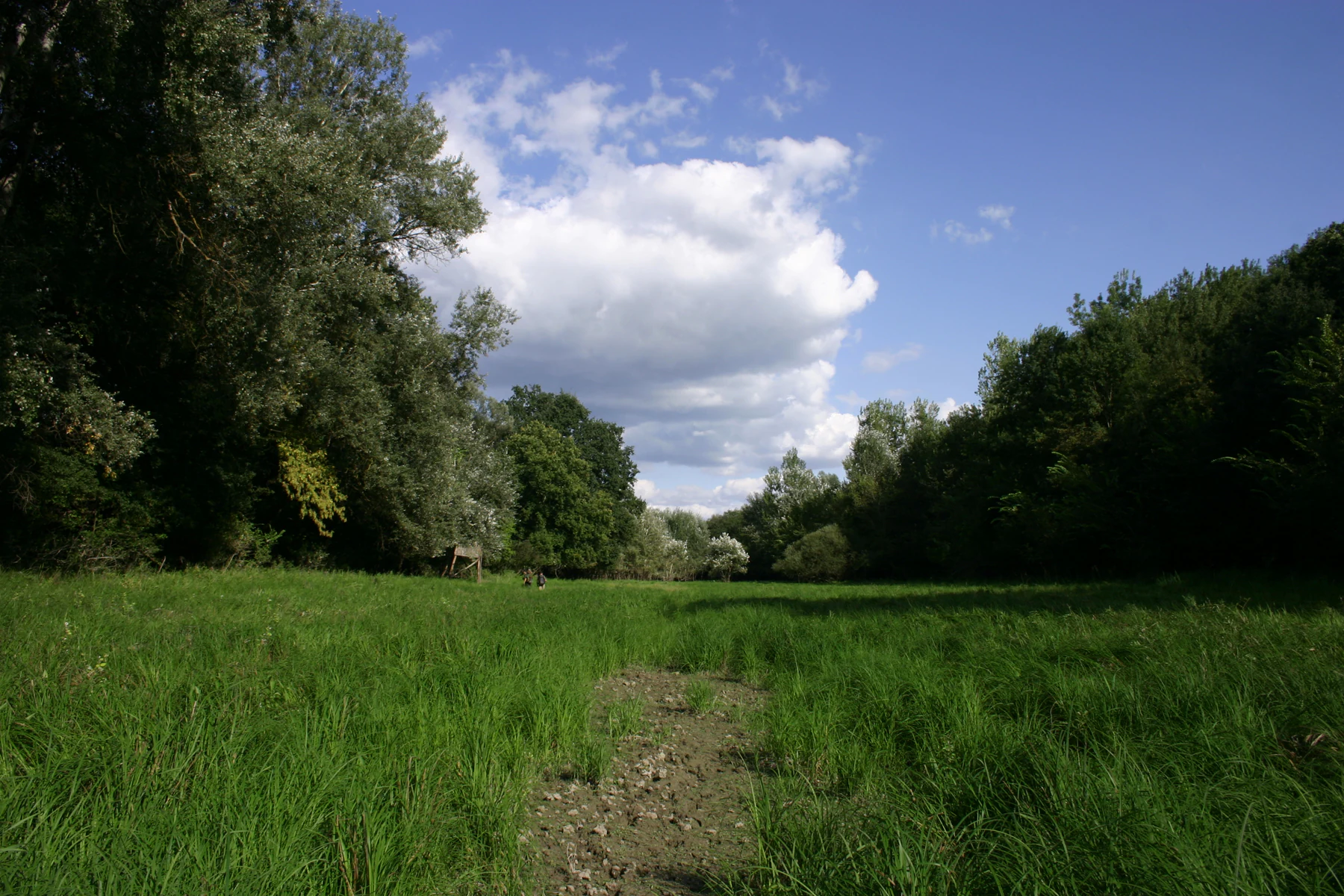
Gemenc is the largest predominantly forested floodplain in Hungary, and its vegetation is closely tied to the rhythm of Danube flooding. The dominant trees are willows, which occupy the lowest, most frequently inundated areas, while poplars take over slightly higher ground. Further inland, on elevations less prone to regular flooding, mature oak-ash-elm forests spread across the broader forest interior. Within this gradation from wet willow-poplar stands to upland hardwood forest, the floodplain exhibits clear vegetation zones that directly reflect water depth and frequency of inundation.
The shrub layer of these alluvial forests is unusually rich, characterized by hawthorn and dewberry, which together form such dense, tangled vegetation that the forests are largely impenetrable on foot. This thick understory provides crucial cover for the area's large mammal populations. On higher terraces that flood less often, the rare black hawthorn can be found, and the spring snowflake is characteristic of the herb layer beneath the trees.
Oxbows, abandoned channels, river islands, and the slow-moving branches of the Danube itself add wetland and aquatic habitat to the closed-canopy forest. The diversity of these water-related environments supports an exceptional range of amphibian, reptile, and fish life, complementing the woodland habitats. Together, the forest, the open water bodies, and the periodically flooded meadows create a multi-layered alluvial ecosystem that is rarely matched elsewhere in Central Europe.
Gemenc wildlife and species highlights
Despite being managed partly as a working forest, Gemenc supports one of Hungary's most diverse wildlife communities, owing to the unbroken transition from aquatic to woodland habitats. The area's large mammal populations are particularly notable. Red deer are the area's most famous residents, prized for the size of their antlers and the quality of their genetic stock; their population has given Gemenc a long-standing international reputation in hunting circles. Roe deer and wild boar are also abundant, roaming the same willow-poplar and oak-ash-elm forests that conceal them.
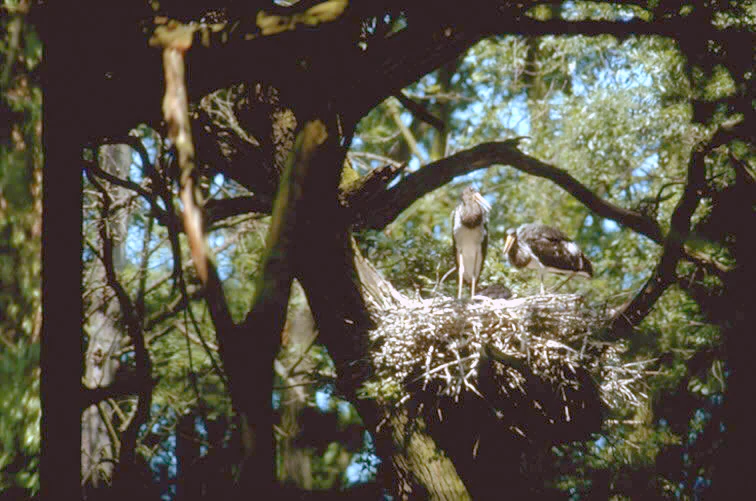
The birdlife is equally rich. White-tailed eagles, saker falcons, lesser spotted eagles, and black kites nest in the area, along with numerous heron colonies where grey herons are especially numerous. Black storks also breed here, while the floodplain's mosaic of channels and oxbows provides habitat for storks in general and many wading species. Wetland margins and meadow edges host amphibians and reptiles in significant numbers, and the slow-moving arms of the Danube support diverse fish communities.
In the invertebrate realm, Gemenc is just as distinctive. Thirteen protected butterfly species have been recorded, including the Freyer's purple emperor (in Hungarian "Magyar színjátszólepke"). The forests also host stag beetles, the great capricorn beetle, and a spider species found only in this area. The combination of large predators, ungulates, breeding raptors, colonial waterbirds, and rare invertebrates makes the reserve an unusually rich site for wildlife observation, particularly along its quieter oxbow shorelines.
Gemenc conservation status and protection priorities
Gemenc's conservation importance lies in the persistence of natural flooding dynamics within a large forest landscape, a feature that has been lost from most of Europe's great rivers. Following centuries of channelization on the Danube, only a handful of floodplain stretches still receive their natural flood pulse on this scale, and Gemenc ranks among the most significant for Hungary and for the Danube basin as a whole. This hydrological character was central to its inclusion among globally important wetlands when it was designated a Ramsar Wetland in 1997.
Domestically, the area's protection rests on its 1977 nature reserve status and its incorporation into the Danube-Drava National Park, with overall stewardship provided by the Danube-Drava National Park Directorate. The strict core of the reserve covers a meaningful portion of the broader territory and excludes hunting and forestry, while surrounding lands continue to be managed for timber, game, and flood protection by the state forestry company. This dual structure of strict protection within a working landscape is itself an important conservation approach, allowing floodplain function to be preserved at a scale that pure strict reserves rarely cover.
The site's ecological value is unusually broad, encompassing mature hardwood floodplain forest, dynamic riverine habitat, oxbow lake systems, and a rich mosaic of breeding sites for European raptors and herons. The continued presence of species such as white-tailed eagle, saker falcon, black stork, and red deer with notable genetic quality highlights the reserve's role in maintaining populations that have declined elsewhere. Conservation of the area is also a question of water management, as the periodic floods that shape its forests are simultaneously an ecological asset and a logistical challenge that continues to require active management along this section of the Danube.
Gemenc cultural meaning and human context
Gemenc lies within the Sárköz, a historical micro-region on the Hungarian Danube that long retained a distinctive rural and folk culture shaped by the river. The forests and hunting grounds of this area were historically tied to the Kalocsa Archbishopric's estates, whose forest and game management practices shaped local land use from the late 1700s until 1945. Archbishopric hunting lodges in and around the area reflect this older cultural layer.
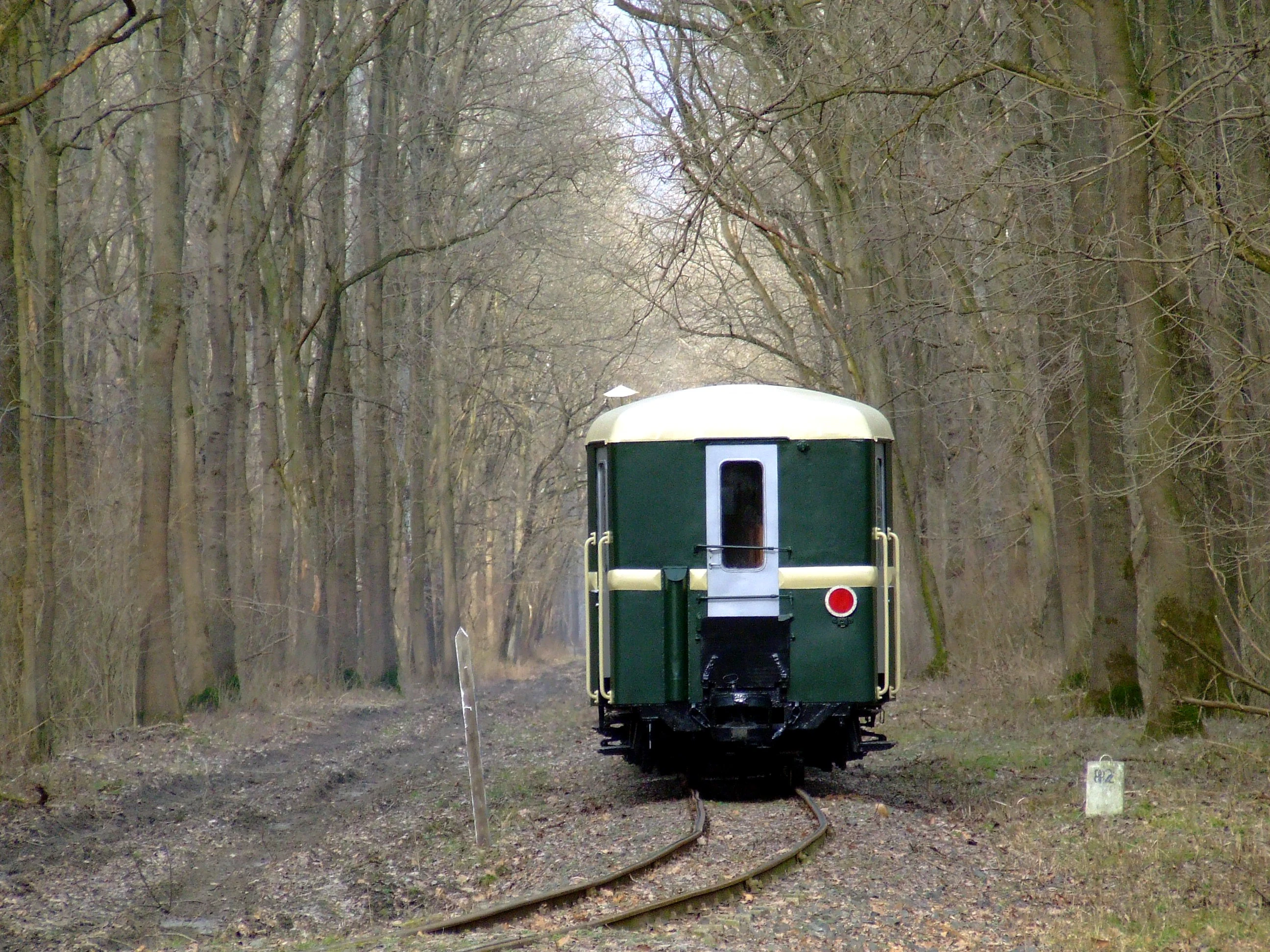
Twentieth-century nature film played a notable role in shaping public awareness of the forest. The 1953 Hungarian nature documentary "Gyöngyvirágtól lombhullásig" ("From Blossom Time to Autumn Frost"), made by István Homoki Nagy, presented the forest's wildlife to viewers and helped anchor Gemenc in Hungary's broader cultural understanding of its natural landscape. Today, the small forest railway, the network of educational nature trails, and visitor centers near Pörböly connect contemporary visitors to both the working forestry heritage and the conservation identity of the area.
Top sights and standout views in Gemenc
Hungary's largest remaining tidal floodplain forest, where the Danube still naturally reworks the land on a substantial scale.
A globally recognized Ramsar Wetland site and part of the Danube-Drava National Park, set aside for protection in 1977.
Famous for red deer of exceptional antler quality and notable genetic stock, alongside abundant wild boar and roe deer.
A rich breeding ground for white-tailed eagles, saker falcons, black storks, lesser spotted eagles, and large grey heron colonies.
A distinctive vegetation mosaic of willow-poplar forests along the water and oak-ash-elm forests inland, interspersed with oxbow lakes and river islands.
Rare invertebrate residents including thirteen protected butterfly species, the Freyer's purple emperor, stag beetles, and a spider species found only at Gemenc.
Best time to visit Gemenc
Gemenc's character shifts strongly with the seasons and with the rhythm of the Danube floods. Spring brings fresh green foliage and active birdlife, when black storks and heron colonies are establishing their breeding season and amphibian activity is at its peak. Summer is the most visually lush period for the floodplain forests, with denser foliage, higher water levels, and active insect populations that make the woodlands especially rich.
Autumn is widely associated with the broader Hungarian conception of Gemenc, given its strong connections to the deer rutting season and to traditional hunting imagery in Hungarian nature writing. The 1953 film "Gyöngyvirágtól lombhullásig" frame its story around this seasonal arc, from spring blossom to autumn leaf fall. Winter, when the deciduous forests thin out, makes it easier to observe large mammals such as red deer and to read the floodplain's topography through its bare branches and exposed oxbow channels. Specific operational timings of forest trains or guided programs should be confirmed locally, as seasonal services may vary.