Why Guanacaste National Park stands out
Guanacaste National Park is best known as a biological corridor connecting dry forest and rainforest ecosystems, allowing seasonal migration for hundreds of species. The park encompasses the volcanic slopes of Orosí and Cacao volcanoes, offering access to both cloud forest and pre-Columbian petroglyph sites. Its extraordinary biodiversity includes over 140 mammal species, more than 300 bird species, 100 amphibians and reptiles, and more than 10,000 identified insect species. The park is also notable for serving as the headquarters location for the Guanacaste Conservation Area management.
Guanacaste National Park history and protected-area timeline
The establishment of Guanacaste National Park in 1989 represented a significant expansion of Costa Rica's protected area network in the Guanacaste region. The park was created by Executive Decree 19124-MIRENEM/89, driven largely by the advocacy of Dr. Daniel Janzen, an ecologist who recognized the critical importance of connecting the dry forest lowlands with the wet forest highlands to allow seasonal species migrations. The park was integrated into the Area de Conservación Guanacaste alongside the existing Santa Rosa National Park and Rincón de la Vieja Volcano National Park. In 1994, these protected areas became part of the National System of Conservation Units administered by SINAC. The entire Guanacaste Conservation Area achieved UNESCO World Heritage Site status in 1999, recognizing its outstanding universal value as a conservation landscape. The Junquillal Bay Wildlife Refuge was incorporated into the conservation complex in 1995, further strengthening the protected area network. An interesting ecological experiment occurred in 1989 when approximately 12,000 tonnes of orange waste were deposited on barren land within the park boundaries; within 15 years, the area had naturally regenerated into diverse vegetation, demonstrating the region's capacity for ecological recovery.
Guanacaste National Park landscape and geographic character
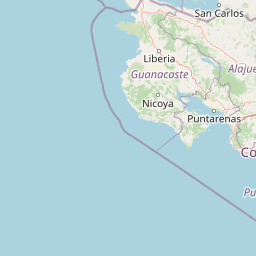
The landscape of Guanacaste National Park is defined by its volcanic geology and dramatic elevation gradient. The park encompasses the western and southwestern slopes of Orosí Volcano and Cacao Volcano, two prominent volcanic peaks in the Guanacaste Mountain Range. The terrain rises from approximately 300 meters near the Interamerican Highway to over 1,500 meters on the volcano slopes, creating diverse microclimates and vegetation zones. The Tempisque River traverses the lowland portions of the park, providing water resources and supporting riparian ecosystems. Lower elevations feature dry tropical forest with deciduous trees that lose their leaves during the dry season, while higher elevations transition into cloud forest where persistent mist and moisture support epiphytes, ferns, and moisture-loving plant communities. The volcanic soils are rich in nutrients, supporting lush vegetation even in areas that might otherwise be challenging for plant growth.
Guanacaste National Park ecosystems, habitats, and plant life
The ecological significance of Guanacaste National Park derives from its position as a transitional zone between the Neotropical dry forest and wet forest biomes. This geographic position creates an unusual diversity of habitats within a relatively compact area, supporting species adapted to both seasonal dry conditions and year-round humid environments. The dry forests at lower elevations are characterized by trees such as guanacaste, espavel, and cedar, while the cloud forest zones feature oak trees, bamboo, and abundant epiphytic vegetation. The park's protection of this corridor allows for the seasonal migration of wildlife between the Pacific dry forests and the Caribbean rainforests, a movement pattern essential for many species' survival. The exceptional insect diversity, with over 10,000 species identified, forms the base of a complex food web that supports larger animals throughout the food chain.
Guanacaste National Park wildlife and species highlights
Guanacaste National Park supports an impressive diversity of wildlife, with 140 mammal species, more than 300 bird species, and 100 amphibians and reptiles recorded within its boundaries. The mammal population includes species such as white-faced capuchin monkeys, howler monkeys, coatis, anteaters, and various carnivores including jaguars and pumas. The bird fauna is particularly notable, with numerous resident species and migratory birds that utilize the park as a seasonal habitat. The amphibian and reptile communities thrive in the different moisture zones, with tree frogs, salamanders, and various snake species among the inhabitants. The extraordinary insect diversity, exceeding 10,000 identified species, forms the foundation of the park's ecological food web and includes numerous endemic species found nowhere else on Earth.
Guanacaste National Park conservation status and protection priorities
Guanacaste National Park plays a central role in Costa Rica's conservation strategy as part of the Area de Conservación Guanacaste, a UNESCO World Heritage Site recognized for its outstanding biodiversity and successful integration of conservation with sustainable land management. The park's establishment was driven by the recognition that protecting isolated fragments of forest was insufficient for maintaining viable populations of migratory species; instead, connected corridors that allow movement between different ecosystem types are essential. This conservation approach, pioneered by figures such as Daniel Janzen, has become a model for landscape-level conservation planning in tropical regions. The park's location connecting Santa Rosa National Park with the highland forests creates a contiguous protected landscape that supports ecological processes across altitudinal and climatic gradients.
Guanacaste National Park cultural meaning and human context
The Guanacaste region has a rich cultural history that predates modern conservation efforts, with the park containing evidence of pre-Columbian human occupation. The trail leading to Orosí Volcano passes near El Pedregal, where pre-Columbian petroglyphs can be found carved into rock surfaces, attesting to the area's significance for indigenous peoples. These archaeological features represent the long history of human interaction with the Guanacaste landscape, though the park's primary purpose today is nature conservation rather than cultural preservation. The park's name reflects the Guanacaste tree, a prominent species in the dry forests that also serves as Costa Rica's national tree.
Top sights and standout views in Guanacaste National Park
The volcanic slopes of Orosí and Cacao offer visitors access to cloud forests and dramatic volcanic scenery within the park boundaries. The biological corridor connecting dry and wet forests makes this park essential for understanding tropical ecosystem connectivity. Pre-Columbian petroglyphs near El Pedregal provide cultural heritage interest along the trail toward Orosí Volcano. The park serves as the administrative headquarters for the Guanacaste Conservation Area, making it a central location for understanding regional conservation efforts. The exceptional biodiversity, with over 10,000 insect species and hundreds of vertebrate species, represents one of the highest densities of life in Central America.
Best time to visit Guanacaste National Park
The optimal time to visit Guanacaste National Park coincides with the dry season from December through April, when precipitation is minimal and trail conditions are most favorable for hiking. During this period, the landscape is characterized by clearer skies and easier access to higher elevation trails. The wet season from May to November brings daily rainfall that transforms the forest into lush greenery but can make some trails slippery and difficult to navigate. Wildlife viewing is rewarding throughout the year, though the dry season may concentrate animals around remaining water sources. The cloud forest at higher elevations maintains consistent moisture year-round, providing reliable conditions for exploring these unique habitats regardless of season.