Why Las Baulas Marine National Park stands out
Las Baulas is world-renowned for hosting the largest nesting colony of leatherback sea turtles on the Pacific coast of the Americas. Playa Grande beach serves as the primary nesting site where female leatherbacks come ashore annually between October and May to lay their eggs in the warm sand. This spectacular natural phenomenon draws researchers and conservationists from around the globe. Beyond turtle nesting, the park is celebrated for its accessible yet protected marine environment where visitors can observe sea turtles, surf pristine waves, and explore mangrove ecosystems from canoes or kayaks.
Las Baulas Marine National Park history and protected-area timeline
Las Baulas Marine National Park was established on July 9, 1991, as part of Costa Rica's expanding network of protected areas designed to preserve the country's most ecologically significant landscapes. The park was created with particular emphasis on protecting the leatherback turtle nesting beaches that had long drawn attention from conservationists and researchers. In 1993, the park gained additional international recognition when the Tamarindo estuary was designated as a Ramsar Wetland, formally acknowledging its significance under the Ramsar Convention on wetlands of international importance. Prior to national park status, the terrestrial areas around Tamarindo had been protected as a wildlife refuge, but the expansion to full national park status and the inclusion of marine waters strengthened the protection regime. The park is managed by the Tempisque Conservation Area, one of the administrative units within Costa Rica's National System of Conservation Areas, which coordinates conservation efforts across multiple protected areas in the Guanacaste region.
Las Baulas Marine National Park landscape and geographic character
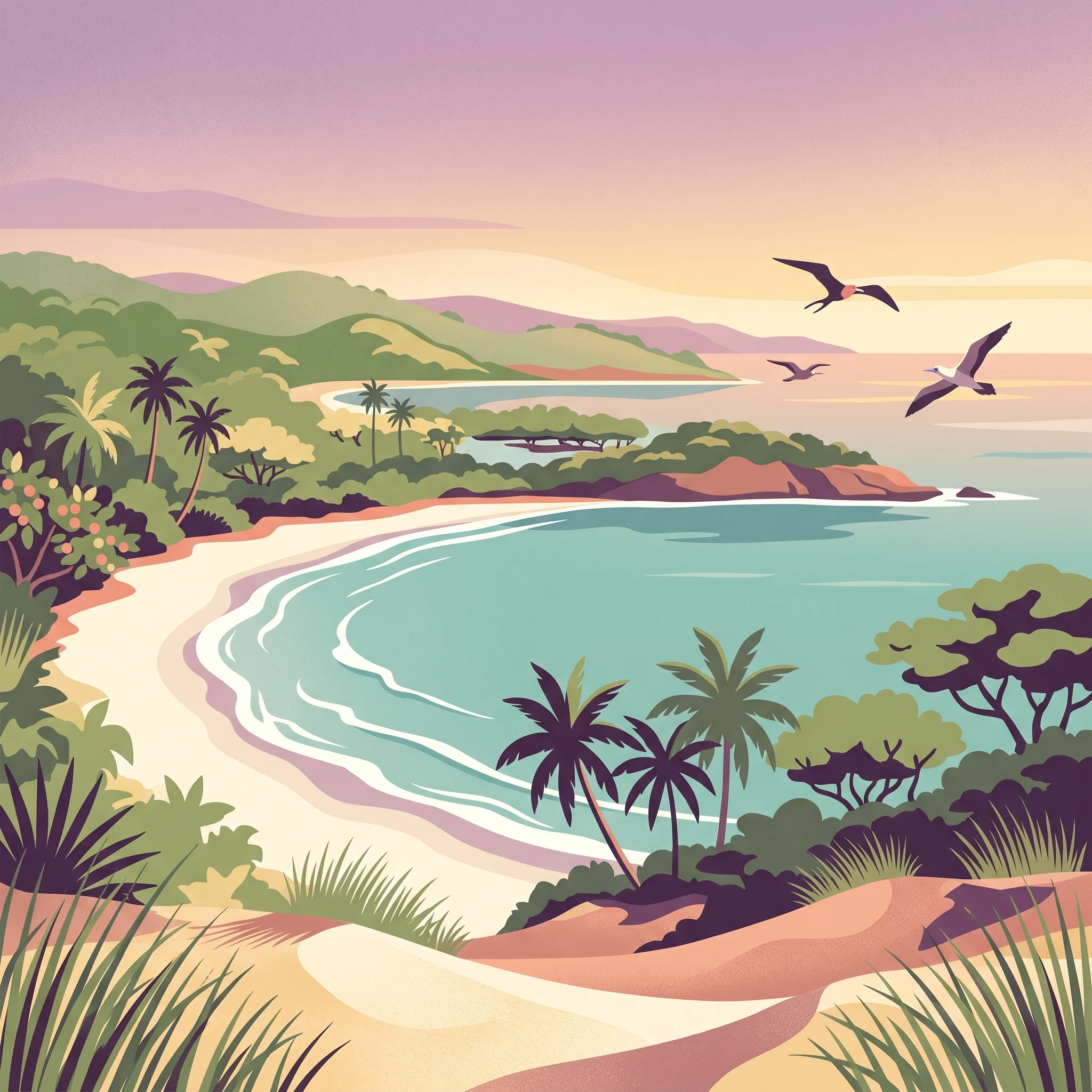
The park presents a classic Pacific coast landscape characterized by wide, white-sand beaches backed by coastal forest and bordered by rocky headlands. Playa Grande, the most prominent beach, stretches for over two kilometers and serves as the primary leatherback turtle nesting site. The coastline is punctuated by rocky outcrops at Roca Bruja, where erosion has created dramatic sea stacks and cliff formations popular with photographers and surfers alike. Inland from the beaches, tropical dry forest covers the low hills, with deciduous trees that lose their leaves during the dry season between December and April. The Tamarindo estuary creates a sheltered water body where freshwater from the Matapalo River mixes with tidal inflows, supporting extensive mangrove growth. The park's northern boundary encompasses the Cerros Morro and Hermosa, two low volcanic ridges that add visual variety and forest habitat to the terrestrial portion.
Las Baulas Marine National Park ecosystems, habitats, and plant life
The marine environment of Las Baulas supports a productive coastal ecosystem influenced by upwelling currents that bring nutrient-rich waters to the surface. The seabed ranges from sandy bottoms near shore to rocky reefs and deeper waters farther offshore, creating diverse habitats for marine life. The mangrove forests at the estuary serve as critical nursery areas for juvenile fish, crabs, and shrimp, while providing feeding grounds for adult fish and waterbirds. The shallow, protected waters of Tamarindo Bay offer ideal conditions for sea turtle foraging, with leatherback turtles and olive ridley turtles frequently encountered swimming in the offshore waters. The coastal forest supports a range of terrestrial species, with approximately 174 bird species recorded within the park's boundaries. Dry forest birds include motmots, trogons, and various raptor species, while the mangrove areas host herons, egrets, and the distinctive roseate spoonbill.
Las Baulas Marine National Park wildlife and species highlights
The leatherback sea turtle stands as the park's most iconic species, drawing global attention to Las Baulas as one of the most important nesting sites in the Western Hemisphere. Adult females typically weigh between 300 and 500 kilograms and undertake remarkable transoceanic migrations to return to their natal beaches. The nesting season peaks between October and March, with eggs incubating in the warm sand for approximately 60 days before hatchlings emerge and make their way to the sea. Olive ridley turtles also utilize the park's beaches and waters, adding to the marine turtle diversity. The American crocodile inhabits the estuary and river channels, often basking on mud banks or swimming slowly through the mangroves. The bird population includes both resident species and migratory birds that winter in the region, with congregations of waterfowl especially notable in the estuary during the northern hemisphere winter months.
Las Baulas Marine National Park conservation status and protection priorities
Las Baulas Marine National Park represents a critical node in the Eastern Pacific leatherback turtle conservation network. The protected status of nesting beaches ensures that female turtles can deposit their eggs without disturbance, while the marine protected area buffers foraging habitats from fishing pressure and other anthropogenic impacts. The Ramsar designation for the Tamarindo estuary acknowledges the wetland's international significance and commits Costa Rica to maintain the ecological character of this important coastal ecosystem. The park's management strategy balances conservation objectives with sustainable recreation, allowing activities like surfing and wildlife observation while enforcing regulations that protect sensitive species and habitats. Research programs conducted within the park contribute to the scientific understanding of leatherback biology and migration patterns, informing conservation efforts throughout the species' range.
Las Baulas Marine National Park cultural meaning and human context
The landscape surrounding Las Baulas has been shaped by human activity for centuries, with the indigenous peoples of the region having utilized the coastal resources long before modern conservation began. The town of Tamarindo has grown from a small fishing village into a popular tourist destination, and the park's existence reflects a broader shift in Costa Rica toward protecting natural heritage while allowing compatible human use. The name "Las Baulas" references the local term for leatherback turtles, connecting the place to the species that defines its international significance. Fishing communities historically relied on the waters now within the park, and ongoing efforts seek to ensure that conservation measures incorporate traditional livelihood considerations.
Top sights and standout views in Las Baulas Marine National Park
The leatherback turtle nesting at Playa Grande represents the park's most extraordinary natural spectacle, with nightly patrols during peak season offering opportunities to observe egg-laying females. Surfing at Roca Bruja provides another highlight, where consistent waves and scenic setting attract both beginners and experienced surfers. The Tamarindo estuary offers paddling opportunities through mangrove channels where crocodiles, kingfishers, and iguanas can be observed from water level. Birdwatchers find particular value in the diverse habitats, with the chance to spot trogons in the forest, roseate spoonbills in the mangroves, and frigatebirds soaring over the coast. The park's compact size and accessible location make it possible to experience multiple environments within a single visit, transitioning from beach to forest to estuary in a short walk.
Best time to visit Las Baulas Marine National Park
The optimal time to visit Las Baulas coincides with the leatherback turtle nesting season, which runs from October through May, with peak activity occurring between December and March. During these months, female turtles come ashore most nights to nest, and guided night tours provide opportunities to observe this remarkable behavior while respecting the turtles' need for minimal disturbance. The dry season from December through April offers sunny skies and minimal rainfall, making beach activities and wildlife observation most comfortable. However, this is also the busiest period, with higher visitor numbers at the park and in Tamarindo. The shoulder seasons of October and May offer a balance between turtle activity and fewer crowds, though weather patterns can be less predictable. The wet season from May through November brings higher humidity and occasional rainfall but offers greener landscapes and the chance to see hatchlings emerging from nests.