

Mori Atlas logo
Wildlife reserveGundla Brahmeswaram Wildlife Sanctuary

A vital ecological refuge set across the Nallamala Forest plateau and Eastern Ghats terrain

Gundla Brahmeswaram Wildlife Sanctuary: Mapped Landscapes and Protected Geography in Andhra Pradesh

Gundla Brahmeswaram Wildlife Sanctuary represents a significant protected area within the Nallamala Forest of Andhra Pradesh. This sanctuary encompasses the elevated Gundla Brahmeshwaram plateau, framed by the Mantralamma Kanuma and Nandi Kanuma hill passes, providing critical tiger habitat as a southern extension of the Nagarjunsagar-Srisailam reserve. The Gundlakamma River traverses these dry deciduous forests, shaping a complex mosaic of riparian zones, ridges, and slopes that define this essential Eastern Ghats sanctuary.

wildlife sanctuaryNallamala Foresttiger reservedry deciduous forestEastern Ghatsplateau landscape

Gundla Brahmeswaram Wildlife Sanctuary

Wildlife reserve

Park overview

Structured park overview, official facts, and landscape profile for Gundla Brahmeswaram Wildlife Sanctuary

Gundla Brahmeswaram Wildlife Sanctuary park facts, protected area profile, and essential visitor context

Review the core facts for Gundla Brahmeswaram Wildlife Sanctuary, including designation, size, terrain, visitor scale, habitats, and operating context in one park-focused overview.

About Gundla Brahmeswaram Wildlife Sanctuary

Gundla Brahmeswaram Wildlife Sanctuary is a large protected area located in the Nallamala Forest range of Andhra Pradesh, India. The sanctuary lies on the elevated terrain of the Gundla Brahmeshwaram plateau, positioned between two named hill passes, Mantralamma Kanuma and Nandi Kanuma, which shape the topography of the surrounding landscape. This plateau setting gives the sanctuary a distinct elevation profile within the otherwise continuous Nallamala hill forests that stretch across central Andhra Pradesh and adjoining Telangana.

The sanctuary was formally declared a wildlife sanctuary in 1990, placing it under the management of the Department of Forests of the Government of Andhra Pradesh. Its protected status covers an extensive area of forested land, with the Gundlakamma River flowing through the sanctuary and providing a vital riparian corridor within the broader dry forest matrix. The combination of plateau forests, hill passes, and a perennial river creates a varied habitat structure across the sanctuary.

One of the most defining features of Gundla Brahmeswaram is its deep integration with the wider Nallamala landscape and the Nagarjunsagar-Srisailam Tiger Reserve. The northern portion of the sanctuary is recognized as an important part of this larger tiger reserve, meaning that Gundla Brahmeswaram effectively functions as a southern buffer and extension of one of the most significant tiger habitats in southern India. This makes the sanctuary strategically important for long-term tiger conservation.

Ecologically, the area is recognized for its botanical diversity and for the mammal community it supports, including apex predators, primates, deer, bats, and smaller carnivores. The presence of multiple threatened species, combined with documentation of confirmed tiger breeding within the sanctuary, underlines its importance as a functioning wildlife refuge rather than merely a protected-area designation on paper.

Protection and recognition

Terrestrial conservation scope and documented protected area framework

Gundla Brahmeswaram Wildlife Sanctuary Protection Status and Designation

Gundla Brahmeswaram Wildlife Sanctuary maintains a defined terrestrial protection status within its regional conservation framework. Documented administrative parameters outline the sanctuary scope without additional international recognition sources.

Protection details

Protection scope
Terrestrial
Transboundary protection
No
Park context

Deeper park guide and search-rich context for Gundla Brahmeswaram Wildlife Sanctuary

Gundla Brahmeswaram Wildlife Sanctuary history, landscape, wildlife, and travel context

Explore Gundla Brahmeswaram Wildlife Sanctuary through its history, landscape character, ecosystems, wildlife, conservation priorities, cultural context, and seasonal travel timing in a structured park guide built for atlas discovery and search intent.

Why Gundla Brahmeswaram Wildlife Sanctuary stands out

Gundla Brahmeswaram is best known as a major component of the Nallamala forest ecosystem and as a critical southern extension of the Nagarjunsagar-Srisailam Tiger Reserve. The sanctuary is associated with healthy populations of Bengal tigers, the presence of leopards (including the Indian leopard subspecies Panthera pardus tulliana), and a botanically rich plateau landscape that supports a notable number of plant species, including several critically endangered taxa. Its position between two named hill passes, Mantralamma Kanuma and Nandi Kanuma, and the flow of the Gundlakamma River through its forests, give the sanctuary a distinct physiographic setting within the broader Eastern Ghats, making it a key area for tiger conservation and forest biodiversity in Andhra Pradesh.
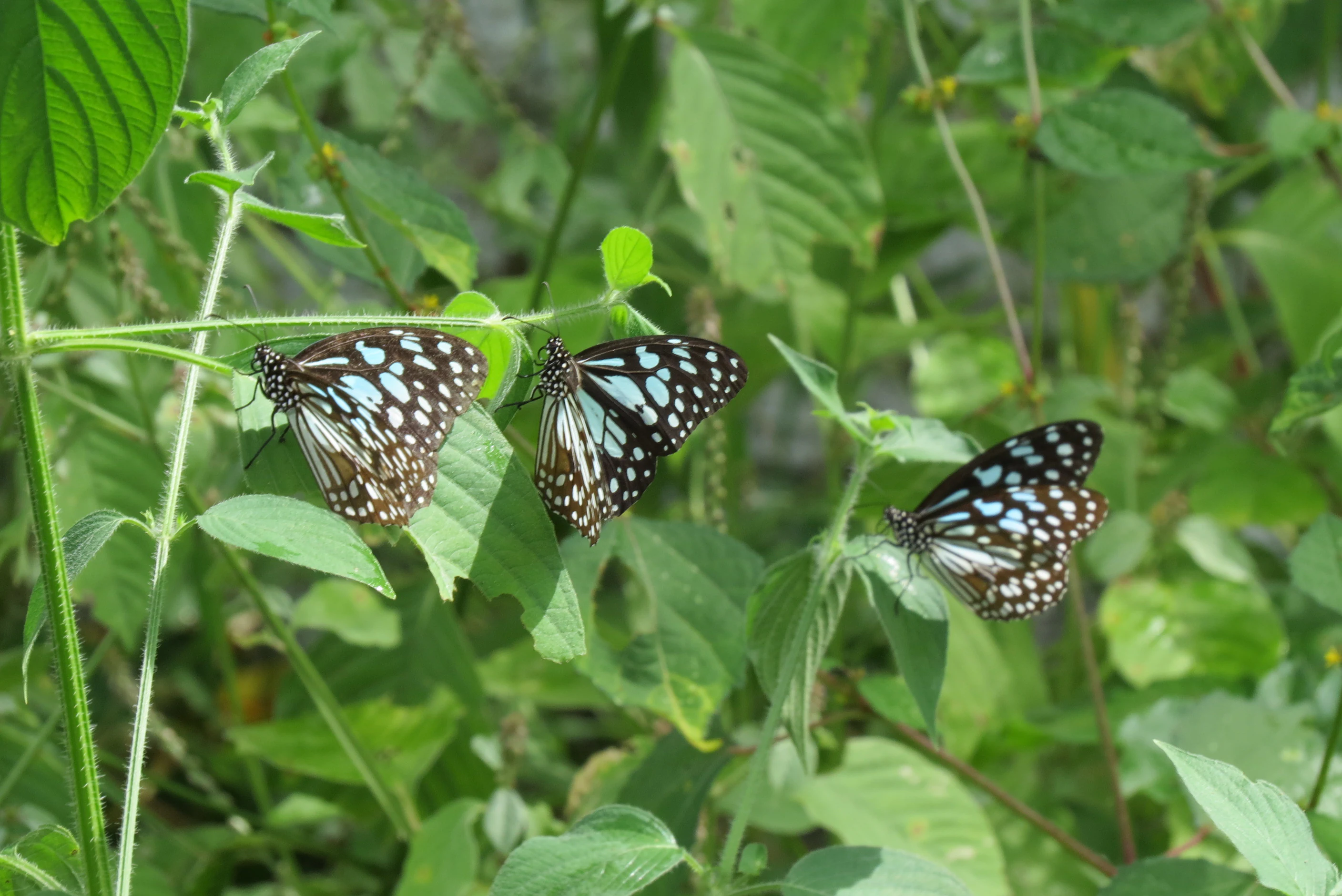
Three Blue Tiger butterflies with black and white-spotted wings resting on green leaves.
A group of Blue Tiger butterflies (Tirumala limniace) resting on foliage in Gundla Brahmeswaram Wildlife Sanctuary.

Gundla Brahmeswaram Wildlife Sanctuary history and protected-area timeline

Gundla Brahmeswaram Wildlife Sanctuary was formally declared a wildlife sanctuary on September 18, 1990. Its designation marked an important step in the formal protection of the Nallamala Forest landscape in Andhra Pradesh, where habitat fragmentation, hunting pressures, and forest degradation had been long-standing concerns.

The sanctuary takes its name from the Gundla Brahmeshwaram plateau, the elevated terrain at the heart of the protected area. Over time, the sanctuary's role expanded beyond its initial protective boundaries, as its northern portion came to be recognized as an integral component of the much larger Nagarjunsagar-Srisailam Tiger Reserve, one of the flagship tiger landscapes of southern India.

This integration with the tiger reserve has shaped the sanctuary's identity and management priorities, shifting attention toward tiger monitoring, prey-base conservation, and the protection of larger mammal populations. Surveys conducted in and around the sanctuary have documented the presence of breeding tigers and other large predators, reinforcing the historical significance of the area as core tiger habitat within the Nallamala range.

Gundla Brahmeswaram Wildlife Sanctuary landscape and geographic character

The landscape of Gundla Brahmeswaram is shaped by the elevated Gundla Brahmeshwaram plateau, a distinctive landform within the broader Nallamala hill system. The sanctuary sits between the Mantralamma Kanuma and Nandi Kanuma hill passes, two named geographic features that frame the plateau and influence drainage, movement corridors, and scenic character across the protected area.

Forested terrain dominates the sanctuary, with dry deciduous woodland covering much of the plateau and its slopes. The topography is varied, with hill passes, ridges, and valley systems creating a mosaic of microhabitats. This elevation gradient supports shifts in vegetation type and animal distribution across the protected area.

A defining hydrological feature of the sanctuary is the Gundlakamma River, which flows through the protected landscape. The river not only adds visual and ecological richness to the terrain but also creates riparian zones along its banks, contrasting with the dry forested uplands and supporting different plant and animal communities within the sanctuary.

Gundla Brahmeswaram Wildlife Sanctuary ecosystems, habitats, and plant life

Gundla Brahmeswaram supports a botanically diverse forest ecosystem characteristic of the Nallamala range. Surveys of the sanctuary have recorded a substantial number of plant species, including multiple taxa that are considered critically endangered. This botanical richness reflects the range of habitats found within the sanctuary, from plateau forests to riparian stretches along the Gundlakamma River.

Dry deciduous woodland is the principal vegetation type across much of the sanctuary, supporting the kind of mixed-tree habitat in which many Nallamala species have evolved. The combination of plateau forest, hill-slope vegetation, and river-margin growth contributes to habitat heterogeneity, allowing the sanctuary to sustain a varied array of plant communities and associated animal life.

Despite being a protected area, the sanctuary faces ecological pressures from invasive plant species, which threaten indigenous biodiversity. The presence of these invasives highlights the ongoing need for habitat management and active conservation intervention in addition to formal protection.

Gundla Brahmeswaram Wildlife Sanctuary wildlife and species highlights

Gundla Brahmeswaram is notable for its mammal diversity, particularly its populations of large predators and primates. The sanctuary supports a community that includes Bengal tigers, leopards (notably the locally occurring Panthera pardus tulliana form), langurs, and bonnet macaques, indicating a healthy mix of canopy-dwelling primates and ground-dwelling carnivores.

Beyond the apex predators, the sanctuary hosts a broader range of mammals including sambar deer, nilgai, mouse deer, pangolin, the Indian flying squirrel, the lesser woolly horseshoe bat, and the rusty-spotted cat. This combination of large herbivores, small carnivores, bats, and insectivores suggests a functioning food web across multiple habitat layers, from forest floor to canopy.

Tiger monitoring has confirmed the sanctuary's role as active breeding habitat. A 2019 survey documented the presence of multiple tigers within the sanctuary, including adult males, females, and a cub, underscoring its importance as part of the wider Nagarjunsagar-Srisailam tiger population. The coexistence of these predators with a varied prey base, including sambar and other ungulates, underlines the sanctuary's value for sustaining large-mammal ecology in the Nallamala landscape.

Invertebrate diversity in the sanctuary is also recognized, with notable sightings of blue tiger butterflies (Tirumala limniace) recorded within the broader Nallamala-Srisailam landscape, contributing to the area's broader biodiversity profile.

Gundla Brahmeswaram Wildlife Sanctuary conservation status and protection priorities

Gundla Brahmeswaram's conservation importance lies in its integration with the Nagarjunsagar-Srisailam Tiger Reserve, one of the largest tiger reserves in India. The northern portion of the sanctuary is recognized as an important part of this larger reserve, making Gundla Brahmeswaram functionally significant for the long-term persistence of the Nallamala tiger population and its prey base.

The sanctuary's documented tiger breeding, combined with confirmed records of leopards, ungulates, and a diverse small-mammal community, indicates that the protected area plays a meaningful conservation role rather than serving merely as a paper designation. The presence of multiple threatened species, including critically endangered plants and mammals such as the pangolin and the Indian flying squirrel, reinforces its biodiversity value.

At the same time, conservation in Gundla Brahmeswaram faces significant challenges. Invasive plant species threaten indigenous biodiversity within the sanctuary, and managing these invasives is an ongoing concern. The sanctuary is administered by the Department of Forests of the Government of Andhra Pradesh, and its management priorities reflect the dual need to maintain tiger habitat integrity and to protect the wider botanical and faunal communities that define the Nallamala ecosystem.

Top sights and standout views in Gundla Brahmeswaram Wildlife Sanctuary

Gundla Brahmeswaram stands out for its position within the Nallamala Forest and its role as a southern extension of the Nagarjunsagar-Srisailam Tiger Reserve, one of southern India's most important tiger landscapes. The sanctuary's plateau setting, framed by the Mantralamma Kanuma and Nandi Kanuma hill passes and crossed by the Gundlakamma River, gives it a distinctive physical character within the Eastern Ghats.

Its combination of confirmed tiger breeding, presence of leopards, primate populations including langurs and bonnet macaques, and a botanically rich forest community marked by critically endangered plant species makes the sanctuary a meaningful refuge for both large-mammal conservation and broader biodiversity protection in Andhra Pradesh.

Best time to visit Gundla Brahmeswaram Wildlife Sanctuary

The sanctuary sits within the dry deciduous forests of the Nallamala range, where seasonal variation influences landscape conditions and wildlife visibility. The cooler and drier months generally offer more comfortable conditions for exploring the forested terrain, while the monsoon period can make forest trails more challenging and bring lush vegetation growth to the plateau and riparian zones along the Gundlakamma River.

Because the sanctuary is recognized for its tiger population and other wildlife, timing visits around cooler and drier periods may also improve the chances of wildlife sightings near water sources and along forest paths, while monsoon greening transforms the landscape into a denser, more closed-canopy environment.

Monthly climate preview

Long-term temperature ranges and precipitation patterns across the protected landscape

Gundla Brahmeswaram Wildlife Sanctuary Climate Normals and Monthly Weather Records

Gundla Brahmeswaram Wildlife Sanctuary exhibits measured annual temperature variations and shifting monthly precipitation rates based on historical data. Examining the full twelve-month climate profile reveals comprehensive long-term averages for detailed environmental analysis.
Annual mean27 °C
22 °C33 °C
Jan23°
Feb26°
Mar30°
Apr32°
May33°
Jun29°
Jul28°
Aug27°
Sep26°
Oct25°
Nov23°
Dec22°
Warmest month
May

33.3 °C

Coolest month
December

21.9 °C

Wettest month
September

4.8 mm/day

Driest month
February

0.1 mm/day

Park location guide

Geography guide, regional context, and park location map for Gundla Brahmeswaram Wildlife Sanctuary

Gundla Brahmeswaram Wildlife Sanctuary park geography, regions, and map view in India

Understand where Gundla Brahmeswaram Wildlife Sanctuary sits in India through a broader geographic reading of the surrounding landscape, nearby location context, and its mapped position within the national park landscape.

How Gundla Brahmeswaram Wildlife Sanctuary fits into India

India is a South Asian country bordered by the Indian Ocean, Arabian Sea, and Bay of Bengal. It shares land borders with Pakistan, China, Nepal, Bhutan, Bangladesh, and Myanmar. The country has a population of over 1.4 billion people and operates as a federal parliamentary republic with its capital in New Delhi.

Wider geography shaping Gundla Brahmeswaram Wildlife Sanctuary in India

India occupies the Indian subcontinent in South Asia, bordered by the Arabian Sea to the southwest, the Bay of Bengal to the southeast, and the Indian Ocean to the south. It shares land borders with Pakistan to the west, China, Nepal, and Bhutan to the north, and Bangladesh and Myanmar to the east. The territory also includes the Andaman and Nicobar Islands in the Indian Ocean.

Map view of Gundla Brahmeswaram Wildlife Sanctuary

Use this park location map to pinpoint Gundla Brahmeswaram Wildlife Sanctuary in India, understand its exact geographic position, and read its mapped placement within the surrounding landscape more clearly.

Pigeon | © OpenStreetMap contributors

Location context for Gundla Brahmeswaram Wildlife Sanctuary

Andhra Pradesh

Visual reference of plateau forests, river corridors, and protected terrain

Gundla Brahmeswaram Wildlife Sanctuary Photos and Landscape Scenery

Visual records capture the dry deciduous woodlands, elevated plateau terrain, and riparian zones spanning Gundla Brahmeswaram Wildlife Sanctuary. Examining these protected area photographs reveals the ecological character of the Nallamala Forest and its varied hill topography.

Three Blue Tiger butterflies with black and white-spotted wings resting on green leaves.

Park atlas

Compare surrounding forest landscapes, wildlife reserves, and regional protected terrain.

Parks Near Gundla Brahmeswaram Wildlife Sanctuary and Regional Protected Areas

Browsing other protected areas near Gundla Brahmeswaram Wildlife Sanctuary provides deeper context on the wider Nallamala Forest ecosystem and Eastern Ghats geography. Expanding the park comparison reveals connected wildlife habitats and regional ecological corridors across central Andhra Pradesh.
Wildlife reserveAndhra Pradesh
About 41 km away#1 closest

West

Rollapadu Wildlife Sanctuary: Mapping the Protected Grassland Landscapes of Andhra Pradesh

A vital semi-arid wildlife reserve and avian conservation zone.

Rollapadu Wildlife Sanctuary provides a focused look at the environmental challenges facing semi-arid grassland ecosystems in southern India. Home to the great Indian bustard and diverse wintering waterbirds, this protected area illustrates the intricate relationship between scrub forest patches, open grazing lands, and the surrounding agricultural periphery in the Nandyal district.

Area
6.14 km²
Established
1988
IUCN
IV
Relief
Upland
National parkAndhra Pradesh
About 105 km away#2 closest

South

Rajiv Gandhi National Park (Rameswaram) National Park: Exploring Andhra Pradesh's Protected Landscapes

Mapped geography and protected area context for Rajiv Gandhi National Park (Rameswaram).

Delve into the geographic identity of Rajiv Gandhi National Park (Rameswaram), a key protected area within Andhra Pradesh. This detail page serves as an atlas anchor for understanding the park's landscape, mapped features, and its significance as a national park. Users can explore its protected boundaries and appreciate its role within the regional geography of Andhra Pradesh.

Area
2.4 km²
Established
2005
IUCN
II
Relief
Lowland
Watercolor illustration showing a landscape with rolling green hills, pale mountains in the background, and clusters of trees in soft shades of green and pink on the sides.
Wildlife reserveAndhra Pradesh
About 118 km away#3 closest

South

Sri Lankamalleswara Wildlife Sanctuary: Protected Geography and Forest Landscapes

A critical dry forest refuge in Andhra Pradesh, India

Located in the Eastern Ghats, Sri Lankamalleswara Wildlife Sanctuary provides a critical sanctuary for the rare Jerdon's courser. The landscape features deep gorges, rocky outcrops, and dry deciduous thorn forests that remain essential for maintaining the ecological integrity of Andhra Pradesh. This protected area represents one of the most distinctive dry-forest systems in the southern part of India.

Area
464.42 km²
IUCN
IV
Relief
Upland
Access
Access unknown
National parkTelangana
About 192 km away#4 closest

North

Mrugavani National Park: Telangana's Protected Area within the Deccan Plateau's Natural Landscape

Explore undulating terrain and tropical dry forest ecosystems.

Mrugavani National Park represents a significant protected landscape within Telangana, India, characterized by its characteristic Deccan Plateau geography. Covering 1,211 acres, this national park features a terrain of rocky outcrops and undulating topography supporting a tropical dry deciduous forest ecosystem. It serves as a critical refuge for native flora and fauna, including a notable population of spotted deer, and offers a valuable case study in regional conservation and mapped protected areas near urban centers.

Area
4.9 km²
Established
1994
IUCN
II
Relief
Upland
National parkTelangana
About 198 km away#5 closest

North

Kasu Brahmananda Reddy National Park: Telangana National Park Geographic Atlas

Mapped protected landscapes and regional context in India.

This detail entry for Kasu Brahmananda Reddy National Park provides essential context for understanding its protected landscape identity within Telangana. Explore its mapped boundaries, regional geographic setting on the Deccan Plateau, and discover how this national park contributes to the atlas of protected areas in South India, offering a grounded perspective for geographic exploration.

Area
1.6 km²
Established
1998
Climate
Tropical
Access
Easy access
Wildlife reserveAndhra Pradesh
About 198 km away#6 closest

Southeast

Sri Penusila Narasimha Wildlife Sanctuary: Geographic Atlas and Protected Area Context

Protected dry evergreen forests of the Eastern Ghats transition zone.

Sri Penusila Narasimha Wildlife Sanctuary stands as a key protected area in Andhra Pradesh, known for its rare dry evergreen forest formation and status as a habitat for tigers, leopards, and the critically endangered Jerdon's courser. The sanctuary's undulating terrain of hills and valleys forms a complex mosaic of sheltered basins that provide essential refuge for both large mammals and endemic ground birds across the Eastern Ghats.

Area
1,030.85 km²
IUCN
IV
Relief
Mountain
Scope
Terrestrial
National parkTelangana
About 215 km away#7 closest

North

Mahavir Harina Vanasthali National Park: Detailed Protected Landscape Atlas

Mapped boundaries and regional geographic context in Telangana.

Mahavir Harina Vanasthali National Park offers a unique perspective on protected landscapes within Telangana, India. This entry provides detailed information on the park's mapped boundaries and its significant role in the regional geography of the Deccan Plateau. Engage with structured data to understand its protected-area identity and its contribution to the atlas of South India's natural heritage.

Area
14.59 km²
Established
1975
IUCN
II
Relief
Upland
National parkAndhra Pradesh
About 221 km away#8 closest

South

Sri Venkateswara National Park: Andhra Pradesh National Park Protected Landscape Atlas

Mapped protected area, regional geography, and natural terrain.

Uncover the core geographic identity of Sri Venkateswara National Park, a designated national park within Andhra Pradesh. This resource delves into its protected landscape features, providing a mapped perspective on its boundaries and natural terrain. It serves as a crucial point for understanding the park's regional context and its significance as a mapped natural area for atlas-based exploration.

Area
353 km²
Established
1989
IUCN
II
Relief
Mountain

Common questions about visiting, size, designation, and location context for Gundla Brahmeswaram Wildlife Sanctuary

Gundla Brahmeswaram Wildlife Sanctuary FAQs for park facts, access, geography, and protected area context

Find quick answers about Gundla Brahmeswaram Wildlife Sanctuary, including protected-area facts, park geography, trail and visitor context, and how the park fits into its surrounding country and regional landscape.
MoriAtlas Explorer

Continue Your Protected Areas Search Across the Global Atlas

Deepen your exploration by continuing the structured search for national parks and protected areas worldwide. Utilize the comprehensive filtering capabilities to compare different conservation landscapes and refine your understanding of global park geography. Discover more about the distribution and characteristics of protected natural areas.

Global natural geography