Mori Atlas logo
National parkRajiv Gandhi National Park (Rameswaram)

Mapping the boundaries and natural terrain of this Andhra Pradesh national park.

Rajiv Gandhi National Park (Rameswaram): Protected Landscape and Geographic Context in Andhra Pradesh

Rajiv Gandhi National Park (Rameswaram) stands as a distinct protected area within the region of Andhra Pradesh, India. This national park offers a unique canvas for geographic discovery, allowing users to trace its mapped boundaries and understand its placement within the state's natural landscape. Explore the fundamental protected land identity of Rajiv Gandhi National Park (Rameswaram) for a deeper atlas-based appreciation of its regional geographic significance.

Tropical Dry Deciduous ForestBirdwatchingAndhra Pradesh Protected AreaRiparian EcosystemSmall National ParkSand Dune Habitat

Rajiv Gandhi National Park (Rameswaram)

National park

Park overview

Structured park overview, official facts, and landscape profile for Rajiv Gandhi National Park (Rameswaram)

Rajiv Gandhi National Park (Rameswaram) park facts, protected area profile, and essential visitor context
Review the core facts for Rajiv Gandhi National Park (Rameswaram), including designation, size, terrain, visitor scale, habitats, and operating context in one park-focused overview.

About Rajiv Gandhi National Park (Rameswaram)

Rajiv Gandhi National Park represents a modest but meaningful contribution to India's protected area network, covering roughly 2.4 square kilometers of tropical dry deciduous forest in the heart of Andhra Pradesh. The park is located near the town of Rameswaram in Kadapa District, a region characterized by semi-arid plains and scattered rocky outcrops where natural forest cover has been substantially reduced over decades of agricultural development and human settlement. The park's position on the north bank of the Penna River provides critical moisture access that supports the deciduous forest community growing in otherwise challenging sandy soil conditions. This riparian forest ecosystem supports a surprisingly diverse assemblage of flora and fauna given the park's small size, with tree species including Dalbergia sissoo, Grewia villosa, and Gymnema sylvestre forming the structural foundation of the habitat. The park's establishment in 2005 reflects a recognition that even small remnants of natural forest in heavily modified landscapes hold conservation value, particularly for maintaining ecological connectivity and protecting species that can persist in fragmentary habitats.

Quick facts and research context for Rajiv Gandhi National Park (Rameswaram)

Located in Kadapa District of Andhra Pradesh on the north bank of the Penna River, this small 2.4 km² national park protects tropical dry deciduous forest on sandy soil. Established in 2005 and renamed from its original Rameshvaram designation, the park supports approximately fifty bird species, several mammal species including spotted deer and Indian grey mongoose, diverse reptile and amphibian populations, and a variety of invertebrates. An eco-zone spanning 500 meters around the park was formally notified in 2017 to enhance protection boundaries.

Park context

Deeper park guide and search-rich context for Rajiv Gandhi National Park (Rameswaram)

Rajiv Gandhi National Park (Rameswaram) history, landscape, wildlife, and travel context
Explore Rajiv Gandhi National Park (Rameswaram) through its history, landscape character, ecosystems, wildlife, conservation priorities, cultural context, and seasonal travel timing in a structured park guide built for atlas discovery and search intent.

Why Rajiv Gandhi National Park (Rameswaram) stands out

Rajiv Gandhi National Park is best known for protecting a rare pocket of tropical dry deciduous forest in Andhra Pradesh's semi-arid interior. The park is notable for its birdlife, with peacocks, little egrets, and parakeets among the approximately fifty avian species recorded within its boundaries. The sand dune ecosystem supporting this forest community represents an ecological niche that is poorly represented in the region's protected area network, making this small reserve significant for biodiversity conservation in central Andhra Pradesh.

Rajiv Gandhi National Park (Rameswaram) history and protected-area timeline

The area that now comprises Rajiv Gandhi National Park was formally established as a protected national park on 19 November 2005, initially notified under the name Rameshvaram National Park. Within just over a month, on 26 December 2005, the park was renamed to Rajiv Gandhi National Park in honor of Rajiv Gandhi, the former Prime Minister of India who had been assassinated in 1991. This renaming reflected a broader practice in India of commemorating national figures through protected area designations. In a subsequent development that strengthened the park's protective framework, a 500-meter eco-zone surrounding the park's boundary was formally notified on 15 May 2017, creating an additional buffer area intended to mitigate external pressures on the core conservation zone.

Rajiv Gandhi National Park (Rameswaram) landscape and geographic character

The park occupies a distinctive landscape position on the north bank of the Penna River in central Andhra Pradesh. The terrain consists predominantly of sandy soil supporting the tropical dry deciduous forest, with the riparian setting along the river providing additional moisture that enables tree growth in what would otherwise be a more xeric environment. The forest ecosystem within the park consists of semi-open canopy trees with understory vegetation adapted to seasonal variation in moisture availability. The surrounding landscape beyond the park boundaries is characterized by agricultural land, rural settlements, and the broader semi-arid plains of Kadapa District, making this forest patch an ecological island within a largely modified land use matrix.

Rajiv Gandhi National Park (Rameswaram) ecosystems, habitats, and plant life

The ecological character of Rajiv Gandhi National Park is defined by its tropical dry deciduous forest growing on sandy soil, a habitat type that is poorly represented in the protected area network of Andhra Pradesh. The tree species Dalbergia sissoo, Grewia villosa, and Gymnema sylvestre represent the dominant woody vegetation, forming a forest structure that provides habitat structure for numerous animal species. The park's location along the Penna River adds a riparian dimension to the forest ecosystem, creating a more diverse habitat than would be found in purely upland deciduous forest. This combination of riverbank influence and deciduous forest creates ecological conditions that support both forest-dwelling species and species associated with water bodies and more open areas within the park.

Rajiv Gandhi National Park (Rameswaram) wildlife and species highlights

The approximately fifty bird species recorded in Rajiv Gandhi National Park represent one of the park's most notable wildlife assets, with peacocks, little egrets, and parakeets being particularly prominent. The mammalian fauna includes spotted deer, Indian grey mongoose, and black-naped hare, which inhabit the forest and surrounding areas. The reptile community features species such as Russell's earth boa, Russell's viper, and common skink, while amphibians including bullfrog and common Indian toad are present in moist microhabitats. Invertebrate diversity is high, with numerous species of scorpions, spiders, butterflies, grasshoppers, and crickets recorded throughout the park. This combination of vertebrate and invertebrate diversity within such a small protected area demonstrates the conservation value of maintaining even fragmented forest habitats in semi-arid landscapes.

Rajiv Gandhi National Park (Rameswaram) conservation status and protection priorities

Rajiv Gandhi National Park plays a meaningful role in protecting a rare tropical dry deciduous forest ecosystem in central Andhra Pradesh, a region where natural forest cover has been significantly reduced by agricultural expansion and human development. The park's small size of 2.4 square kilometers limits its capacity to support large mammal populations or wide-ranging species, but it nonetheless provides essential habitat for bird populations, small mammals, reptiles, amphibians, and diverse invertebrates. The 2017 notification of a 500-meter eco-zone around the park demonstrates ongoing commitment to strengthening the protection framework for this conservation area. The presence of approximately fifty bird species within this relatively tiny area highlights the ecological significance of preserving even small forest remnants in fragmented landscapes, as these patches can serve as critical refuges and stepping stones for wildlife movement through modified terrain.

Rajiv Gandhi National Park (Rameswaram) cultural meaning and human context

The park is located near Rameswaram, a town in Kadapa District that shares its name with the more famous pilgrimage town of Rameswaram in Tamil Nadu. This geographic context places the park within a region that has historical ties to Hindu religious traditions, though the park itself does not contain major religious heritage sites. The landscape around the park has been influenced by agricultural activity and rural settlement patterns typical of central Andhra Pradesh.

Top sights and standout views in Rajiv Gandhi National Park (Rameswaram)

The most significant highlight of Rajiv Gandhi National Park is its role as a protected sanctuary for tropical dry deciduous forest in a semi-arid region where such habitat is increasingly rare. The park supports approximately fifty bird species, making it a notable location for avian diversity in Kadapa District. Peacocks, little egrets, and parakeets are among the most commonly observed bird species, while spotted deer and Indian grey mongoose represent the mammalian community. The sand dune ecosystem underlying the forest represents a distinctive habitat type that supports specialized flora and fauna adapted to sandy soil conditions.

Best time to visit Rajiv Gandhi National Park (Rameswaram)

The best time to visit Rajiv Gandhi National Park would be during the cooler winter months from November through February, when temperatures are more comfortable for outdoor exploration and wildlife activity is more observable as animals become more active during cooler parts of the day. The post-monsoon period from September to November also offers green vegetation and adequate water availability in the riparian areas. Monsoon season from June to September brings rainfall that can make access more difficult but also enhances the lushness of the forest understory. Summer months from March to May can be extremely hot in this region of Andhra Pradesh, making park visits less comfortable.
Park location guide

Geography guide, regional context, and park location map for Rajiv Gandhi National Park (Rameswaram)

Rajiv Gandhi National Park (Rameswaram) park geography, regions, and map view in India
Understand where Rajiv Gandhi National Park (Rameswaram) sits in India through a broader geographic reading of the surrounding landscape, nearby location context, and its mapped position within the national park landscape.

How Rajiv Gandhi National Park (Rameswaram) fits into India

India is a South Asian country bordered by the Indian Ocean, Arabian Sea, and Bay of Bengal. It shares land borders with Pakistan, China, Nepal, Bhutan, Bangladesh, and Myanmar. The country has a population of over 1.4 billion people and operates as a federal parliamentary republic with its capital in New Delhi.

Wider geography shaping Rajiv Gandhi National Park (Rameswaram) in India

India occupies the Indian subcontinent in South Asia, bordered by the Arabian Sea to the southwest, the Bay of Bengal to the southeast, and the Indian Ocean to the south. It shares land borders with Pakistan to the west, China, Nepal, and Bhutan to the north, and Bangladesh and Myanmar to the east. The territory also includes the Andaman and Nicobar Islands in the Indian Ocean.

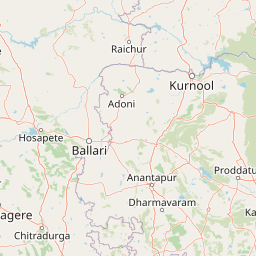
Map view of Rajiv Gandhi National Park (Rameswaram)

Use this park location map to pinpoint Rajiv Gandhi National Park (Rameswaram) in India, understand its exact geographic position, and read its mapped placement within the surrounding landscape more clearly.

Pigeon | © OpenStreetMap contributors

Location context for Rajiv Gandhi National Park (Rameswaram)

Andhra Pradesh
Park atlas

Explore Regional Protected Landscapes and Compare National Parks in Central Andhra Pradesh

Discover More Protected Areas and National Parks Near Rajiv Gandhi National Park (Rameswaram)
Continue your exploration beyond Rajiv Gandhi National Park (Rameswaram) by mapping other national parks and protected areas across central Andhra Pradesh. Browse various conservation landscapes, from riparian settings along the Penna River to dry deciduous forests, comparing their ecological significance within the broader semi-arid region.
National parkAndhra Pradesh

Sri Venkateswara National Park: Andhra Pradesh National Park Protected Landscape Atlas

Mapped protected area, regional geography, and natural terrain.

Uncover the core geographic identity of Sri Venkateswara National Park, a designated national park within Andhra Pradesh. This resource delves into its protected landscape features, providing a mapped perspective on its boundaries and natural terrain. It serves as a crucial point for understanding the park's regional context and its significance as a mapped natural area for atlas-based exploration.

Area
353 km²
Established
1989
IUCN
II
Relief
Mountain
Watercolor illustration showing mountains, a winding river, and green vegetation
National parkKarnataka

Bannerghatta National Park: A National Park in Karnataka with Mapped Geographic Identity

Explore the protected landscape and regional terrain context.

Bannerghatta National Park is an important protected area within the state of Karnataka, India. Its designation as a national park signifies its role in preserving regional natural landscapes and providing valuable geographic context for atlas exploration. Users can examine its mapped boundaries and understand its placement within the diverse terrain characteristic of South India and the Western Ghats, contributing to a structured understanding of protected lands.

Area
260.51 km²
Established
1974
IUCN
II
Relief
Mountain
National parkTamil Nadu

Guindy National Park: Exploring its Protected Area Identity and Geographic Setting in Tamil Nadu

National park terrain and mapped boundaries for regional context.

Guindy National Park represents a significant protected natural landscape within Tamil Nadu, India. This entry provides detailed geographic context, focusing on the park's mapped boundaries and its identity as a national park. Users can delve into the regional landscape, understanding how Guindy National Park contributes to the atlas of protected areas in South India and appreciating its specific natural terrain.

Area
2.706 km²
Established
1977
IUCN
II
Visitors
700K annual
National parkTelangana

Mrugavani National Park: Telangana's Protected Area within the Deccan Plateau's Natural Landscape

Explore undulating terrain and tropical dry forest ecosystems.

Mrugavani National Park represents a significant protected landscape within Telangana, India, characterized by its characteristic Deccan Plateau geography. Covering 1,211 acres, this national park features a terrain of rocky outcrops and undulating topography supporting a tropical dry deciduous forest ecosystem. It serves as a critical refuge for native flora and fauna, including a notable population of spotted deer, and offers a valuable case study in regional conservation and mapped protected areas near urban centers.

Area
4.9 km²
Established
1994
IUCN
II
Relief
Upland
National parkTelangana

Kasu Brahmananda Reddy National Park: Telangana National Park Geographic Atlas

Mapped protected landscapes and regional context in India.

This detail entry for Kasu Brahmananda Reddy National Park provides essential context for understanding its protected landscape identity within Telangana. Explore its mapped boundaries, regional geographic setting on the Deccan Plateau, and discover how this national park contributes to the atlas of protected areas in South India, offering a grounded perspective for geographic exploration.

Area
1.6 km²
Established
1998
Climate
Tropical
Access
Easy access
National parkTelangana

Mahavir Harina Vanasthali National Park: Detailed Protected Landscape Atlas

Mapped boundaries and regional geographic context in Telangana.

Mahavir Harina Vanasthali National Park offers a unique perspective on protected landscapes within Telangana, India. This entry provides detailed information on the park's mapped boundaries and its significant role in the regional geography of the Deccan Plateau. Engage with structured data to understand its protected-area identity and its contribution to the atlas of South India's natural heritage.

Area
14.59 km²
Established
1975
IUCN
II
Relief
Upland
National parkKarnataka

Nagarahole National Park: National Park within Karnataka's Protected Geography

Explore mapped boundaries and regional landscape context.

Nagarahole National Park stands as a distinct national park entity within the state of Karnataka, India. This section focuses on its specific geographic footprint and the protected landscape it encompasses, offering valuable data for users engaged in atlas-based discovery of India's conservation areas and natural terrains. Understand its mapped geography and regional significance.

Area
847.98 km²
Established
1983
IUCN
II
Relief
Upland
Watercolor painting showing a landscape with rolling hills, forests, and distant mountains
National parkKarnataka

Kudremukh National Park: Karnataka's Protected Landscape and River Origin

Explore the geography of shola forests and grasslands.

Kudremukh National Park is a pivotal protected landscape in Karnataka, India, recognized for its distinctive montane grasslands and shola forests. This national park is a critical source for three major rivers: the Tunga, Bhadra, and Nethravathi, highlighting its ecological and geographic significance within the Western Ghats. The park's terrain features rolling hills and steep western slopes, contributing to its unique biodiversity and landscape character for atlas-based discovery.

Area
600.57 km²
Established
1987
IUCN
II
Relief
Mountain

Common questions about visiting, size, designation, and location context for Rajiv Gandhi National Park (Rameswaram)

Rajiv Gandhi National Park (Rameswaram) FAQs for park facts, access, geography, and protected area context
Find quick answers about Rajiv Gandhi National Park (Rameswaram), including protected-area facts, park geography, trail and visitor context, and how the park fits into its surrounding country and regional landscape.
MoriAtlas Explorer

Continue Your Protected Areas Search Across the Global Atlas

Deepen your exploration by continuing the structured search for national parks and protected areas worldwide. Utilize the comprehensive filtering capabilities to compare different conservation landscapes and refine your understanding of global park geography. Discover more about the distribution and characteristics of protected natural areas.

Global natural geography