

Mori Atlas logo
National parkIsangano National Park

Discover the protected landscape identity and regional geography of this national park.

Isangano National Park: Mapped Boundaries and Geographic Context in Northern Province, Zambia

Isangano National Park represents a significant protected natural area within Zambia's Northern Province, offering a unique geographic focus for atlas-based exploration. As a national park, its primary purpose is conservation, providing a defined landscape for understanding regional geography and protected land distribution. Users can delve into its mapped boundaries and explore the surrounding natural terrain, contributing to a richer comprehension of protected areas within the national and regional atlas.

wetlandfloodplainBangweulu SwampsNorthern Province Zambiawildlife conservationantelope habitat

Isangano National Park

National park

Park overview

Structured park overview, official facts, and landscape profile for Isangano National Park

Isangano National Park park facts, protected area profile, and essential visitor context
Review the core facts for Isangano National Park, including designation, size, terrain, visitor scale, habitats, and operating context in one park-focused overview.

About Isangano National Park

Isangano National Park represents an important protected area within Zambia's northern wetland regions, occupying a strategic position within the Bangweulu Swamps ecosystem. The park's 840-square-kilometer expanse encompasses a complex mosaic of floodplain, swampy forest, and grassland habitats that reflect the dynamic hydrological processes of the Chambeshi River system. The Bangweulu Swamps, of which Isangano forms a part, constitute one of the most extensive wetland areas in Zambia and support remarkable biodiversity while also playing a critical role in regulating regional water cycles and providing livelihoods for local communities. The park's elevation of approximately 1100 meters places it within the highlands region of northern Zambia, where seasonal rainfall patterns drive the flooding cycles that sustain the wetland ecosystems. The transition between permanently inundated swamp forests and seasonally flooded grasslands creates distinct ecological zones that support different plant and animal communities throughout the year. Despite facing significant conservation challenges including illegal settlements and wildlife depletion, the park retains potential as a wildlife conservation area and ecological corridor within the broader Bangweulu landscape.

Quick facts and research context for Isangano National Park

Isangano National Park covers 840 square kilometers in Zambia's Northern Province, within the Luwingu and Kasama district boundaries. The protected area sits at approximately 1100 meters elevation and forms part of the Bangweulu Swamps complex, with the Chambeshi River marking its eastern boundary and the Bangweulu Flats to the west. The park was originally designated as a protected reserve in 1957 and elevated to national park status in 1972 under statutory order number 42. The landscape consists primarily of floodplain terrain with interconnected swampy forest patches and seasonal grasslands. The park supports populations of black lechwe, reedbuck, oribi, and sitatunga, along with various migratory bird species and water birds, though wildlife populations have faced pressures from historical human settlement and poaching pressures.

Park context

Deeper park guide and search-rich context for Isangano National Park

Isangano National Park history, landscape, wildlife, and travel context
Explore Isangano National Park through its history, landscape character, ecosystems, wildlife, conservation priorities, cultural context, and seasonal travel timing in a structured park guide built for atlas discovery and search intent.

Why Isangano National Park stands out

Isangano National Park is best known for its position within the Bangweulu Swamps system, one of Zambia's largest and most ecologically significant wetland complexes. The park protects a transitional landscape where floodplain ecosystems meet swampy forest habitats and open grasslands, creating a diverse environmental mosaic. Its wildlife includes notable antelope species such as the black lechwe, a species particularly associated with wetland environments, along with reedbuck, oribi, and the elusive sitatunga. The area also serves as a habitat for migratory bird species and diverse waterfowl populations that utilize the seasonal flooding patterns. The park's conservation challenges and recent revival efforts have also drawn attention as an example of wetland protection and restoration in southern Africa.

Isangano National Park history and protected-area timeline

Isangano National Park was first established as a protected reserve in 1957, reflecting Zambia's early efforts to conserve its natural heritage during the colonial and immediate post-independence period. The area was elevated to full national park status in 1972 through statutory order number 42, formalizing its protection under Zambia's national parks legislation. Following its designation as a national park, the protected area experienced significant decline attributable to multiple factors including insufficient financial support for management and infrastructure, persistent poaching activities, and the establishment of illegal human settlements within the park boundaries. These pressures resulted in depletion of wildlife populations and degradation of the park's ecological integrity. In July 2007, the Zambian government initiated concerted efforts to address these longstanding challenges through the Provincial Development Coordinating Committee, approving measures to evict illegal settlers and facilitate the park's restoration. These revival efforts aimed to enable restocking with wildlife and the reestablishment of effective conservation management, reflecting ongoing commitment to recovering the park's ecological value within the Bangweulu Swamps system.

Isangano National Park landscape and geographic character

The landscape of Isangano National Park is defined by its position within the Bangweulu Swamps system, characterized by extensive floodplain terrain that undergoes seasonal inundation patterns. The park's terrain consists primarily of flat to gently undulating floodplain areas interspersed with swampy forest patches and open grassland expanses. The eastern boundary of the park is marked by the Chambeshi River, one of Zambia's major river systems that contributes to the hydrological regime sustaining the wider Bangweulu wetlands. To the west, the park borders the Bangweulu Flats, a vast expanse of seasonal wetlands that extend the ecological continuum of the protected area. The combination of river influence, seasonal flooding, and the underlying geology creates a landscape where aquatic and terrestrial habitats intermingle in complex patterns. At approximately 1100 meters elevation, the park sits within the elevated plateau regions of northern Zambia, though the floodplain nature of much of the area results in relatively low relief across most of the protected territory.

Isangano National Park ecosystems, habitats, and plant life

The ecological character of Isangano National Park reflects its position within the Bangweulu Swamps, a wetland system of significant ecological importance in southern Africa. The park encompasses a gradient of habitat types from permanently saturated swamp forests through to seasonally flooded grasslands, each supporting distinct ecological communities. The floodplain ecosystems receive water from the Chambeshi River and from seasonal rainfall, creating dynamic hydrological conditions that shape vegetation patterns and wildlife distribution. The swampy forest areas feature tree species adapted to periodic inundation, while the grassland zones provide foraging habitat for various herbivorous species. The Bangweulu system as a whole is recognized for its biodiversity value, supporting populations of water-associated species and serving as important habitat for migratory bird populations. The seasonal flooding cycle influences nutrient cycling and maintains the productivity of these wetland ecosystems, supporting the food web upon which the park's wildlife depends.

Isangano National Park wildlife and species highlights

Isangano National Park supports several notable wildlife species, though populations have been affected by historical human pressures within the protected area. The black lechwe represents one of the characteristic large mammal species, a wetland-adapted antelope particularly associated with floodplain and swamp edge habitats where it feeds on grasses and aquatic vegetation. The park also maintains populations of reedbuck, a medium-sized antelope that inhabits reed beds and grassland areas near water, along with oribi, a small antelope species preferring grassland environments. The sitatunga, a specialized swamp-dwelling antelope with partially webbed feet adapted for moving through flooded terrain, occurs in the swampy forest areas of the park. Beyond these antelope species, the park provides habitat for various water bird species and migratory birds that utilize the wetlands during seasonal movements. The Bangweulu Swamps system generally supports significant bird diversity, with the wetland habitats offering important feeding and nesting areas for species adapted to aquatic environments.

Isangano National Park conservation status and protection priorities

Isangano National Park represents an important component of Zambia's protected area network, particularly within the context of wetland conservation in southern Africa. The park's inclusion within the Bangweulu Swamps system connects it to a larger ecological landscape of significant conservation value, where wetland protection contributes to biodiversity preservation, water resource management, and support for local communities. The establishment of the park in 1972 reflected recognition of the need to protect this wetland environment, though subsequent challenges including human settlement and wildlife depletion demonstrate the difficulties of maintaining protected area integrity without adequate resources and enforcement capacity. The 2007 intervention to address illegal settlements and initiate restoration represents an important effort to recover the park's conservation value, though the success of these efforts continues to depend on sustained management commitment and resource allocation. The park's conservation significance is heightened by its role in protecting transitional wetland habitats that support species with specific ecological requirements, particularly the wetland-adapted antelope species that depend on the floodplain environment.

Top sights and standout views in Isangano National Park

Isangano National Park's defining highlight lies in its integration with the Bangweulu Swamps, one of Zambia's most extensive and ecologically significant wetland systems. The park protects critical floodplain, swamp forest, and grassland habitats that support characteristic wetland wildlife including the black lechwe, sitatunga, and diverse water bird populations. The Chambeshi River forms a natural boundary and hydrological lifeline, connecting the protected area to broader ecological processes affecting the entire Bangweulu basin. The park's history of conservation challenges and recent revival efforts provide important context for understanding the complexities of protected area management in wetland environments where human settlement pressures and ecological restoration needs must be balanced. The elevation of approximately 1100 meters places the park within the northern Zambian highlands, while its position within the Luwingu and Kasama districts places it at the heart of a region known for its ecological diversity.

Best time to visit Isangano National Park

The optimal time to visit Isangano National Park depends on seasonal conditions that affect both landscape character and wildlife viewing opportunities. The dry season, typically from May to October, generally offers easier access to park areas as flood waters recede and vegetation becomes less dense, potentially improving visibility of wildlife congregating around remaining water sources. However, the wet season brings the floodplain to life with seasonal water levels transforming the landscape and attracting migratory bird species, creating a different but equally compelling visitor experience. The timing of visits should be planned with awareness that the park has faced management challenges and that visitor infrastructure may be limited compared to more established national parks in Zambia. Wildlife viewing may be most productive during the dry season when animals concentrate near water bodies, though the park's wildlife populations remain limited compared to historical levels due to past pressures.
Park location guide

Geography guide, regional context, and park location map for Isangano National Park

Isangano National Park park geography, regions, and map view in Zambia
Understand where Isangano National Park sits in Zambia through a broader geographic reading of the surrounding landscape, nearby location context, and its mapped position within the national park landscape.

How Isangano National Park fits into Zambia

Zambia is a landlocked nation in Southern Africa with a population of approximately 20 million people. The country is bordered by eight countries and features diverse geography ranging from the Zambezi River to vast plateaus. Lusaka serves as the capital and largest city, while the Copperbelt Province in the north drives much of the economy through copper mining.

Wider geography shaping Isangano National Park in Zambia

Zambia is located in Southern Africa and is landlocked, bordered by eight countries: Democratic Republic of the Congo to the north, Tanzania to the northeast, Malawi to the east, Mozambique to the southeast, Zimbabwe and Botswana to the south, Namibia to the southwest, and Angola to the west. The country features varied terrain including the Zambezi River plain in the south, plateaus in the central and northern regions, and the Muchinga Mountains in the northeast. Lake Tanganyika forms part of the northern border.

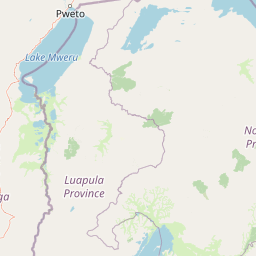
Map view of Isangano National Park

Use this park location map to pinpoint Isangano National Park in Zambia, understand its exact geographic position, and read its mapped placement within the surrounding landscape more clearly.

Pigeon | © OpenStreetMap contributors

Location context for Isangano National Park

Kasama DistrictLuwingu DistrictNorthern Province
Park atlas

Map the regional spread of protected areas and interconnected wetland systems in Zambia's Northern Province, enriching your view of Isangano National Park.

Explore Other National Parks and Protected Landscapes Near Isangano National Park
Browse an extended atlas of national parks and protected areas near Isangano National Park, comparing diverse wetland ecosystems and floodplain landscapes across Zambia's Northern Province. Continue your geographic discovery by exploring adjacent reserves and tracing the broader Bangweulu Swamps system, providing richer context for regional conservation efforts.
National parkMuchinga Province

Lavushi Manda National Park: Zambian National Park with Mapped Protected Boundaries

Discover its regional geography and landscape context.

Lavushi Manda National Park represents a distinct protected landscape within Muchinga Province, Zambia. This page provides detailed insights into its geographic identity, mapped park boundaries, and its placement within the broader regional terrain. Utilize this resource for structured atlas exploration of the park's natural context and its significance as a conservation area, offering a foundation for understanding its environmental setting.

Area
1,500 km²
Established
1972
IUCN
II
Relief
Mixed relief
National parkCentral Province

Kasanka National Park: National Park, Central Province, Zambia - Atlas and Geography

Explore protected landscape boundaries and regional context

Kasanka National Park is a vital protected area situated in Zambia's Central Province. This entry provides detailed geographic context, focusing on its mapped boundaries and its significance as a national park within the larger atlas of protected lands. Users can explore the terrain and natural landscape characteristics that define this specific conservation area and its regional setting.

Area
390 km²
IUCN
II
Relief
Lowland
Scope
Terrestrial
National parkMuchinga Province

North Luangwa National Park: National Park Protected Landscape and Regional Geography

Mapped boundaries and geographic context within Muchinga Province.

North Luangwa National Park is a designated national park offering critical insights into Zambia's protected landscapes. This page provides an atlas-driven view of its geographic scope, emphasizing its mapped boundaries and its position within Muchinga Province. Explore the fundamental geography and protected area context that defines North Luangwa National Park for structured landscape discovery.

Area
4,636 km²
Established
1972
IUCN
II
Relief
Mixed relief
National parkZambia

Luambe National Park: Detailed Geographic and Protected Area Atlas Information

Mapped landscape context within Zambia's natural regions.

This section provides an in-depth look at Luambe National Park, detailing its role as a protected area within the diverse geography of Zambia. Users can explore its mapped boundaries and understand its significance within the country's atlas of natural landscapes. The focus is on providing a concrete geographic perspective, essential for understanding how this national park fits into the regional conservation and landscape context of southern Africa.

Area
300 km²
IUCN
II
Relief
Upland
Climate
Tropical
National parkZambia

South Luangwa National Park: Zambia's National Park Geographic Atlas and Protected Landscape

Explore mapped boundaries and regional context within this Zambian protected area.

South Luangwa National Park represents a vital national park within Zambia, offering a distinct focal point for atlas-based geographic exploration. This dedicated entry details the park's mapped area and its integration into the surrounding Zambian geography. Users seeking to understand protected landscapes, regional park distributions, and natural terrain context will find South Luangwa National Park a key reference for detailed mapping and landscape analysis.

Area
9,050 km²
Established
1972
IUCN
II
Relief
Mixed relief
National parkLuapula Province

Lusenga Plain National Park: Zambia National Park Geographic Atlas

Mapped park boundaries and regional landscape context.

Gain a structured understanding of Lusenga Plain National Park, a dedicated national park situated in Zambia's Luapula Province. This resource details the park's geographic dimensions and its placement within the regional landscape, providing essential context for atlas exploration and a mapped view of protected lands.

Area
800 km²
Established
1972
IUCN
II
Relief
Lowland
National parkZambia

Nsumbu National Park: Zambia's Lakeside Protected Landscape, Map Atlas, and Geographic Context

Mapped terrain and unique shoreline geography.

Nsumbu National Park stands as a vital protected landscape in Zambia, defined by its prominent position on Lake Tanganyika. The park's approximately 2,026 square kilometers showcase a dramatic geographic interplay between terrestrial environments, including miombo woodlands and rare Itigi-Sumbu thicket, and the vast aquatic expanse of the lake. Users exploring this atlas entry will find detailed information on the park's mapped boundaries, distinctive shoreline features like rocky cliffs and sandy beaches, and its overall role in the regional geography of Southern Africa.

Area
2,026 km²
Established
1985
IUCN
II
Relief
Lowland
National parkZambia

Lukusuzi National Park: Zambia's Protected National Park Geographic Context

Mapped protected area and regional landscape identity for Lukusuzi.

Gain detailed insights into Lukusuzi National Park, a key protected area in Zambia, through its geographic setting and mapped boundaries. This page provides essential context for understanding the park's landscape character and its significance within the national park atlas. Explore the fundamental protected-area geography of this distinct Zambian natural landscape.

IUCN
II
Access
Access unknown
Scope
Terrestrial

Common questions about visiting, size, designation, and location context for Isangano National Park

Isangano National Park FAQs for park facts, access, geography, and protected area context
Find quick answers about Isangano National Park, including protected-area facts, park geography, trail and visitor context, and how the park fits into its surrounding country and regional landscape.
MoriAtlas Explorer

Continue Your Protected Areas Search Across the Global Atlas

Deepen your exploration by continuing the structured search for national parks and protected areas worldwide. Utilize the comprehensive filtering capabilities to compare different conservation landscapes and refine your understanding of global park geography. Discover more about the distribution and characteristics of protected natural areas.

Global natural geography