
Why Klapperkop Nature Reserve stands out
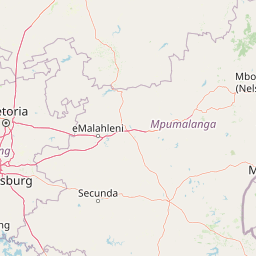
Klapperkop Nature Reserve is best known for protecting a representative fragment of bankenveld grassland at a sensitive ecological threshold within urban Gauteng. The vegetation it conserves, when combined with neighboring reserves, forms one of the more meaningful surviving examples of this threatened highveld mosaic in the province. The reserve is named for its defining feature, the Klapperkop hill and its klapper tree woodland, which gives the landscape both its identity and its visual focal point. Equally distinctive is the pairing of natural and cultural heritage: Fort Klapperkop, completed in 1897 and situated inside the reserve, links the protected area to Pretoria's late nineteenth century military history. The reserve is also closely associated with the nearby Voortrekker Monument, placing it within a cluster of significant South African heritage sites at the city's southern edge.
Klapperkop Nature Reserve history and protected-area timeline
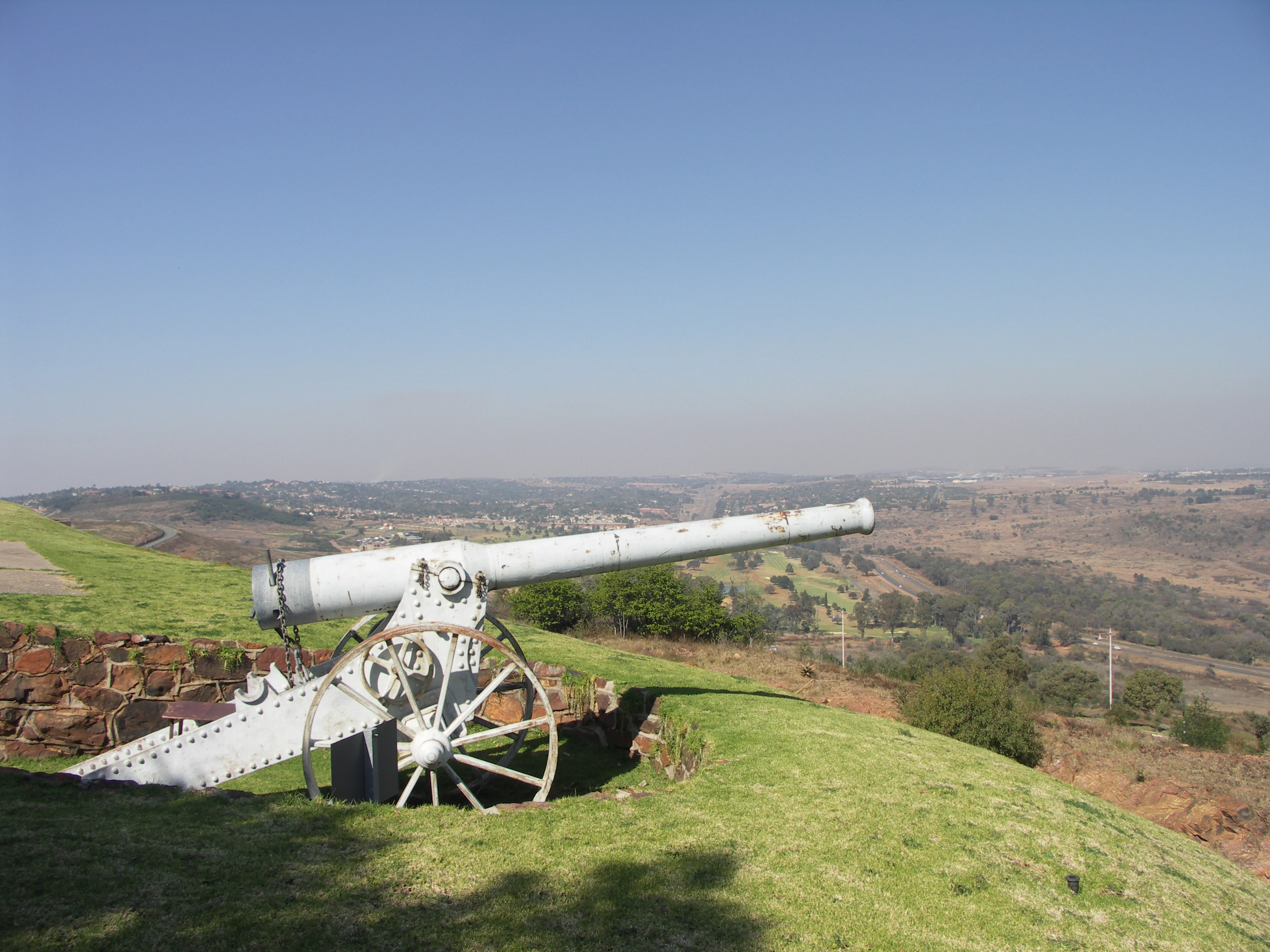
The reserve has an unexpectedly long administrative history for a small urban green space. It was formally established in 1898, only a year after the completion of Fort Klapperkop, one of the four Pretoria forts built at the close of the nineteenth century to defend the city. From its earliest days, the protected area therefore combined two purposes: conserving the natural vegetation of the Klapperkop hill and its surroundings, and safeguarding a key piece of late nineteenth century military infrastructure.
For most of its modern history the reserve has been managed as a municipal nature conservation asset under what is now the Department of Nature Conservation within the City of Tshwane. During the late 1990s the reserve entered a more active ecological management phase. Extensive plantations of invasive black wattle were removed, a process that gradually allowed the native grassland vegetation to re-establish. At roughly the same time, the reserve was restocked with game species, transforming it from a primarily cultural and scenic site into a functioning small-scale wildlife area within the urban edge of Pretoria.
Klapperkop Nature Reserve landscape and geographic character
The defining landform of the reserve is the Klapperkop hill, or kopje, that gives the area its name. This rocky elevation rises above the surrounding terrain and supports its own microclimate and vegetation, particularly the klapper trees that cloak its northern slopes. The broader reserve is built on a spur running west to east, which gives the area its elongated layout and produces the elevated viewpoints that the reserve is known for. Johann Rissik Drive follows this spur and offers sweeping views across Pretoria and toward landmarks such as the Union Buildings.
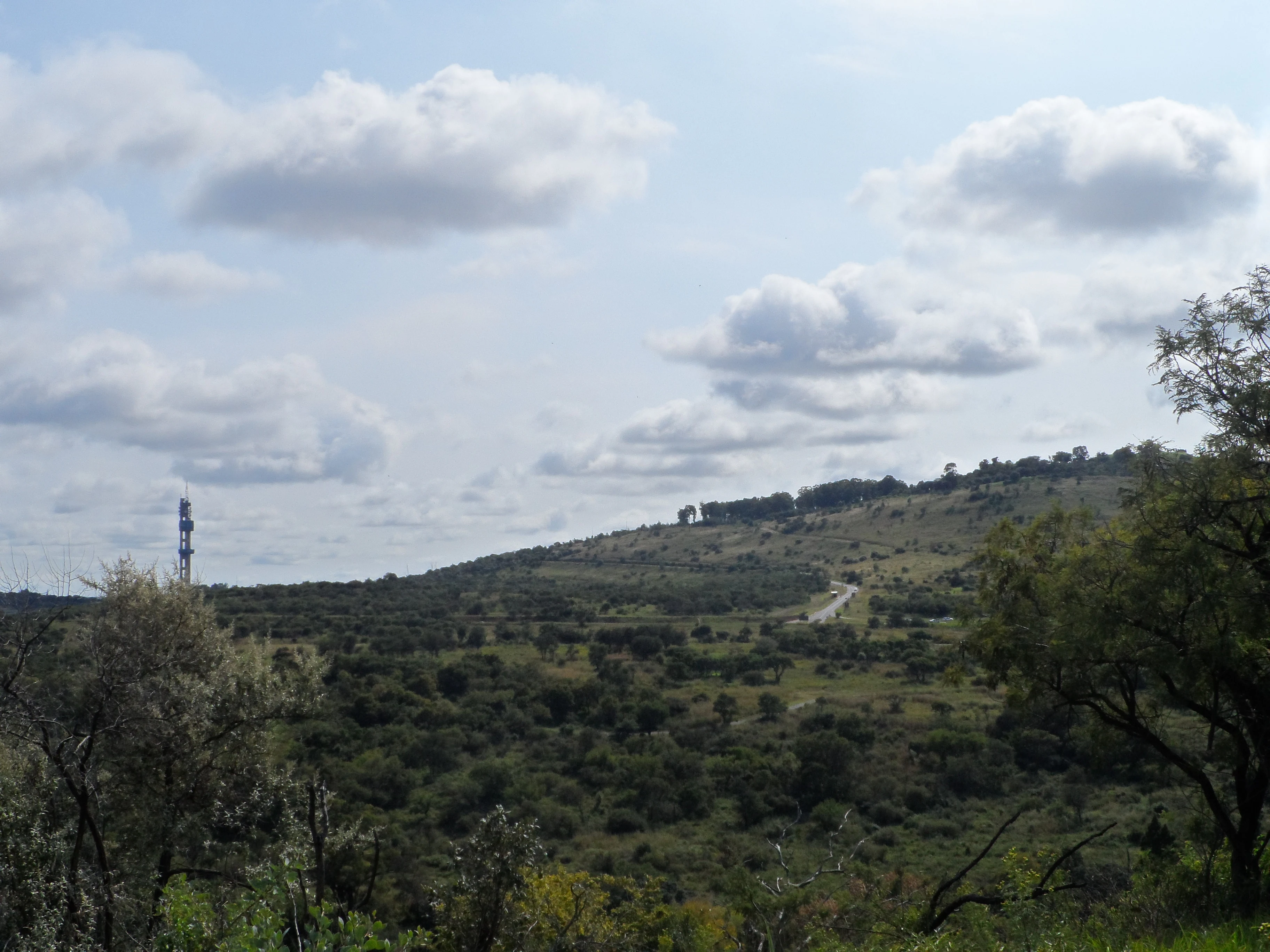
In ecological terms, the underlying vegetation of the reserve is bankenveld, a savanna and grassland mosaic typical of the rocky ridges and plains of the broader Gauteng highveld. The broken terrain of the spur produces areas of denser woody cover around the koppie, more open grassland on flatter sections, and transitional zones where the two intergrade. The removal of black wattle plantations has allowed natural grassland to recolonize much of the central plateau, restoring a more open, rolling savanna character to large parts of the reserve.
Klapperkop Nature Reserve ecosystems, habitats, and plant life
Bankenveld is the foundational ecosystem of Klapperkop Nature Reserve. This vegetation type combines elements of grassland and woodland in patterns determined largely by soil depth, rockiness, and slope, and it supports a specialized mix of grasses, forbs, woody shrubs, and scattered trees. In Gauteng, bankenveld has been heavily reduced by urban expansion, agriculture, and invasive plants, which makes the surviving examples around the southern entrance of Pretoria ecologically significant. Together with neighbouring Groenkloof, the Klapperkop reserve protects roughly 1,400 hectares of this threatened vegetation.
The northern slopes of the Klapperkop hill itself are notable for their concentration of klapper trees (Strychnos pungens), a hardy woody species adapted to rocky highveld sites. Around the base and across the spur, the vegetation is dominated by open grassland transitioning into denser savanna patches. This patchwork of microhabitats is what gives the reserve its relatively high ecological value despite its small size.
For decades, the reserve was compromised by extensive plantations of black wattle (Acacia mearnsii), an invasive Australian tree that suppresses indigenous grasses and shrubs. Their systematic removal during the late 1990s and into the 2000s has been one of the defining ecological moves in the reserve's history, allowing bankenveld species to return. The recovery of grassland has, in turn, supported the reintroduction of grazing animals, which now interact with the vegetation in ways that help maintain its character.
Klapperkop Nature Reserve wildlife and species highlights
Although Klapperkop was historically a relatively quiet reserve in terms of larger mammals, deliberate game restocking from the late 1990s onward has significantly changed its wildlife profile. Burchell's zebra, blue wildebeest, and red hartebeest are now regularly seen across the open grassland sections, often grazing in loose groups together. These use the reserve as both grazing habitat and a refuge from the surrounding urban density, and their presence has become one of the most recognizable features of visits to the area.
Alongside the larger game, the reserve supports a variety of smaller mammals typical of the highveld. Black-backed jackal, several species of mongoose, hedgehogs, hares, and porcupines are recorded, and these smaller animals occupy the wooded fringes and rocky zones around the Klapperkop hill. Birdlife is also a feature of the reserve. Species such as Swainson's spurfowl occur on the open slopes and in the grassland, adding a strong birding element to a site that is otherwise best known for its scenery and history.
The combination of relatively open grassland, scattered rocky outcrops, and woodland patches supports a wide community of small reptiles, insects, and seasonal migrants, contributing to a more diverse reserve than its compact size would suggest. The presence of game also helps shape the vegetation, with grazing and trampling influencing grass composition and turnover.
Klapperkop Nature Reserve conservation status and protection priorities
The conservation importance of Klapperkop Nature Reserve is rooted chiefly in the protection of bankenveld vegetation at a scale that is meaningful within Gauteng. This vegetation type has been substantially reduced across the province, and the combined 1,400 hectares conserved by Klapperkop and its immediate neighbours represents one of the more concentrated surviving blocks. The reserve therefore functions as a refuge for the plants, animals, and ecological processes associated with rocky highveld grassland.
A major part of the reserve's conservation story has been ecological restoration. The removal of black wattle plantations was a priority intervention, because invasive wattles suppress native grasses and alter fire regimes, fundamentally changing the character of bankenveld. By clearing these plantations, managers reopened the landscape to indigenous vegetation, which has since recovered to occupy much of the former plantation footprint. This recovery is closely linked to the reserve's game restocking programme, which has helped reintroduce native herbivores into an ecosystem that had effectively lost its large grazing component.
The reserve also plays a role in conservation awareness and urban ecological connectivity. By maintaining a sizeable patch of natural habitat directly adjacent to a major city, it offers a visible example of integrated conservation at the urban edge, and provides ecological stepping stones between the broader highveld landscape and protected spaces elsewhere in the region.
Klapperkop Nature Reserve cultural meaning and human context
Klapperkop Nature Reserve carries a layered cultural identity that reflects both South African military history and the modern identity of Pretoria as a capital city. The reserve is home to Fort Klapperkop, completed in 1897 as one of the late nineteenth century forts built around Pretoria. The fort remains a tangible piece of the region's colonial-era military architecture and is recognized in heritage discussions of the Pretoria fort system. Its continued presence within an actively managed nature reserve gives the site a distinctive heritage-and-conservation character.
Beyond the fort, the reserve's proximity to the Voortrekker Monument and its neighbours places it within a wider cultural landscape at the southern entrance to Pretoria. This area is strongly associated with Afrikaner and broader South African historical narratives, and the reserve is part of the broader setting within which visitors approach these monuments. In more everyday terms, the reserve has also become a part of contemporary urban culture in Pretoria, used regularly by cyclists, joggers, hikers, and sightseers as a place for outdoor recreation at the edge of the city.
Top sights and standout views in Klapperkop Nature Reserve
One of the standout features of Klapperkop Nature Reserve is the concentration of protected bankenveld at the southern edge of Pretoria, a vegetation type that is heavily threatened in Gauteng and that gives the site genuine ecological weight despite its compact size. The recovery of native grassland following the removal of invasive black wattle plantations, combined with the reintroduction of game, has produced a working highveld ecosystem visible from roads and trails within the reserve.
The reserve is also distinguished by the way natural and historical features interlock. The Klapperkop hill and its klapper tree slopes define both the visual landscape and the name of the reserve, while Fort Klapperkop anchors the cultural landscape and creates direct links to Pretoria's late nineteenth century history. From the elevated road through the reserve, visitors gain viewpoints that connect the grasslands, the fort, and broader city landmarks such as the Union Buildings.
Best time to visit Klapperkop Nature Reserve
Because the reserve is centered on open grassland and exposed koppie slopes, the character of a visit shifts meaningfully with the seasons. In the wetter summer months, the bankenveld greens up, grasses grow tall, and game such as zebra and wildebeest are more easily seen across open ground, while bird activity generally increases around the reserve. The cooler dry winter months bring shorter, more golden grasses, clearer views from the higher portions of the spur, and cooler conditions suited to longer hiking and cycling outings.
Wildlife viewing and birding are typically best during the warmer months, when both resident and seasonal species are more active. Conversely, the cooler season makes hiking and scenic enjoyment of the reserve's viewpoints more comfortable and reduces the need for early starts. As with most highveld reserves, dawn and late afternoon are generally the most rewarding times of day for wildlife spotting, and the reserve is recommended for daylight visits given its safety considerations.