
Why Kruger to Canyons Biosphere stands out
The Kruger to Canyons Biosphere is best known for bringing together some of South Africa's most iconic natural areas within a single UNESCO-recognized framework. The region unites Kruger National Park, one of Africa's largest game reserves, with the Blyde River Canyon, the Wolkberg floral hotspot, and the dramatic Mpumalanga Drakensberg escarpment. Its defining identity lies in the combination of savanna wildlife ecosystems, deep river canyons, montane habitats, and high floristic diversity. The biosphere is also notable for demonstrating how large-scale landscape conservation can integrate ecological protection with the realities of rural communities and land-use pressures, making it both a conservation zone and a model for sustainable development.
Kruger to Canyons Biosphere history and protected-area timeline
The Kruger to Canyons Biosphere Region was officially designated as a UNESCO biosphere reserve on 1 January 2001, following a process led by South Africa's then Department of Environmental Affairs. The designation was made under UNESCO's Man and the Biosphere (MaB) Programme, which promotes biosphere reserves as learning landscapes that integrate biodiversity conservation, sustainable development, and community engagement alongside formally protected core areas.
The ratification reflected growing recognition in South Africa during the late 1990s and early 2000s of the need to manage large, ecologically significant landscapes holistically, rather than relying solely on traditional protected-area models. By linking Kruger National Park and the Blyde River Canyon through coordinated zoning and governance, the biosphere established one of the country's first internationally recognized frameworks for landscape-scale conservation.
In 2011, the Kruger to Canyons Biosphere Region Non-Profit Company (K2C NPC) was established to coordinate biosphere-related activities on the ground. The founding board put early enabling structures in place, after which a strategic plan was developed and implemented within the framework of South African company law. Today, the K2C NPC operates as the coordinating body for an expanding portfolio of conservation, land management, and community-focused projects across the biosphere region.
Kruger to Canyons Biosphere landscape and geographic character
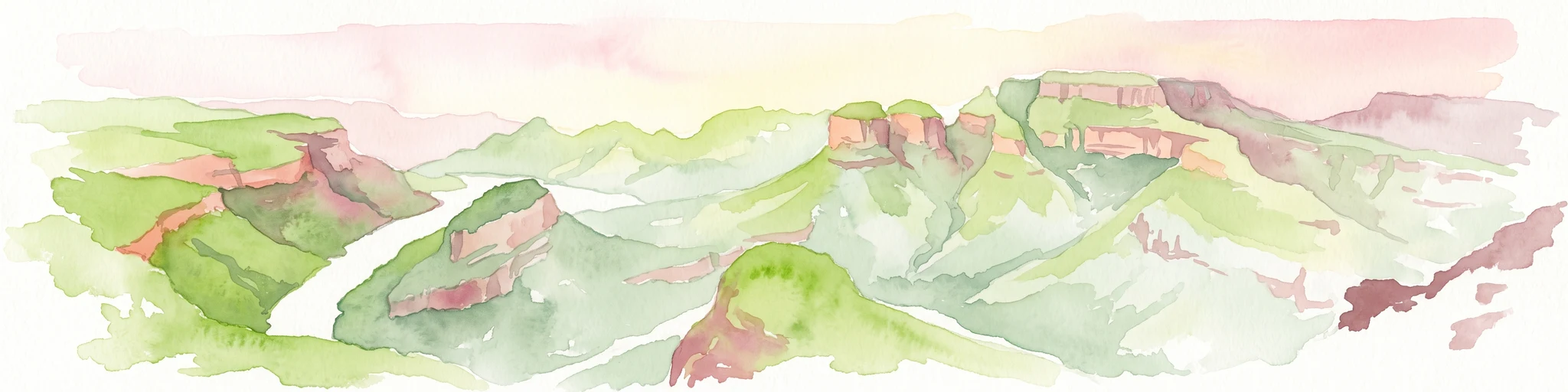
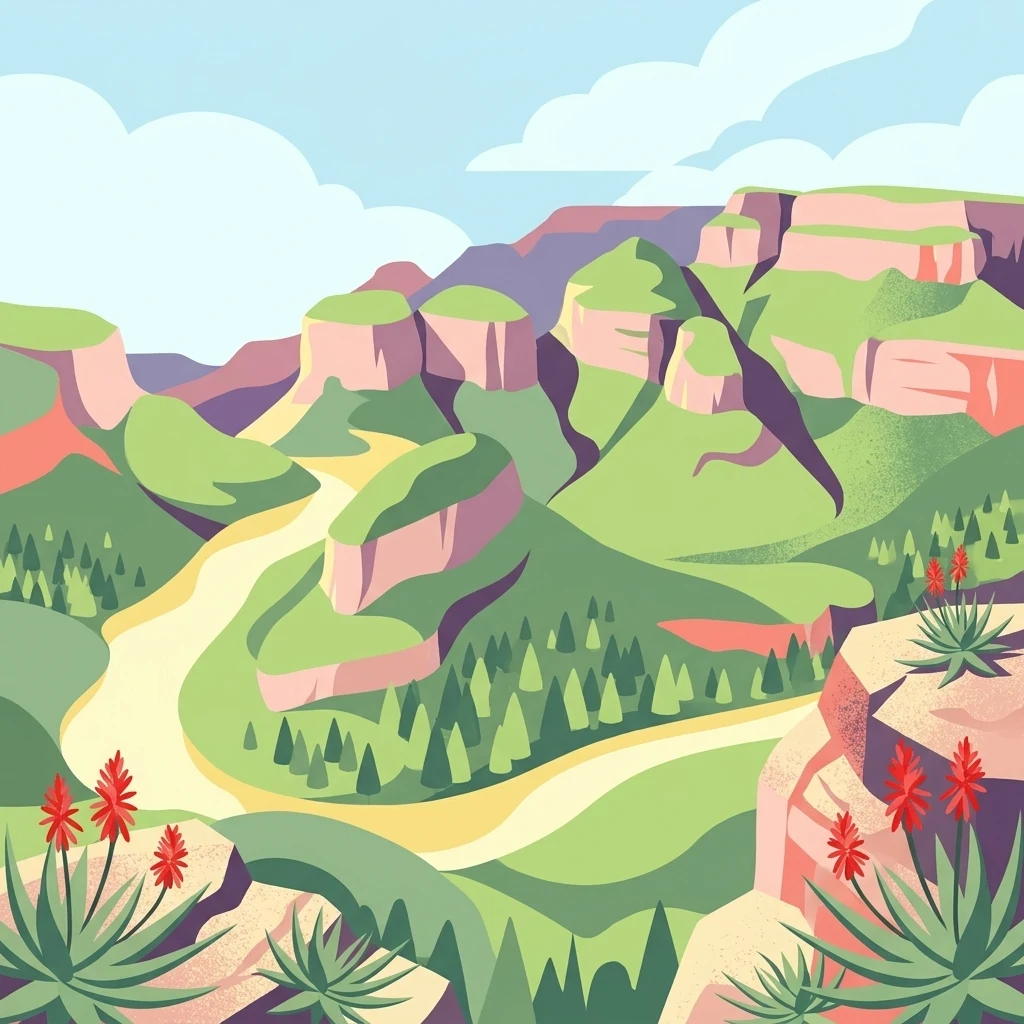
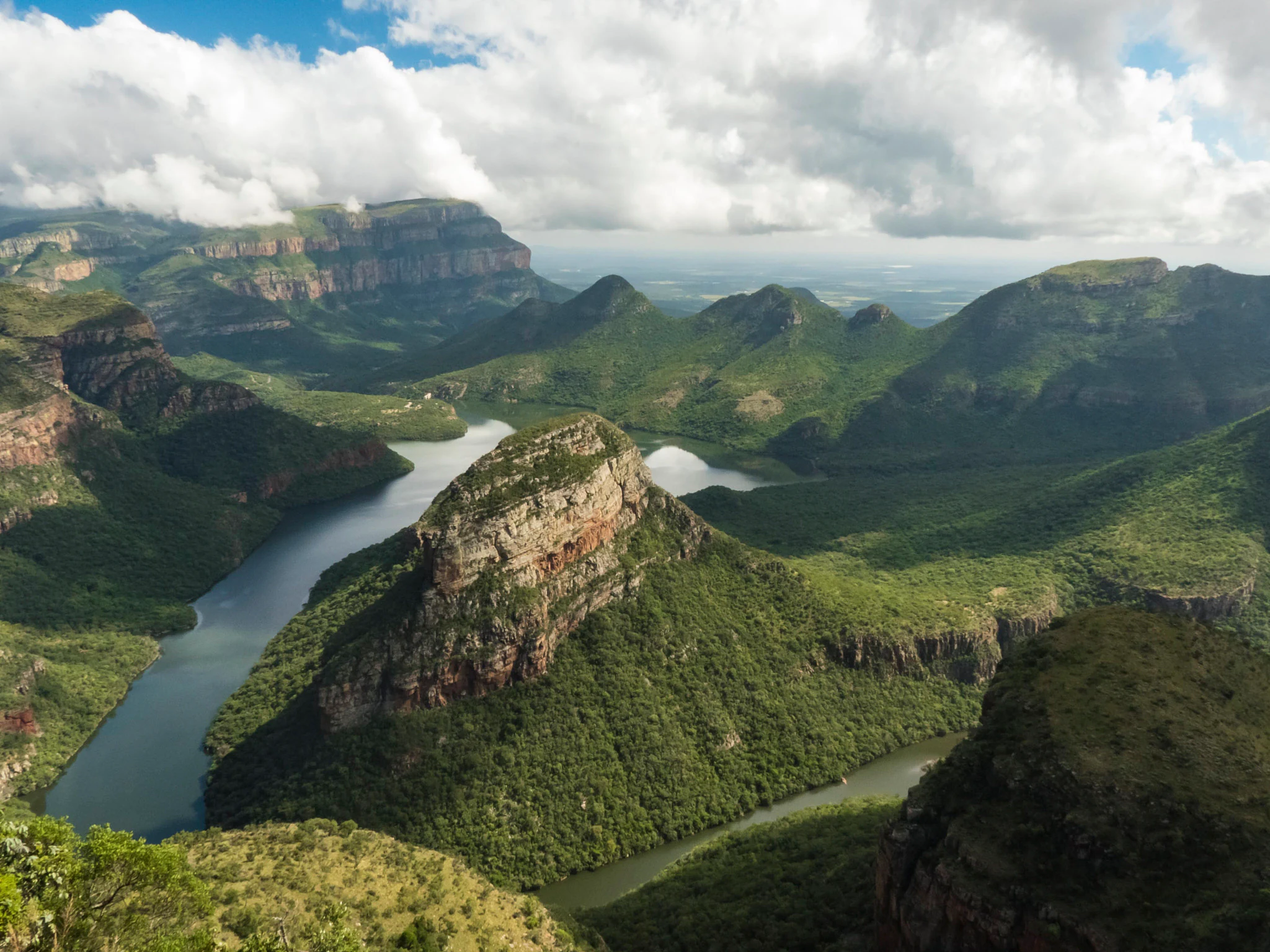
The landscape of the Kruger to Canyons Biosphere Region is defined by dramatic contrasts in terrain and elevation across northeastern South Africa. Its western edge is anchored by the Blyde Escarpment and the deep Blyde River Canyon, one of the largest and most spectacular green canyons in the world. Here, sheer cliffs plunge toward forested valley floors, and landmarks such as Mariepskop rise above the surrounding ridges, offering sweeping views of the Drakensberg.
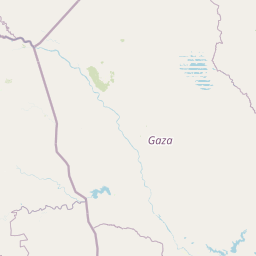
To the east, the terrain transitions into the broad savanna plains associated with Kruger National Park, creating a vast lowveld landscape shaped by ancient river systems and seasonal rainfall. The northern boundary follows the Letaba River, while the southern boundary traces the Sabie River, both key tributaries that feed into the wider Limpopo system near the Mozambique border.
Between the escarpment and the lowveld lie transitional landscapes that include montane grasslands, Afromontane forests, and the Wolkberg mountains, home to exceptional botanical diversity. This gradient from high escarpment to open bushveld produces one of the most visually and ecologically varied landscapes in southern Africa.
Kruger to Canyons Biosphere ecosystems, habitats, and plant life
The Kruger to Canyons Biosphere Region encompasses an unusually broad range of ecosystems within a single contiguous conservation framework. The lowveld areas in the east support classic African savanna habitats shaped by large herbivore populations and seasonal wet-and-dry cycles, while the escarpment and canyon systems to the west preserve microclimates that sustain moisture-loving montane forests and rare plant communities.
The Wolkberg mountains, identified internationally as a leading floral hotspot, contribute exceptional botanical diversity to the biosphere. The region is also characterized by strong altitudinal gradients, from the high ridges of the Drakensberg escarpment down through forested slopes to the open plains of the lowveld. These ecological transitions create overlapping habitats that support a wide spectrum of plant and animal life while also creating ecological corridors between formally protected areas.
Conservation initiatives operating within the biosphere include invasive alien plant clearing, sustainable rangeland management, and efforts to expand protected-area coverage across catchments such as the Blyde, reinforcing the ecological integrity of the broader landscape.
Kruger to Canyons Biosphere wildlife and species highlights
The wildlife profile of the Kruger to Canyons Biosphere is closely tied to Kruger National Park, which forms a core area of the reserve and supports one of Africa's most diverse large-mammal communities. The savanna ecosystems of the lowveld sustain populations of iconic species that have come to define South African wildlife tourism, including elephants, lions, buffaloes, leopards, and rhinoceroses, alongside diverse plains game and a rich birdlife typical of bushveld habitats.
The Blyde River Canyon and surrounding escarpment habitats add a distinct ecological dimension, supporting bird species associated with cliffs, forested valleys, and montane environments. The gradient from canyon to escarpment to lowveld gives the biosphere strong potential as a corridor species and seasonal migration route, while also contributing to the broader conservation value of the landscape beyond any single national park boundary.
Kruger to Canyons Biosphere conservation status and protection priorities
The Kruger to Canyons Biosphere Region represents an important example of UNESCO's landscape-scale approach to conservation in South Africa. By encompassing core areas such as Kruger National Park and the Blyde River Canyon Nature Reserve alongside buffer and transition zones, it extends the reach of formal protection into surrounding land uses and rural communities. This zoning structure is designed to maintain ecological connectivity while supporting sustainable development.
Conservation South Africa operates within the biosphere as a partner in the Catchment Investment Programme, which focuses on invasive alien plant clearing, sustainable rangeland management, and protected-area expansion across key catchments including the Blyde. The K2C NPC coordinates a broader portfolio of projects linking biodiversity conservation with water security, agro-ecology, capacity building for environmental monitors, and environmental education, reinforcing the biosphere's role as both an ecological asset and a functioning conservation management unit.
Kruger to Canyons Biosphere cultural meaning and human context
The biosphere region occupies a landscape with a long history of human settlement, with rural communities living across its core, buffer, and transition zones. The integration of these communities into biosphere governance reflects UNESCO's broader philosophy that reserves should be living landscapes where conservation is linked to economic and social realities.
In practical terms, this means the Kruger to Canyons Biosphere supports community-based environmental monitoring, sustainable land use, and local engagement with conservation projects alongside its formal protected-area mandate.
Top sights and standout views in Kruger to Canyons Biosphere
The most distinctive feature of the Kruger to Canyons Biosphere is its ability to unite two of South Africa's defining natural landmarks, Kruger National Park and the Blyde River Canyon, under a single UNESCO framework. Its sheer geographic range, from the Letaba River in the north to the Sabie River in the south, and from the Blyde Escarpment to the Mozambique border, gives it unusually high ecological and scenic diversity.
Equally notable is the region's role as a model for integrated conservation. Through the K2C NPC, the biosphere runs projects spanning invasive plant clearing, protected-area expansion, water security, agro-ecology, and community-based environmental monitoring, demonstrating how landscape-scale conservation can function alongside rural settlement and land use.
Best time to visit Kruger to Canyons Biosphere
The Kruger to Canyons Biosphere straddles areas with broadly similar seasonal patterns, shaped by northeastern South Africa's wet and dry cycles. The dry winter months generally bring cooler temperatures, thinner vegetation, and easier wildlife visibility in the lowveld and savanna sections, while also offering clear conditions for enjoying the dramatic viewpoints along the Blyde River Canyon and Drakensberg escarpment.
The wetter summer months transform the landscape with lush vegetation, stronger flowing rivers, and greener montane slopes, making the canyon's forested areas and escarpment viewpoints particularly scenic, though wildlife viewing may be more challenging due to denser bush.