Mori Atlas logo
National parkLengwe National Park

Understand the mapped natural terrain and protected area boundaries within Malawi's geography.

Lengwe National Park: Exploring Malawi's Protected Landscape and Regional Geography

Lengwe National Park stands as a distinct protected area within Malawi, contributing to the nation's mosaic of natural landscapes. This page provides an atlas-driven view, focusing on the park's geographic setting and its role as a mapped entity. Users can explore the park's boundaries and understand its place within the regional geography of southeastern Africa, gaining context for its protected landscape identity.

National ParkWildlife ConservationWoodland EcosystemBirdwatchingSafari DestinationNyala Habitat

Lengwe National Park

National park

Park overview

Structured park overview, official facts, and landscape profile for Lengwe National Park

Lengwe National Park park facts, protected area profile, and essential visitor context

Review the core facts for Lengwe National Park, including designation, size, terrain, visitor scale, habitats, and operating context in one park-focused overview.

About Lengwe National Park

Lengwe National Park occupies a significant position in Malawi's protected area network, representing the country's efforts to conserve unique woodland ecosystems in the southern region. Located in the Lower Shire Valley, the park's setting is characterized by a distinctive combination of open deciduous forests and dense thickets that set it apart from many other Malawian protected areas. The park's establishment history reflects evolving conservation priorities, beginning as a game reserve in 1928 to protect the large mammals of the region, particularly the nyala antelope which reaches the northern limit of its natural range in this area. The original protected area was substantially larger than the current park, covering 520 square kilometers before being reduced to 120 square kilometers for agricultural development. This reduced area, known as Old Lengwe, lacked the year-round water supply that the Shire River had previously provided to wildlife. The construction of four artificial water holes in 1964 and 1970 addressed this limitation and supported the park's elevation to national park status in 1970. A major expansion in 1975 increased the park to its current size of 887 square kilometers, primarily to protect the catchment areas of the Shire, Mwanza, and Nkombedzi wa Fodya rivers. This extension also preserved distinctive rock outcrops and expanded the dispersal area available to wildlife. The hot and dry climate presents ongoing challenges for wildlife management, as rainfall represents the only reliable water source, making the artificial waterholes critical for maintaining animal populations throughout the year.

Quick facts and research context for Lengwe National Park

Lengwe National Park spans 887 square kilometers in Malawi's Lower Shire Valley region, about 40 kilometers southwest of Blantyre near Chikwawa. The park was established as a game reserve in 1928 to protect large mammals, particularly nyala antelope, and achieved national park status in 1970. The ecosystem consists of open deciduous woodland and dense thickets, a landscape type that is unusual for Malawi. The park is managed by the Department of National Parks and Wildlife and contains several artificial water holes built to support year-round wildlife populations. Notable wildlife includes nyala, giraffe, leopard, Cape buffalo, and diverse bird species such as shrikes, rollers, bee-eaters, and the yellow-spotted nicator.

Protection and recognition

Analyzing the terrestrial scope, official classification, and global conservation data

Lengwe National Park Protection Status and Conservation Designations

Explore the formal terrestrial boundaries and official conservation classification designated to safeguard the landscape of Lengwe National Park. Grounded geographic records clarify the official conservation framework, management boundaries, and global designation status of the park.

Protection details

Protection scope
Terrestrial
Transboundary protection
No
Park context

Deeper park guide and search-rich context for Lengwe National Park

Lengwe National Park history, landscape, wildlife, and travel context

Explore Lengwe National Park through its history, landscape character, ecosystems, wildlife, conservation priorities, cultural context, and seasonal travel timing in a structured park guide built for atlas discovery and search intent.

Why Lengwe National Park stands out

Lengwe National Park is best known for its population of nyala antelope, a species that reaches its northernmost natural extent in Malawi's Lower Shire Valley. The park provides crucial protection for this reclusive antelope and its habitat within the woodland ecosystem. Beyond nyala, the park supports a diverse community of large mammals including giraffe, leopard, spotted hyena, kudu, impala, and Cape buffalo. The landscape of open deciduous forest and dense thickets represents a distinctive habitat type within Malawi, differing from the highland and lakeside environments found in other protected areas. The artificial water holes throughout the park create focal points for wildlife observation and have been instrumental in sustaining populations through the dry season.

Lengwe National Park history and protected-area timeline

Lengwe National Park's history reflects the development of wildlife conservation in Malawi during the colonial and post-independence periods. The area was first protected in 1928 when it was established as a Game Reserve specifically to conserve the large mammals of the Lower Shire Valley, with particular emphasis on protecting nyala antelope and their habitat. At its initial designation, the protected area covered 520 square kilometers. However, the reserve was substantially reduced in size to 120 square kilometers to make land available for agricultural purposes, creating what is now referred to as Old Lengwe. This reduction created a significant problem as the remaining area lacked the year-round water supply that the Shire River had provided to wildlife in the larger reserve. To address this limitation, four artificial water holes were constructed throughout the area in 1964 and 1970. In 1970, Lengwe was elevated to national park status, providing formal protection under the country's park system. A major expansion occurred in 1975 when an extension area was added, increasing the park's size to 887 square kilometers. This expansion was designed primarily to protect the catchment areas of the Shire, Mwanza, and Nkombedzi wa Fodya rivers, while also preserving the area's distinctive rock outcrops and providing additional dispersal territory for wildlife. The park is now managed by the Department of National Parks and Wildlife. In November 2016, authorities arrested 35 individuals for illegal logging activities within the park, highlighting ongoing challenges with cross-border illegal activity from neighboring Mozambique.

Lengwe National Park landscape and geographic character

The landscape of Lengwe National Park differs notably from the terrain found in many other Malawian protected areas. Rather than the mountainous highlands or lakeside environments that characterize much of Malawi's geography, Lengwe consists of open deciduous forests interspersed with dense thickets. This woodland and thicket combination creates a distinctive visual character across the park's 887 square kilometer extent. The Lower Shire Valley setting provides a relatively flat to gently rolling terrain, punctuated by several notable rock outcrops that were incorporated into the protected area during the 1975 expansion. The extension area also encompasses portions of the Shire, Mwanza, and Nkombedzi wa Fodya river catchments, adding hydrological significance to the park's protected landscapes. The absence of permanent natural water bodies makes the landscape dependent on seasonal rainfall, creating conditions where artificial waterholes become essential features of the ecosystem.

Lengwe National Park ecosystems, habitats, and plant life

Lengwe National Park supports a woodland ecosystem that represents an important habitat type within Malawi's protected area network. The combination of open deciduous forests and dense thickets creates a complex habitat structure that supports diverse wildlife communities. The hot and dry climate of the Lower Shire Valley shapes the ecological character of the park, with rainfall providing the only consistent source of water for wildlife throughout the year. This climatic constraint has shaped both the natural ecology and the management approaches used in the park. The artificial water holes constructed throughout the area serve a critical ecological function, providing year-round water sources that support wildlife populations during the dry season. The park's location in the Lower Shire Valley is significant as it represents the farthest northern point where nyala occur naturally, making Lengwe crucial for the conservation of this species. The woodland ecosystem supports a range of other wildlife species adapted to drier forest and thicket habitats.

Lengwe National Park wildlife and species highlights

Lengwe National Park supports a diverse assemblage of wildlife species adapted to the woodland and thicket habitats of the Lower Shire Valley. The park is particularly known for its population of nyala, a reclusive antelope species that reaches the northernmost extent of its natural range in this region. The protected area provides crucial habitat for this species, which remains the flagship conservation focus for the park. Beyond nyala, the park supports populations of giraffe, spotted hyena, African leopard, common warthog, kudu, impala, Samango monkey, reedbuck, African buffalo, and suni. This combination of species represents both browsers and grazers, utilizing the different habitat structures within the park. The birdlife of Lengwe is also noteworthy, with particularly interesting species including various shrikes, rollers, bee-eaters, and the yellow-spotted nicator. The artificial water holes throughout the park serve as important focal points for wildlife observation, attracting animals during the dry season when natural water sources become scarce.

Lengwe National Park conservation status and protection priorities

Lengwe National Park represents an important conservation asset for Malawi, protecting a distinctive woodland ecosystem that differs from the highland and lakeside habitats found in many other protected areas. The park's establishment and subsequent expansion reflect evolving understanding of the ecological value of the Lower Shire Valley region. The original 1928 designation as a Game Reserve demonstrated early recognition of the area's importance for large mammal conservation, particularly for nyala antelope which reaches its northern range limit here. The 1975 expansion to 887 square kilometers added significant protection for watershed areas, recognizing the broader ecological services provided by the park'scatchment areas of the Shire, Mwanza, and Nkombedzi wa Fodya rivers. Managing the park as an IUCN Category II protected area designates it as a national park, reflecting its primary conservation purpose. The challenge of maintaining wildlife populations in a hot, dry climate with limited natural water sources has necessitated ongoing management intervention, including the maintenance of artificial water holes. The 2016 enforcement action against illegal logging demonstrates the ongoing challenges of protecting the park from external pressures, including cross-border illegal activity from Mozambique.

Lengwe National Park cultural meaning and human context

Lengwe National Park is situated in the Lower Shire Valley region of Malawi, an area with local communities whose relationship with the landscape predates formal protected area designation. The park's establishment in 1928 as a Game Reserve reflected colonial-era approaches to wildlife management, which often involved restricting local access to natural resources. The subsequent reduction of the protected area in the mid-20th century to make land available for agriculture demonstrates the ongoing tension between conservation objectives and development pressures in the region. The expansion in 1975 incorporated additional land and river catchments, extending the park's ecological influence. The park remains located near the town of Chikwawa, maintaining connections to the surrounding regional community. The presence of Nyala Lodge, operated by Jambo Africa Ltd, indicates that tourism provides an economic interface between the park and the regional economy.

Top sights and standout views in Lengwe National Park

Lengwe National Park offers distinctive wildlife viewing opportunities in a unique Malawian woodland setting. The chance to observe nyala antelope in their natural habitat represents a particularly special experience, as the park protects the northernmost population of this species. The artificial water holes create reliable wildlife viewing opportunities, particularly during the dry season when animals congregate around these permanent water sources. The park's landscape of open deciduous forest and dense thickets provides a different visual experience from Malawi's more famous highland and lakeside parks. The presence of species like giraffe, leopard, and Cape buffalo alongside nyala demonstrates the ecological diversity contained within the protected area. The birdlife, particularly the variety of shrikes, rollers, bee-eaters, and the yellow-spotted nicator, adds additional interest for ornithological visitors.

Best time to visit Lengwe National Park

Lengwe National Park can be visited year-round, though the experience varies significantly with the seasons. The dry season, from approximately May to October, generally offers the best wildlife viewing opportunities as animals concentrate around the artificial water holes and vegetation becomes less dense. This period coincides with Malawi's winter months, when temperatures are milder and rainfall is minimal. The hot dry season from October through November can be particularly intense, with increasing water scarcity driving wildlife to the available water sources. The rainy season from November through April brings green vegetation that can make wildlife more difficult to spot, though the park's landscape becomes lush and birds are often more active. The optimal visiting window typically falls between May and September when conditions are most favorable for wildlife observation and outdoor exploration.

Monthly climate preview

Historical temperature ranges and monthly precipitation patterns from long-term observations

Long-Term Climate Profile and Monthly Weather Trends in Lengwe National Park

Long-term meteorological data at a representative elevation of 210 meters reveals a pronounced seasonal cycle for this Malawian reserve, featuring hot late-year temperatures and a distinct wet period. Comparing the complete twelve-month profile helps researchers and observers map out the historical baseline of monthly precipitation and temperature shifts.
Annual mean26 °C
22 °C30 °C
Jan27°
Feb26°
Mar26°
Apr25°
May24°
Jun22°
Jul22°
Aug24°
Sep28°
Oct30°
Nov30°
Dec28°
Warmest month
November

30.4 °C

Coolest month
July

21.8 °C

Wettest month
January

8.3 mm/day

Driest month
August

0.2 mm/day

Park location guide

Geography guide, regional context, and park location map for Lengwe National Park

Lengwe National Park park geography, regions, and map view in Malawi

Understand where Lengwe National Park sits in Malawi through a broader geographic reading of the surrounding landscape, nearby location context, and its mapped position within the national park landscape.

How Lengwe National Park fits into Malawi

Malawi is a landlocked country in Southeastern Africa. Formerly known as Nyasaland under British colonial rule, it gained independence in 1964 and became a multi-party democracy in 1994. The country is known for Lake Malawi, which comprises about one-fifth of its territory, and is governed as a unitary presidential republic with Lilongwe as its capital.

Wider geography shaping Lengwe National Park in Malawi

Malawi is located in Southeastern Africa within the Great Rift Valley. It is bordered by Zambia to the west, Tanzania to the north and northeast, and Mozambique to the east, south, and southwest. The country features highlands and plateaus in the northern and central areas, with the Great Rift Valley system running through the territory.

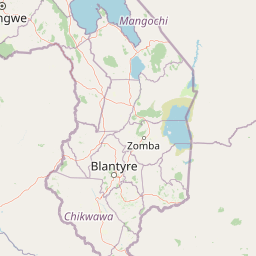
Map view of Lengwe National Park

Use this park location map to pinpoint Lengwe National Park in Malawi, understand its exact geographic position, and read its mapped placement within the surrounding landscape more clearly.

Pigeon | © OpenStreetMap contributors
Park atlas

Browse the Surrounding Landscapes and Regional Protected Areas for Broader Park Comparison

Explore Other National Parks Near Lengwe National Park: Discover Nearby Protected Areas in Southern Malawi

After exploring Lengwe National Park, continue your geographic discovery by mapping other national parks and protected areas across southern Malawi and its adjacent regions. Compare their distinct woodland ecosystems, river catchments, and conservation landscapes to understand the broader protected-area context beyond Lengwe's unique nyala habitat.
Wildlife reserveMalawi
About 32 km away#1 closest

North

Majete Wildlife Reserve: Geographic Atlas and Protected Area Map of Southern Malawi

Savanna landscapes and Shire River valley ecology

Majete Wildlife Reserve represents a premier example of habitat restoration in the Shire River valley. Spanning 700 square kilometers of varied terrain, the reserve protects a mosaic of riparian forest and savanna that has been carefully managed to sustain Big Five wildlife. Gain insight into the regional geography, protected landscape boundaries, and conservation history of this essential Malawian wildlife sanctuary.

Area
700 km²
Established
1955
IUCN
IV
Visitors
7K annual
Wildlife reserveNsanje District
About 52 km away#2 closest

Southeast

Mwabvi Wildlife Reserve: Mapping the Protected Landscapes of the Nsanje District

Geography, woodland terrain, and regional biodiversity.

Located in the southernmost Nsanje District of Malawi, Mwabvi Wildlife Reserve encompasses a unique convergence of dry Brachystegia woodland, sandstone hills, and open savanna grasslands. This protected area offers a deep look into the varied topographies of the Lower Shire region, providing a comprehensive understanding of the reserve's historic ecological importance and its current role in regional conservation.

Area
135 km²
Established
1953
IUCN
IV
Relief
Upland
Nature reserveChiradzulu District
About 79 km away#3 closest

Northeast

Chiradzulu Mountain Forest Reserve: Geography and Protected Area Profile

A rugged mountain landmark in the Shire Highlands of southern Malawi

Located in the heart of Chiradzulu District, this nature reserve protects a prominent mountain massif known for its unique silhouette and ecological importance. The site provides a vital reference point for understanding the mountainous terrain, regional reforestation progress, and the broader natural landscapes of the Shire Highlands.

Area
7.74 km²
Established
1924
Relief
Mountain
Scope
Terrestrial
Nature reserveMalawi
About 95 km away#4 closest

Northeast

Mulanje Mountain Forest Reserve: Protected Afromontane Landscapes in Southern Malawi

Geographic overview of the Mulanje Massif and its high-elevation plateau

This nature reserve covers an isolated mountain block in Malawi, rising sharply to 3,002 meters at Sapitwa Peak. The landscape features rugged granite cliffs, deeply carved valleys, and extensive Afromontane forests that provide sanctuary for numerous endemic species. Use this atlas resource to understand the massif's vertical relief, plateau characteristics, and its central role in the regional geography of southeastern Africa.

Area
563.17 km²
Established
1927
Relief
Mountain
Climate
Tropical
Nature reserveMalawi
About 120 km away#5 closest

Northeast

Zomba Plateau Nature Reserve: Geographic Overview and Mapped Mountain Terrain

Protected montane landscapes in southern Malawi

Zomba Plateau stands as a significant granitic intrusion within the Shire Highlands, featuring high-altitude terrain and diverse forested patches. This record provides essential geographic context on its geological structure, forest reserves, and surrounding vistas across the southern Malawi landscape.

Area
130 km²
Established
1913
Relief
Mountain
Climate
Tropical
Protected areaZomba District
About 147 km away#6 closest

Northeast

Lake Chilwa Protected Area: Geography, Map, and Seasonal Wetland Landscape Analysis

Understanding the endorheic basin and floodplain dynamics in Malawi.

Lake Chilwa stands as a significant protected area and Ramsar wetland in Zomba District. This detail covers its unique closed-basin geography, the influence of seasonal rainfall on surface extent, and the distinct characteristics of its shallow open water and flooded grasslands. Explore the intersection of river inflows and basin drainage that defines this critical ecosystem.

Established
1996
Relief
Lowland
Scope
Terrestrial
Water
Water-dominated
National parkSouthern Region
About 170 km away#7 closest

North

Liwonde National Park: National Park in Malawi's Southern Region

Mapped Protected Area Boundaries and Geographic Context

Liwonde National Park is a designated national park situated in Malawi's Southern Region. This entry provides detailed geographic information, focusing on the park's mapped boundaries and its role within the broader atlas of protected landscapes. Explore the unique regional geography and conservation context that defines this protected area.

Area
548 km²
Established
1973
Relief
Upland
Climate
Tropical
National parkMalawi
About 225 km away#8 closest

North

Lake Malawi National Park: UNESCO Protected Landscape and Endemic Fish Habitat

Discover mapped terrain, island geography, and evolutionary wonders.

Lake Malawi National Park offers unparalleled insight into freshwater biodiversity and landscape dynamics within Malawi's Great Rift Valley. As a UNESCO World Heritage Site, it is celebrated for its spectacular evolutionary radiation of cichlid fish, a phenomenon studied globally. The park's protected territory includes the mountainous Nankumbu Peninsula and thirteen islands, providing a rich context for understanding the interplay between aquatic ecosystems, terrestrial terrain, and unique island geography.

Area
94 km²
Established
1980
IUCN
II
Relief
Mountain

Common questions about visiting, size, designation, and location context for Lengwe National Park

Lengwe National Park FAQs for park facts, access, geography, and protected area context

Find quick answers about Lengwe National Park, including protected-area facts, park geography, trail and visitor context, and how the park fits into its surrounding country and regional landscape.
MoriAtlas Explorer

Continue Your Protected Areas Search Across the Global Atlas

Deepen your exploration by continuing the structured search for national parks and protected areas worldwide. Utilize the comprehensive filtering capabilities to compare different conservation landscapes and refine your understanding of global park geography. Discover more about the distribution and characteristics of protected natural areas.

Global natural geography