
Why Ngula Bulgarabang Regional Park stands out
Ngula Bulgarabang Regional Park is best known as a forested plateau sitting on the upper Blue Mountains western escarpment, directly overlooking the Megalong Valley and adjoining the Greater Blue Mountains World Heritage Area. The plateau carries a distinctive mix of natural escarpment bushland and an older radiata pine plantation, which has given the park its alternative identity as Radiata Plateau. It is also notable for its ecological role within the broader Blue Mountains landscape, supporting species such as the spotted-tail quoll, greater glider, and flame robin, and for preserving the traditional Gundungurra Aboriginal pathway known as Blacks Ladder that runs through the area.
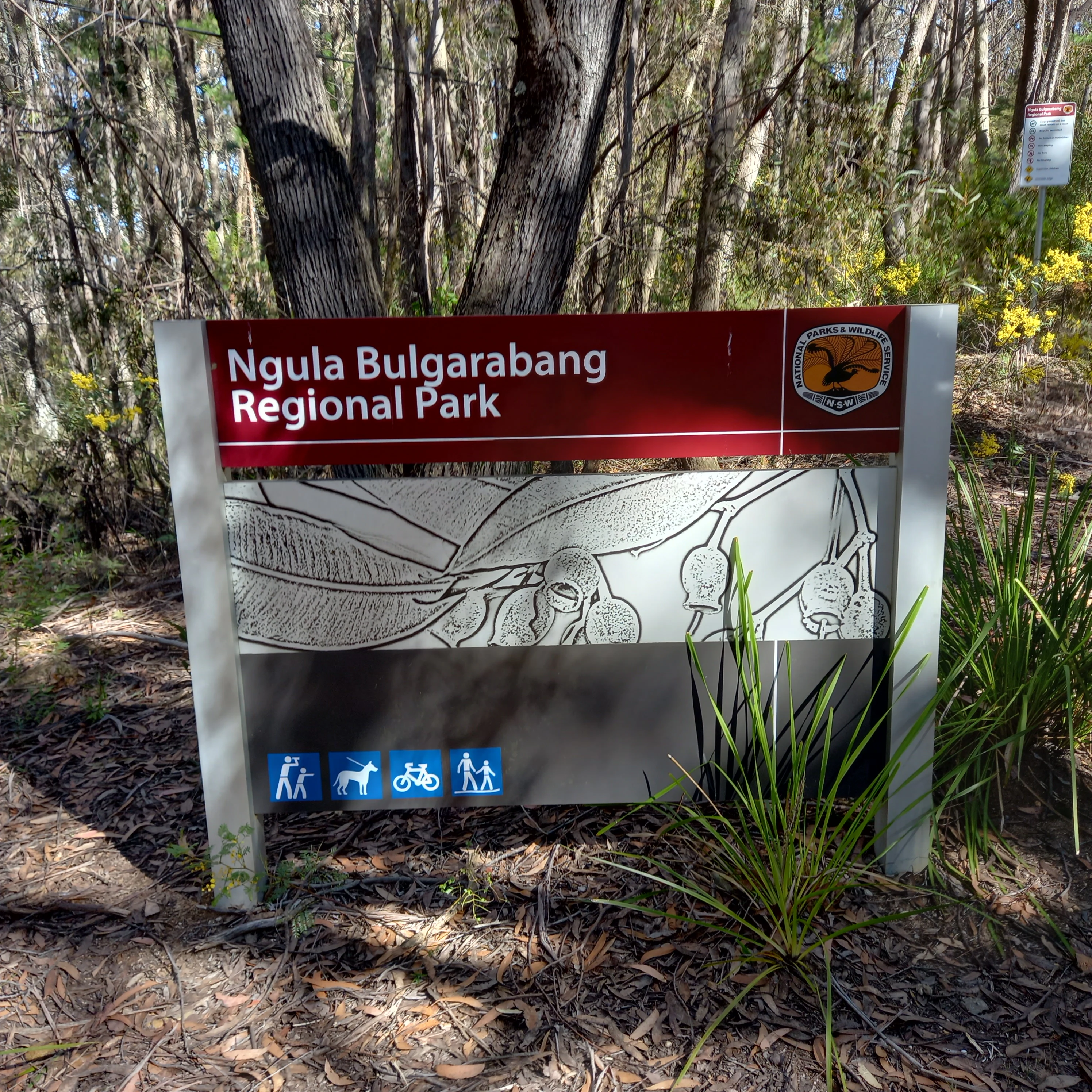
Ngula Bulgarabang Regional Park history and protected-area timeline
The plateau that now forms Ngula Bulgarabang Regional Park was held by a single family for 45 years, from 1974 to 2019, and was known to them as Invincibility Point. During this long period of private ownership, the property was identified by its Pulpit Hill Road address in Katoomba and was widely regarded as one of the largest undeveloped escarpment holdings in the upper Blue Mountains.
Before its modern history, the plateau was known as Pulpit Plateau. In the 1960s, parts of the plateau were cleared to establish a plantation of radiata pine, which has remained a defining feature of the landscape and gave rise to the colloquial name Radiata Plateau. The plantation sits within a broader matrix of natural escarpment bushland that has persisted around the planted pines.
Recognition of the property's conservation significance grew through the late 2010s. In 2019, it was offered for sale as a substantial multi-lot escarpment holding. Later that year, the NSW State Government purchased the property for $2.8 million, and on 8 October 2019, NSW Environment Minister Matt Kean announced that the area would be incorporated into the State's national park reserve system.
The park was officially gazetted in June 2020 under the name Ngula Bulgarabang, meaning 'very large forest' in the Gundungurra language, formalizing the transition from a privately held escarpment property to a regionally significant protected area within the Blue Mountains landscape.
Ngula Bulgarabang Regional Park landscape and geographic character
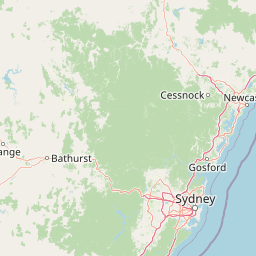
Ngula Bulgarabang Regional Park sits on a well-defined plateau along the upper Blue Mountains western escarpment, west of Katoomba. The plateau forms a relatively level upper surface that contrasts sharply with the steep sandstone cliffs and deeply incised valleys typical of the surrounding Blue Mountains terrain. From the plateau edge, the land drops away toward the Megalong Valley, producing long, open views across one of the upper mountains' most prominent valleys.
Within the park, the physical landscape is shaped by two overlapping elements: the natural escarpment bushland that covers much of the plateau, and the broad stands of radiata pine planted in the 1960s. The pine plantation gives parts of the park an open, parkland-like character, while surrounding native vegetation creates denser bushland corridors around the plateau margins and along the escarpment edge.
The location immediately adjoining the Greater Blue Mountains World Heritage Area places the park within a continuous sandstone landscape of cliffs, ledges, and forested valley systems. Pulpit Hill Road defines much of the eastern approach to the plateau, and the property's layout across several lots supports a mix of plateau interior and escarpment-edge terrain.
Ngula Bulgarabang Regional Park ecosystems, habitats, and plant life
The vegetation of Ngula Bulgarabang Regional Park reflects its position on the upper Blue Mountains western escarpment, where dry sclerophyll eucalypt forest types typically dominate surrounding landscapes. On the plateau itself, the natural bushland has been supplemented by a substantial mid twentieth century radiata pine plantation, producing a distinctive mixture of native canopy elements and a non-native conifer understory in parts of the park.
Around the plantations and across the rest of the plateau, regenerating native vegetation continues to occupy gullies, rock outcrops, and escarpment edges. The plateau's location adjoining the Greater Blue Mountains World Heritage Area places it within one of the most significant temperate eucalypt forest systems in Australia, with habitat continuity between the park and the broader wilderness of the upper mountains.
The combination of plateau forest, plantation, and escarpment-edge habitat creates a mosaic of environments that supports a variety of animal species and contributes to broader ecological functioning across the upper Blue Mountains escarpment corridor.
Ngula Bulgarabang Regional Park wildlife and species highlights
Ngula Bulgarabang Regional Park is known to support several notable native species that are characteristic of the upper Blue Mountains escarpment forests. Among the mammals recorded in the area is the spotted-tail quoll, a medium-sized marsupial carnivore that depends on large, connected tracts of forested landscape. The plateau's forest and escarpment-edge habitats also provide habitat for the greater glider, a gliding marsupial associated with mature eucalypt forest and hollow-bearing trees.
Birdlife in the park includes species such as the flame robin, a small insectivorous bird typically associated with open eucalypt woodlands and forest edges. The mix of native bushland and plantation, along with the adjoining Megalong Valley and the Greater Blue Mountains World Heritage Area, broadens the range of habitats available to both resident and seasonally mobile bird species.
Because the park sits within a wider landscape of protected escarpment forests, its wildlife communities are closely tied to broader patterns of species movement and habitat use across the upper Blue Mountains, making the plateau an important local refuge and connectivity area.
Ngula Bulgarabang Regional Park conservation status and protection priorities
Ngula Bulgarabang Regional Park is significant from a conservation perspective because it protects a substantial block of upper Blue Mountains escarpment bushland at the edge of the Greater Blue Mountains World Heritage Area. The park safeguards a mix of natural forest cover and an older radiata pine plantation within a landscape that has historically experienced considerable clearing and fragmentation.
Its position immediately adjoining the World Heritage Area strengthens habitat connectivity across the upper mountains, supporting species such as the spotted-tail quoll and greater glider that depend on extensive, connected forest environments. By adding another plateau and escarpment parcel to the State's reserve network, the park extends the buffer of protected bushland between the townships of the upper Blue Mountains and the surrounding wilderness.
The park's acquisition by the NSW State Government in 2019 and its gazetting in 2020 reflect recognition of the plateau's contribution to long-term ecological resilience, biodiversity protection, and the preservation of escarpment forest systems in this part of New South Wales.
Ngula Bulgarabang Regional Park cultural meaning and human context
The name Ngula Bulgarabang, given to the park at its gazetting in 2020, comes from the Gundungurra language and translates to 'very large forest'. The Gundungurra people are the traditional custodians of the Blue Mountains landscape, including the upper western escarpment country around Katoomba and the Megalong Valley. Naming the park in Gundungurra language reflects recognition of the continuing cultural significance of the area to Aboriginal communities.
A traditional Aboriginal pathway known as Blacks Ladder runs through the plateau, indicating long-standing Aboriginal travel routes through the upper escarpment. The presence of this pathway highlights the importance of the plateau not only as a natural landscape but as part of broader traditional movement corridors and cultural geographies of the Gundungurra people.
The lower profile colloquial names 'Pulpit Plateau' and 'Radiata Plateau', together with the private-era name Invincibility Point, also illustrate the layered human history of the area, ranging from European-era pastoral and land use patterns through to the modern recognition of Aboriginal place naming within the formal protected-area system.
Top sights and standout views in Ngula Bulgarabang Regional Park
Ngula Bulgarabang Regional Park protects a well-defined upper Blue Mountains plateau near Katoomba, sitting directly above the Megalong Valley and adjoining the Greater Blue Mountains World Heritage Area. Its roughly 756 acres of escarpment bushland include one of the more notable radiata pine plantations on the upper mountains, a legacy of 1960s clearing that gives the site its alternative identity as Radiata Plateau.
The park supports signature species of the Blue Mountains such as the spotted-tail quoll, greater glider, and flame robin, and incorporates the traditional Aboriginal pathway Blacks Ladder, which traverses the plateau as part of longer historic Gundungurra travel corridors. Its 2020 gazetting as Ngula Bulgarabang marked a significant expansion of protected escarpment bushland in the upper Blue Mountains.
Best time to visit Ngula Bulgarabang Regional Park
Visitation character at Ngula Bulgarabang Regional Park is shaped by the cool, elevated climate of the upper Blue Mountains, where conditions can shift between misty, wetter periods and clearer, drier windows. Cooler months generally produce crisper views across the Megalong Valley and more comfortable walking conditions across the plateau, while warmer months can bring higher temperatures and occasional summer storms, sometimes reducing visibility from the escarpment edge.
The plateau's mix of radiata pine plantation and surrounding native bushland gives it distinct seasonal character, with cooler periods often highlighting the structural contrast between the open pine stands and the denser eucalypt canopy. Wildlife activity across the area tends to follow broader upper Blue Mountains patterns, with cooler seasons frequently associated with more visible animal movement and clearer conditions for viewing across the valley.