
Why Parc naturel régional des Monts d'Ardèche stands out
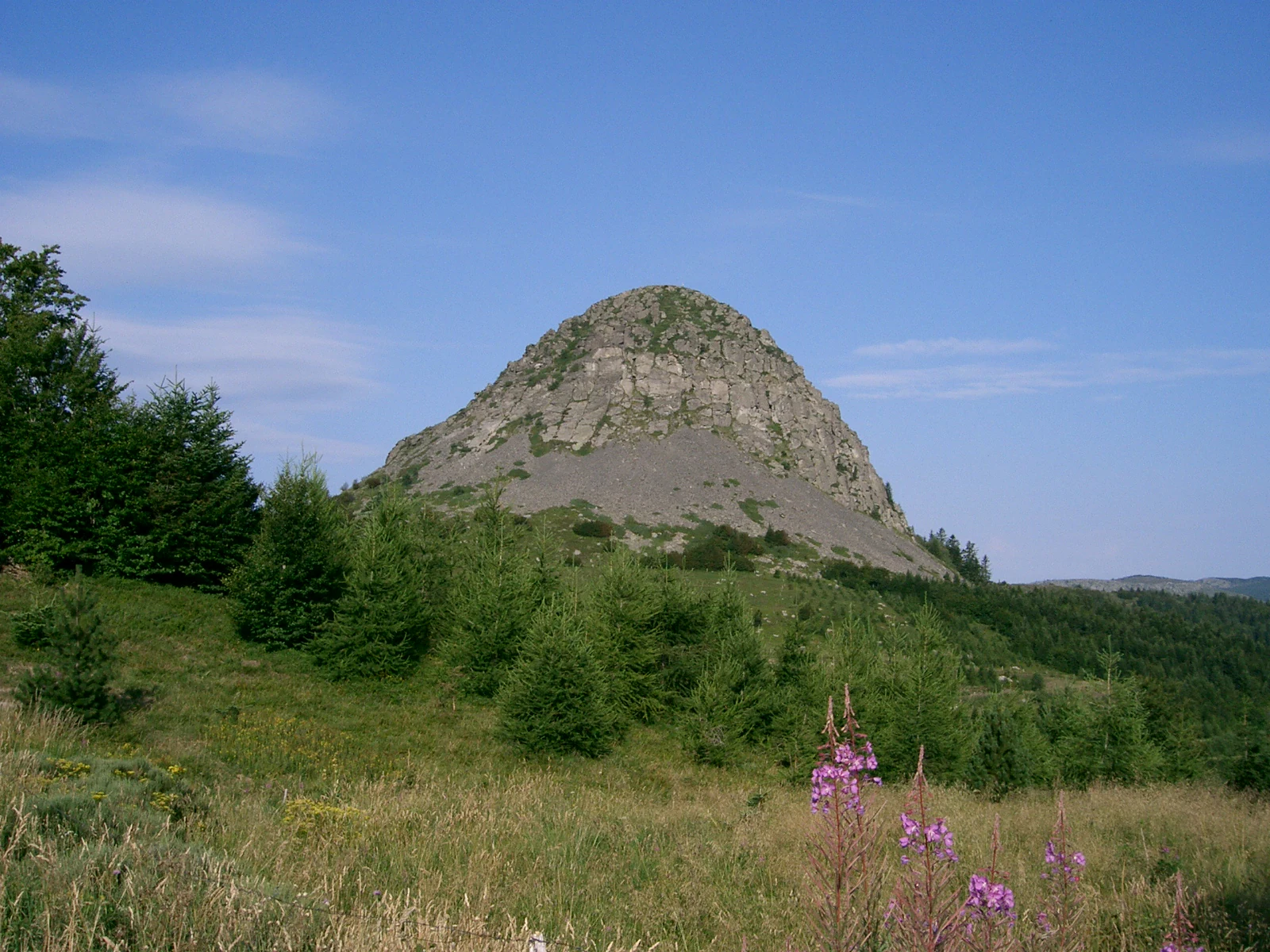
The park is best known for the volcanic sucs and highland scenery of the Massif du Mézenc, with Mont Gerbier-de-Jonc as one of the most recognisable landmarks. Its territory also features the chestnut groves, terraced landscapes and Cévenol river valleys that have shaped local rural life for centuries. Equally distinctive is the park's double identity as both a regional natural park and a UNESCO Global Geopark, making it a place where pastoral heritage, traditional food crops and geological heritage converge. The combination of volcanic landforms, chestnut culture, blueberry harvests and mountain rivers gives the Monts d'Ardèche a sharply defined regional character within the Massif Central.
Parc naturel régional des Monts d'Ardèche history and protected-area timeline
The idea for the Monts d'Ardèche regional natural park emerged in 1992, initiated by local chestnut growers, or castanéiculteurs, who wanted a formal tool to protect chestnut landscapes and the rural heritage tied to them. After a long candidacy process involving the western Ardèche communes, the French Prime Minister signed the official decree on 9 April 2001, formally creating the Parc naturel régional des Monts d'Ardèche.
The park then operated under an initial ten-year charter covering 132 communes and around 61,700 inhabitants. As the charter neared its renewal, the territory was revised in 2013 and 2014, extending the perimeter to include additional communes in Haute-Loire. The renewed charter took effect on 14 March 2014, expanding the park's footprint and renewing the institutional commitment of local communities.
In 2015, the Monts d'Ardèche was awarded UNESCO Global Geopark status, recognising the area's exceptional geological heritage, particularly its volcanic landscapes and the presence of Mont Gerbier-de-Jonc, one of the most iconic volcanic peaks in the Massif Central. The park has been led over the years by successive presidents from the communes of Privas, Payzac, Saint-Étienne-de-Boulogne, Saint-Mélany and, most recently, Lachamp-Raphaël, reflecting the breadth of municipal involvement in its governance.
Parc naturel régional des Monts d'Ardèche landscape and geographic character
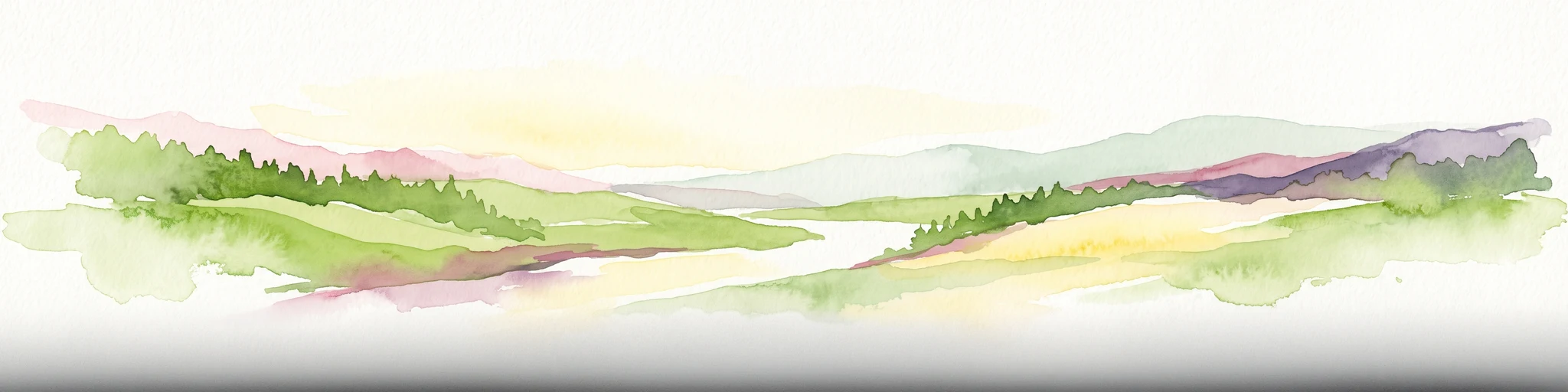
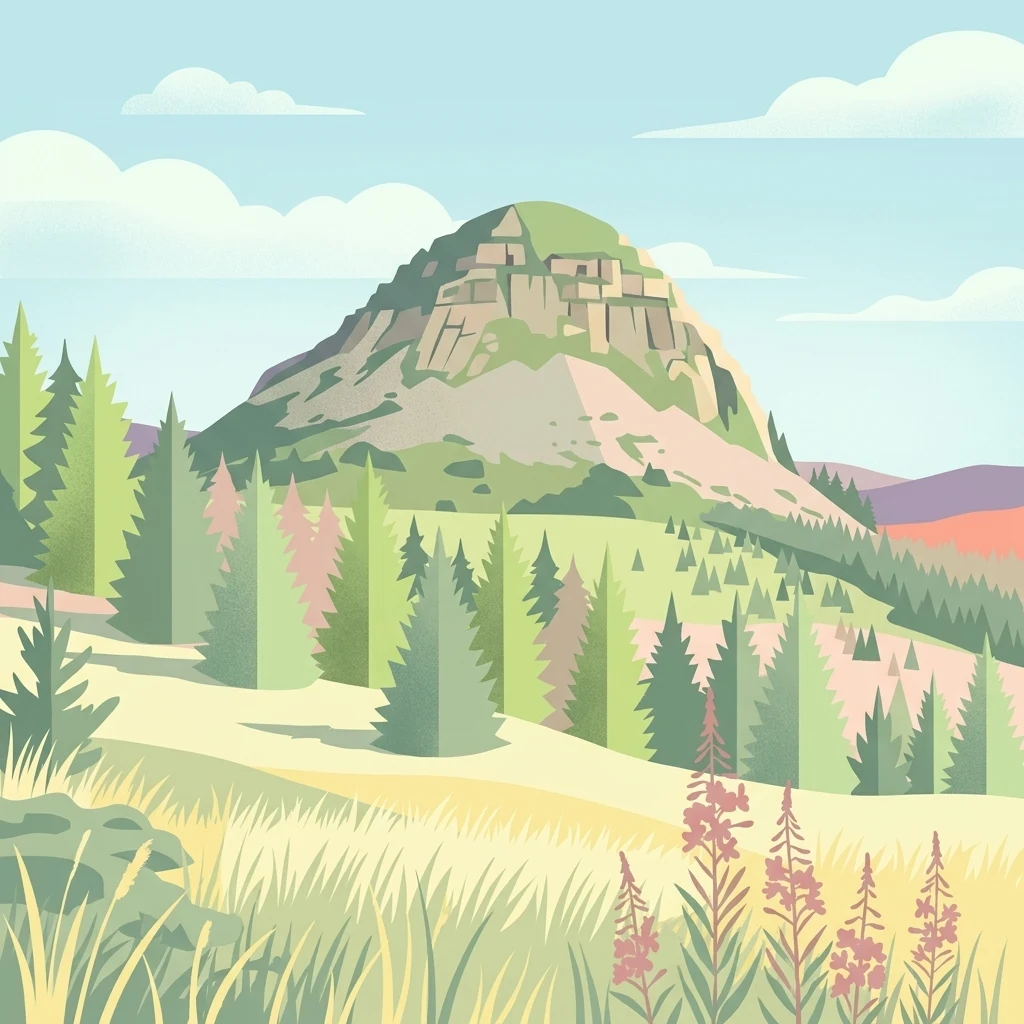
The Monts d'Ardèche scene takes shape around dramatic volcanic geology, with the sucs of the Mézenc massif rising as conical basalt peaks above the surrounding plateau. Mont Gerbier-de-Jonc, perhaps the most celebrated of these summits, anchors the highland identity of the park and marks a landmark visible from across the territory. Between these peaks lie broad stretches of high plateau, moorland and pasture, broken by crags and rocky outcrops that reveal the deep volcanic history of the Massif Central.
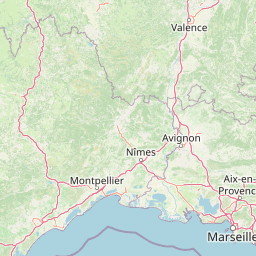
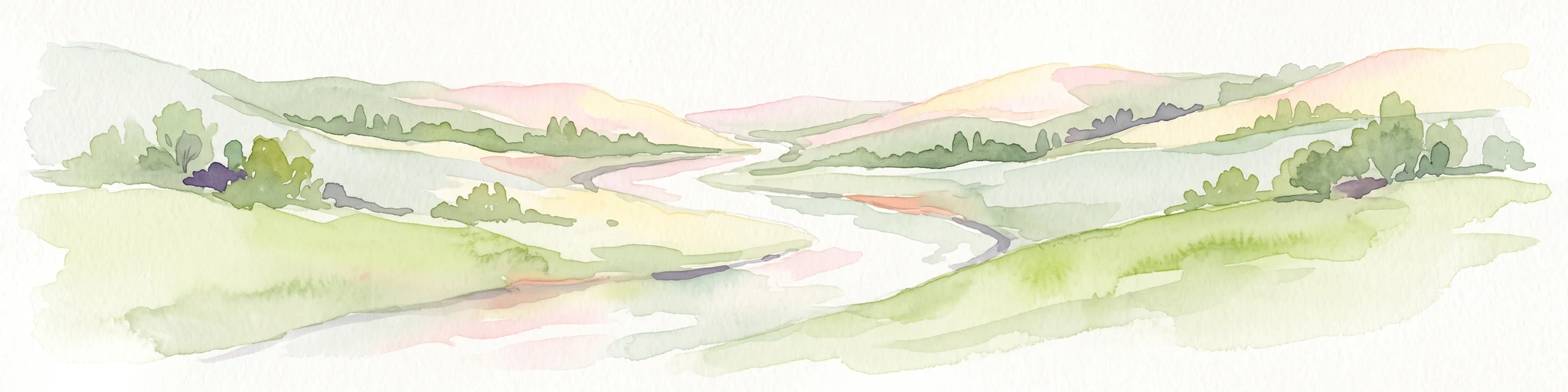
Below the highland core, the landscape opens into deeply incised river valleys. The Boutières area, drained by the Eyrieux and its tributaries, forms a transitional zone between the volcanic highlands and the Cévennes. Further south, the high Cévennes, the Cévenol Piedmont near Aubenas and Les Vans, and the southern Cévennes add forested slopes, chestnut groves, terraced fields and steep limestone valleys to the overall mix. The eastern plateau of Vernoux-en-Vivarais offers a flatter, wooded counterpoint to the more vertical terrain of the volcanic and Cévenol zones.
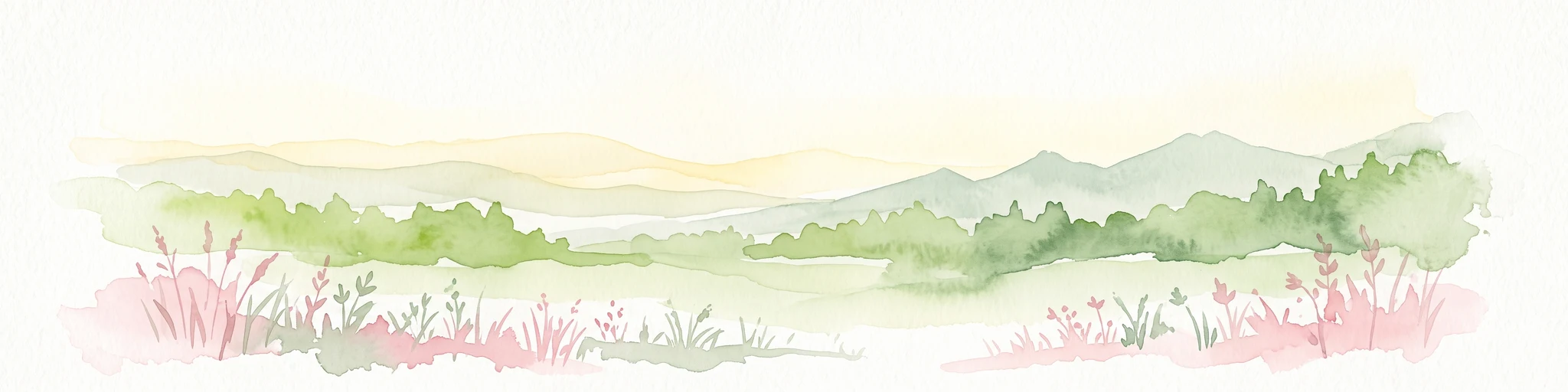
Water is a defining element throughout the territory. Clear Cévenol streams, waterfalls and gorges shape the valley bottoms, while mountain springs feed both natural habitats and traditional water mills. The interplay between volcanic uplands, Cévenol slopes, river-cut valleys, terraced agriculture and forest cover gives the Monts d'Ardèche a markedly varied topography within a single, interrelated rural landscape.
Parc naturel régional des Monts d'Ardèche ecosystems, habitats, and plant life
Ecologically, the Monts d'Ardèche sits at a meeting point between Mediterranean, Cévenol and Massif Central influences. The varied altitude, exposure and geology create a mosaic of habitats, from high-altitude moorlands and volcanic grasslands on the Mézenc plateau to chestnut forests, beech woodlands, terraced meadows and riparian corridors along the river valleys.
These habitat gradients support a rich and varied biodiversity. River systems host species such as the European otter, whose presence has been used as an indicator of healthy waterways in regional conservation work. Upland moors and grasslands sustain specialised flora adapted to volcanic soils, while chestnut groves and mixed deciduous forests provide habitat for a wide range of woodland birds, insects and small mammals. The geographic position of the park, bridging Cévennes and Massif Central, gives it particular importance for species that depend on transitional landscapes.
The park's protection framework places strong emphasis on maintaining these habitat mosaics through traditional land use. Grazing, chestnut cultivation, blueberry harvesting and extensive small-scale farming are all viewed as part of the ecological balance, alongside the conservation of geological features, river corridors and highland open spaces. This integration of farming and biodiversity preservation is one of the defining elements of the park's environmental approach.
Parc naturel régional des Monts d'Ardèche wildlife and species highlights
Wildlife in the Monts d'Ardèche is shaped by the diversity of habitats stretching from volcanic highland moors down through chestnut forests and Cévenol river valleys. The clean, well-vegetated rivers are particularly important for aquatic and semi-aquatic fauna, with the European otter serving as a flagship species for the park's river conservation programmes and a symbol of the ecological recovery of its waterways.
Forest environments support typical Massif Central and Cévenne fauna, including deer, wild boar, foxes and a wide variety of woodland birds. Open upland areas around the sucs and the Mézenc plateau host raptors and species adapted to mosaic landscapes of grassland, heath and rock. The transition between Mediterranean and mountain influences also enriches the invertebrate and reptile fauna, particularly in the southern parts of the park, where drier, sun-exposed slopes contrast with the wetter Cévenol valleys.
Fruit-bearing habitats, particularly chestnut groves and bilberry-rich moorlands, play a seasonal role in supporting feeding and migration patterns. The presence of diverse microhabitats, from rocky volcanic outcrops to riparian corridors and old terraced fields, allows the park to host a broad range of species across a relatively compact territory.
Parc naturel régional des Monts d'Ardèche conservation status and protection priorities
The park's conservation significance lies in its scale and its integration of rural land use with habitat protection. By covering more than 248,000 hectares and linking 152 communes under a single charter, it provides a framework for maintaining the traditional agro-pastoral systems that have shaped the Monts d'Ardèche for centuries, while also protecting the underlying natural heritage.
Recognition of the territory as a UNESCO Global Geopark in 2015 elevated the profile of its conservation work, particularly around volcanic landforms and geological heritage. The park's IUCN Category V designation as a protected landscape underlines the importance of maintaining not only individual species or sites but the broader landscape mosaic, including chestnut groves, terraced fields, riverbanks, upland moors and historic villages.
Local conservation initiatives address river health, with otter-friendly river management, the preservation of dry-stone terraces, and programmes that support chestnut cultivation and traditional orchards as living cultural and ecological landscapes. By linking geological heritage, biodiversity and rural culture, the Monts d'Ardèche functions as a large-scale laboratory for integrated rural conservation in the Massif Central.
Parc naturel régional des Monts d'Ardèche cultural meaning and human context
The cultural fabric of the Monts d'Ardèche is closely tied to the land. Chestnut cultivation has long been central to local identity, both as an everyday food source and as a defining element of the landscape, and the original impetus for the park's creation came from the castanéiculteurs of the region. Religious heritage, stone-built villages, terraced fields and a long tradition of small hydraulic mills and silk moulinages together give the territory a strong sense of place.
Seasonal rural practices, including blueberry harvests in the uplands, chestnut gathering in autumn and transhumance of livestock through mountain pastures, continue to structure local life. These traditions are not presented as relics, but as living heritage supported by the park's charter, which encourages farm diversification, local food products and the maintenance of rural skills. Religious and pilgrimage heritage, along with architectural traditions in stone and timber, further reinforce the region's distinct cultural character within the broader Ardèche and Massif Central area.
Top sights and standout views in Parc naturel régional des Monts d'Ardèche
The Monts d'Ardèche offers a rare combination of volcanic highlands, Cévenol chestnut country and incised river valleys within a single protected territory. Mont Gerbier-de-Jonc, the Mézenc sucs and the UNESCO Global Geopark designation give the park a strong geological identity, while chestnut groves, terraced fields, historic mills and traditional food crops provide a vivid rural and cultural dimension.
For travellers, researchers and residents alike, the park stands out as an example of how a large rural territory can organise itself around shared landscape, biodiversity and heritage goals. The breadth of the territory, the diversity of its communes and the involvement of more than 80,000 inhabitants make it one of the most distinctive regional natural parks in the southern Massif Central.
Best time to visit Parc naturel régional des Monts d'Ardèche
The Monts d'Ardèche has a distinctly seasonal character shaped by its elevation and rural traditions. Late spring and early summer bring fresh green slopes, full rivers and active wildlife along the Cévenol valleys, while highland moors around the Mézenc plateau begin to bloom.
Autumn is one of the most characteristic seasons, when chestnut harvests, blueberry gathering and the rich colours of the forests give the territory its strongest sense of rural tradition. Winter, with snow often dusting the sucs and upland areas, offers a quieter, more atmospheric experience focused on highland scenery and traditional villages. Summer remains attractive for hiking and river-based activities, though warmer temperatures are felt most strongly in the lower Cévenol and Piémont zones.