
Mori Atlas logo
National parkPrince Albert National Park

Understanding the Protected Landscape Boundaries and Regional Natural Terrain

Prince Albert National Park: A Mapped National Park in Saskatchewan's Geography

Prince Albert National Park stands as a significant protected area within the Saskatchewan region, offering a distinct national park identity for geographic exploration. This canonical detail page provides an atlas-driven perspective, highlighting the park's mapped boundaries and its place within the natural terrain of Saskatchewan. It serves as a key entry point for understanding the protected landscape's geographic context and its role in broader regional mapping and conservation.

Boreal ForestNational ParkSaskatchewanBisonWildlife WatchingLakes

Prince Albert National Park

National park

Park overview

Structured park overview, official facts, and landscape profile for Prince Albert National Park

Prince Albert National Park park facts, protected area profile, and essential visitor context
Review the core facts for Prince Albert National Park, including designation, size, terrain, visitor scale, habitats, and operating context in one park-focused overview.

About Prince Albert National Park

Prince Albert National Park represents the southern boreal forest region of Canada, protecting a transition zone between the agricultural lands of southern Canada and the Canadian Shield to the north. The park's landscape was shaped by Pleistocene glaciers that deposited glacial till, sand, and other materials later colonized by trees and shrubs. The Waskesiu Upland dominates approximately 90% of the park's terrain, creating a rolling, forested landscape with numerous lakes and rivers. The park serves as a critical watershed, with several major rivers including the Spruce, Sturgeon, and Smoothstone rivers having their source within its boundaries. The community of Waskesiu Lake provides visitor facilities and services, while the park remains politically separate from surrounding rural municipalities, administered as part of the Northern Saskatchewan Administration District. The park's development as a recreation destination has influenced the broader region, with communities like Christopher Lake and Emma Lake becoming popular recreation areas adjacent to the park boundaries.

Quick facts and research context for Prince Albert National Park

Prince Albert National Park occupies 3,874 km² of central Saskatchewan boreal forest, making it a substantial protected wilderness area in Canada's prairie province. The park was established in 1927 and is administered by Parks Canada. The only community within the park is the hamlet of Waskesiu Lake, located on the southern shore of Waskesiu Lake. The park features diverse terrain including coniferous forests dominated by jack pine and white spruce, with aspen forest and rare fescue grasslands in the southern regions. The southwest corner hosts a herd of over 400 plains bison, the only free-ranging herd in Canada with natural predator populations. Water quality in the park's lakes remains high, supporting robust fish populations including northern pike, walleye, lake trout, and whitefish.

Park context

Deeper park guide and search-rich context for Prince Albert National Park

Prince Albert National Park history, landscape, wildlife, and travel context
Explore Prince Albert National Park through its history, landscape character, ecosystems, wildlife, conservation priorities, cultural context, and seasonal travel timing in a structured park guide built for atlas discovery and search intent.

Why Prince Albert National Park stands out

Prince Albert National Park is best known for its free-ranging plains bison herd in the southwest corner, the only herd in Canada existing within its original range alongside natural predators including timber wolves. The park also holds significance as the former home of Grey Owl (Archibald Belaney), a famous conservationist and author who lived at Ajawaan Lake in the 1930s and wrote influential books about wilderness protection including Pilgrims of the Wild. The park's boreal forest ecosystem, diverse wildlife including moose, elk, black bears, and wolves, and extensive lake systems make it a destination for wildlife observation. The presence of one of Canada's largest white pelican colonies at Lavallée Lake adds to the park's ornithological importance.

Prince Albert National Park history and protected-area timeline

Prince Albert National Park has human history spanning thousands of years, with archaeological evidence of pre-contact indigenous peoples dating from 11,000 years before present through to the historic period. A Hudson's Bay Company fur trading post operated at Waskesiu Lake between 1886 and 1893. In 1908-1909, the New Northwest expeditions led by Frank Crean were the first to scientifically document the region through photography and lake mapping, leading to Crean Lake being named in his honor. Early 20th century industries of fishing and logging operated in the boreal forest, though the large forest fire of 1919 eliminated the logging industry. The park was officially established on March 24, 1927, though Prime Minister William Lyon Mackenzie King did not perform the official opening ceremonies until August 10, 1928. Upon the park's creation, indigenous peoples who traditionally lived on the lands were forcibly removed by federal officials and the RCMP, with their possessions and cabins destroyed. The park became the subject of a 2011 National Parks Project film directed by Stéphane Lafleur. The park's most famous resident was Grey Owl, hired by the Dominion Parks Service as the first naturalist, who lived at Ajawaan Lake from 1932 until his death in 1938 and wrote influential conservation literature.

Prince Albert National Park landscape and geographic character

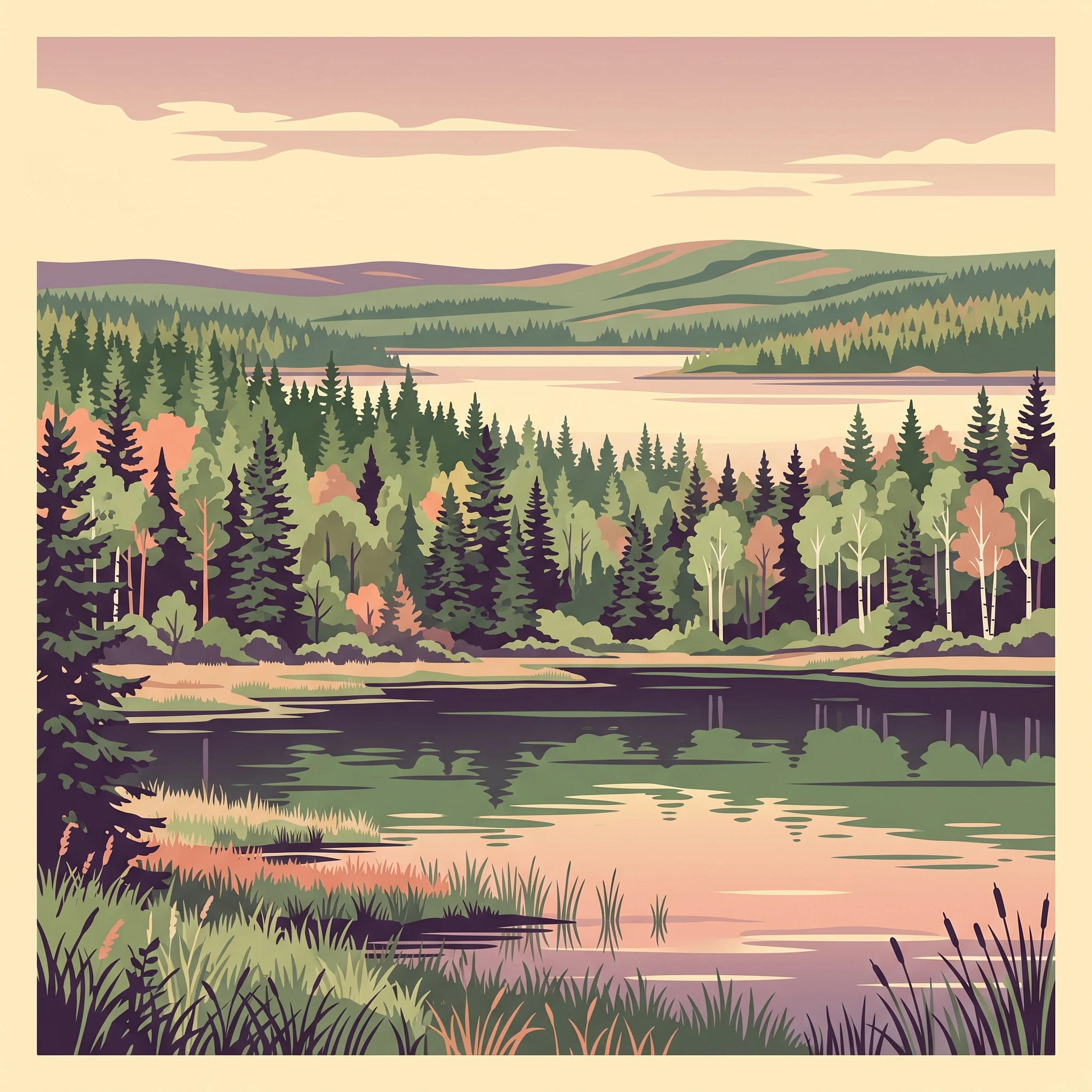
Prince Albert National Park features a rolling, predominantly forested landscape within the Waskesiu Hills, covering elevations from 488 metres in the western portions to 724 metres in the eastern areas. The terrain was shaped by Pleistocene glacial activity, which deposited glacial till, sand, and other materials that subsequently became colonized by vegetation. The park contains several significant lakes, with Waskesiu, Kingsmere, and Crean being the largest. The lake-studded landscape includes numerous smaller water bodies connected by rivers and streams that form the headwaters for several major river systems. The southern portion of the park contains rare fescue grasslands within an aspen forest matrix, representing an ecologically significant habitat type that has largely been lost outside the park boundaries due to agricultural conversion and urban development. The terrain provides diverse scenery from forested ridges to lake shores and wetland areas.

Prince Albert National Park ecosystems, habitats, and plant life

The park represents the southern boreal forest region of Canada, positioned south of the Canadian Shield in landscapes shaped by glacial processes. Most of the park is covered by coniferous forests, with jack pine and white spruce becoming more prevalent toward the north. The southern portions transition to predominantly aspen forest with understory shrubs including elderberry, honeysuckle, and rose, interspersed with meadows of fescue grassland. These fescue grasslands hold particular ecological importance due to their rarity, as most native fescue grassland outside the park has been lost to agriculture or development. The park's location on the drainage divide between the North Saskatchewan and Churchill Rivers creates diverse wetland and aquatic habitats. The numerous lakes support productive aquatic ecosystems with high water quality, though lake trout populations in Crean Lake have not recovered from commercial overfishing in the early 20th century.

Prince Albert National Park wildlife and species highlights

Prince Albert National Park supports diverse wildlife populations within its boreal forest ecosystem. Large mammals include elk, moose, white-tailed deer, black bears, coyotes, and timber wolves. The park is particularly notable for its free-ranging plains bison herd of over 400 individuals in the southwest corner, the only herd in Canada existing within its original range with a full complement of native predators. Boreal woodland caribou from a declining regional population occasionally range into the park, though their core habitat lies to the north. The park supports 21 documented fish species including northern pike, walleye, lake trout, yellow perch, cisco, and lake whitefish. Avian diversity includes waterfowl such as double-crested cormorants, red-necked grebes, and common loons, while raptors including bald eagles and osprey are common. One of Canada's largest white pelican colonies nests on Lavallée Lake in a closed area. River otters are reliably observable year-round, particularly around open water areas in winter.

Prince Albert National Park conservation status and protection priorities

Prince Albert National Park serves as a critical conservation area within Saskatchewan's boreal forest region, protecting representative ecosystems of the southern boreal forest. The park preserves rare fescue grassland habitats that have largely disappeared outside its boundaries due to agricultural conversion. The free-ranging bison herd represents a unique conservation success, maintaining the only plains bison population in Canada within its original geographic range with intact predator-prey relationships including timber wolves. The park's lakes and waterways support important fish populations, and the protection of watershed areas contributes to broader regional water quality. The white pelican colony at Lavallée Lake represents significant breeding habitat protection. Boreal woodland caribou conservation remains a challenge, as regional populations face habitat loss from forest logging outside the park. The park's protection extends to cultural heritage sites including Grey Owl's cabin at Ajawaan Lake.

Prince Albert National Park cultural meaning and human context

The lands now comprising Prince Albert National Park have been inhabited by indigenous peoples for thousands of years, with archaeological evidence spanning pre-contact periods from 11,000 years before present through to historic times. Upon the park's establishment in 1927, indigenous communities who traditionally lived on these lands were forcibly removed by federal officials and the RCMP, with their cabins and possessions destroyed. The park's name references the city of Prince Albert, though the park's main entrance lies 80 kilometres north of that city. The hamlet of Waskesiu Lake developed as the park's primary visitor service centre. The park holds cultural significance through its association with Grey Owl, the conservationist who lived at Ajawaan Lake and whose writings influenced public attitudes toward wilderness conservation in Canada.

Top sights and standout views in Prince Albert National Park

Prince Albert National Park offers exceptional boreal wilderness experiences with highlights including the free-ranging bison herd in the southwest, Grey Owl's historic cabin at Ajawaan Lake, excellent wildlife watching particularly for wolves, elk, and otters, and the extensive lake systems suitable for boating and fishing. The park provides over 400 kilometres of hiking trails including routes to scenic viewpoints and along river systems. The Waskesiu Golf Course, designed by Stanley Thompson in the 1930s, remains a notable recreational feature. The diverse habitats from coniferous forest to aspen parkland and fescue grassland support outstanding biodiversity. Winter visiting offers unique opportunities to observe wolves traveling on frozen lakes and reliable otter sightings around open water areas.

Best time to visit Prince Albert National Park

Prince Albert National Park is open year-round, with the most visited period from May to September when warm weather enables full access to hiking trails, swimming beaches, boating, and camping. Summer provides the most comprehensive park experience with all facilities and services operational. However, winter offers exceptional wildlife watching opportunities as wolves travel across frozen lakes and elk and deer become more visible in the town of Waskesiu. Otters are particularly reliable around open water at the Waskesiu Lake Narrows and where the Waskesiu River exits the lake during winter months. The shoulder seasons of spring and fall provide quieter visitation with different landscape character as the boreal forest transitions through seasonal changes.
Park location guide

Geography guide, regional context, and park location map for Prince Albert National Park

Prince Albert National Park park geography, regions, and map view in Canada
Understand where Prince Albert National Park sits in Canada through a broader geographic reading of the surrounding landscape, nearby location context, and its mapped position within the national park landscape.

How Prince Albert National Park fits into Canada

Canada is a federal parliamentary constitutional monarchy spanning North America from the Atlantic to the Pacific and Arctic Oceans. With a population of over 41 million, it is officially bilingual in English and French at the federal level. The country gained independence from the United Kingdom through a gradual process culminating in 1982.

Wider geography shaping Prince Albert National Park in Canada

Canada occupies the northern portion of North America, sharing its longest international border with the United States. The country extends from the Atlantic Ocean to the Pacific Ocean and northward into the Arctic Ocean, giving it the longest coastline of any nation.

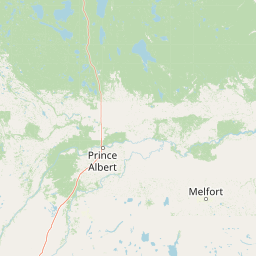
Map view of Prince Albert National Park

Use this park location map to pinpoint Prince Albert National Park in Canada, understand its exact geographic position, and read its mapped placement within the surrounding landscape more clearly.

Pigeon | © OpenStreetMap contributors

Location context for Prince Albert National Park

Saskatchewan
Park atlas

Compare surrounding protected landscapes and explore regional park geography beyond central Saskatchewan.

Discover Other National Parks and Protected Areas Near Prince Albert National Park
Browse an expanded atlas of national parks and protected areas geographically connected to Prince Albert National Park's boreal forest and lake systems. Explore diverse Canadian conservation landscapes, understand regional ecological contexts, and trace the spread of protected terrain across Saskatchewan and neighboring regions for informed comparison.
National parkAlberta

Elk Island National Park: National Park Protected Landscape and Alberta Geography

Discover the mapped terrain and protected boundaries.

Elk Island National Park, a designated national park in Alberta, Canada, offers a distinct protected landscape for geographic exploration. This detail page focuses on its mapped boundaries, regional setting within Western Canada, and the specific natural terrain that constitutes its protected area. Users can gain a structured understanding of Elk Island National Park's role as a conserved natural entity, ideal for atlas-based discovery and geographic context.

Area
194 km²
Established
1913
IUCN
II
Visitors
401.9K annual
National parkSaskatchewan

Grasslands National Park: Saskatchewan Protected Landscape Atlas

Discover its mapped boundaries and regional geographic context.

Grasslands National Park represents a vital component of protected lands in Saskatchewan, Canada, offering rich opportunities for atlas-based geographic exploration. This detail page provides specific insights into the park's mapped boundaries, its natural terrain, and its role as a national park within the broader regional geography. Understand how this protected landscape fits into the larger atlas of Canadian conservation areas and discover its unique geographic identity.

Area
907 km²
Established
1981
IUCN
II
Visitors
19.7K annual
National parkManitoba

Riding Mountain National Park: Manitoba National Park Protected Landscape and Geography

Discover mapped boundaries and regional context for this national park.

Delve into the geography of Riding Mountain National Park, a protected national park located in Manitoba. This page provides detailed insights into its mapped boundaries and its significance as a protected landscape within the region. Understand its place within the broader natural terrain and atlas context of Manitoba, offering a focused view for geographic exploration and conservation landscape study.

Area
2,969 km²
Established
1933
IUCN
II
Visitors
336.6K annual
National parkCanada

Banff National Park: Exploring Canada's Iconic National Park Protected Landscape and Geography

Mapped park boundaries and regional geographic context for Banff National Park.

Gain a structured understanding of Banff National Park as a key protected area within Canada. This resource details its identity as a national park, providing insights into its geographic setting and mapped landscape. It serves as a vital point for atlas-based discovery, helping to contextualize Banff National Park's significance within Canada's protected lands and natural terrain.

Area
6,641 km²
Established
1885
IUCN
II
Visitors
4.1M annual
National parkNorthwest Territories

Wood Buffalo National Park: Mapped Protected Landscape and Geographic Context

Explore Canada's Wood Buffalo National Park mapped boundaries.

Wood Buffalo National Park serves as a critical protected area, offering a detailed view of its mapped boundaries and regional geographic setting within Northwest Territories. As a national park, it represents a significant natural landscape to explore. This entry provides structured information ideal for understanding the park's specific location and its role in the broader atlas of protected lands.

Area
44,741 km²
Established
1922
IUCN
II
Visitors
2.4K annual
National parkBritish Columbia

Kootenay National Park: National Park Protected Landscape and Geographic Context

Explore Kootenay National Park's mapped terrain and regional geography.

Kootenay National Park is a protected national park located in British Columbia, Canada. This dedicated detail page provides an atlas-style exploration of its geographic identity, focusing on its mapped boundaries and the surrounding natural terrain. Understand how Kootenay National Park fits into the larger regional geography, offering rich context for protected landscape discovery and analysis.

Area
1,406 km²
Established
1920
IUCN
II
Visitors
574.1K annual
National parkAlberta

Waterton Lakes National Park: Alberta's Protected Landscape and Geographic Atlas

Explore mapped boundaries and regional terrain context.

Waterton Lakes National Park represents a vital protected area situated within the province of Alberta. This atlas view focuses on its mapped boundaries and the characteristic natural terrain, providing essential geographic context for understanding its significance. Discover its role as a national park and its placement within the regional geography of Western Canada, ideal for users seeking structured data on protected lands and landscape features.

Area
505 km²
Established
1895
IUCN
II
Visitors
475.8K annual
National parkAlberta

Jasper National Park National Park: Mapped Protected Landscape and Alberta Geography

Explore Alberta's regional park context and natural terrain.

Jasper National Park is a key protected national park in Alberta, Canada, offering extensive natural landscapes. This park page details its precise geographic location, outlines its protected boundaries, and provides context within the regional geography of Western Canada. Discover the mapped terrain and the park's significance as a protected area within a broader atlas perspective.

Area
10,878 km²
Established
1907
IUCN
II
Visitors
2.4M annual

Common questions about visiting, size, designation, and location context for Prince Albert National Park

Prince Albert National Park FAQs for park facts, access, geography, and protected area context
Find quick answers about Prince Albert National Park, including protected-area facts, park geography, trail and visitor context, and how the park fits into its surrounding country and regional landscape.
MoriAtlas Explorer

Continue Your Protected Areas Search Across the Global Atlas

Deepen your exploration by continuing the structured search for national parks and protected areas worldwide. Utilize the comprehensive filtering capabilities to compare different conservation landscapes and refine your understanding of global park geography. Discover more about the distribution and characteristics of protected natural areas.

Global natural geography