Why Réserve forestière de Diécké stands out
Diécké is best known for its extensive tract of lowland evergreen rainforest in southeastern Guinea, and for being one of the country's most clearly zoned forest reserves. The reserve stands out for its combination of remaining primary growth, rugged hilly terrain, swampy lowlands, and a management scheme that separates a strict core protection zone from areas of sustainable timber use and forest improvement. It holds significance as one of the larger blocks of West African humid forest that has been formally classified for conservation and that still contains a substantial proportion of undisturbed canopy, despite pressure from logging, agriculture, and shifting cultivation in surrounding areas.
Réserve forestière de Diécké history and protected-area timeline
Although the precise legal establishment date of the Réserve forestière de Diécké is not detailed in the available sources, the reserve's history is closely linked to the management era of the early 1990s, when a dedicated project ran from 1991 to 1996 to reorganize the forest into differentiated management zones.
That project formalized three categories of land within the reserve. It recognized that the central portion of the forest had historically been less affected by logging and designated it as a core protection zone in which timber extraction and exploitation would be prohibited. It established a surrounding zone where wood exploitation would remain permitted under controlled conditions, reflecting both the forest's economic importance and the variable condition of the standing timber. Finally, it identified a broad peripheral improvement zone where degraded natural forest would be the focus of longer-term recovery efforts.
The resulting zonation has shaped how the reserve has been understood and managed since: as a forest block with a strictly protected interior, a working forest around it, and an outer buffer where gradual improvement and regeneration are the priority. This layered approach distinguished Diécké from many other forest reserves in the region and made it the subject of external documentation referenced through the World Database on Protected Areas.
Réserve forestière de Diécké landscape and geographic character
The landscape of Diécké is defined by low to moderate hills covered by a continuous expanse of humid lowland forest. Elevations within the reserve stretch from about 400 meters to 595 meters, producing an undulating terrain that includes plateau-like sections, steeper hill slopes, and flatter valley bottoms. The topography, combined with the dense vegetation, makes much of the interior physically difficult to traverse.
Dominating the terrain is a closed canopy of evergreen rainforest, a hallmark of West African lowland forest. The upper strata form a relatively continuous cover, while the lower strata are more variable, with open stretches alternating with denser thickets and patches of secondary regrowth. Where the canopy has been disturbed or removed, semi-dense formations, open zones, and fallow areas have taken their place, especially toward the periphery of the reserve.
Hydrology shapes the lower portions of the landscape. The Nyé and Gbin rivers, together with three additional watercourses, cut through the forest. Their valleys create zones of swamp and standing water that shift the vegetation toward more hydrophilic plant communities and that, in combination with the steep surrounding hills, deepen the sense of a remote and fragmented forest interior. Together these features make Diécké a landscape of unbroken forest, scattered swampy lowlands, and forested ridges.
Réserve forestière de Diécké ecosystems, habitats, and plant life
The ecological identity of Diécké is rooted in West African evergreen lowland rainforest. The reserve is dominated by dense forest types, with around seventy percent of its area made up of primary and secondary forest formations that together maintain largely closed canopies.
These dense forests are complemented by semi-dense formations distributed mainly toward the edges of the reserve, by non-forested gaps that interrupt the canopy, and by areas of fallow land that reflect past human activity. The diverse canopy and understory structure creates varied light conditions and microhabitats, from open understory in parts of the core zone to dense, tangled vegetation along rivers, in swamps, and on steep slopes.
The presence of two main rivers and three additional watercourses, combined with the swampy depressions they create, supports consistently humid conditions across much of the reserve. This hydrological network is a defining ecological feature, sustaining the moisture-dependent evergreen forest and maintaining more specialized wet environments within an otherwise predominantly terrestrial forest block.
Réserve forestière de Diécké wildlife and species highlights
The available sources do not provide detailed species lists for the Réserve forestière de Diécké. However, the reserve's large extent of dense, evergreen lowland rainforest, its swampy riparian corridors, and its mixture of primary and secondary growth indicate the kind of habitat that in West Africa typically supports forest-dependent mammals, a diverse bird community, and a rich assemblage of forest insects, amphibians, and reptiles.
The combination of intact canopy in the core zone, heavily vegetated river valleys, and more disturbed edge habitats means that the reserve likely supports a range of species tied to undisturbed interior forest as well as those able to use more open or regenerating habitats.
Réserve forestière de Diécké conservation status and protection priorities
Diécké is significant from a conservation perspective as one of the larger formally recognized forest reserves in Guinea and as one of the few in the region whose management structure explicitly distinguishes a strict protection zone from surrounding areas of sustainable use and forest improvement.
The core protection zone of roughly 14,762 hectares has historically been the least disturbed by logging and is closed to timber extraction and resource exploitation, providing a refuge of largely intact canopy. The sustainable use zone acknowledges the economic importance of timber in the region but confines extraction to a regulated area, while the improvement zone addresses degraded peripheral forest. This tiered approach gives the reserve a more structured conservation function than many surrounding forest areas.
In the broader Guinean and West African context, the reserve represents a meaningful remnant of lowland evergreen rainforest in a landscape where forest cover continues to be reduced by agricultural expansion, logging, and shifting cultivation. Its inclusion in international databases of protected areas reflects recognition of its value as a forest block of regional conservation interest.
Réserve forestière de Diécké cultural meaning and human context
The Réserve forestière de Diécké is embedded in a cultural landscape shaped by rural forest communities, where smallholder agriculture, shifting cultivation, and reliance on forest products have long been part of local livelihoods. The presence of fallow land, semi-dense forest, and non-forested pockets within the reserve's perimeter reflects this history of human interaction with the forest.
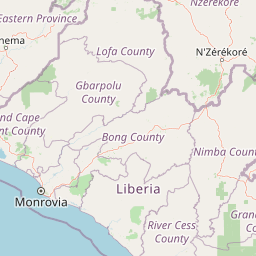
The reserve's location in the Yomou Prefecture, near the sub-prefecture of Diécké, places it within an area of southeastern Guinea where villages and forest land have long coexisted. The zonation of the reserve into protection, sustainable use, and improvement areas can be read as an attempt to balance local resource use with the preservation of denser forest stands, though specific cultural or traditional land-use practices tied to particular communities are not detailed in the available sources.
Top sights and standout views in Réserve forestière de Diécké
The most distinctive aspect of Diécké is its sheer scale as a lowland evergreen forest reserve, with roughly 64,000 hectares of mostly continuous rainforest rising between 400 and 595 meters above sea level. About seventy percent of the reserve remains primary or secondary dense forest, a substantial proportion in a region where such stands have become increasingly rare.
Equally notable is the reserve's tri-zonal management structure, established through a project that ran from 1991 to 1996. A strict core protection zone preserves the least-disturbed canopy, a surrounding sustainable use zone allows regulated timber activity, and an outer improvement zone targets degraded peripheral forest. The Nyé and Gbin rivers, together with three smaller watercourses, further shape the reserve's character, feeding swampy lowlands and steep forested hills that keep much of the interior difficult to access and help protect its most intact stands.
Best time to visit Réserve forestière de Diécké
The available sources do not contain specific seasonal visitor information for the Réserve forestière de Diécké. As a lowland evergreen rainforest reserve, its character is influenced by the wet and dry seasons typical of southeastern Guinea, with rain likely enhancing the lushness and humidity of the forest, swampy conditions in the river valleys, and the overall green appearance of the canopy. Drier periods would generally make internal terrain easier to traverse. Any season-sensitive planning would depend on the specific goals of a visit, such as observing forest conditions in full leaf versus accessing interior terrain more easily.