Mori Atlas logo
Nature reserveSaksfjed-Hyllekrog

Tracing the protected boundaries and coastal terrain of a vital Ramsar and Natura 2000 wetland complex.

Saksfjed-Hyllekrog Nature Reserve: A Mapped Study of Coastal Geography and Protected Wildlife Habitats in Southern Lolland, Denmark

Saksfjed-Hyllekrog represents a distinct coastal mosaic on the southern edge of Lolland, Denmark, where reclaimed land meets the dynamic waters of the Smålandsfarvandet strait. The reserve encompasses the prominent Hyllekrog headland and adjacent polder landscapes, offering a window into the intersection of historical land management and active environmental stewardship. By examining these mapped terrains, one gains a deeper understanding of the coastal dynamics, woodland, scrub, and beach flat habitats that support diverse species within this internationally significant conservation area.

nature reservecoastal landscapewetlandRamsar siteNatura 2000bird migration
A digital illustration of a coastal cliff landscape featuring a waterfall flowing into the sea, with pine trees in the foreground and a mountain backdrop.

Saksfjed-Hyllekrog

Nature reserve

Park overview

Structured park overview, official facts, and landscape profile for Saksfjed-Hyllekrog Nature Reserve

Saksfjed-Hyllekrog Nature Reserve park facts, protected area profile, and essential visitor context

Review the core facts for Saksfjed-Hyllekrog Nature Reserve, including designation, size, terrain, visitor scale, habitats, and operating context in one park-focused overview.

About Saksfjed-Hyllekrog Nature Reserve

Saksfjed-Hyllekrog is a compact but ecologically rich nature reserve located on the southern coast of Lolland, one of Denmark's southernmost islands. Although it covers roughly 217 hectares, it forms the heart of a much larger protected landscape of about 1,150 hectares, which includes the reclaimed Saksfjed Inddæmning, the Drummeholm area, and the Hyllekrog Odde headland. Together, these places create a continuous transition from farmland and reclaimed polder to open coastal habitats, giving the reserve unusually broad ecological character for its size.

The reserve is managed by the Fugleværnsfonden, Denmark's bird protection foundation. The land was acquired in 1995 through the Karen Krieger Foundation, which transferred administration to Fugleværnsfonden, while parts of the Saksfjed area remain owned by the Hempel Foundation. The reserve is a designated wildlife reserve where hunting is prohibited across the bay area north of Hyllekrog Odde, and it is formally protected through a 1989 landscape preservation order. Its habitats include woodland, scrub, coastal meadows, old dike graves, shallow coastal lagoons, small islets, beach flats, dunes, and shoreline, reflecting a long history of land reclamation meeting active coastal processes.

The site is part of Natura 2000 area 173, covering Smålandsfarvandet north of Lolland, Guldborgsund, Bøtø Nor, and Hyllekrog-Rødsand, and is also listed as a Ramsar wetland of international importance for waterbirds. These designations highlight the reserve's role not only as a local protected area but as an important node in wider European nature networks. The combination of formal protection, international designations, and active conservation management makes Saksfjed-Hyllekrog a particularly significant example of Danish coastal conservation practice.

In practical terms, the reserve is also defined by its human management. Grazing animals, including wild horses, organic cattle, and a 2025 introduction of Taurus beef cattle at Saksfjed, are used to keep habitats open and to sustain the conditions that support the reserve's distinctive flora and fauna. Two structures stand on the Hyllekrog headland: the Hyllekrog lighthouse, owned by Naturstyrelsen and open to visitors outside the breeding season, and Ninas Hus, a former hunting lodge restored by the foundation's volunteer work group for birdwatching events and nature activities.

Quick facts and research context for Saksfjed-Hyllekrog Nature Reserve

Saksfjed-Hyllekrog is a nature reserve of about 217 hectares in southern Lolland, Denmark, consisting of the Hyllekrog headland (90 hectares) and the Saksfjed area (127 hectares). It is owned and managed by the Fugleværnsfonden, with parts of the Saksfjed area held by the Hempel Foundation, and was acquired in 1995 through the Karen Krieger Foundation. The reserve sits inside a much larger 1989 landscape preservation of around 1,150 hectares that also includes Drummeholm and Hyllekrog Odde.

The area is a Ramsar wetland, part of Natura 2000 area covering Smålandsfarvandet north of Lolland, Guldborgsund, Bøtø Nor, and Hyllekrog-Rødsand, and is also designated as a wildlife reserve where hunting is prohibited. Habitats include forest, scrub, coastal meadow, beach flat, dune, shore, and small islets, supporting breeding white-tailed eagles, autumn raptor migration, fallow deer, wild horses, organic cattle, and a recently introduced herd of Taurus beef cattle used for nature management.

Protection and recognition

Review the mixed protection scope and 1989 establishment timeline for this protected area.

Saksfjed Hyllekrog Protection Status and Designated Area History

Saksfjed Hyllekrog maintains a documented mixed protection scope established in 1989 without transboundary status or imported international listings. Official records detail the foundational designation timeline and management framework associated with the protected area.

Protection details

Protection scope
Mixed
Designated year
1989
Transboundary protection
No
Park context

Deeper park guide and search-rich context for Saksfjed-Hyllekrog Nature Reserve

Saksfjed-Hyllekrog Nature Reserve history, landscape, wildlife, and travel context

Explore Saksfjed-Hyllekrog Nature Reserve through its history, landscape character, ecosystems, wildlife, conservation priorities, cultural context, and seasonal travel timing in a structured park guide built for atlas discovery and search intent.

Why Saksfjed-Hyllekrog Nature Reserve stands out

Saksfjed-Hyllekrog is best known as one of Denmark's premier autumn migration sites for birds of prey, where thousands of raptors pass along the Lolland coast each year between August and October. The reserve's combination of open coastal landscape, varied shoreline habitats, and protected status makes it a strategic funneling point for migrating raptors moving south. Equally central to its identity is the rich mosaic of protected wetland and coastal habitats, set within a Ramsar and Natura 2000 framework. The reserve is also notable for its breeding white-tailed eagles and for its deliberate use of large grazers, including wild horses, organic cattle, and Taurus cattle, to maintain open natural habitats as part of active nature management.
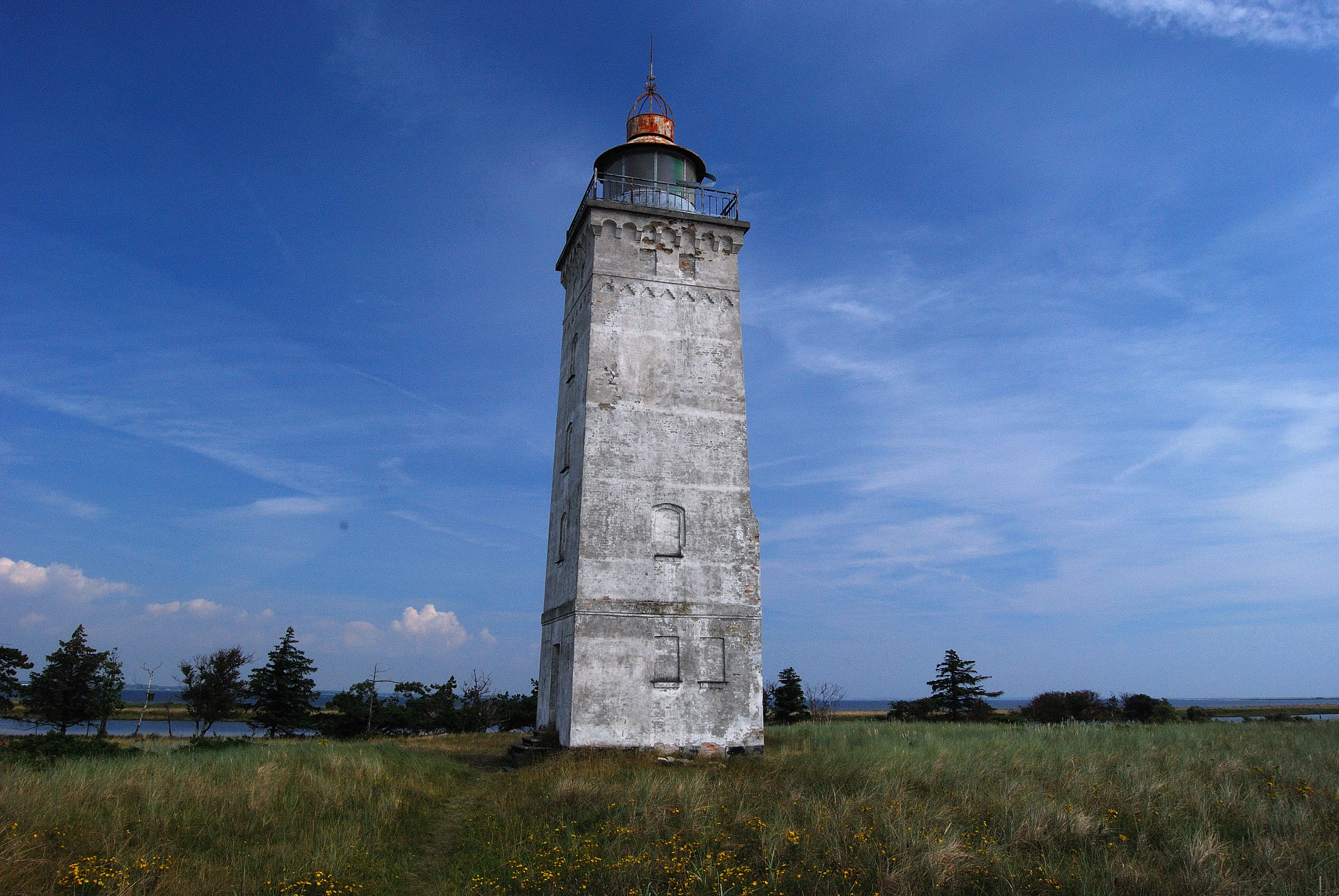
A square, weathered white stone lighthouse stands in a grassy coastal field under a clear blue sky.
The historic Hyllekrog Lighthouse standing amidst the coastal landscape of the Saksfjed-Hyllekrog nature reserve.

Saksfjed-Hyllekrog Nature Reserve history and protected-area timeline

The wider protected landscape surrounding Saksfjed-Hyllekrog was formally preserved in 1989, when roughly 1,150 hectares including the Saksfjed Inddæmning, Drummeholm, and Hyllekrog Odde were placed under a Danish landscape preservation order. This broader protection set the stage for the later creation of the reserve itself.

The Saksfjed-Hyllekrog nature reserve was established in 1995, when the Karen Krieger Foundation acquired the area and entrusted its administration to the Fugleværnsfonden, Denmark's national bird protection foundation. While most of the reserve is now managed by the foundation, the Hempel Foundation retains ownership of parts of the Saksfjed area. The reserve's ongoing development has been shaped by active habitat management, including the use of grazing animals to maintain open coastal habitat, with a notable expansion in 2025 when 30 Taurus beef cattle were released at Saksfjed for nature management purposes.

Saksfjed-Hyllekrog Nature Reserve landscape and geographic character

The landscape of Saksfjed-Hyllekrog is defined by its coastal position on southern Lolland, where reclaimed land meets the open waters of Smålandsfarvandet. The reserve stretches across two complementary landscapes: the Hyllekrog Odde headland, a roughly 90-hectare coastal spit, and the Saksfjed area, a 127-hectare reclaimed parcel on the inland side of the embankment.

Hyllekrog Odde forms a prominent coastal projection, with dune, beach flat, shoreline, and small islets shaping its edge against the sea. The Saksfjed side carries visible traces of historical land reclamation, including old dike graves and shallow coastal lagoons, as well as more varied habitats with woodland, scrub, and coastal meadow. Together, these features create a landscape mosaic where inland reclaimed polders, wetland features, and active coastal dynamics interact across a relatively small area.

Saksfjed-Hyllekrog Nature Reserve ecosystems, habitats, and plant life

Saksfjed-Hyllekrog protects an unusually varied set of habitats for a coastal reserve of its size. Within a compact footprint it combines forest, scrub, coastal meadow, beach flat, dune, shoreline, shallow coastal lagoons, small islets, and reclaimed polder landscapes. This habitat diversity reflects the meeting of historic land reclamation, hydrological features like loer, and ongoing coastal processes.

The reserve's ecological character is shaped both by its static habitat mosaic and by active management. Grazing animals, including wild horses, organic cattle, and the newly introduced Taurus cattle at Saksfjed, are used to maintain open habitat conditions. Its inclusion in Natura 2000 and its Ramsar status emphasize its value as an internationally important wetland ecosystem supporting waterbirds and other species dependent on coastal habitats.

Saksfjed-Hyllekrog Nature Reserve wildlife and species highlights

Saksfjed-Hyllekrog is one of Denmark's most important autumn migration sites for birds of prey, with thousands of raptors passing through on their way south between August and October each year. The reserve's geography, jutting out along Lolland's southern coast, makes it a natural gathering point for visible raptor migration, and the Fugleværnsfonden hosts regular free autumn raptor-watching events there.

Beyond raptors, the reserve supports breeding white-tailed eagles, a robust population of fallow deer, and large grazing herds including wild horses, organic cattle, and the newly introduced Taurus cattle at Saksfjed, which together play an active role in shaping habitat conditions. The broader protected landscape, particularly the bay north of Hyllekrog Odde where hunting is prohibited, provides additional refuge for waterbirds and other wildlife tied to the Smålandsfarvandet coastline.

Saksfjed-Hyllekrog Nature Reserve conservation status and protection priorities

The reserve sits within a layered protection framework that gives it strong conservation significance. It is part of a 1989 landscape preservation order covering about 1,150 hectares, and is itself managed as a nature reserve by the Fugleværnsfonden. Hyllekrog and the bay north of the headland are designated as a wildlife reserve where hunting is prohibited, removing direct human hunting pressure from a key stretch of the Lolland coast.

At the broader scales, the reserve is part of the Natura 2000 network under area 173, Smålandsfarvandet north of Lolland, Guldborgsund, Bøtø Nor, and Hyllekrog-Rødsand, and is also a designated Ramsar wetland of international importance as a habitat for waterbirds. These recognitions emphasize the reserve's role as an internationally significant coastal wetland ecosystem. Conservation management is active, with grazing animals including wild horses, organic cattle, and a 2025-introduced herd of Taurus cattle employed to maintain open habitat conditions and ecological diversity.

Saksfjed-Hyllekrog Nature Reserve cultural meaning and human context

The cultural context of Saksfjed-Hyllekrog is closely tied to the long history of land reclamation that shaped southern Lolland. Old dike graves in the landscape are visible reminders of the effort to reclaim coastal land, while the legacy of former estate ownership, expressed through foundations like the Karen Krieger Foundation and the Hempel Foundation, still shapes how the reserve is owned and managed today.

The reserve also carries a tradition of public nature engagement. Ninas Hus, a former hunting lodge on the Hyllekrog headland, has been restored by the Fugleværnsfonden's volunteer work group and is used for birdwatching events and nature activities, while the 19th-century Hyllekrog lighthouse has been adapted by Naturstyrelsen into a small exhibition space. These features give the reserve a modest but meaningful cultural layer beyond its natural values.

Top sights and standout views in Saksfjed-Hyllekrog Nature Reserve

Saksfjed-Hyllekrog's strongest points of distinction lie at the intersection of conservation value, migratory wildlife, and active habitat management. Its status as one of Denmark's most important autumn raptor migration sites, combined with documented breeding white-tailed eagles, places it firmly on the national ornithological map. Combined with Ramsar and Natura 2000 designations, this dual bird-focused identity is the park's clearest signature.

Equally distinctive is its use of large grazers, including wild horses, organic cattle, and the recently introduced Taurus herd, as a tool for nature management on reclaimed coastal land. The presence of Hyllekrog lighthouse and the restored Ninas Hus adds modest but recognizable cultural landmarks, rounding out a reserve where coastal geography, wildlife migration, and deliberate ecological stewardship come together.

Best time to visit Saksfjed-Hyllekrog Nature Reserve

Saksfjed-Hyllekrog is strongly seasonal in character, with autumn standing out as the most distinctive time to experience the reserve. Between August and October, thousands of birds of prey migrate along the Lolland coast, and the Fugleværnsfonden runs regular free guided raptor-watching events during this period, making it the natural window for visitors interested in bird migration.

Outside of the autumn migration season, the reserve's mix of woodland, coastal meadow, dunes, and shoreline offers quieter but still rewarding visits, particularly for those interested in breeding birds, white-tailed eagles, grazing animals, and general coastal landscape. The Hyllekrog lighthouse exhibition is open to visitors outside the breeding season, making the broader spring, summer, and winter months more suitable for exploring the reserve's land-based features.
Monthly climate preview

Long-term representative temperature and precipitation patterns across the year

Saksfjed-Hyllekrog Climate Normals and Monthly Temperature Rhythm

Representative coordinates record annual temperature progression alongside baseline monthly precipitation values for Saksfjed-Hyllekrog. Examining the complete twelve-month record clarifies long-term climate behavior and seasonal variation.
Annual mean9 °C
1 °C18 °C
Jan
Feb
Mar
Apr
May12°
Jun15°
Jul18°
Aug18°
Sep15°
Oct11°
Nov
Dec
Warmest month
August

18.3 °C

Coolest month
February

1.4 °C

Wettest month
August

2.3 mm/day

Driest month
April

1.2 mm/day

Park location guide

Geography guide, regional context, and park location map for Saksfjed-Hyllekrog Nature Reserve

Saksfjed-Hyllekrog Nature Reserve park geography, regions, and map view in Denmark

Understand where Saksfjed-Hyllekrog Nature Reserve sits in Denmark through a broader geographic reading of the surrounding landscape, nearby location context, and its mapped position within the national park landscape.

How Saksfjed-Hyllekrog Nature Reserve fits into Denmark

Denmark is a constitutional monarchy and Nordic country in Northern Europe. It is the southernmost of the Scandinavian countries, bordering Germany to the south, Norway to the north, and Sweden to the southwest. The country consists of the Jutland peninsula and an archipelago of islands, with Copenhagen as its capital and largest city. Denmark has a population of over 6 million and is characterized by flat, arable land, sandy coasts, and a temperate climate.

Wider geography shaping Saksfjed-Hyllekrog Nature Reserve in Denmark

Denmark occupies the Jutland peninsula and roughly 406 islands in Northern Europe. It is situated between the North Sea to the west and the Baltic Sea to the east. The country borders Germany to the south and is connected to Sweden via the Øresund Bridge. Denmark is predominantly flat terrain with low elevation, the highest point being Møllehøj at 170.86 meters.

Map view of Saksfjed-Hyllekrog Nature Reserve

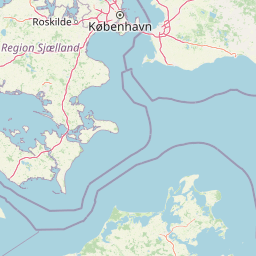
Use this park location map to pinpoint Saksfjed-Hyllekrog Nature Reserve in Denmark, understand its exact geographic position, and read its mapped placement within the surrounding landscape more clearly.

Pigeon | © OpenStreetMap contributors

Location context for Saksfjed-Hyllekrog Nature Reserve

Lolland

Examine the coastal terrain, habitat mosaic, and protected scenery of southern Lolland

Visual Exploration and Landscape Photography of Saksfjed-Hyllekrog

Photographic documentation reveals the diverse terrain, coastal dunes, and wetland habitats that define the protected landscape of Saksfjed-Hyllekrog. Visual records provide essential insight into the reserve's unique geography, active shoreline dynamics, and conservation environments.

A square, weathered white stone lighthouse stands in a grassy coastal field under a clear blue sky.

Park atlas

Compare surrounding coastal reserves, wetland habitats, and regional park geography

Parks Near Saksfjed-Hyllekrog and Related Protected Areas in the Region

Browse nearby national parks and protected landscapes connected to the coastal environment of Saksfjed-Hyllekrog. Extending your geographic comparison reveals broader regional ecosystems and shared conservation patterns across the surrounding territory.
A soft watercolor illustration of a coastal landscape with rolling green hills and pink and yellow sky reflected in calm water.
Nature reserveGermany
About 12 km away#1 closest

Southwest

Fehmarnbelt Nature Reserve: Exploring Marine Geography and Protected Baltic Sea Habitats

Submerged trench, boulder reefs, and marine migration corridors

Fehmarnbelt is an ecologically significant nature reserve in the German Baltic Sea, recognized for its role in water exchange between two major seas. The area features a deep trench, dynamic megaripple formations, and boulder reefs that support complex benthic communities. This site stands as a key protected landscape for marine biodiversity and harbor porpoise preservation within the region.

Area
280 km²
Established
2017
Relief
Lowland
Climate
Temperate
A soft watercolor painting depicting a calm lake surrounded by lush green trees and soft, rolling hills in the background.
Protected landscapeLolland
About 16 km away#2 closest

North

Naturpark Maribosøerne Protected Landscape and Glacial Geography in Denmark

Glacial lake ecosystems on the island of Lolland

The landscape of Naturpark Maribosøerne centers on four interconnected glacial lakes, characterized by twisting shorelines and shallow, nutrient-rich water. This protected area on Lolland blends ancient ice age terrain with historic manor estates, extensive wetlands, and managed forest zones. Its formal status as a Natura 2000 habitat and bird protection zone highlights the ecological importance of this unique southern Danish environment.

Area
11.4 km²
Established
1957
Water
Major water bodies
A horizontal watercolor painting showing a soft green shoreline in the foreground and rolling hills across the water in the distance.
Nature reserveNaestved Municipality
About 60 km away#3 closest

North

Dybsø Nature Reserve: Protected Coastal Landscape in Naestved Municipality

Geographic atlas of a protected Danish barrier island

Dybsø is a distinct barrier island situated off the coast of Zealand. Its protected landscape consists of open grasslands, coastal reed beds, and freshwater ponds that shelter the shallow waters of the fjord system. As a designated nature reserve, the area represents a critical wildlife refuge, maintained through traditional grazing to preserve its unique maritime terrain and geological history.

Area
1.34 km²
Established
1978
Relief
Lowland
Climate
Temperate
Wildlife reserveDenmark
About 61 km away#4 closest

North

Dybsø Fjord Wildlife Reserve: Coastal Geography and Protected Wetland Map in Denmark

A shallow fjord system on the southwestern coast of Zealand

Dybsø Fjord represents a primary protected landscape in Denmark, featuring a broad and exceptionally shallow lagoon environment. By tracing its boundaries and surrounding peninsulas, users can analyze a critical wetland habitat that supports international bird protection networks and reflects the unique coastal scenery of the Baltic region.

Area
17 km²
Established
1940
Relief
Lowland
Scope
Mixed
Watercolor illustration showing a coastal lagoon with sandy shoreline, calm water, sand dunes, and sparse vegetation including trees and grasses
National parkMecklenburg-Vorpommern
About 67 km away#5 closest

East

Western Pomerania Lagoon Area National Park: Detailed Geographic and Protected Landscape Context

Explore its mapped boundaries and unique Baltic Sea coastal geography.

Western Pomerania Lagoon Area National Park is a vital protected landscape in Mecklenburg-Vorpommern, renowned for its complex network of peninsulas, islands, and extremely shallow brackish 'bodden' waters. This page serves as an atlas entry, detailing the park's geographic features, its distinctive wind-driven water level fluctuations, and its ecological importance as a major migratory bird staging area. Users can investigate the mapped extent of this significant German national park and understand its unique place within the regional geography.

Area
805 km²
Established
1990
IUCN
II
Relief
Lowland
Nature reserveDenmark
About 69 km away#6 closest

North

Stigsnæs-Borreby-Basnæs Nor Nature Reserve: Mapped Geography and Coastal Landscape Context

Protected wetlands and migration corridors in southern Denmark

Stigsnæs-Borreby-Basnæs Nor encompasses a complex interplay of manor-influenced farmland, reed-fringed shallows, and essential marshlands. This nature reserve functions as a critical funnel for migratory raptors and waterfowl on the southwestern edge of the Zealand coast. The area integrates deep cultural history with internationally recognized habitats, offering a clear window into the coastal terrain and wetland structure of the region.

Area
12.15 km²
Established
1978
Relief
Lowland
Scope
Mixed
Protected landscapeSchleswig-Holstein
About 82 km away#7 closest

Southwest

Naturpark Holsteinische Schweiz: Geographic Atlas of a Northern German Protected Landscape

Lake-dense glacial regions and forest habitats in Schleswig-Holstein.

Spanning 75,000 hectares across the districts of Ostholstein, Plön, and Segeberg, Naturpark Holsteinische Schweiz offers a rich look at a classic post-glacial landscape. This structured overview details the park's intricate network of lakes, winding streams like the Schwentine, and restored peatlands that support essential waterbird habitats. Gain a deeper understanding of the park's topography, from the Bungsberg ridges to the expansive lowland depressions that define this region.

Area
753.28 km²
Established
1986
Relief
Upland
Climate
Temperate
Nature reserveFaxe Municipality
About 92 km away#8 closest

North

Bagholt Mose: Protected Peatland Mosaic and Fen Geography in Faxe Municipality, Denmark

A high-value Natura 2000 protected wetland and bog habitat.

Bagholt Mose is a significant nature reserve situated within the Munkeskov forest of southern Zealand. The landscape features a distinct combination of historical peat cuttings and raised bog remnants, which together form a rare mosaic of nutrient-poor and calcareous fen communities that support an exceptional diversity of lowland bog flora.

Area
0.17 km²
Established
1985
Relief
Lowland
Scope
Terrestrial

Common questions about visiting, size, designation, and location context for Saksfjed-Hyllekrog Nature Reserve

Saksfjed-Hyllekrog Nature Reserve FAQs for park facts, access, geography, and protected area context

Find quick answers about Saksfjed-Hyllekrog Nature Reserve, including protected-area facts, park geography, trail and visitor context, and how the park fits into its surrounding country and regional landscape.
MoriAtlas Explorer

Continue Your Protected Areas Search Across the Global Atlas

Deepen your exploration by continuing the structured search for national parks and protected areas worldwide. Utilize the comprehensive filtering capabilities to compare different conservation landscapes and refine your understanding of global park geography. Discover more about the distribution and characteristics of protected natural areas.

Global natural geography