
Why Saksfjed-Hyllekrog Nature Reserve stands out
Saksfjed-Hyllekrog is best known as one of Denmark's premier autumn migration sites for birds of prey, where thousands of raptors pass along the Lolland coast each year between August and October. The reserve's combination of open coastal landscape, varied shoreline habitats, and protected status makes it a strategic funneling point for migrating raptors moving south. Equally central to its identity is the rich mosaic of protected wetland and coastal habitats, set within a Ramsar and Natura 2000 framework. The reserve is also notable for its breeding white-tailed eagles and for its deliberate use of large grazers, including wild horses, organic cattle, and Taurus cattle, to maintain open natural habitats as part of active nature management.
Saksfjed-Hyllekrog Nature Reserve history and protected-area timeline
The wider protected landscape surrounding Saksfjed-Hyllekrog was formally preserved in 1989, when roughly 1,150 hectares including the Saksfjed Inddæmning, Drummeholm, and Hyllekrog Odde were placed under a Danish landscape preservation order. This broader protection set the stage for the later creation of the reserve itself.
The Saksfjed-Hyllekrog nature reserve was established in 1995, when the Karen Krieger Foundation acquired the area and entrusted its administration to the Fugleværnsfonden, Denmark's national bird protection foundation. While most of the reserve is now managed by the foundation, the Hempel Foundation retains ownership of parts of the Saksfjed area. The reserve's ongoing development has been shaped by active habitat management, including the use of grazing animals to maintain open coastal habitat, with a notable expansion in 2025 when 30 Taurus beef cattle were released at Saksfjed for nature management purposes.
Saksfjed-Hyllekrog Nature Reserve landscape and geographic character
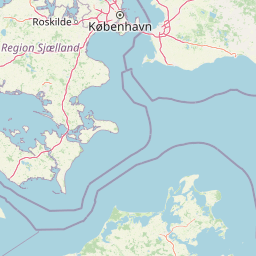
The landscape of Saksfjed-Hyllekrog is defined by its coastal position on southern Lolland, where reclaimed land meets the open waters of Smålandsfarvandet. The reserve stretches across two complementary landscapes: the Hyllekrog Odde headland, a roughly 90-hectare coastal spit, and the Saksfjed area, a 127-hectare reclaimed parcel on the inland side of the embankment.
Hyllekrog Odde forms a prominent coastal projection, with dune, beach flat, shoreline, and small islets shaping its edge against the sea. The Saksfjed side carries visible traces of historical land reclamation, including old dike graves and shallow coastal lagoons, as well as more varied habitats with woodland, scrub, and coastal meadow. Together, these features create a landscape mosaic where inland reclaimed polders, wetland features, and active coastal dynamics interact across a relatively small area.
Saksfjed-Hyllekrog Nature Reserve ecosystems, habitats, and plant life
Saksfjed-Hyllekrog protects an unusually varied set of habitats for a coastal reserve of its size. Within a compact footprint it combines forest, scrub, coastal meadow, beach flat, dune, shoreline, shallow coastal lagoons, small islets, and reclaimed polder landscapes. This habitat diversity reflects the meeting of historic land reclamation, hydrological features like loer, and ongoing coastal processes.
The reserve's ecological character is shaped both by its static habitat mosaic and by active management. Grazing animals, including wild horses, organic cattle, and the newly introduced Taurus cattle at Saksfjed, are used to maintain open habitat conditions. Its inclusion in Natura 2000 and its Ramsar status emphasize its value as an internationally important wetland ecosystem supporting waterbirds and other species dependent on coastal habitats.
Saksfjed-Hyllekrog Nature Reserve wildlife and species highlights
Saksfjed-Hyllekrog is one of Denmark's most important autumn migration sites for birds of prey, with thousands of raptors passing through on their way south between August and October each year. The reserve's geography, jutting out along Lolland's southern coast, makes it a natural gathering point for visible raptor migration, and the Fugleværnsfonden hosts regular free autumn raptor-watching events there.
Beyond raptors, the reserve supports breeding white-tailed eagles, a robust population of fallow deer, and large grazing herds including wild horses, organic cattle, and the newly introduced Taurus cattle at Saksfjed, which together play an active role in shaping habitat conditions. The broader protected landscape, particularly the bay north of Hyllekrog Odde where hunting is prohibited, provides additional refuge for waterbirds and other wildlife tied to the Smålandsfarvandet coastline.
Saksfjed-Hyllekrog Nature Reserve conservation status and protection priorities
The reserve sits within a layered protection framework that gives it strong conservation significance. It is part of a 1989 landscape preservation order covering about 1,150 hectares, and is itself managed as a nature reserve by the Fugleværnsfonden. Hyllekrog and the bay north of the headland are designated as a wildlife reserve where hunting is prohibited, removing direct human hunting pressure from a key stretch of the Lolland coast.
At the broader scales, the reserve is part of the Natura 2000 network under area 173, Smålandsfarvandet north of Lolland, Guldborgsund, Bøtø Nor, and Hyllekrog-Rødsand, and is also a designated Ramsar wetland of international importance as a habitat for waterbirds. These recognitions emphasize the reserve's role as an internationally significant coastal wetland ecosystem. Conservation management is active, with grazing animals including wild horses, organic cattle, and a 2025-introduced herd of Taurus cattle employed to maintain open habitat conditions and ecological diversity.
Saksfjed-Hyllekrog Nature Reserve cultural meaning and human context
The cultural context of Saksfjed-Hyllekrog is closely tied to the long history of land reclamation that shaped southern Lolland. Old dike graves in the landscape are visible reminders of the effort to reclaim coastal land, while the legacy of former estate ownership, expressed through foundations like the Karen Krieger Foundation and the Hempel Foundation, still shapes how the reserve is owned and managed today.
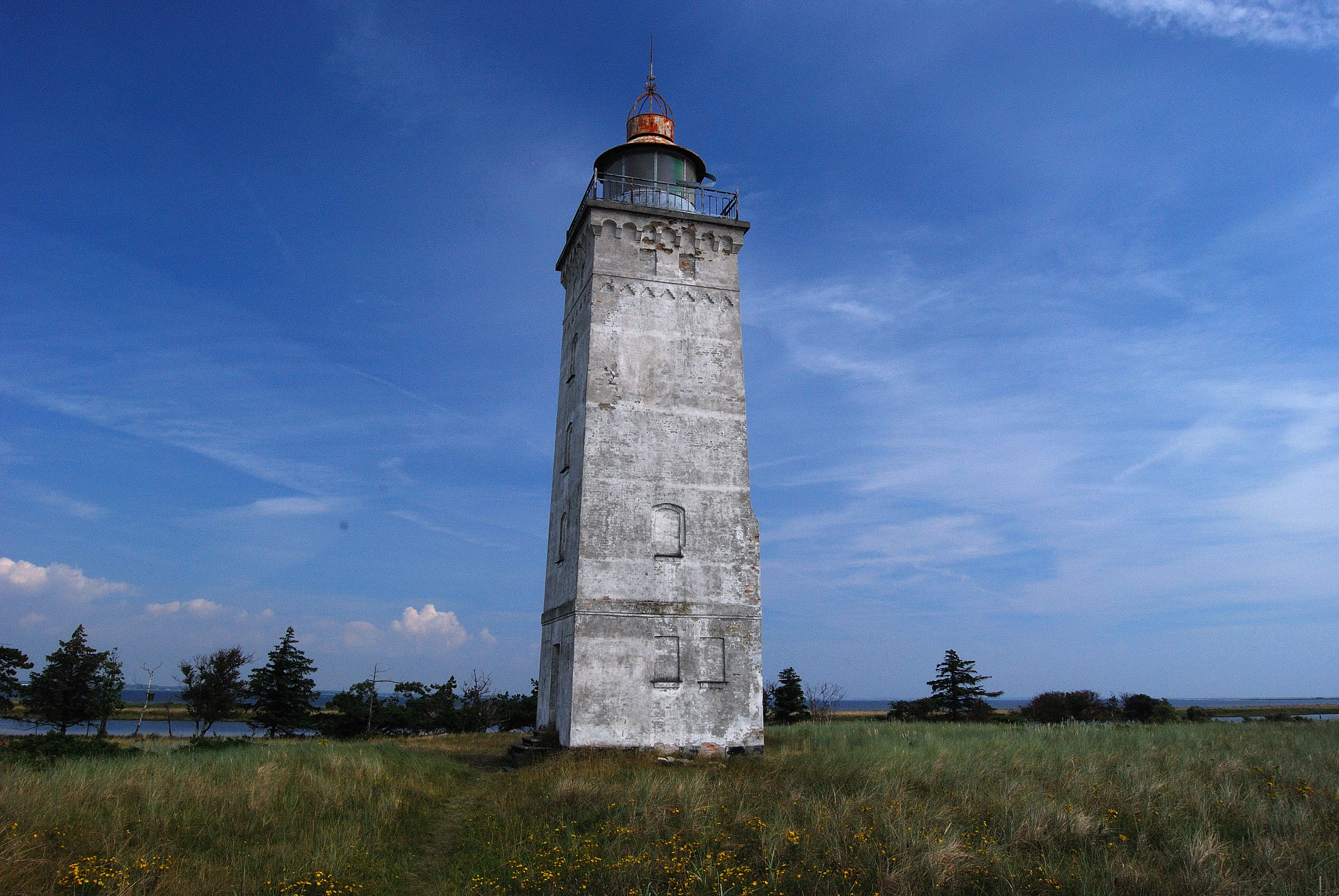
The reserve also carries a tradition of public nature engagement. Ninas Hus, a former hunting lodge on the Hyllekrog headland, has been restored by the Fugleværnsfonden's volunteer work group and is used for birdwatching events and nature activities, while the 19th-century Hyllekrog lighthouse has been adapted by Naturstyrelsen into a small exhibition space. These features give the reserve a modest but meaningful cultural layer beyond its natural values.
Top sights and standout views in Saksfjed-Hyllekrog Nature Reserve
Saksfjed-Hyllekrog's strongest points of distinction lie at the intersection of conservation value, migratory wildlife, and active habitat management. Its status as one of Denmark's most important autumn raptor migration sites, combined with documented breeding white-tailed eagles, places it firmly on the national ornithological map. Combined with Ramsar and Natura 2000 designations, this dual bird-focused identity is the park's clearest signature.
Equally distinctive is its use of large grazers, including wild horses, organic cattle, and the recently introduced Taurus herd, as a tool for nature management on reclaimed coastal land. The presence of Hyllekrog lighthouse and the restored Ninas Hus adds modest but recognizable cultural landmarks, rounding out a reserve where coastal geography, wildlife migration, and deliberate ecological stewardship come together.
Best time to visit Saksfjed-Hyllekrog Nature Reserve
Saksfjed-Hyllekrog is strongly seasonal in character, with autumn standing out as the most distinctive time to experience the reserve. Between August and October, thousands of birds of prey migrate along the Lolland coast, and the Fugleværnsfonden runs regular free guided raptor-watching events during this period, making it the natural window for visitors interested in bird migration.
Outside of the autumn migration season, the reserve's mix of woodland, coastal meadow, dunes, and shoreline offers quieter but still rewarding visits, particularly for those interested in breeding birds, white-tailed eagles, grazing animals, and general coastal landscape. The Hyllekrog lighthouse exhibition is open to visitors outside the breeding season, making the broader spring, summer, and winter months more suitable for exploring the reserve's land-based features.