
Why Sandgrube am Mahlertshof stands out
The reserve is best known for being a former sand quarry that has transformed into a network of small ponds and pools embedded in mixed woodland. Its defining character is the meeting of open water, marshy shoreline vegetation, and forest, producing a compact wetland refuge that is unusually rich in amphibian life and useful to both resident and migrating birds.
Sandgrube am Mahlertshof history and protected-area timeline
The site has its origin as a former sand quarry in the area locally known as the Willhards pit. After extraction activities ceased, the hollowed ground gradually filled with water, producing a series of ponds and small pools that began to acquire ecological value on their own. Recognition of this transformation came on 25 May 1992, when the area was placed under formal nature protection as the Naturschutzgebiet Sandgrube am Mahlertshof, identified under the official designation 1631026, ensuring its conservation as a small wetland refuge within the surrounding mixed forest landscape.
Sandgrube am Mahlertshof landscape and geographic character
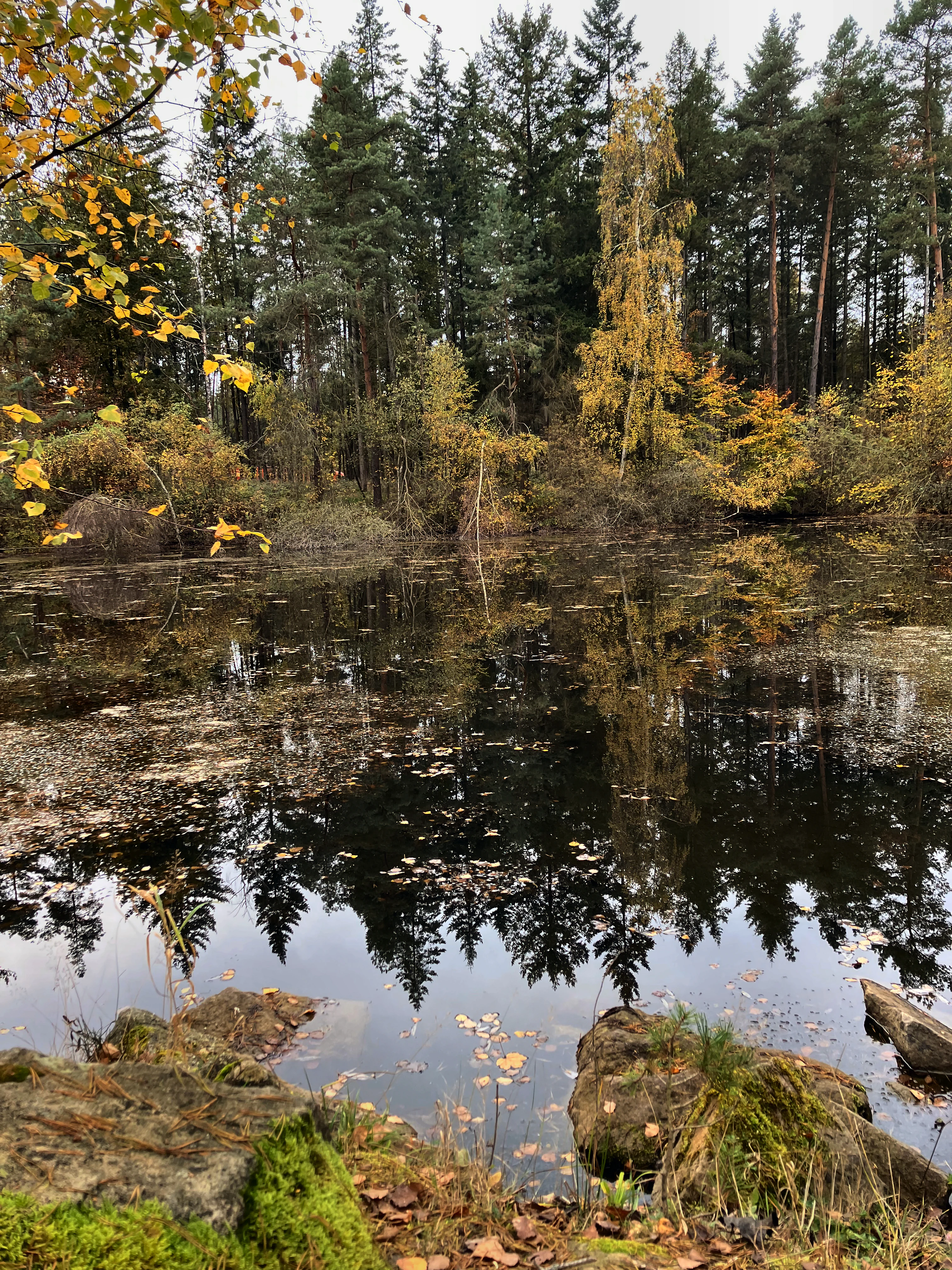
The landscape of the reserve is shaped by what could be described as a hollowed, water-filled terrain inside a forested setting. Four ponds and pools of differing size and depth occupy the central zone, each bordered by shallow shoreline transitions that support marsh plants. The surrounding vegetation is mixed forest, which frames the open water and creates sheltered margins.
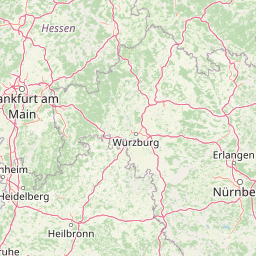
The site lies near the hamlet of Mahlertshof, between the core settlement of Burghaun and the Schlotzau area, and runs broadly parallel to the Bundesautobahn 7 corridor. Although the topography is gentle and the elevation modest, the contrast between open water, marsh edge, and enclosing woodland gives the small reserve a clearly defined internal landscape character.
Sandgrube am Mahlertshof ecosystems, habitats, and plant life
Ecologically, the reserve functions as a small but well-defined wetland system embedded in mixed woodland. The four ponds and pools provide aquatic habitat, while their shallow margins support a typical suite of damp-loving vegetation, including broad-leaved and narrow-leaved bulrush, upright bur-reed, meadowsweet, water horehound, club-rush, and floating sweet-grass.
The combination of forest cover and open water creates a transitional ecological zone where forest, shoreline, marsh, and aquatic conditions meet within a very small area. This layered habitat supports amphibians in the pools, reptiles along the warmer edges, waterbirds using the surface as a drinking site, and a diverse insect community, especially butterflies, in the surrounding vegetation.
Sandgrube am Mahlertshof wildlife and species highlights
The reserve is particularly notable for its amphibian populations. The ponds and pools serve both as habitat and spawning waters for species such as common toads, water frogs, grass frogs, and both smooth and alpine newts. Reptiles are also documented in the area, taking advantage of the warmer edges around the ponds.
Birds use the open water as a drinking spot, and during the migration season the reserve occasionally hosts shorebirds, known in German as Limikolen, that stop briefly to rest and forage. The mix of water, marshy margins, and forest further supports a rich insect fauna, including butterflies, which in turn reinforces the food web for birds and other small predators.
Sandgrube am Mahlertshof conservation status and protection priorities
Conservation significance at Sandgrube am Mahlertshof stems from the site's role as a small, specialized wetland refuge within a predominantly forested and agricultural regional landscape. The protected area, formally designated since 1992, preserves a former sand quarry that now functions as ecologically valuable open water and marsh habitat in an otherwise limited local setting.
Its protection helps maintain local amphibian breeding habitat, supports seasonal use by migratory shorebirds, and safeguards a transitional zone between forest and wetland that can support diverse insect life. As one of many small nature reserves in the Landkreis Fulda, it also contributes to the broader network of protected sites that maintain habitat connectivity and biodiversity across eastern Hesse.
Top sights and standout views in Sandgrube am Mahlertshof
Among the reserve's most notable qualities is the way a former sand quarry has become a functioning wetland system, with four ponds of varied size and depth offering layered habitat within a single small footprint. The reserve supports a strong amphibian community, including toads, frogs, and both smooth and alpine newts, and functions as a seasonal drinking site and shorebird stopover.