Why Serranía de Los Churumbelos Auka-Wasi National Natural Park stands out
The park is renowned as an exceptional birdwatching destination, with an estimated 550 bird species inhabiting its diverse habitats, making it one of the most species-rich areas in the Andes. It is particularly significant for threatened and near-threatened bird species, with twelve such species recorded during initial surveys. The mountain range also harbors important populations of spectacled bear and mountain tapir, two endangered mammals characteristic of high-altitude Andean environments. The discovery of a tabletop massif called Alto Cagadero in 1998, bearing resemblance to the tepuis of Venezuela, added geological significance to the park's scientific value.
Serranía de Los Churumbelos Auka-Wasi National Natural Park history and protected-area timeline
The scientific history of Serranía de Los Churumbelos began with Anglo-Colombian expeditions in 1998, specifically the Colombia '98 initiative and the EBA Project, which represented collaborative efforts between Colombian and UK researchers. These initial explorations focused on rapid biodiversity assessments and conservation evaluations across the mountain range. A subsequent expedition in 2000 expanded this scientific effort, with findings published by Fundacion ProAves in a 2007 edition of Conservacion Colombiana. These publications provided the scientific foundation for the park's establishment, documenting the extraordinary bird diversity, discovering new plant species, and recording significant populations of threatened mammals. The Colombian government formally declared the area a national park on August 30, 2007, recognizing its global significance for biodiversity conservation.
Serranía de Los Churumbelos Auka-Wasi National Natural Park landscape and geographic character
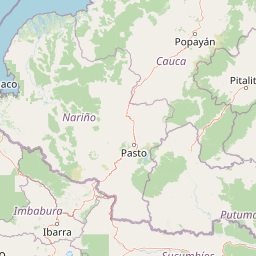
The Serranía de los Churumbelos forms a dramatic mountain landscape characterized by steep-sided slopes and a remarkable altitudinal gradient that spans from lower elevations up to highland zones. The range's southernmost position within the Eastern Cordillera creates a distinct topographical identity, with the terrain transitioning between different elevational zones that support varied vegetation communities. A notable geological feature is the previously unexplored tabletop massif named Alto Cagadero, located at approximately 1°14'32.32″N and 76°30'28.34″W, which bears a striking resemblance to the tepuis of Venezuela, ancient table-top mountains found in the Guiana Shield. This geological formation adds distinctive character to the park's mountainous scenery and represents a rare example of such formations in the Colombian Andes.
Serranía de Los Churumbelos Auka-Wasi National Natural Park ecosystems, habitats, and plant life
The ecological significance of Serranía de Los Churumbelos stems from its position at the intersection of four major biogeographic regions, creating a complex mosaic of habitats that supports extraordinary biodiversity. The mountain range's extensive altitudinal gradient has produced multiple distinct ecosystems and microhabitat zones within the protected area. Lowland Amazonian species encounter Andean cloud forest communities, while transitional zones support elements from both the Eastern and Central Cordilleras as well as the drier Magdalena Valley. This ecological blending has produced an exceptional diversity of plant communities, including newly discovered species in the Gesneriaceae and Piperaceae families. The varied habitats range from humid forest slopes to more open highland environments, each supporting distinct assemblages of flora adapted to specific conditions.
Serranía de Los Churumbelos Auka-Wasi National Natural Park wildlife and species highlights
The wildlife of Serranía de Los Churumbelos demonstrates exceptional diversity, particularly for avian species. Initial surveys documented 462 bird species, with 246 individuals ringed for research purposes, and scientists estimate the total bird species inventory may exceed 550, making this a global avian hotspot of extraordinary importance. Twelve bird species recorded in the park are classified as either threatened or near-threatened, highlighting its conservation significance for vulnerable populations. The mammal community includes two flagship species of high conservation concern: the spectacled bear, a distinctive Andean bear species with characteristic facial markings, and the mountain tapir, the smallest and most threatened of the world's four tapir species. Amphibian and reptile surveys revealed 46 species, including four new records for Colombia and several potentially undescribed taxa, indicating ongoing discoveries await further research.
Serranía de Los Churumbelos Auka-Wasi National Natural Park conservation status and protection priorities
The establishment of Serranía de Los Churumbelos as a national park reflects strong biological justifications for protection. The area had remained relatively intact compared to other parts of the eastern Andean slope that have experienced significant human population pressure and habitat degradation. However, the park faces emerging threats from development, including the completion of the Mocoa-Bogotá highway that increases accessibility to the region, proposed road construction linking Puerto Asís and Florencia, and growing interest in petroleum and precious metal extraction. Agricultural expansion, particularly from coca cultivation and maize farming, along with hunting pressures, represents ongoing challenges. The conservation rationale emphasizes the importance of protecting this biological corridor that connects multiple biogeographic regions while providing refuge for species with limited distribution in the face of Andean deforestation.
Serranía de Los Churumbelos Auka-Wasi National Natural Park cultural meaning and human context
The park's name incorporates Auka-Wasi, reflecting indigenous cultural connections to the region, though the available source material provides limited detail on specific indigenous communities or historical land use. The broader Bota Caucana region has been historically inhabited by various indigenous groups whose relationships with the mountainous landscape predate modern protected area designation. The region's name, Serranía de los Churumbelos, derives from local toponymy, and the park's establishment represents a modern approach to conservation that must balance ecological protection with the presence of local communities and their historical connections to the land.
Top sights and standout views in Serranía de Los Churumbelos Auka-Wasi National Natural Park
The exceptional bird diversity makes Serranía de Los Churumbelos a priority destination for ornithologists and birdwatchers, with over 550 expected species including twelve threatened or near-threatened species. The presence of both spectacled bear and mountain tapir provides flagship mammal viewing opportunities in pristine Andean habitats. The geological similarity of Alto Cagadero to the tepuis offers a distinctive landscape feature uncommon in the Colombian Andes. The park's position at the crossroads of four biogeographic regions creates remarkable ecological variety within a single protected area.
Best time to visit Serranía de Los Churumbelos Auka-Wasi National Natural Park
The park's equatorial mountain location means that visitor conditions are influenced more by elevation than by typical seasonal changes. Higher elevations within the park tend to experience cloud forest conditions with persistent moisture, while lower areas maintain more consistently warm temperatures. The transition periods between wet and dry seasons typically offer the best conditions for wildlife observation, though the park's relatively recent establishment means visitor infrastructure and access information may be limited. Visitors planning trips should consult current Colombian national park authorities for the most up-to-date guidance on access, permits, and seasonal conditions.