Mori Atlas logo
Protected areaGaleras

Discover the protected landscape and regional terrain surrounding Galeras.

Galeras Protected Area: Mapped Boundaries and Geographic Context in Colombia

Galeras is a designated protected area within Colombia, offering a unique lens for exploring its specific geographic setting and natural landscape. This entry focuses on the park's mapped boundaries and its place within the country's broader geographical tapestry, providing a foundation for understanding its protected status and the surrounding terrain. Investigate the distinctiveness of Galeras as a key protected land within the South American atlas.

active volcanostratovolcanoDecade VolcanoAndesvolcanic hazardgeological research
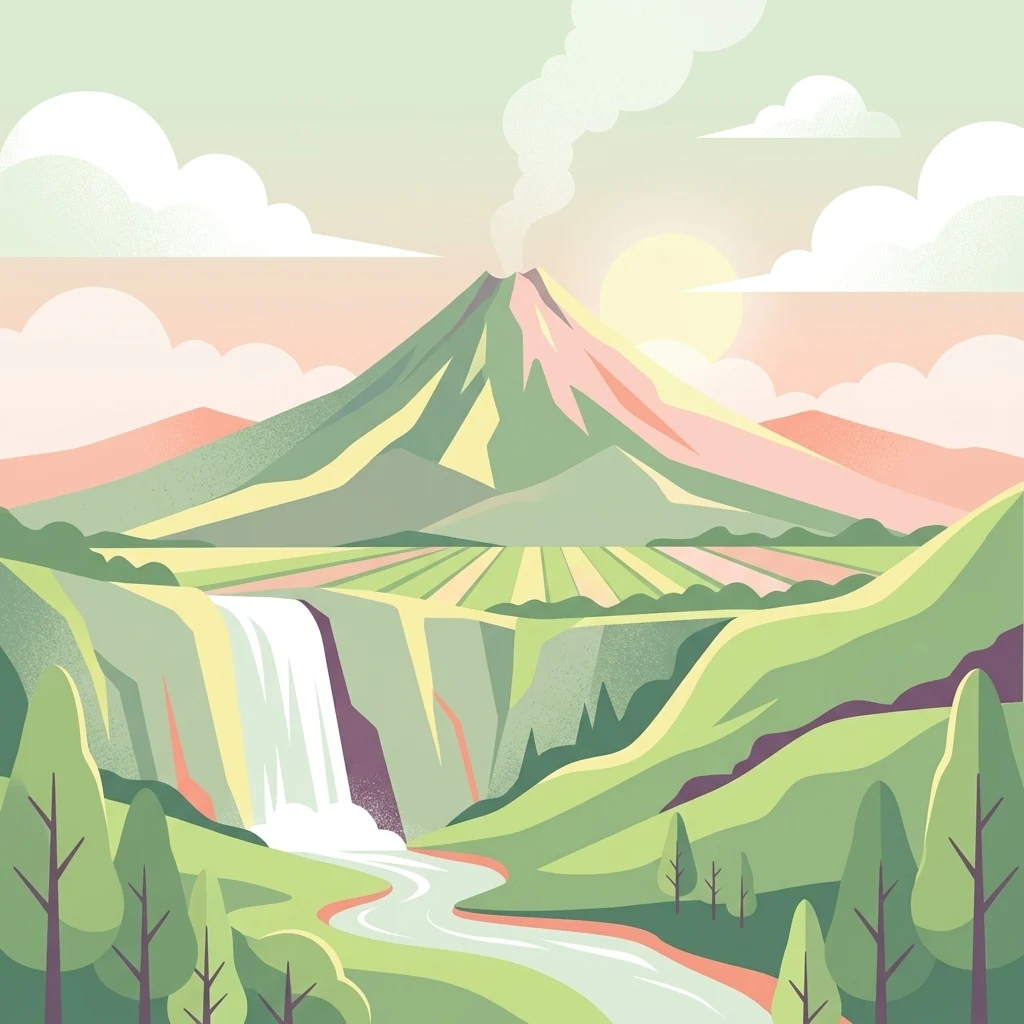
Stylized illustration of a volcano with smoke, waterfall, river, green hills, and trees

Galeras

Protected area

Park overview

Structured park overview, official facts, and landscape profile for Galeras

Galeras park facts, protected area profile, and essential visitor context
Review the core facts for Galeras, including designation, size, terrain, visitor scale, habitats, and operating context in one park-focused overview.

About Galeras

Galeras dominates the landscape near Pasto, rising dramatically above the surrounding terrain in southwestern Colombia. The volcano's persistent activity has shaped both the physical environment and the lives of communities in its shadow. As a Decade Volcano identified by the International Decade for Natural Disaster Reduction, Galeras has received intensive scientific attention aimed at improving volcanic hazard assessment and early warning capabilities. The volcano's andesitic composition and complex internal structure result in diverse eruption styles, from relatively mild Strombolian explosions to more dangerous Plinian events capable of generating pyroclastic flows and lahars. The persistent monitoring efforts have produced valuable data on precursor phenomena, particularly the distinctive tornillo seismic events that precede most eruptions at Galeras. The volcano's activity continues to affect regional air quality and poses ongoing risks to surrounding communities, who have experienced repeated evacuations and ash fall events.

Quick facts and research context for Galeras

Galeras is a complex stratovolcano with a horseshoe-shaped caldera formed by two major caldera-forming eruptions approximately 560,000 and 40,000 to 150,000 years ago. The volcano has erupted more than 30 times since the Spanish conquest, with activity ranging from gentle ash emissions to explosive events. It was designated a Decade Volcano by the United Nations in 1991, recognizing it as a priority target for volcanic hazard research. The volcano is part of the Central Ranges of the Colombian Andes and has been studied extensively by international volcanological teams.

Park context

Deeper park guide and search-rich context for Galeras

Galeras history, landscape, wildlife, and travel context
Explore Galeras through its history, landscape character, ecosystems, wildlife, conservation priorities, cultural context, and seasonal travel timing in a structured park guide built for atlas discovery and search intent.

Why Galeras stands out

Galeras is best known for its status as Colombia's most active volcano and for the tragic 1993 eruption that killed six scientists and three tourists at the summit. The volcano is also renowned for its tornillo seismic events, low-frequency seismic signatures that have proven to be reliable precursors to explosive eruptions, occurring before approximately 80 percent of recorded explosions. Its ongoing activity has made it a critical natural laboratory for understanding volcanic behavior and improving eruption prediction capabilities.
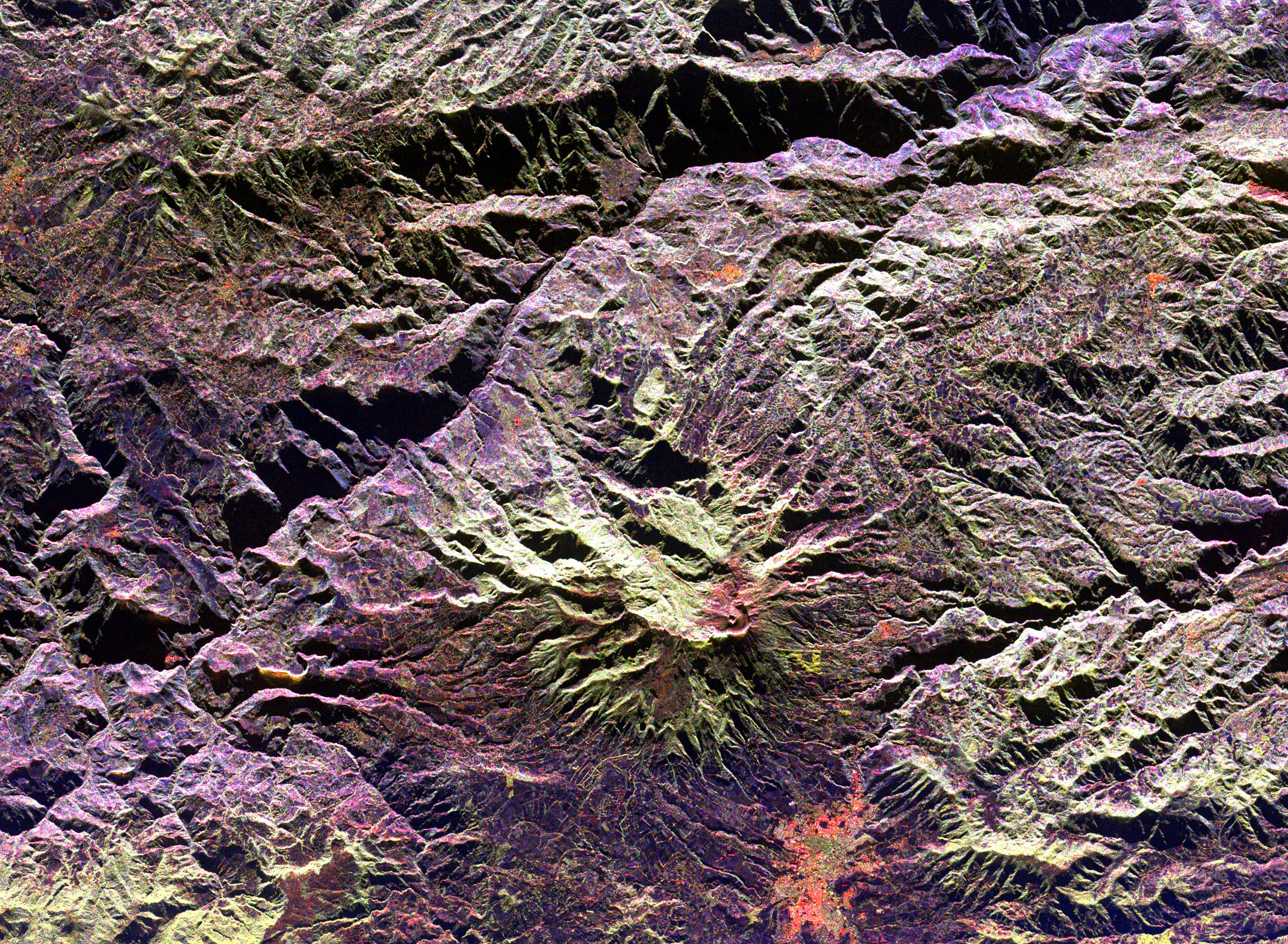
Snow-capped Galeras Volcano with green hills and city of Pasto in foreground under cloudy sky
Snow-capped Galeras Volcano overlooking Pasto city under overcast skies

Galeras history and protected-area timeline

Galeras has been active for at least one million years, with andesite as the dominant volcanic product throughout its geological history. Two catastrophic caldera-forming eruptions shaped the volcano's present form: the first approximately 560,000 years ago expelled roughly 15 cubic kilometers of material, while a second eruption between 40,000 and 150,000 years ago released about 2 cubic kilometers of material. Following these events, partial collapse of the caldera wall, possibly related to hydrothermal activity, created the distinctive horseshoe-shaped depression visible today. Subsequent eruptions built a smaller cone within this caldera. The first documented historical eruption occurred on December 7, 1580, beginning a pattern of frequent activity that continues to the present. The volcano reactivated in 1988 after a decade of dormancy, setting the stage for the tragic events of January 1993 when an unexpected eruption during a scientific expedition claimed nine lives. This disaster led to significant changes in volcanic monitoring protocols and hazard communication practices.

Galeras landscape and geographic character

Galeras rises as a prominent conical peak within the Central Ranges of the Colombian Andes, its summit reaching 4,276 meters above sea level. The volcano features a horseshoe-shaped caldera open to the west, formed by ancient collapses and subsequent volcanic construction. The modern volcanic cone occupies the northeastern portion of this caldera depression. The landscape around Galeras is characterized by steep slopes descending into valleys inhabited by rural communities engaged in agriculture. The city of Pasto sits at the volcano's base approximately 9 kilometers to the northeast, with the volcano's profile forming a dramatic backdrop to the urban area. The region experiences a tropical highland climate influenced by the volcano's elevation and the surrounding Andean terrain.
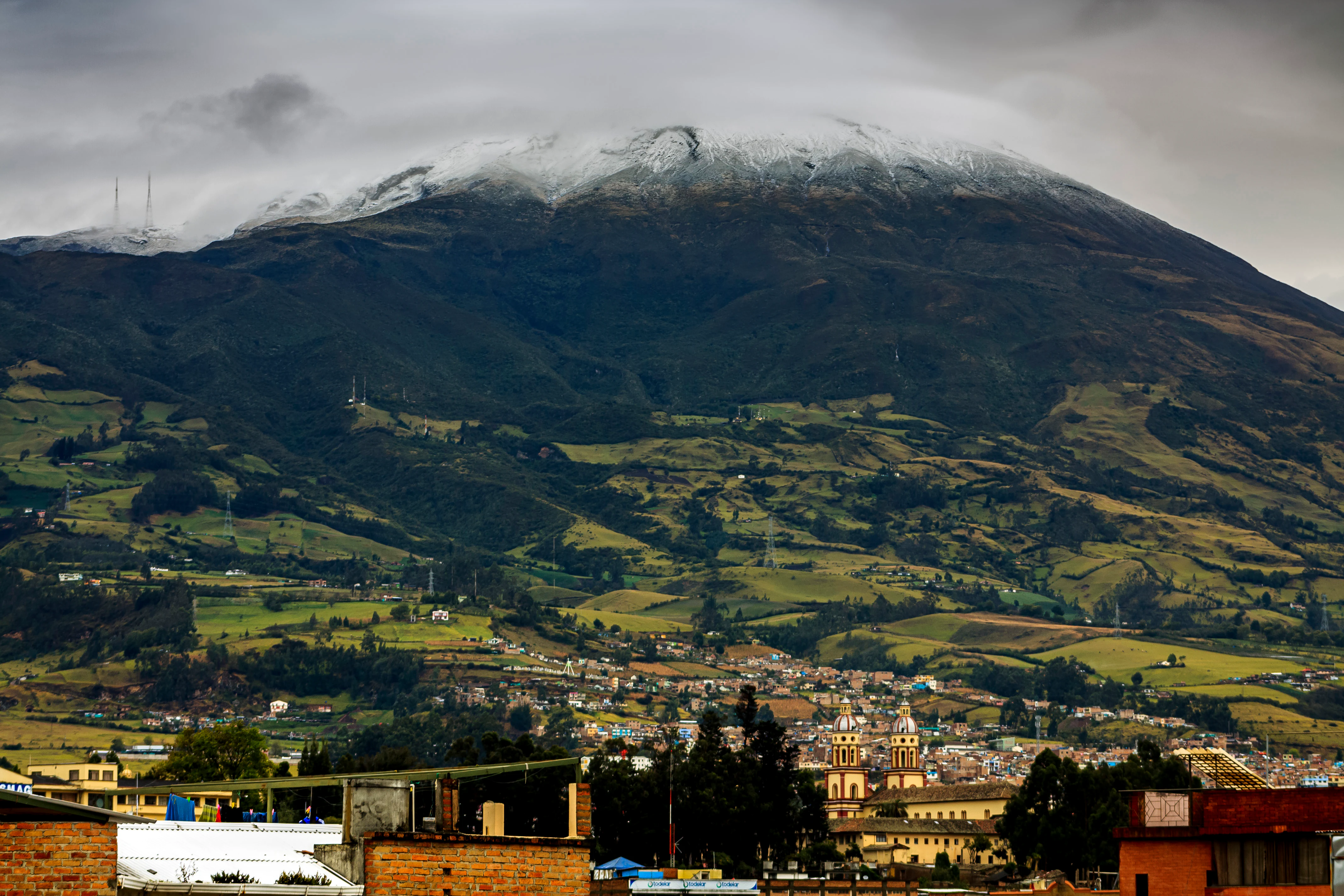
Radar image showing the topographic features of Galeras Volcano with color-coded elevation data
Space radar image of Galeras Volcano, Colombia

Galeras ecosystems, habitats, and plant life

The ecosystems around Galeras reflect the dramatic altitudinal gradient from the volcano's summit to the surrounding valleys and plains. The Andean forest zones at mid-elevations host diverse vegetation adapted to the cool, humid conditions characteristic of this latitude. Paramo ecosystems occur at higher elevations, featuring specialized vegetation adapted to the harsh conditions above the tree line. The volcanic activity influences local soil chemistry and creates unique habitat conditions in areas where volcanic deposits have weathered. While the active volcanic zone itself supports limited vegetation due to repeated disturbance, the surrounding protected areas contain ecosystems important for regional biodiversity conservation.
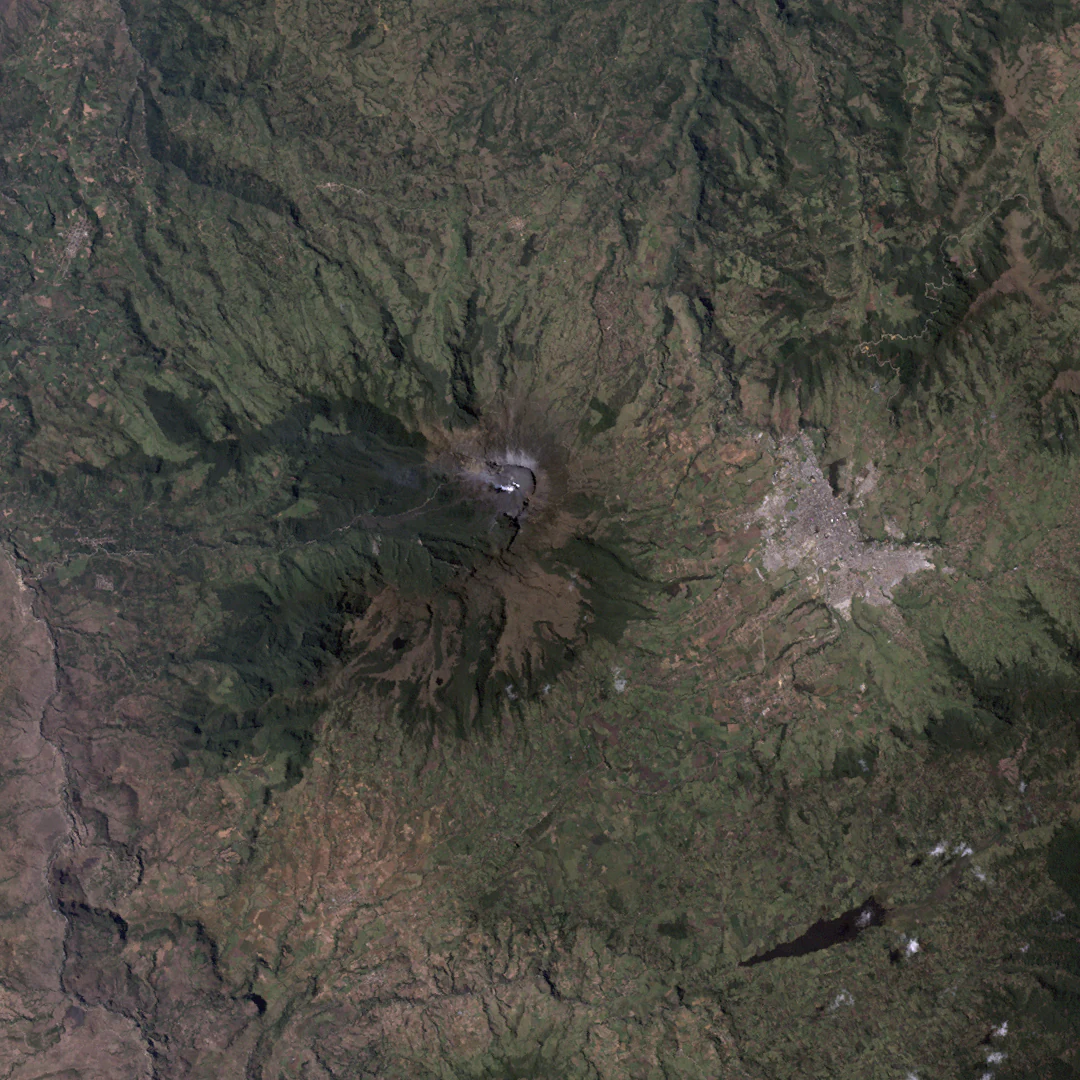
Satellite image showing Galeras Volcano with a volcanic crater, surrounding green terrain, and an urban settlement nearby
Satellite view of Galeras Volcano near Pasto, Colombia

Galeras wildlife and species highlights

The wildlife in the Galeras region reflects the ecological diversity of the Andean foothills of southwestern Colombia. The surrounding forests and protected areas provide habitat for various bird species common to the Colombian Andes, including numerous species of hummingbirds, tanagers, and raptors. The paramo zones above the tree line support specialized high-altitude fauna adapted to the harsh conditions. Mammals present in the region include various species of rodents, and larger mammals such as spectacled bears and pumas have been recorded in the broader Andean landscape. The volcanic nature of the area limits wildlife distribution in the most active zones, but the surrounding habitats maintain ecological value.

Galeras conservation status and protection priorities

Galeras holds significant conservation importance through its designation as a Decade Volcano, which identifies it as a priority target for international volcanic hazard research and monitoring. This recognition by the United Nations International Decade for Natural Disaster Reduction reflects both the volcano's activity level and the population exposure risk from potential eruptions. The ongoing scientific monitoring programs at Galeras have contributed substantially to global understanding of volcanic precursor phenomena and eruption prediction. The volcano serves as a natural laboratory for developing and testing monitoring techniques that can be applied to other active volcanic systems worldwide. While the immediate volcanic hazard precludes traditional conservation designations, the scientific value of the area is recognized through its inclusion in international volcanic monitoring networks.

Galeras cultural meaning and human context

The indigenous name Urcunina reflects the historical presence of pre-Columbian peoples in the Galeras region, where native groups inhabited the Andean foothills long before Spanish colonization. The city of Pasto, located at the volcano's base, grew in the shadow of Galeras and developed alongside the volcano's periodic activity. Local communities have adapted to living with volcanic risk over generations, developing traditional knowledge about precursor signs and evacuation procedures. The 1993 tragedy brought international attention to the region and led to improvements in community preparedness and emergency response systems. The ongoing relationship between Pasto's residents and Galeras exemplifies the broader pattern of human adaptation to active volcanic landscapes throughout Colombia.

Top sights and standout views in Galeras

Galeras stands as Colombia's most active volcano with a documented history spanning over a thousand recorded eruptions. The distinctive tornillo seismic events serve as reliable eruption precursors, making this volcano particularly valuable for volcanic science. The 1993 eruption that claimed nine lives remains one of the most tragic incidents in modern volcanology. The volcano's proximity to 450,000 residents of Pasto makes it one of the most densely populated volcanic danger zones in the world. As a Decade Volcano, Galeras receives continuous international scientific attention aimed at improving eruption prediction and hazard mitigation.

Best time to visit Galeras

Galeras is not a standard tourist destination due to the inherent dangers of its ongoing volcanic activity. Access to the summit and higher elevations is restricted by Colombian authorities, and evacuations are commonly ordered during periods of increased activity. The volcano exhibits low-level persistent activity with small explosions occasionally dusting nearby communities with ash. For those interested in observing volcanic activity safely, the surroundings of Pasto offer views of the volcano from appropriate distances, though any visit should be coordinated with local authorities and monitoring agencies to ensure safety.
Park location guide

Geography guide, regional context, and park location map for Galeras

Galeras park geography, regions, and map view in Colombia
Understand where Galeras sits in Colombia through a broader geographic reading of the surrounding landscape, nearby location context, and its mapped position within the national park landscape.

How Galeras fits into Colombia

Colombia is a presidential republic located in the northern part of South America. It spans approximately 1.14 million km² and has a population of around 52 million. The country features the Andes mountain range, extensive Amazon rainforest, and coastal regions on both the Caribbean and Pacific. Spanish is the official language, and Bogotá serves as the capital and largest city.

Wider geography shaping Galeras in Colombia

Colombia is located in the northwestern part of South America, bordering the Caribbean Sea to the north and the Pacific Ocean to the west. Its mainland neighbors are Venezuela to the east, Brazil to the southeast, Peru and Ecuador to the south and southwest, and Panama to the northwest. The terrain is diverse, featuring the Andes mountain range in the west, Amazon rainforest in the south and east, and coastal plains along both oceans.

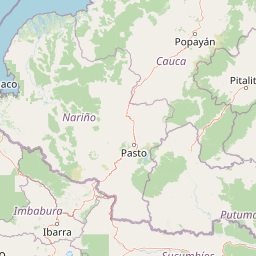
Map view of Galeras

Use this park location map to pinpoint Galeras in Colombia, understand its exact geographic position, and read its mapped placement within the surrounding landscape more clearly.

Pigeon | © OpenStreetMap contributors

Location context for Galeras

Nariño Department

Visualizing Galeras: Insights into its Dynamic Volcanic Terrain, High-Altitude Habitats, and Protected Area Character

Galeras Volcano Photography: Explore its Active Andean Landscapes and Unique Scenery
Discover compelling imagery of Galeras, Colombia's most active stratovolcano, to visually grasp its dramatic Andean landscapes, formidable conical peak, and unique high-altitude habitats. These photos offer essential context for understanding the volcano's ever-changing terrain, its surrounding protected area, and the dynamic environment that defines this significant natural landmark.

Snow-capped Galeras Volcano with green hills and city of Pasto in foreground under cloudy sky

Galeras Volcano with smoke emission above the city of Pasto under a clear blue sky

Radar image showing the topographic features of Galeras Volcano with color-coded elevation data

Satellite image showing Galeras Volcano with a volcanic crater, surrounding green terrain, and an urban settlement nearby

Park atlas

Discover regional park geography and connected protected landscapes surrounding Galeras, tracing Colombia's Andean terrain.

Explore More Protected Areas Near Galeras Volcano: Browse Nearby Parks in the Colombian Andes
After exploring Galeras, delve into other protected areas across the North Volcanic Zone of the Andes, including additional national parks and significant conservation landscapes within southwestern Colombia. Compare varied volcanic terrains, highland ecosystems, and critical natural reserves to understand the regional spread of protected park geography, building upon the unique profile of Galeras.
Watercolor painting of a lake with green hills and trees in the background
Protected areaNariño

La Corota Island Flora Sanctuary: A Unique Protected Area within Colombia's Nariño Region

Explore its Andean cloud forest landscape and mapped island geography.

La Corota Island Flora Sanctuary is a critical protected area in Nariño, Colombia, celebrated for its distinctive status as the country's only lake island ecosystem supporting old-growth Andean cloud forest. This compact sanctuary provides a unique landscape context, safeguarding endemic plant species and diverse birdlife within its mapped boundaries. Its presence within Laguna de la Cocha highlights a special convergence of wetland and forest geography, offering insights for atlas exploration of protected lands.

Area
0.152 km²
Established
1977
IUCN
II
Visitors
28K annual
National parkNariño Department

Doña Juana-Cascabel Volcanic Complex National Natural Park: National Park with Mapped Protected Landscape

Explore its volcanic terrain and geographic context in Nariño Department.

Doña Juana-Cascabel Volcanic Complex National Natural Park is a designated National Park offering rich opportunities for geographic exploration. Situated within Nariño Department, this protected landscape provides a unique lens through which to study regional natural features and mapped conservation boundaries. Its presence within Colombia's protected areas network makes it a key point of reference for understanding national park geography and landscape context.

Area
0.267 km²
Established
2007
IUCN
II
Relief
Mountain
National parkColombia

Serranía de Los Churumbelos Auka-Wasi National Natural Park: Colombia's Protected Landscape Atlas

Mapped national park boundaries and regional geography.

Understand Serranía de Los Churumbelos Auka-Wasi National Natural Park through its geographic context and protected landscape features. This atlas view highlights the park's mapped boundaries and its significance within Colombia's natural geography, offering detailed insights into its protected status and regional terrain.

Area
562 km²
Established
2007
IUCN
II
Relief
Mountain
National parkCauca Department

Puracé National Natural Park: National Park Discovery and Geographic Context in Cauca Department

Explore its mapped protected landscape and regional natural geography.

Puracé National Natural Park offers a rich opportunity for geographic discovery within Colombia's Cauca Department. As a designated national park, its protected landscape serves as a key point of reference for understanding regional natural geography. This atlas-focused entry provides insight into the park's mapped boundaries and its significance as a protected area, facilitating a deeper comprehension of Colombia's conservation territories and natural terrain.

Area
830 km²
Established
1961
IUCN
II
Relief
Mountain
National parkCauca Department

Munchique National Natural Park: National Park with Key Protected Landscape Features

Explore mapped geography and protected area context.

Munchique National Natural Park is a designated National Park offering a distinct protected landscape within Colombia's Cauca Department. This page provides essential context for understanding its geographic footprint, regional setting, and its significance as a mapped natural area. Dive into the atlas details and explore the unique geography that defines this protected entity.

Area
440 km²
Established
1977
IUCN
II
Relief
Mountain
National parkEcuador

Sumaco Napo-Galeras National Park: Ecuador's Volcanic National Park Landscape

Explore protected areas and biodiversity in the Andean-Amazon transition.

Sumaco Napo-Galeras National Park protects a dramatic volcanic landscape in Ecuador, showcasing a significant elevation gradient that supports diverse cloud forest and Amazonian rainforest habitats. This national park is recognized for its endemic species and rich avifauna, offering a compelling case study for understanding protected land geography and ecological transitions within South America.

Area
2,067.49 km²
Established
1994
IUCN
II
Relief
Mountain
National parkCotopaxi Province

Cotopaxi National Park: Ecuador's Mapped Protected Landscape and Regional Geography

Explore the geographic context of this national park.

Cotopaxi National Park represents a key protected landscape within Ecuador, located in Cotopaxi Province. This page facilitates detailed exploration of the park's mapped boundaries and its contribution to the regional geography. Understand the specific characteristics of this national park as part of a broader atlas of protected areas and natural terrains.

Area
333.93 km²
Established
1975
IUCN
II
Relief
Mountain
Watercolor painting of green hills, trees, and distant mountains under a light sky
National parkValle del Cauca Department

Farallones de Cali National Park: Protected Landscape and Geographic Atlas

Explore mapped boundaries and regional context.

Farallones de Cali National Park offers a distinct protected landscape within Valle del Cauca Department. This page provides atlas-level detail on its geographic scope and mapped features, crucial for understanding its regional context. Dive into the protected-area specifics to grasp the natural terrain and conservation landscape that defines this significant Colombian national park.

Area
1,500 km²
Established
1968
IUCN
II
Relief
Mountain

Common questions about visiting, size, designation, and location context for Galeras

Galeras FAQs for park facts, access, geography, and protected area context
Find quick answers about Galeras, including protected-area facts, park geography, trail and visitor context, and how the park fits into its surrounding country and regional landscape.
MoriAtlas Explorer

Continue Your Protected Areas Search Across the Global Atlas

Deepen your exploration by continuing the structured search for national parks and protected areas worldwide. Utilize the comprehensive filtering capabilities to compare different conservation landscapes and refine your understanding of global park geography. Discover more about the distribution and characteristics of protected natural areas.

Global natural geography