
Why Sierra La Laguna stands out
Sierra La Laguna is best known for being the only place in Baja California Sur where pine-oak forest, tropical forest, oak woodland, and palm groves occur together in a single protected landscape. The reserve harbors more than two thousand recorded plant and animal species, including a notable share of endemics. Its highland climate, with cooler temperatures and a strong summer rainy season, distinguishes it sharply from the surrounding desert peninsula. The range is also recognized as the principal aquifer recharge zone for the southern Baja California Peninsula, supporting a large part of the state's population.
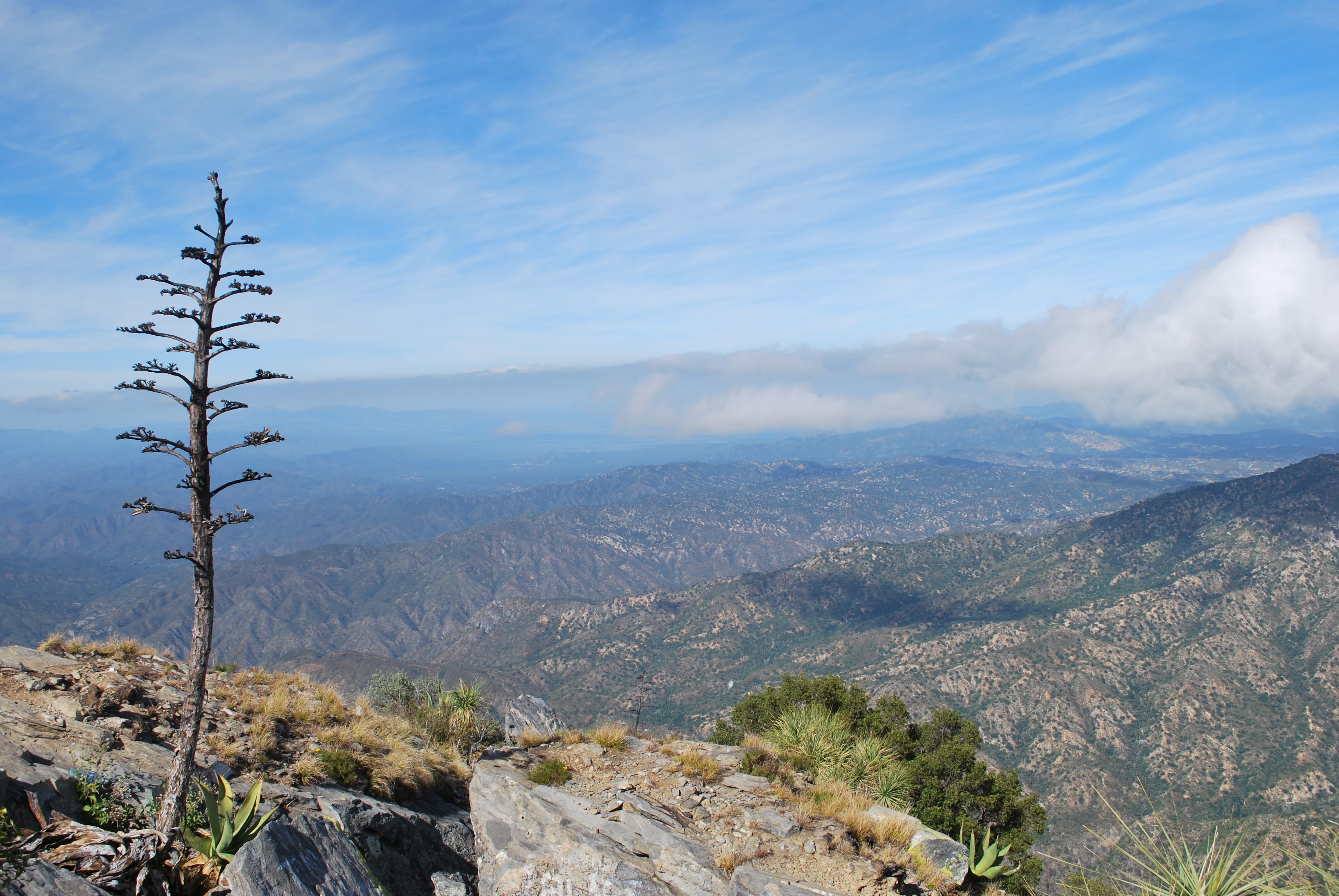
Sierra La Laguna history and protected-area timeline
Sierra La Laguna has long been a hydrological and ecological landmark in southern Baja California Sur, known locally even before its formal protection as the principal recharge zone for regional aquifers. The area contains archaeological vestiges that indicate long-standing human presence in the range, even though the remote and rugged character of the highlands limited large-scale settlement.
Modern conservation history began on 6 June 1994, when the Mexican federal government decreed the establishment of the Reserva de la Biosfera Sierra La Laguna. The decree set aside a core zone of approximately 32,500 hectares and two buffer zones totaling roughly 80,000 additional hectares, creating a layered protection system around the most ecologically sensitive areas. Since its designation, the reserve has been managed as a key biodiversity and water-resource site for the state, and conservation concerns have increasingly shifted toward regulating large-scale tourism development in the surrounding lowlands, where proposed mega-resorts have periodically threatened the integrity of the buffer zones.
Sierra La Laguna landscape and geographic character
Sierra La Laguna is a compact, rugged mountain massif in the southern Baja California Peninsula, with a maximum elevation close to 2,080 meters above sea level that makes it the highest point in the state of Baja California Sur. The range is built primarily from intrusive igneous rocks, with massive granites and syenites of Mesozoic age forming the dominant surface geology. These coarse-grained, well-consolidated rocks are thought to be part of a Cretaceous batholith that underlies much of the peninsula, and they create steep slopes, deep drainages, and exposed rocky terrain.
Soils across the range are generally shallow and poorly developed, especially on the steepest slopes, where thin soils over bedrock support only limited vegetation. The relief is broken by canyons, hills, and abrupt transitions from highland to coastal plain, giving the reserve strong topographic contrast in a relatively regional area. Fifteen sub-watersheds are nested within the reserve, and the network of streams that drains these highlands represents the largest portion of the river system in this part of the peninsula, fed by seasonal rainfall that accumulates at higher elevations.
Sierra La Laguna ecosystems, habitats, and plant life
Ecologically, Sierra La Laguna stands out as a biodiversity enclave within an otherwise arid peninsula. The reserve encompasses an unusual mosaic of vegetation types for Baja California Sur, including the state's only pine-oak forest, its only tropical forest, palm groves, oak woodland, and cactus scrubland. Lower slopes support deciduous shrubland and denser plant cover, while higher elevations support conifer woodlands. This combination of ecosystems within a single protected area gives the range an unusually high density of habitat types for the region.
Mexican national biodiversity records indicate that more than two thousand plant and animal species are present in the reserve, with dozens falling within official Mexican risk categories and a smaller number classified as exotic species. Characteristic plant species include black oak, pinyon pine, madrone, sotol, and various shrubs and cacti that occupy the slope-dependent vegetation zones. Because the park includes both tropical and temperate vegetation types, the reserve functions as an important ecological island, sustaining species and habitats not found elsewhere in the southern peninsula.
Sierra La Laguna wildlife and species highlights
The fauna of Sierra La Laguna reflects the range's unusual mix of tropical, temperate, and arid influences. Mammals in the reserve include deer, coyotes, black-tailed hares, puma, and gray fox. The birdlife is diverse, featuring white-winged doves, collared doves, vultures, hawks, and small owls. Reptiles are also well represented, with around forty recorded reptile species complemented by a substantial insect fauna that includes spiders and tarantulas.
The endemism in the reserve, combined with the ecological contrast between highlands and the surrounding lowlands, gives the wildlife of Sierra La Laguna a distinctive regional importance. Many of the species documented here are tied to habitats that exist nowhere else in the state, which is why the reserve's protection is critical both for resident fauna and for broader patterns of biodiversity in the Baja California Peninsula.
Sierra La Laguna conservation status and protection priorities
Sierra La Laguna carries strong conservation significance because of the unusual concentration of habitat types and endemic species within its boundaries, supported by a biosphere reserve designation that protects an extensive core zone plus buffer areas. Its designation in 1994 recognized both its biodiversity and its function as the principal aquifer recharge zone for the region, supplying the majority of freshwater used by the population of Baja California Sur.
Conservation pressures are concentrated outside the core zone, where mining activities have been proposed but not approved, and where large tourism developments along the southern coast, including proposed mega-resort complexes in the Cabo Cortés area, have threatened buffer zones. The layered structure of the reserve, with a strictly protected core and surrounding buffer areas, is intended to safeguard both ecosystems and hydrological function against these external pressures, while also preserving archaeological and cultural resources associated with the landscape.
Sierra La Laguna cultural meaning and human context
Although best known for its ecological value, Sierra La Laguna also holds a cultural dimension. The range contains archaeological vestiges that indicate human presence in the highlands well before modern settlement patterns. These remains, combined with the reserve's small rural communities and surrounding towns such as Todos Santos, connect the protected landscape to a longer regional history of human interaction with the rugged southern peninsula. The range is not only a natural refuge but also a physical anchor for the identity and water security of surrounding communities in Baja California Sur.
Top sights and standout views in Sierra La Laguna
Sierra La Laguna distinguishes itself as the highest range in Baja California Sur, the state's only pine-oak forest, and the principal freshwater source for the southern peninsula. Its compact mosaic of pine-oak woodland, tropical forest, palm groves, oak woodland, and cactus scrub supports far more biodiversity than any other protected landscape in the state. Combined with its archaeological sites and layered protection system, the reserve serves as a critical ecological, hydrological, and cultural reference point for southern Baja California.
Best time to visit Sierra La Laguna
The climate of Sierra La Laguna is strongly altitude-driven, with higher elevations experiencing a temperate, subtropical highland climate that is noticeably cooler than the surrounding desert. Conditions are generally mild year-round at higher altitudes, while rainfall is concentrated in the summer months, with July through September bringing the bulk of annual precipitation. For visitors interested in cooler temperatures, greener vegetation, and active streams, late summer and early autumn are the strongest seasons, while the cooler, drier months of late autumn through early spring offer more stable weather for accessing the higher elevations.