

Mori Atlas logo
National parkTapin Tops National Park

Discover the geographic boundaries and natural terrain of this Australian National Park.

Tapin Tops National Park: A Mapped Protected Landscape in Mid North Coast

Tapin Tops National Park stands as a significant protected area within the Mid North Coast region of Australia, offering a unique lens for geographic exploration. This page delves into the mapped landscape of Tapin Tops National Park, providing structured insights into its protected boundaries and the regional geography it inhabits. Understand its place within the national park system and explore its natural terrain through a detailed atlas-driven approach.

rainforestmountain landscapesMid North Coast NSWsubtropical forestsprotected habitatwet sclerophyll forest

Tapin Tops National Park

National park

Park overview

Structured park overview, official facts, and landscape profile for Tapin Tops National Park

Tapin Tops National Park park facts, protected area profile, and essential visitor context
Review the core facts for Tapin Tops National Park, including designation, size, terrain, visitor scale, habitats, and operating context in one park-focused overview.

About Tapin Tops National Park

Tapin Tops National Park occupies a distinctive position in the conservation network of New South Wales, protecting a mountainous corridor of rainforest and wet forest that forms part of the larger Gondwana Rainforests of Australia world heritage nomination area's broader context. The park's terrain is characterised by steep ridgelines, deep gullies, and clear perennial streams that flow through the landscape, creating diverse microhabitats from moist rainforest valleys to more open sclerophyll slopes. Access from Wingham involves travelling via Elands Road, Wherrol Flat Road, Dingo Tops Road, and Knodingbul Road, with these routes generally remaining accessible to two-wheel-drive vehicles despite their largely unsealed nature. The park contains several visitor facilities including the Dingo Tops campground for overnight stays, the Potoroo Falls picnic area with access to a waterfall approximately one kilometre upstream along Little Run Creek, and numerous swimming holes scattered throughout the area. The combination of accessible camping, waterfall walks, and rainforest circuits makes Tapin Tops a valued destination for visitors seeking to experience the natural character of the Mid North Coast hinterland.

Quick facts and research context for Tapin Tops National Park

Tapin Tops National Park spans 110 square kilometres in the Mid North Coast of New South Wales, with the nearest town being Wingham. The park was formally established in 1999 and is managed by the NSW National Parks and Wildlife Service. The area features subtropical rainforest communities, steep escarpments, and several watercourse systems including the Rowleys River, Nowendoc River, Dingo Creek, and Bobin Creek. The park's highest point reaches roughly 1,000 metres Australian Height Datum at Rowley's Peak. The park shares boundaries with three state forests and Killabakh nature reserve, forming part of a larger connected conservation landscape in the northern tablelands of New South Wales.

Park context

Deeper park guide and search-rich context for Tapin Tops National Park

Tapin Tops National Park history, landscape, wildlife, and travel context
Explore Tapin Tops National Park through its history, landscape character, ecosystems, wildlife, conservation priorities, cultural context, and seasonal travel timing in a structured park guide built for atlas discovery and search intent.

Why Tapin Tops National Park stands out

Tapin Tops is best known for its extensive subtropical rainforests, particularly the Mountain Brush circuit walk that passes through ancient stands of red cedar, coachwood, brush box, soft corkwood, and the distinctive yellow carabeen. The park's high elevation scenic lookouts provide sweeping 360-degree views across the coastal plain to the Tasman Sea, making it a significant destination for landscape appreciation. The protected area also guards critical habitat for several threatened species including the spotted-tailed quoll, koala, glossy black cockatoo, and powerful owl, all of which face pressure from surrounding logging activities that historically prompted conservation blockades in the adjacent Dingo and Bulgar Forests in 1993.

Tapin Tops National Park history and protected-area timeline

Tapin Tops National Park was formally established in 1999, representing the culmination of decades of conservation advocacy and boundary adjustments in the Mid North Coast region. The park's creation was significantly influenced by community activism in the early 1990s, particularly the 1993 blockade of logging operations in the Dingo and Bulgar Forests. These protests highlighted the presence of threatened species in the forests and successfully halted commercial timber extraction in areas that were subsequently added to the new national park. The establishment of Tapin Tops represented a strategic expansion of protected area coverage in a region previously dominated by state forest logging operations, providing formal IUCN Category II protection for ecosystems that had been under threat from timber harvesting. The park's management falls to the NSW National Parks and Wildlife Service, which continues to manage the property as part of the state's national park system.

Tapin Tops National Park landscape and geographic character

The landscape of Tapin Tops National Park comprises a mountainous interior rising from the surrounding state forest plains, with elevations reaching approximately 1,000 metres at Rowley's Peak. The terrain is dominated by steep ridges and valleys carved by the park's numerous watercourses, including the Rowleys and Nowendoc rivers which both traverse the reserve, alongside Dingo and Bobin creeks. The rainforest communities are concentrated in the moist gullies and lower slopes, while the higher ridges support wet sclerophyll forest with a diverse understory. The park's eastern boundary provides sweeping views across the Taree coastal plain to the Tasman Sea, while to the west the landscape descends toward the forested catchments flowing toward Nowendoc. The combination of elevation, moisture, and protection from fire has allowed the rainforest communities to persist and develop the complex structure that characterises this mountainous reserve.

Tapin Tops National Park ecosystems, habitats, and plant life

Tapin Tops National Park protects significant examples of subtropical rainforest and associated wet sclerophyll forest communities that represent the northern extent of the Gondwanan rainforests along Australia's east coast. The Mountain Brush circuit passes through diverse rainforest characterised by buttressed trees, epiphytic ferns, and a dense understory of palms and shade-tolerant shrubs. The forest composition includes valuable timber species such as red cedar and coachwood, as well as the distinctive yellow carabeen, a large rainforest tree belonging to the family Proteaceae. The moist conditions throughout the park support continuous canopy cover and maintain humidity levels that enable epiphytic growth throughout the forest strata. Water quality in the park's streams is influenced by the intact forest cover, with the protected catchments providing relatively undisturbed runoff into the broader drainage systems of the Mid North Coast.

Tapin Tops National Park wildlife and species highlights

The wildlife community of Tapin Tops National Park includes several threatened species that depend on the park's diverse forest habitats. Mammal species of conservation significance include the spotted-tailed quoll, one of Australia's largest remaining carnivorous marsupials, as well as the koala and the Parma wallaby. The red-legged pademelon occupies the forest understory, while several bat species utilise the park's hollow-bearing trees and caves, including the common bent-wing bat, little bent-wing bat, and greater broad-nosed bat. Birdlife includes the glossy black cockatoo, which feeds on the seeds of casuarina species throughout the area, the wompoo fruit dove found in the rainforest canopy, and the powerful owl that hunts among the tall forest. The presence of this suite of threatened species reflects the importance of the protected area in maintaining connectivity between larger blocks of forest habitat in the state forest landscape surrounding the reserve.

Tapin Tops National Park conservation status and protection priorities

Tapin Tops National Park plays a critical role in the conservation of Mid North Coast forest ecosystems, providing protected habitat for numerous threatened species in a landscape otherwise dominated by production forestry. The establishment of the park in 1999 followed direct action against logging in the adjacent Dingo and Bulgar Forests, where the presence of threatened species was documented during conservation surveys. The protected area contributes to a network of reserves and nature conservation linkages across the region, connecting with Killabakh nature reserve to the east and the state forest system to the north, south, and southwest. This connectivity is essential for maintaining genetic exchange between wildlife populations across the mountainous hinterland of northern New South Wales, supporting species that require large home ranges or seasonal movement patterns.

Tapin Tops National Park cultural meaning and human context

Tapin Tops National Park lies within the traditional Country of the Birpai people, an Aboriginal nation belonging to the broader Bundjalung nation of northern New South Wales. The name 'Tapin' derives from the Worimi language, also known as Kattang, and translates to 'dingo', reflecting the historical presence of this canid across the landscape. The park area would have supported indigenous communities through its abundant resources, including freshwater from the numerous streams, wildlife for hunting, and plant materials for tool-making and medicine. The Worimi name for the area appears in historical records as both 'Dapin' and 'Dapit', representing alternative spellings of the traditional terminology. The park's establishment protected this cultural landscape from industrial logging, preserving both ecological values and indigenous heritage within a formal conservation framework.

Top sights and standout views in Tapin Tops National Park

The Mountain Brush circuit is a 15-minute rainforest walk showcasing towering red cedar, coachwood, brush box, soft corkwood, and the prominent yellow carabeen. Rowley's Peak features a platform with 360-degree panoramic views extending to the Tasman Sea, the Taree coastal plain, and the western forested hinterland toward Nowendoc. The Dingo Tops campground provides accessible camping facilities within the park, while the Potoroo Falls walk leads to a waterfall approximately one kilometre upstream along Little Run Creek. The park contains several natural swimming holes throughout its drainage systems, offering visitor recreation opportunities amid the subtropical forest setting.

Best time to visit Tapin Tops National Park

The Mid North Coast climate of New South Wales supports year-round visitation to Tapin Tops National Park, though the warmer months from spring through autumn typically offer the most comfortable conditions for walking and camping. Summer rainfall is common in the region and can affect road conditions on the unsealed access routes, while winter months may bring cooler temperatures at higher elevations. The rainforest environment maintains a humid atmosphere throughout the year, and the park's elevation means that fog and mist can occur particularly in winter and spring. Wildlife viewing opportunities are present across all seasons, though the cooler months may increase the likelihood of observing koalas and other mammals basking in the sun on exposed branches.
Park location guide

Geography guide, regional context, and park location map for Tapin Tops National Park

Tapin Tops National Park park geography, regions, and map view in Australia
Understand where Tapin Tops National Park sits in Australia through a broader geographic reading of the surrounding landscape, nearby location context, and its mapped position within the national park landscape.

How Tapin Tops National Park fits into Australia

Australia is a constitutional monarchy and federal parliamentary democracy comprising six states and ten territories. With a population of nearly 28 million, it is one of the world's most urbanised countries, with most people concentrated on the eastern seaboard. The country has a high Human Development Index and is known for its cultural diversity, ancient Aboriginal heritage, and unique wildlife.

Wider geography shaping Tapin Tops National Park in Australia

Australia occupies the entire Australian continent, the island of Tasmania, and numerous smaller islands. It is the world's flattest and driest inhabited continent, featuring vast deserts in the interior (the Outback), tropical rainforests along the eastern coast, and a coastline bordering the Indian and Pacific Oceans.

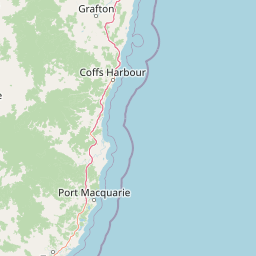
Map view of Tapin Tops National Park

Use this park location map to pinpoint Tapin Tops National Park in Australia, understand its exact geographic position, and read its mapped placement within the surrounding landscape more clearly.

Pigeon | © OpenStreetMap contributors

Location context for Tapin Tops National Park

Mid North CoastNew South Wales
Park atlas

Compare nearby protected areas and trace regional park geography, expanding your exploration beyond Tapin Tops National Park.

Discover National Parks Near Tapin Tops, Explore Related Protected Areas in New South Wales
After exploring Tapin Tops National Park, browse other protected areas within New South Wales that share similar mountainous rainforest ecosystems and diverse wet sclerophyll forests. This expanded view allows for comparing regional park geography, understanding conservation efforts across adjacent landscapes, and planning further discovery of Australia's protected natural heritage.
National parkNew South Wales

Biriwal Bulga National Park: Protected Landscape and Geographic Context within New South Wales

Explore mapped boundaries and the national park's regional setting.

Biriwal Bulga National Park represents a significant protected area within New South Wales, Australia, offering crucial insights into the region's natural landscape geography. This dedicated page details the park's specific identity as a national park, focusing on its mapped geographic boundaries and its contribution to the broader atlas of protected lands. It is designed for users who require structured information about individual protected areas and their precise location and landscape context.

Area
65.28 km²
Established
1999
IUCN
II
Relief
Lowland
National parkNew South Wales

Barakee National Park: New South Wales Protected Landscape Atlas Explorer

Mapped Boundaries and Regional Geography Insights

Barakee National Park is a vital component of New South Wales's protected natural areas, offering a focused point for geographic discovery. This page provides key details on its protected landscape identity and its place within the mapped terrain of the region. Examine the structured data to grasp the park's geographic footprint and understand its significance as a designated national park within Australia.

Area
50.11 km²
Established
1999
IUCN
II
Relief
Mixed relief
National parkNew South Wales

Coorabakh National Park: A Protected Volcanic Landscape in New South Wales

Discover unique terrain, mapped protected boundaries, and regional geography.

Coorabakh National Park in New South Wales, Australia, is characterized by its striking volcanic trio: Big Nellie, Flat Nellie, and Little Nellie. These peaks dominate the rugged escarpment terrain, offering a unique geographic vista. The park protects a rich mosaic of tall eucalypt forests and sheltered subtropical rainforest gullies, highlighting its ecological diversity. For those interested in atlas-style exploration, Coorabakh National Park provides a clear example of a protected landscape with significant geological and ecological features within the broader regional context of New South Wales.

Area
18 km²
Established
1999
IUCN
II
Relief
Highland
National parkNew South Wales

Cottan-Bimbang National Park: A Protected Landscape in New South Wales

Explore its mapped boundaries and regional geographic context.

Delve into the protected landscape of Cottan-Bimbang National Park, a key national park situated in New South Wales, Australia. This page provides detailed insight into its geographic setting and mapped park boundaries, offering a clear understanding of its regional importance. Discover the distinct natural landscape characteristics that define Cottan-Bimbang National Park within the broader Australian atlas.

Area
269 km²
Established
1999
IUCN
II
Climate
Temperate
National parkNew South Wales

Woko National Park: Explore Its Protected Landscape and Geographic Boundaries

Discover the mapped terrain and regional atlas context of Woko National Park.

Woko National Park presents a unique opportunity for geographic discovery, situated within New South Wales, Australia. This detail page focuses on the park's protected landscape and its mapped boundaries, providing a clear understanding of its geographic identity. Engage with Woko National Park as a key component of the Australian national park atlas, highlighting its regional setting and natural terrain.

Area
85.98 km²
Established
1982
IUCN
II
Relief
Highland
National parkNew South Wales

Bago Bluff National Park: New South Wales National Park with Panoramic Views

Explore its mapped geography and protected forest landscapes.

Bago Bluff National Park in New South Wales presents a remarkable protected landscape characterized by its prominent bluff formation, offering breathtaking panoramic views over the Hastings Valley. This national park preserves extensive wet sclerophyll forests and eucalypt woodlands, contributing to a rich mosaic of natural habitats and supporting a vibrant bird population. The park's geography is deeply tied to its geological history, with local quarries revealing significant fossil specimens. As a key protected area, it provides valuable context for understanding the regional landscape and mapped natural terrain of eastern Australia.

Area
40.23 km²
Established
1999
IUCN
II
Relief
Upland
National parkNew South Wales

Middle Brother National Park: New South Wales Protected Area and Geographic Exploration

Mapped boundaries and regional landscape context for this national park.

Middle Brother National Park represents a distinct protected landscape within the state of New South Wales, Australia. This entry offers detailed geographic context, focusing on the park's mapped boundaries and its significance as a national park. Users can explore its place within the regional geography of New South Wales, gaining a structured understanding of this protected area through an atlas-focused perspective.

Area
18.3 km²
Established
1999
IUCN
II
Relief
Mountain
National parkNew South Wales

Mummel Gulf National Park: New South Wales Protected Area & Mapped Gorge Landscape

Rugged escarpment terrain with diverse forest ecosystems.

Mummel Gulf National Park is a protected area in New South Wales, Australia, renowned for its dramatic V-shaped gorge carved by the Mummel River, reaching depths over 400 metres. This rugged escarpment landscape hosts a variety of vegetation communities, including tall open eucalypt, wet sclerophyll, snow gum forests, and subtropical rainforest patches. The park's geography is central to its ecological significance, providing habitat for numerous species and showcasing a distinct natural terrain within the New England region, ideal for geographic exploration.

Area
122 km²
Established
1999
IUCN
II
Relief
Mountain

Common questions about visiting, size, designation, and location context for Tapin Tops National Park

Tapin Tops National Park FAQs for park facts, access, geography, and protected area context
Find quick answers about Tapin Tops National Park, including protected-area facts, park geography, trail and visitor context, and how the park fits into its surrounding country and regional landscape.
MoriAtlas Explorer

Continue Your Protected Areas Search Across the Global Atlas

Deepen your exploration by continuing the structured search for national parks and protected areas worldwide. Utilize the comprehensive filtering capabilities to compare different conservation landscapes and refine your understanding of global park geography. Discover more about the distribution and characteristics of protected natural areas.

Global natural geography