Why Cottan-Bimbang National Park stands out
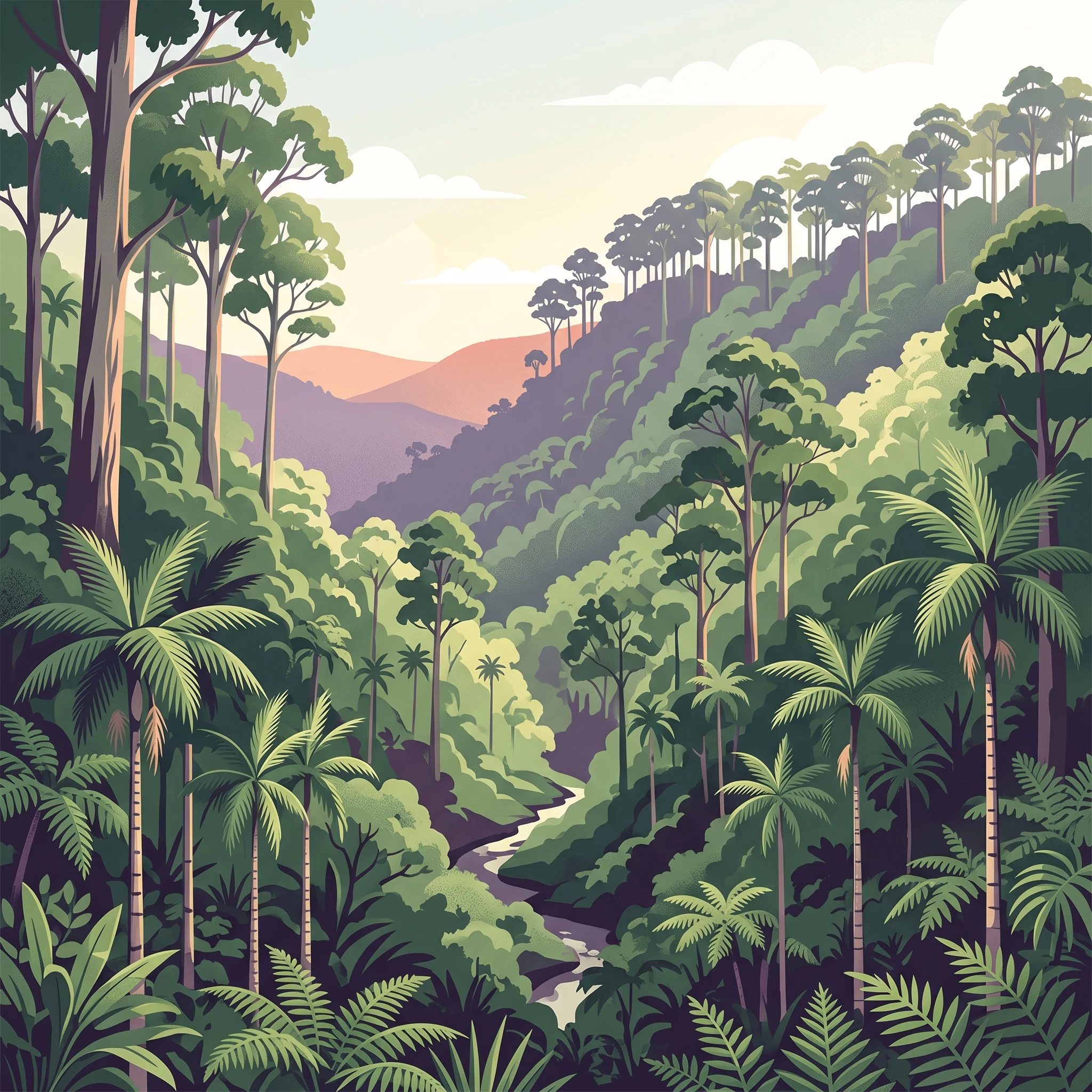
Cottan-Bimbang is best known for its extensive tracts of tall old-growth eucalypt forest and the presence of temperate rainforests in its deeper gullies and sheltered valleys. The park protects a notable population of yellow-bellied gliders and koalas, along with several threatened frog species. Its dramatic eastern escarpment setting creates a visually striking landscape of steep forested slopes and ridgelines. The walking stick palm, which gives the park its name, grows abundantly in the park's rainforest understory and remains a defining botanical feature of the area.
Cottan-Bimbang National Park history and protected-area timeline
Cottan-Bimbang National Park was officially established in 1999 when the former state forest land was redesignated under national park protection. The transition from state forest to national park reflected a growing recognition of the area's ecological significance and wilderness values, particularly the old-growth forest communities and the diverse wildlife populations they support. Prior to European settlement, the land was part of the traditional territory of Aboriginal peoples, and the name Cottan-Bimbang itself derives from local Indigenous language, specifically referring to the walking stick palm that grows throughout the area's rainforests. The establishment of the park provided formal protection for landscapes that had previously been subject to forestry operations, ensuring the preservation of old-growth forest stands and the ecological processes they support.
Cottan-Bimbang National Park landscape and geographic character
The landscape of Cottan-Bimbang National Park is defined by its position on the eastern escarpment of the Great Dividing Range, where the terrain drops away steeply toward the coastal plain. The park features a rugged topography of steep ridges, deep V-shaped valleys, and sheltered gullies that create strong variations in aspect and microclimate across relatively short distances. The highest points of the park lie on the main ridgelines, while the drainage lines and lower slopes support the dense temperate rainforest communities. Rock exposures and cliff bands occur in some areas, adding visual complexity to the forest landscape. The combination of elevation, aspect, and moisture availability produces a vegetation pattern where tall eucalypt forest dominates the ridges and upper slopes while rainforest occupies the more sheltered positions below.
Cottan-Bimbang National Park ecosystems, habitats, and plant life
The ecological character of Cottan-Bimbang National Park is defined by the interaction between tall eucalypt forest and temperate rainforest, creating a complex mosaic of vegetation types across the park's elevation range. The old-growth eucalypt forests contain large, mature trees that have developed over centuries, providing critical habitat resources for arboreal wildlife. The rainforest gullies support a distinct suite of plant species including the walking stick palm (Linospadix monostachya), which gives the park its name, along with ferns, epiphytes, and moisture-loving understory plants. The park's position on the eastern escarpment creates a transition zone between different climatic influences, supporting species with different environmental tolerances. This ecological diversity makes the park significant for biodiversity conservation in the northern New South Wales region.
Cottan-Bimbang National Park wildlife and species highlights
Cottan-Bimbang National Park supports several notable wildlife species, with the yellow-bellied glider (Petaurus australis) and koala (Phascolarctos cinereus) being among the most recognizable inhabitants of the tall eucalypt forests. These arboreal marsupials rely on the mature trees and hollows found in old-growth forest for shelter and feeding. The park also contains populations of threatened frog species that inhabit the moist rainforest environments and the creek systems that drain the escarpment. The diverse forest structure provides foraging habitat and movement corridors for wildlife across the landscape. The presence of both eucalypt forest and rainforest creates a variety of microhabitats that support different species assemblages, from canopy-dwelling mammals to ground-dwelling amphibians in the leaf litter.
Cottan-Bimbang National Park conservation status and protection priorities
Cottan-Bimbang National Park plays an important role in conserving old-growth forest and temperate rainforest ecosystems in northern New South Wales. As a Category II protected area under the IUCN system, the park is managed primarily for ecosystem preservation and wilderness protection. The old-growth eucalypt forests represent increasingly rare habitat in a region where extensive clearing has occurred for agricultural development. The park also protects catchment areas that feed into local river systems, providing downstream water quality benefits. The presence of threatened species including frogs and arboreal marsupials adds conservation significance to the area. Invasive blackberry species currently pose a management challenge within the park, requiring ongoing control efforts to protect native vegetation communities.
Cottan-Bimbang National Park cultural meaning and human context
The name Cottan-Bimbang derives from the local Aboriginal word for the walking stick palm (Linospadix monostachya), a palm species that grows abundantly in the park's temperate rainforests. This naming connection reflects the long history of Aboriginal occupation and use of the landscape prior to European settlement. The area would have provided traditional foods, materials, and cultural resources for Indigenous peoples. The transition of the land from state forest to national park in 1999 marked a change in management philosophy toward preservation rather than timber production, aligning with broader recognition of the area's natural and cultural values.
Top sights and standout views in Cottan-Bimbang National Park
The old-growth eucalypt forests of Cottan-Bimbang represent some of the most significant intact forest remaining in the Northern Tablelands region. The park's rainforests, though limited in extent, support the distinctive walking stick palm that defines the park's identity and gives it its name. Visitor access via the Oxley Highway allows exploration of key sites like the Stockyard Creek picnic area where rainforest grows alongside the creek line. The mix of tall eucalypt forest and temperate rainforest in such close proximity creates a distinctive visual and ecological character that distinguishes this park from other protected areas in the region.
Best time to visit Cottan-Bimbang National Park
The park can be visited throughout the year, with autumn and winter generally offering comfortable conditions for bushwalking and forest exploration. Summer months can bring warm temperatures and occasional storms to the escarpment, while spring brings flowering of eucalypts and increased wildlife activity. The forest environment is attractive in all seasons, though visitors should be prepared for variable weather conditions typical of elevated terrain. The availability of basic facilities at Stockyard Creek and camping areas at Maxwells Flat provides options for both day visitors and those wishing to stay overnight.