Why Velondriake stands out
Velondriake is best known for its community-run periodic octopus fishery closures, which have become one of the most replicated small-scale marine management models in the tropical western Indian Ocean. By rotating closures across 20 to 25 percent of community octopus grounds for two to three months at a time, fishers inside the area have seen catches climb sharply when grounds reopen. It is also distinguished by the scale of its locally managed marine area, the integration of reef, mangrove, seagrass, and coastal forest habitats under a single community governance structure, and its role as a learning site where more than 500 visiting fishers from across Africa, the Indian Ocean, and Latin America have studied and exchanged experience with the Velondriake approach.
Velondriake history and protected-area timeline
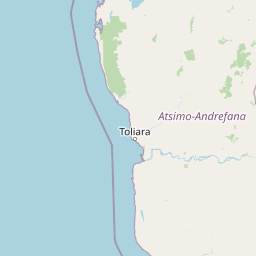
Velondriake was established as a locally managed marine area in 2006 in response to declining fisheries and reef conditions along Madagascar's southwest coast. The communities, working alongside the UK-based marine conservation organization Blue Ventures, had already begun experimenting with rotating octopus closures in 2004, and the broader reserve framework grew out of that early practice.
In 2010, Velondriake received temporary protected area status from the Malagasy government, and in 2015 it was granted permanent protected area status, formalizing the community-driven management that had developed over the previous decade. Blue Ventures, present in the area since 2003, is recognized alongside the Velondriake Association as a co-management authority.
The reserve's profile broadened through a series of national and international recognitions. The village of Andavadoaka received the United Nations Development Programme's Equator Prize in 2007 for piloting the first temporary octopus closure, and the Velondriake president received the WWF J. Paul Getty Award in 2008. The Safidy community health programme won the Excellence in Leadership for Family Planning award in 2013. By 2019, the first Fisheries Improvement Project in Madagascar was launched in the Velondriake octopus grounds.
Velondriake landscape and geographic character
Velondriake's landscape blends tropical marine environments with the distinctive dry vegetation of southwestern Madagascar. The seaward edge of the area is shaped by a long stretch of coral reef and associated lagoon that buffers the coast, with shallower zones of seagrass bed extending into the bay system.
Behind the coast, sheltered inlets support extensive mangrove stands, particularly in the Bay of Assassins in the southern part of the area. Inland, the dry southwest vegetation becomes increasingly visible, with emblematic baobab trees and spiny forest formations appearing on drier substrates near the village territories.
Velondriake ecosystems, habitats, and plant life
The protected area covers a layered sequence of marine and coastal habitats that together support the Vezo communities' fisheries and livelihoods. Coral reef systems dominate the marine zone, with five permanent reef reserves set aside from extractive use. Mangrove forests line sheltered bays and tidal creeks, with two permanent mangrove reserves complementing broader sustainable-use mangrove areas.
Seagrass beds occupy the lagoon shallows and are linked ecologically to both reef and mangrove habitats. On land, the area overlaps with baobab-dominated dry forest and the spiny forest formations typical of southwestern Madagascar, habitats widely recognized for their endemic plant communities and conservation concern.
Velondriake wildlife and species highlights
The habitats sheltered within Velondriake support a typical western Indian Ocean coastal and reef fauna, with reef fish and invertebrates forming the foundation of the fishery. The reef octopus is the species most strongly associated with the reserve, since the periodic fishery closures are designed around its life cycle and have become the defining feature of Velondriake's management.
Mud crabs occupy the mangrove zones and are managed through seasonal closures similar in spirit to the octopus system. The mangroves themselves support the broader marine food web by serving as nursery habitat for many of the species later harvested on the reefs and in the lagoon.
Velondriake conservation status and protection priorities
Velondriake matters from a conservation perspective because it demonstrates that large, ecologically rich coastal areas can be effectively protected through community governance rather than centralized enforcement. The reserve combines permanent no-take reef and mangrove reserves with a flexible rotation of temporary closures, reducing pressure on key species while still allowing fishing across most of the area at any given time.
The Tahiry Honko mangrove carbon project adds a climate dimension to the conservation work, with communities designing management plans that include strict conservation zones, sustainable harvest areas, and replanting targets. Educational programs supported by UNICEF and the MacArthur Foundation, and a community health program that links family planning and environmental stewardship, extend the conservation model into the social and health dimensions of coastal life.
Velondriake cultural meaning and human context
Velondriake is inseparable from Vezo culture, a semi-nomadic seafaring people of southwest Madagascar whose identity is built around fishing and movement across the sea. The name of the reserve itself, meaning "to live with the sea," reflects this worldview, and traditional fishing practice, including octopus fishing by free diving, lies at the heart of both the economy and the management system.
Community life is organized around small villages, with Andavadoaka serving as the main hub within the reserve. Local governance draws on the dina, a custom-based community legal code that is formally recognized by the state and used to regulate fishing, settlement-level disputes, and resource use. Coastal tourism through the Hébergement Vezo homestay system has begun to broaden cultural exchange, offering visitors a way to stay directly with Vezo families.
Top sights and standout views in Velondriake
Velondriake is one of the largest community-led marine reserves in the western Indian Ocean, integrating reef, mangrove, seagrass, and dryland habitats under a single locally driven governance system.
The reserve's signature innovation is its rotating octopus fishery closures, which have produced strong catch recoveries and been replicated across Madagascar and in countries including Tanzania, Mayotte, Mauritius, Indonesia, Mexico, and Mozambique. Alongside fisheries, the area hosts pioneering community sea cucumber and seaweed farming, a blue carbon mangrove restoration project, a women's-led family planning program, and a homestay tourism initiative.
Best time to visit Velondriake
Travelers interested in Velondriake should be aware that the experience is shaped less by typical weather-season categories than by the rhythm of the fishery cycle, with octopus closures opening at different times of year across different communities. Since access involves reaching remote southwest Madagascan villages such as Andavadoaka, conditions suitable for calm sea travel and reef visibility are practical considerations.
For cultural exchange, the dry season months tend to bring calmer seas and easier overland travel along the southwest coast, while the monsoon period can make coastal roads and channel crossings more challenging. Visitors interested in witnessing a closure reopening should coordinate with the Velondriake Association or partner organizations, since these events are scheduled by the local communities themselves.