Why Wierdense Veld stands out
Wierdense Veld is best known for being one of the eastern Netherlands' last surviving patches of raised bog, and for the visible struggle to keep that bog alive against the pressures of nearby agriculture and a functioning drinking water extraction zone. It is also recognized for its open heathland kept clear by a herd of around 300 Veluwe heath sheep, and for the unusually rich combination of three native snake species living side by side within a single small protected area. Within the wider Natura 2000 network, the site carries particular weight as a case study in how a working water catchment can also be a designated conservation area. The presence of breeding common cranes and snipe adds to its profile as a quietly important site for birds tied to wet bog and heath transitions, while the rewetting experiments using foil screens beneath the surface have made it a small but interesting example of active bog restoration in a heavily used Dutch landscape.
Wierdense Veld history and protected-area timeline
Wierdense Veld has a long human history shaped by turf cutting, grazing, and more recently water extraction. Like many of the higher sandy soils of eastern Netherlands, parts of the area were once worked for peat, leaving behind the network of peat pools and exposed bog remnants that still define the site today. Centuries of grazing, drainage, and gradual agricultural intensification around the area steadily reduced the extent of intact raised bog.
The modern conservation story begins in 1968, when management of the area was taken up by the regional conservation organization Landschap Overijssel. Under that stewardship the heathland was maintained through sheep grazing, and the area gradually acquired a clearer identity as a protected nature area, although it remained surrounded by working farmland and continued to function as part of the regional drinking water supply.
In 2008 a proposed designation as a Natura 2000 site under the EU Habitats Directive was blocked by agricultural interests concerned about the implications for surrounding land use. The conflict was eventually resolved when the site was officially designated as a Natura 2000 area in 2016. Around 2019 the broader area process weighing ecological, agricultural, and drinking water interests was paused, and the longer-term balance between water supply, farming, and bog restoration has remained a subject of local debate.
Wierdense Veld landscape and geographic character
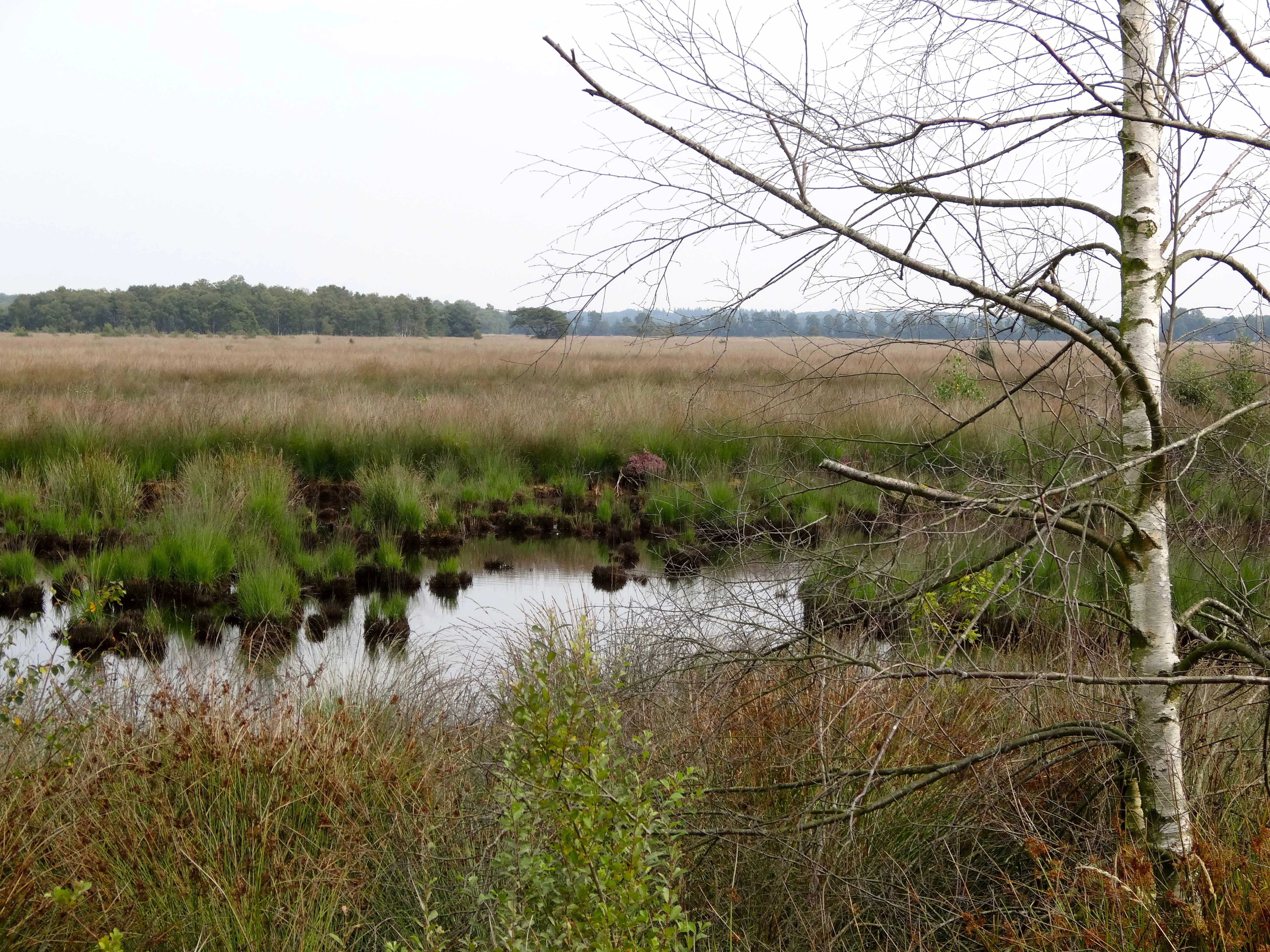
Wierdense Veld sits on the higher sandy soils of Overijssel, a landscape type common to the eastern Netherlands but increasingly fragmented by agriculture and urbanization. Its terrain is gently undulating rather than dramatic, with low relief and a generally flat to rolling heathland profile. The most visually distinctive features are the peat pools, locally known as boerenkuilen, which mark places where turf was historically cut and which now hold water at or near the surface.
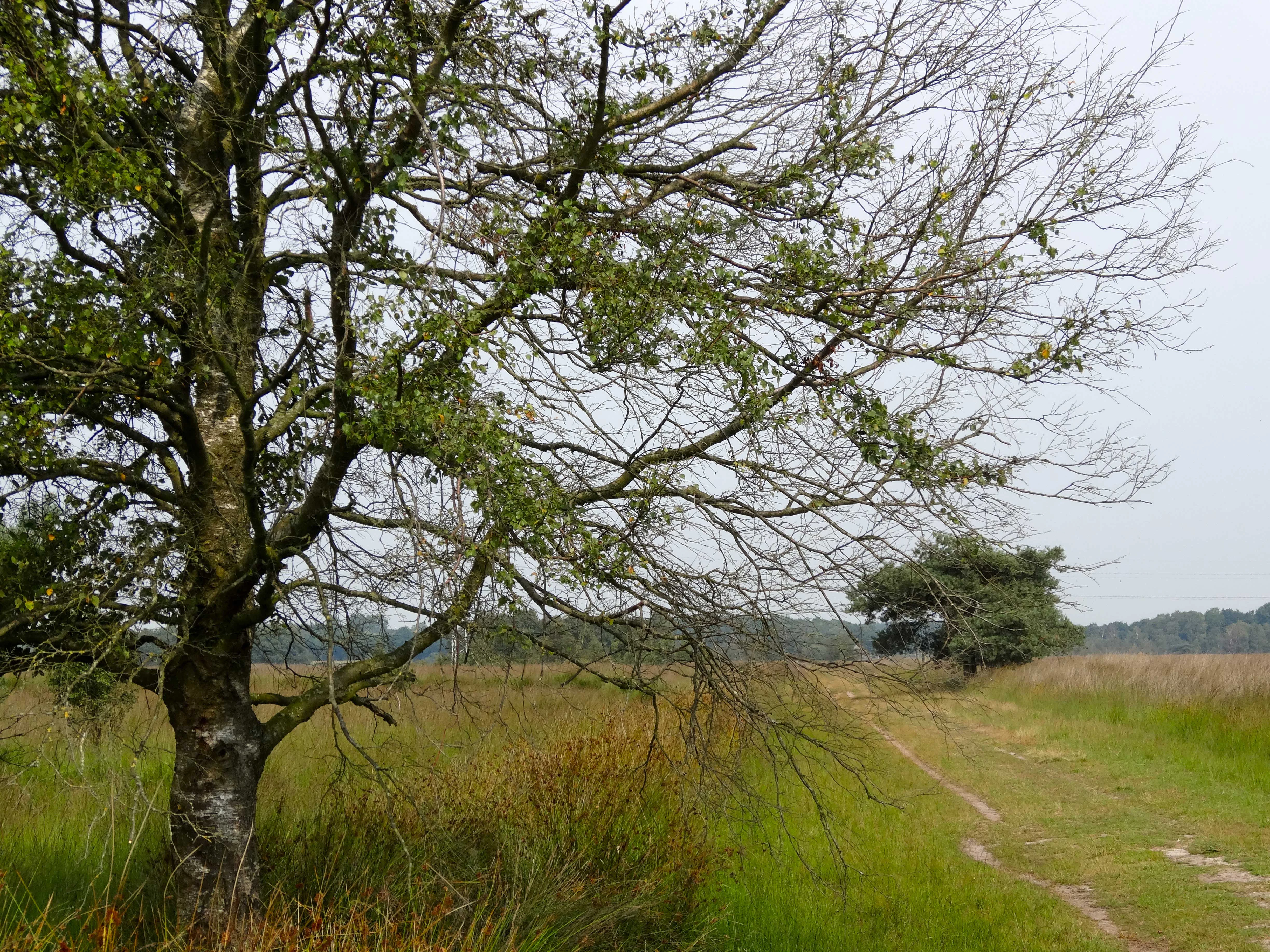
The vegetation mosaic alternates between dry heath, where common heather and grasses dominate, and wetter heath and bog margins where sphagnum mosses and bog specialists can persist. Stands of birch scrub fringe parts of the open area, creating transitional zones between open heath and what remains of the raised bog core. The whole is threaded through with sandy tracks that allow light visitor access without requiring paved infrastructure.
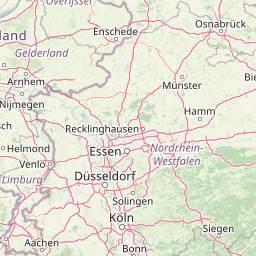
Within the broader regional context, Wierdense Veld is part of a chain of small protected sandy-soil landscapes that includes the nearby Borkeld, the forested higher ground of the Sallandse Heuvelrug to the west, and the wetter Vecht and Regge valley habitats that connect eastward. Its landscape character therefore reads as a piece of an older, larger heathland and bog system that has otherwise been broken up by agriculture over the past century.
Wierdense Veld ecosystems, habitats, and plant life
Ecologically, Wierdense Veld is best understood as a tension zone between past peat cutting and present-day hydrological recovery. The site covers dry heath, wet heath, peat pools, birch scrub, and a small but ecologically critical remnant of living raised bog. Of the total area, only around 12 hectares still functions as raised bog in any meaningful sense, and this fragment has long suffered from desiccation, nutrient enrichment from surrounding farmland, and the encroachment of coarse grasses.
Management interventions have focused on raising water tables locally by burying foil barriers beneath the surface, blocking lateral drainage losses, and reducing atmospheric nutrient deposition effects. These rewetting efforts have enabled modest new growth of high bog mosses and the return of rare bog plants, while the wider heath mosaic continues to be shaped by grazing and by prevention of further woodland encroachment.
The uniqueness of the ecological profile lies in the marriage of habitats. Within a small footprint one finds terrestrial heath communities, aquatic peat pool environments, peatland vegetation on the verge of recovery, and wet woodland fringes. This compressed diversity is what makes the site ecologically significant despite its small size, and it explains why it has been integrated into both national and European protection frameworks.
Wierdense Veld wildlife and species highlights
Wierdense Veld supports a quietly rich fauna typical of well-managed Dutch heath and bog landscapes. Its most distinctive bird presence includes a breeding population of common cranes, a species closely tied to wet bog edges and surrounding farmland mosaics, and breeding snipe, which use the wetter heath and bog margins during the nesting season. Historically the area also supported black grouse, though that species disappeared from the site by the 1990s as the surrounding landscape became less suitable.
Reptiles are an unusually strong element of the fauna. Three snake species occur together here: the adder, the grass snake, and the smooth snake. The combination is nationally rare and reflects the diversity of microhabitats, including dry heath, damp bog margins, and transitional scrub.
Amphibians also thrive in the wetter parts of the site. The moor frog is associated particularly with the bog and peat pool habitats, while dragonflies such as the high bog emerald are indicators of recovering bog conditions. Carnivorous plants like the round-leaved sundew are present in the wetter areas and reflect the persistence of acidic, nutrient-poor conditions necessary for the full bog-associated community. Heath sheep themselves are a managed presence, but they are part of the landscape's living heritage rather than its wild fauna.
Wierdense Veld conservation status and protection priorities
Wierdense Veld is protected primarily through its Natura 2000 designation under the EU Habitats Directive, which it received in 2016 after a contested process that began in 2008. The site is one of the Netherlands' smaller Natura 2000 areas but carries outsized importance because of its surviving raised bog fragment and the rare combination of bog, heath, and peat pool habitats on higher sandy soils.
The conservation challenge at the site is fundamentally one of water management. The same landscape that is being protected for its bog and heath is also an active drinking water catchment, and the surrounding agricultural land continues to influence nutrient inputs and drainage patterns. Dutch provincial authorities have publicly acknowledged that combining agriculture, drinking water extraction, and nature restoration around Wierdense Veld is difficult, and in 2019 the broader area process aiming to balance these goals was paused.
On the ground, conservation work focuses on hydrological recovery. Buried foil screens raise local groundwater levels, reducing desiccation of the remaining high bog. Grazing by Veluwe heath sheep maintains the structure of the heath and prevents scrub encroachment, and monitoring tracks the recovery of high bog mosses, bog heather, and characteristic fauna. The site's conservation significance rests less on its current ecological condition and more on its potential to rebuild functioning bog and heath habitat within a working water catchment.
Wierdense Veld cultural meaning and human context
Wierdense Veld carries a long cultural memory of common grazing and turf cutting that shaped the eastern Netherlands. The tradition of using open heath for sheep grazing has been preserved at the site through the use of a managed flock of around 300 Veluwe heath sheep, which traces back to centuries of regional land use patterns in which sheep were walked over village commons, kept in local sheepfolds, and produced both wool and meat. The presence of a sheepfold, or schaapskooi, at the site is a tangible reminder of that heritage.
The peat pools themselves are a record of the historical turf economy, when communities cut peat for fuel in shallow excavations now filled with water. Local place names and the term boerenkuilen for these pools preserve that history in the everyday vocabulary of the region. The site is also part of the broader Overijssel identity as a province where the sandy soil landscapes around Twente and Salland have been modified by centuries of gradual human use rather than by sudden industrial transformation.
Top sights and standout views in Wierdense Veld
Wierdense Veld stands out for the improbable coexistence of a working drinking water catchment and an actively recovering piece of raised bog, and for the way in which traditional sheep grazing continues to play a central role in keeping the heath open. Its rare triple presence of adder, grass snake, and smooth snake in a single small landscape, and its breeding populations of common crane and snipe, give it a wildlife profile that punches above its size.
Its hydrological restoration work, including the use of subsurface foil screens to raise groundwater levels, makes the site an interesting small example of bog recovery within the Dutch Natura 2000 network. The larger significance of Wierdense Veld lies in showing how an older heath and bog landscape can be reconciled, however imperfectly, with modern demands for water supply and agricultural land, and how such reconciliation is itself a form of conservation.
Best time to visit Wierdense Veld
The character of Wierdense Veld shifts mainly with the seasons in ways typical of Dutch heathland. Late summer and early autumn, broadly from August into September, are when the heather is in full bloom and the open heath displays its strongest color, while cooler and wetter months bring higher water levels in the peat pools and a quieter, more subdued landscape.
Spring brings renewed bird activity around the bog margins, with breeding common cranes and snipe present in the wetter zones, while autumn often sees the most striking interplay of color between the heath, the bog pools, and the surrounding birch stands. Because the site is highly sensitive and access is limited to a few sandy tracks plus a small freely accessible forested area near the Bruine Hoopsweg, the best time to experience it is whenever conditions are mild enough to walk on the sandy paths without damaging the fragile surface, typically in drier spells from late spring through early autumn.