
Mori Atlas logo
Nature reserveXinjiang Barkol Mountain National Nature Reserve

Mapping the relic forest ecosystems and mountain terrain of this vital northwestern China sanctuary

Xinjiang Barkol Mountain National Nature Reserve: Geography and Protected Mountain Landscapes

(Xinjiang Baluk Mountain National Nature Reserve)

Xinjiang Barkol Mountain National Nature Reserve encompasses a rugged, elevated landscape along the western margin of the Junggar Basin in Tacheng Prefecture. This protected area preserves critical relic plant communities, including expansive wild almond stands, Xinjiang wild apple forests, and native Schrenk's spruce. Spanning diverse mountain valleys and steep slopes, the reserve serves as a sanctuary for mountain biodiversity, including snow leopard and Siberian ibex populations in a moisture-capturing high-altitude environment.

mountain reservenational nature reserverelict tree specieswild almondXinjiang wild appleSchrenk's spruce forest

Xinjiang Barkol Mountain National Nature Reserve

Nature reserve

Park overview

Structured park overview, official facts, and landscape profile for Xinjiang Barkol Mountain National Nature Reserve

Xinjiang Barkol Mountain National Nature Reserve park facts, protected area profile, and essential visitor context

Review the core facts for Xinjiang Barkol Mountain National Nature Reserve, including designation, size, terrain, visitor scale, habitats, and operating context in one park-focused overview.

About Xinjiang Barkol Mountain National Nature Reserve

Xinjiang Barkol Mountain National Nature Reserve lies at the western margin of the Junggar Basin, where the Barkol Mountains form an independent east-west oriented range in the Tacheng region of Xinjiang. The protected area extends across the southern portion of Yumin County and the northwestern portion of Toli County, covering more than 1,150 square kilometers of rugged mountain terrain shaped by valleys, ridges, and deeply weathered loess soils.

The Barkol range runs roughly 250 kilometers in length and reaches up to about 80 kilometers at its widest point. Average elevations hover near 2,000 meters, while its tallest peak, Kongtakamp Peak (孔塔坎普峰), reaches 3,253 meters. The mountains rise higher in the southwest and slope downward toward the northeast, producing pronounced altitudinal zonation across the reserve. Because the local topography forms a pocket-like basin opening westward, the reserve catches moisture from the prevailing westerlies, supporting forest cover in a region otherwise dominated by dry steppe and desert.

Climatically, the reserve experiences long winters with stable snow cover and short transitional seasons. Annual average temperatures sit in the range of 5.5 to 6.5 degrees Celsius, with January means below minus 7 and July means near 19 degrees. Annual precipitation ranges from 300 to 500 millimeters, considerably higher than in the surrounding Junggar lowlands, although evaporation still exceeds 1,000 millimeters per year. Soils include deep mountain loess and chestnut soils that are notably fertile.

Ecologically, the reserve protects a mosaic of habitat types spanning mountain coniferous forest, deciduous broadleaf forest, shrubland, steppe, meadow, wetland, alpine vegetation, and drier desert-influenced communities. These varied habitats support rich plant diversity, including roughly 1,178 plant species across at least 81 families and 444 genera and at least 585 insect species. The reserve's mix of relic tree populations and rugged mountain terrain has made it an important refuge for large mammals and raptors that depend on undisturbed mountain landscapes.

Quick facts and research context for Xinjiang Barkol Mountain National Nature Reserve

Xinjiang Barkol Mountain National Nature Reserve is administered by the Tacheng Prefecture Forestry Bureau and lies within the Tacheng region of Xinjiang, China, covering parts of southern Yumin County and northwestern Toli County. It is a national-level nature reserve focused on protecting relic tree species, including Schrenk's spruce, Xinjiang wild apple, and wild almond, as well as wildlife such as snow leopard and Siberian ibex.

The reserve occupies a position on the western flank of the Junggar Basin along the Barkol Mountains, an isolated east-west range with average elevations around 2,000 meters and a peak of more than 3,200 meters. Annual precipitation exceeds 300 millimeters, and stable winter snow cover plays a key role in supporting the reserve's ecological character.

Protection and recognition

Examine the terrestrial protection scope and established designation year for this reserve

Xinjiang Barkol Mountain National Nature Reserve Protection Status and Designation History

Xinjiang Barkol Mountain National Nature Reserve features a documented terrestrial protection scope established in the year 2014. Review official designation records, management scope, and international recognition details for this protected area.

Protection details

Protection scope
Terrestrial
Designated year
2014
Transboundary protection
No
Core area
435 km²
Park context

Deeper park guide and search-rich context for Xinjiang Barkol Mountain National Nature Reserve

Xinjiang Barkol Mountain National Nature Reserve history, landscape, wildlife, and travel context

Explore Xinjiang Barkol Mountain National Nature Reserve through its history, landscape character, ecosystems, wildlife, conservation priorities, cultural context, and seasonal travel timing in a structured park guide built for atlas discovery and search intent.

Why Xinjiang Barkol Mountain National Nature Reserve stands out

The reserve is best known for protecting one of the most important remaining populations of wild almond (Amygdalus ledebouriana) in China, a relic species whose range once extended from the Mediterranean to Central Asia but has been greatly reduced since the Quaternary glaciation. Wild almond blossoms turn the reserve's slopes pink in spring, creating one of its most distinctive seasonal scenes. Equally distinctive are its stands of Xinjiang wild apple, a tree listed as Vulnerable on the IUCN Red List, and its Schrenk's spruce forests that climb parts of the Barkol range. The combination of these relic tree communities, montane topography, and habitat for snow leopards and Siberian ibex makes the reserve a significant stronghold for mountain biodiversity in northwestern Xinjiang.

Xinjiang Barkol Mountain National Nature Reserve history and protected-area timeline

Xinjiang Barkol Mountain National Nature Reserve has its origins in the earliest conservation efforts in the Xinjiang Uyghur Autonomous Region. In April 1980, the Xinjiang Uyghur Autonomous Region People's Government approved the establishment of the Wild Almond Forest Nature Reserve (野巴旦杏林自然保护区), which, at less than 19 square kilometers, was Xinjiang's very first nature reserve. The reserve was created specifically to protect the region's wild almond trees, whose populations had become increasingly fragmented after the Quaternary glaciation.

In 2005, the surrounding Barkol Mountain Forest Farm (巴尔鲁克山林场) territory was incorporated into the reserve, expanding its area to more than 1,150 square kilometers. With this expansion, the reserve was renamed the Barkol Mountain Nature Reserve. The broader boundary brought additional forest types, including Schrenk's spruce and Xinjiang wild apple stands, under formal protection.

A second major milestone came in 2014, when the State Council of the People's Republic of China approved the reserve's upgrade to national-level status. From that point forward, the reserve became Xinjiang Barkol Mountain National Nature Reserve, with an expanded mandate to protect its full range of forest communities and wildlife. Today, the reserve is managed by the Tacheng Prefecture Barkol Mountain National Nature Reserve Management Bureau, an administrative unit under the Tacheng Prefecture Forestry Bureau responsible for monitoring, forest protection, wildlife disease surveillance, pest control, and fire management across the protected area.

Xinjiang Barkol Mountain National Nature Reserve landscape and geographic character

The landscape of Xinjiang Barkol Mountain National Nature Reserve is defined by the Barkol Mountains themselves, an isolated east-west oriented range along the western side of the Junggar Basin. The mountains stretch approximately 250 kilometers in length and reach up to 80 kilometers at their widest, with terrain that rises steeply in the southwest and slopes more gently toward the northeast. Average elevations across the range sit near 2,000 meters, while the highest peak, Kongtakamp Peak, reaches 3,253 meters.

The reserve's terrain sits on a hilly plateau-like upland divided by the Dorati Valley (多拉提沟) and the Burghan River (布尔干河). Steep slopes and pronounced altitudinal gradients create a layered landscape in which vegetation shifts visibly with elevation. Because the surrounding topography forms a basin-like pocket facing westward, the reserve captures moisture-bearing westerly winds, allowing forest cover to thrive in a region dominated elsewhere by steppe and desert.

Deep loess deposits mantle much of the terrain, supporting fertile chestnut soils that have encouraged both forest growth and intensive biological activity. Winters bring prolonged, stable snow cover, while summers are comparatively short and mild. Streams, shrubby slopes, rocky ridges, and valley floors complete a varied mountain landscape that transitions from foothill steppe into coniferous forest and alpine habitat at higher elevations.

Xinjiang Barkol Mountain National Nature Reserve ecosystems, habitats, and plant life

The natural character of Xinjiang Barkol Mountain National Nature Reserve is shaped by an unusual juxtaposition of plant communities within a semi-arid mountain setting. The reserve's flora combines relict tree populations, including Schrenk's spruce forests at higher elevations, Xinjiang wild apple woodlands, and wild almond shrub stands, with extensive broadleaf deciduous forests of Euphrates poplar, Tianshan birch, warty birch, and other native broadleaves. Shrublands cover a large share of the reserve and are dominated by species such as wild rose, golden-spirea, and Caragana.

Vegeta tion falls into roughly eight major types across the reserve: mountain coniferous forest, deciduous broadleaf forest, shrubland, desert, steppe, meadow, marsh, and alpine vegetation. The plant diversity is substantial, with records indicating more than 1,178 plant species across at least 81 families and 444 genera, and a flora dominated overall by northern temperate elements. The reserve also marks an important biogeographical intersection between the Irano-Turanian and Dzungarian floristic regions, giving it a distinctive botanical identity.

Unique botanical value is reflected in a set of endemic Baluk Mountain taxa, including Yumin fritillary (Fritillaria yuminensis), white-flowered Yumin fritillary, pink-flowered Yumin fritillary, Toli fritillary (Fritillaria tortifolia), double-petaled Toli fritillary, and Toli saussurea (Saussurea tioliensis). The reserve's wild almond populations in particular are notable for surviving the contraction of their historical range since the Quaternary glaciation, making the area a key refugium for these relict plants.

Xinjiang Barkol Mountain National Nature Reserve wildlife and species highlights

The wildlife of Xinjiang Barkol Mountain National Nature Reserve reflects the diversity of its mountain and forest habitats, which support mammals, birds, reptiles, amphibians, fish, and insects at multiple trophic levels. Large mammals of conservation concern include the snow leopard and Siberian ibex, both classified as national first-class protected animals in China. Other notable mammals include Eurasian lynx, snow hare, goitered gazelle, argali, stone marten, and Pallas's cat, along with several mustelid species such as stoat, mountain weasel, steppe polecat, and marbled polecat. Regionally protected carnivores also include red fox and corsac fox.

The reserve's birdlife is rich, with at least 149 species recorded across 42 families and 16 orders. Raptors, flycatchers, finches, and ducks are among the most commonly observed groups. Five national first-class protected bird species are present, including great bustard, white stork, black stork, golden eagle, and eastern imperial eagle. National second-class protected birds are also well represented, featuring steppe eagle, saker falcon, common kestrel, black grouse, and black-bellied sandgrouse, among roughly 37 protected bird species overall.

Reptiles and amphibians occur in smaller numbers, including species such as the striped racer and steppe viper among reptiles and Asian toad and Chinese wood frog among amphibians. The reserve's streams harbor fish such as the black-spotted highland loach, while insect diversity is substantial, with 585 insect species recorded across 114 families and 426 genera, the most diverse groups being beetles and butterflies and moths.

Xinjiang Barkol Mountain National Nature Reserve conservation status and protection priorities

Xinjiang Barkol Mountain National Nature Reserve represents one of the most significant conservation areas for relict plant populations in northwestern China. Its protected tree communities include the Vulnerable Xinjiang wild apple and the Endangered wild almond, both of which have lost vast portions of their historical range since the Quaternary glaciation. By protecting a continuous mountain landscape of more than 1,150 square kilometers, the reserve safeguards not only these trees but also the ecological processes and pollinator communities they depend on.

Beyond relic trees, the reserve plays an important role in conserving large-mountain fauna. Snow leopards and Siberian ibex are flagship species whose survival depends on extensive, undisturbed mountain terrain, while raptors such as golden eagle and great bustard benefit from the protected landscape's nesting and foraging habitat. The reserve also contributes to conserving Chinese national second-class protected plants including Xinjiang asafoetida, Xinjiang purple gromwell, and a cluster of endemic Baluk Mountain fritillaries.

As the first nature reserve established in Xinjiang, the reserve has also played a pioneering institutional role, demonstrating the value of locally led conservation efforts and providing a foundation for later protected-area expansion across the autonomous region. Today, the management bureau focuses on forest resource monitoring, wildlife disease surveillance, pest and disease control for wild plants, forestry law enforcement, and fire prevention.

Xinjiang Barkol Mountain National Nature Reserve cultural meaning and human context

The landscape of the Barkol Mountains has long been inhabited by communities whose lives have been closely tied to the mountain forests and steppe valleys. The reserve's creation, as Xinjiang's first nature reserve, reflects local and regional recognition of the area's botanical importance, particularly the cultural memory of wild almond forests as a defining seasonal feature of the mountains. Each spring, the wild almond bloom produces a pink flowering landscape that remains a notable seasonal marker in local regional experience.

The reserve's continued management under the Tacheng Prefecture Forestry Bureau ties it to regional administrative traditions of forest stewardship, and its role as an early model for nature protection has shaped how conservation has been understood in the Xinjiang Uyghur Autonomous Region. While deeper cultural and ethnographic detail is limited in the available source material, the reserve stands as a recognized geographic landmark at the intersection of Yumin and Toli counties.

Top sights and standout views in Xinjiang Barkol Mountain National Nature Reserve

Among the standout features of Xinjiang Barkol Mountain National Nature Reserve are its three principal relict forest types: Schrenk's spruce, Xinjiang wild apple, and wild almond, the last of which is the reserve's signature species and the reason the area was first protected. The reserve's wild almond stands are globally important because they represent one of the largest surviving populations of this Endangered tree in China, a species once widespread from the Mediterranean to Central Asia.

Other highlights include the reserve's wildlife significance, particularly for snow leopard and Siberian ibex, its rich birdlife featuring species such as golden eagle and great bustard, and its endemic botanical interest, including Yumin and Toli fritillaries. Combined with the dramatic mountain backdrop of the Barkol range, these features make the reserve a meaningful stronghold of mountain biodiversity in northwestern China.

Best time to visit Xinjiang Barkol Mountain National Nature Reserve

Because the reserve's most celebrated natural scene is its spring wild almond bloom, late spring is often the most visually distinctive time to contemplate the landscape, when pink blossoms cover large stands. However, the same period coincides with the area's late frost risk, which historically has affected wild almond fruiting and is part of the park's natural ecological rhythm.

Summers are short and relatively mild, offering comfortable conditions for appreciating mountain forests and wildlife, while winters bring stable and prolonged snow cover that transforms the Barkol range into a snow-dominated landscape suited to hardy mountain species. Spring and autumn are brief transitional seasons that can provide glimpses of migration and seasonal shifts in the reserve's birdlife and vegetation. Visitors and researchers interested in different ecological aspects of the reserve will find each season offers a distinct perspective on the Barkol Mountains.

Monthly climate preview

Long term temperature and precipitation records measured across twelve representative months

Xinjiang Barkol Mountain National Nature Reserve Climate Normals and Weather by Month

Historical data records long term monthly averages for temperature and precipitation across Xinjiang Barkol Mountain National Nature Reserve, mapping the annual thermal and moisture rhythm from a representative coordinate. Reviewing the complete monthly profile provides deeper analytical context for studying the protected area environment.
Annual mean7 °C
-10 °C22 °C
Jan-10°
Feb-7°
Mar
Apr
May14°
Jun20°
Jul22°
Aug21°
Sep15°
Oct
Nov-1°
Dec-7°
Warmest month
July

22.4 °C

Coolest month
January

-9.7 °C

Wettest month
November

1.2 mm/day

Driest month
August

0.7 mm/day

Park location guide

Geography guide, regional context, and park location map for Xinjiang Barkol Mountain National Nature Reserve

Xinjiang Barkol Mountain National Nature Reserve park geography, regions, and map view in China

Understand where Xinjiang Barkol Mountain National Nature Reserve sits in China through a broader geographic reading of the surrounding landscape, nearby location context, and its mapped position within the national park landscape.

How Xinjiang Barkol Mountain National Nature Reserve fits into China

China is a unitary communist state in East Asia, governed by the Chinese Communist Party. The country's capital is Beijing, while Shanghai is the largest city by urban population. China has 33 province-level divisions including provinces, autonomous regions, municipalities, and special administrative regions. The nation has a long history spanning thousands of years, with achievements including the invention of gunpowder, paper, printing, and the compass.

Wider geography shaping Xinjiang Barkol Mountain National Nature Reserve in China

China is located in East Asia, bordering fourteen countries: Russia, North Korea, Vietnam, Laos, Myanmar, India, Bhutan, Nepal, Pakistan, Afghanistan, Tajikistan, Kyrgyzstan, Kazakhstan, and Mongolia. The country spans diverse terrain including deserts, mountains, plateaus, and river valleys. Major river systems include the Yellow River and Yangtze River. The coastline stretches along the East China Sea, South China Sea, and Yellow Sea.

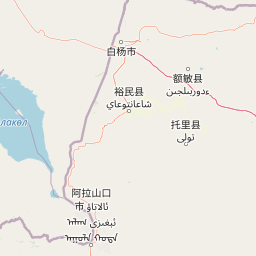
Map view of Xinjiang Barkol Mountain National Nature Reserve

Use this park location map to pinpoint Xinjiang Barkol Mountain National Nature Reserve in China, understand its exact geographic position, and read its mapped placement within the surrounding landscape more clearly.

Pigeon | © OpenStreetMap contributors

Location context for Xinjiang Barkol Mountain National Nature Reserve

Tacheng PrefectureXinjiang Uyghur Autonomous Region
Park atlas

Compare adjacent protected landscapes and mountain ecosystems across northwestern China

Explore Other Parks Near Xinjiang Barkol Mountain National Nature Reserve

Browsing nearby protected areas allows travelers to compare the distinct mountain topography and relic forest communities of Xinjiang Barkol Mountain National Nature Reserve with surrounding regional ecosystems. Expanding the geographic view reveals broader conservation corridors and interconnected wilderness zones throughout the northwestern borderlands.
National parkEast Kazakhstan Region
About 68 km away#1 closest

Northwest

Tarbagatai National Park: Protected Landscape and Wild Fruit Tree Forests in East Kazakhstan Region

Explore the mapped boundaries and ecosystem of this national park.

Tarbagatai National Park is a protected area in East Kazakhstan recognized for its unique role in conserving wild fruit tree forests that have maintained genetic isolation. This national park provides a detailed view of a mountain-steppe ecosystem across the Tarbagatai mountain range, Karabas Mountains, and Arkaly Mountains, along with the Urzhar and Emel river valleys. Its establishment in 2018 highlights its importance for biodiversity and the study of natural forest genetics, offering significant geographic context for regional protected land exploration.

Area
1,364 km²
Established
2018
IUCN
II
Relief
Mountain
A soft watercolor illustration depicting a landscape of rolling green hills meeting a large body of water under a light sky.
Nature reserveKazakhstan
About 85 km away#2 closest

Northwest

Alakol Nature Reserve: Mapped Protected Landscapes and Wetland Geography in Kazakhstan

Protected lake basin and avian flyway conservation site.

Alakol Nature Reserve offers a deep look into the desert-wetland interface of southeastern Kazakhstan. Centered on the Tentek River delta and Lake Alakol islands, the reserve safeguards rare colonial bird habitats within a striking arid tectonic basin. Discover the geographic interplay between saline flats, riparian vegetation, and expansive lake environments that define this international conservation site.

Area
656.72 km²
Established
1998
IUCN
Ia
Relief
Lowland
Nature reserveXinjiang
About 127 km away#3 closest

Southeast

新疆甘家湖梭梭林国家级自然保护区: Arid Ecosystems and Protected Haloxylon Woodland Mapping

Examining desert terrain and dune geomorphology in northwestern Xinjiang

Explore the structured geography of the Xinjiang Ganjiahu Haloxylon National Nature Reserve, which guards an expansive and ecologically critical saxaul woodland corridor. This protected area stands as a representative example of temperate desert systems in the Ebinur Basin, offering insight into wind-shaped dune landscapes, saline-alkali soil patterns, and the historic riverbeds that once connected Tien Shan meltwater to the regional basin floor.

Area
546.67 km²
Established
1983
Relief
Lowland
Climate
Arid
Nature reserveXinjiang
About 209 km away#4 closest

Southwest

Xinjiang Wenquan Xinjiang Salamander National Nature Reserve Protected Landscape and Atlas Geography

A vital montane spring and alpine grassland protected area in the Western Tianshan.

The Xinjiang Wenquan Xinjiang Salamander National Nature Reserve serves as a dedicated refuge for relict amphibian populations within the Tianshan mountain system. Its small footprint concentrates on preserving the integrity of cold-water spring brooks and snowmelt-driven seepage zones that form the backbone of this regional ecosystem. The reserve provides a clear example of targeted habitat management within the diverse topography of northwestern China.

Area
6.95 km²
Established
1997
Relief
Mountain
Climate
Arid
Nature reserveXinjiang Uyghur Autonomous Region
About 216 km away#5 closest

Southwest

新疆霍城四爪陆龟国家级自然保护区: Mapped Landscape and Tianshan Foothills Geography

Nature reserve boundaries within the Xinjiang Uyghur Autonomous Region

Located in the Xinjiang Uyghur Autonomous Region, the 新疆霍城四爪陆龟国家级自然保护区 represents a unique loess hill ecosystem. This atlas profile details the protected boundaries, erosion-carved terrain, and the semi-arid sagebrush steppe habitat essential for the four-clawed tortoise population, providing deep geographic context for this national nature reserve.

Area
350 km²
Established
1983
Relief
Upland
Climate
Arid
Watercolor painting depicting a mountain range, lake, and grassy foreground under a pale sky
National parkAlmaty Region
About 238 km away#6 closest

Southwest

Zhongar-Alatau National Park: Protected Mountain Landscape and Genetic Heritage Atlas

Almaty Region's critical wild apple forest and glaciated terrain.

Zhongar-Alatau National Park in Kazakhstan's Almaty Region is a significant protected landscape renowned for its role in conserving the genetic origins of cultivated apples. The park encompasses dramatic glaciated mountain ranges, deep canyons, and diverse ecosystems within the Dzungarian Alatau. Its mapped boundaries define an area vital for protecting unique wild fruit tree species, including the Sievers apple, and preserving the distinctive alpine terrain of southeastern Kazakhstan, offering rich context for geographic exploration.

Area
36 km²
Established
2010
IUCN
II
Relief
Mountain
Nature reserveXinjiang
About 253 km away#7 closest

South

新疆伊犁小叶白蜡国家级自然保护区: Regional Protected Landscape and Tianshan Mountain Geography

Conservation focus on rare riparian ash forest ecosystems in Xinjiang

Spanning the alluvial floodplains of the Kashi and Ili Rivers, this nature reserve is a scientific stronghold for the narrow-leaved ash. The protected area showcases multi-generational forest structures and diverse ancient plant lineages, shaped by a sheltered Tianshan valley microclimate that remains unusually humid for the arid landscapes of inland Xinjiang.

Area
91.03 km²
Established
1983
Relief
Mixed relief
Climate
Temperate
Nature reserveGongliu County
About 303 km away#8 closest

South

Xinjiang West Tianshan National Nature Reserve: Protected Landscape and Mountain Terrain Map

A high-altitude forest and mountain nature reserve in Gongliu County.

This nature reserve encompasses a vast altitudinal range and complex river drainage systems in the western Tianshan. It is defined by its deep river gorges, glaciated peaks, and ancient spruce stands, functioning as a moist island for diverse Central Asian flora and fauna within an otherwise arid regional geography.

Area
312.17 km²
Established
1983
Relief
Mountain
Climate
Temperate

Common questions about visiting, size, designation, and location context for Xinjiang Barkol Mountain National Nature Reserve

Xinjiang Barkol Mountain National Nature Reserve FAQs for park facts, access, geography, and protected area context

Find quick answers about Xinjiang Barkol Mountain National Nature Reserve, including protected-area facts, park geography, trail and visitor context, and how the park fits into its surrounding country and regional landscape.
MoriAtlas Explorer

Continue Your Protected Areas Search Across the Global Atlas

Deepen your exploration by continuing the structured search for national parks and protected areas worldwide. Utilize the comprehensive filtering capabilities to compare different conservation landscapes and refine your understanding of global park geography. Discover more about the distribution and characteristics of protected natural areas.

Global natural geography