Why Buchenberg, Grisselborner Wäldchen und Taftgrund bei Soisdorf stands out
The reserve is best known for bringing together, in a single compact area, several classic Kuppenrhön habitat types: beech-dominated deciduous woodland, well-developed forest margins, hedgerow and thicket mosaics, nutrient-poor dry grassland, and a near-natural lowland stream corridor. The combination of hilltop forest on the Buchenberg and the adjoining Taftgrund valley creates an unusually complete biotope complex for the northern Rhön foothills. It also stands out as a good example of paired protection in Hesse, where a strict nature reserve and a connecting landscape protection area were created under one ordinance to preserve both core habitat quality and the transitional land-use landscape surrounding it.
Buchenberg, Grisselborner Wäldchen und Taftgrund bei Soisdorf history and protected-area timeline
The nature reserve was officially designated in 1994 under the Hessian nature protection framework, with the formal identifier 1632025. Its legal basis is the ordinance of 22 February 1994 issued by the Regierungspräsidium Kassel, published in the official gazette of the state of Hesse.
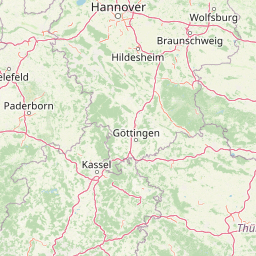
The same 1994 ordinance established the companion landscape protection area (Landschaftsschutzgebiet Buchenberg, Grisselborner Wäldchen und Taftgrund bei Soisdorf) directly south of the nature reserve. This narrow protection zone follows the Taft valley eastward toward the Thuringian border and covers about 16.6 hectares, providing a buffer and continuum between the strict reserve and the wider farmed and forested landscape. The protection rationale, as recorded in the ordinance, was to preserve the connected ensemble of near-natural deciduous forest, forest margins, hemic scrub and tree hedgerows, nutrient-poor grasslands, extensively managed meadows, and the natural course of the Taft stream as a representative Kuppenrhön biotope complex and habitat for rare species.
Buchenberg, Grisselborner Wäldchen und Taftgrund bei Soisdorf landscape and geographic character
The protected area sits in the characteristic terrain of the Kuppenrhön, where low, dome-like basalt and sandstone hills alternate with shallow valleys and small streams. The Buchenberg rises as a wooded elevation on the western side of the reserve, while the Grisselborner Wäldchen extends the forest cover across a smaller adjoining rise. The Taftgrund forms a gently sloping valley floor that opens southward toward the Taft stream, one of the smaller tributaries that feed the Ulster river system leading ultimately to the Werra.
The reserve landscape combines three readable layers: the upland forest on the Buchenberg and Grisselborner Wäldchen, the richly structured mosaic of forest margins, hedgerows, scrub, and dry grassland complexes on the slopes, and the open valley with extensively used meadow and the natural brook course of the Taft. The terrain is modest in elevation but texturally varied, with woodland edges, thickets, and open patches creating an unusually diverse small-scale mosaic for the northern Rhön foothills.
Buchenberg, Grisselborner Wäldchen und Taftgrund bei Soisdorf ecosystems, habitats, and plant life
Ecologically, the reserve functions as a representative example of the Kuppenrhön habitat network, and the Hessian ordinance specifically names it as such. The protected habitats include near-natural deciduous forest communities dominated by beech and associated broadleaf species, structurally rich forest edges, hedges and scrub composed of native shrubs and small trees, nutrient-poor grassland complexes, extensively managed meadows, and a near-natural lowland stream.
The combination of forest, scrub margin, dry grassland, and valley meadow on a single compact site gives the area a high density of habitat transitions, which is precisely what makes it valuable for the flora and fauna of the western Rhön foothills. By pairing the strict reserve with a connected landscape protection area in the Taft valley, the 1994 ordinance also aimed to sustain these habitat transitions beyond the core zone.
Buchenberg, Grisselborner Wäldchen und Taftgrund bei Soisdorf wildlife and species highlights
The source material identifies the reserve as habitat for rare animal and plant species typical of the Kuppenrhön, without enumerating specific taxa. The structural description strongly implies the presence of species tied to deciduous forest interior, forest edge transitions, hedgerow and scrub thickets, nutrient-poor grassland, and stream-side meadow habitats: a typical mix for low mountain range reserves in central Germany.
Because the protection rationale rests on maintaining this entire habitat mosaic rather than any single species, the reserve is best understood as supporting the broader community of woodland birds, hedge-dwelling small mammals, insects associated with dry grassland and woodland margins, and stream-side species along the Taft rather than any single flagship species.
Buchenberg, Grisselborner Wäldchen und Taftgrund bei Soisdorf conservation status and protection priorities
The conservation importance of the reserve lies in its role as a representative biotope complex for the Kuppenrhön rather than in any single feature. By protecting the full sequence of beech forest, forest margin, hedgerow, scrub, dry grassland, meadow, and near-natural stream together, the site preserves an unusually complete cross-section of the natural and semi-natural landscape character of the northern Rhön foothills.
Equally important is the integrated approach of the 1994 ordinance, which created both a nature reserve for the core zone and a directly adjacent landscape protection area for the Taft valley. This pairing helps maintain habitat connectivity and a buffer zone of traditional land use, reducing the risk that changes in surrounding agriculture or forestry could erode the ecological quality of the core reserve.
Top sights and standout views in Buchenberg, Grisselborner Wäldchen und Taftgrund bei Soisdorf
The reserve's strongest points of distinction are the combination of Buchenberg hill forest, the Grisselborner Wäldchen woodland, and the Taftgrund valley into a single protected habitat mosaic. Its representation of the Kuppenrhön biotope complex in a compact area is recognized in the founding ordinance of 1994.
The site also illustrates the Hessian practice of pairing a strict Naturschutzgebiet with a directly adjoining Landschaftsschutzgebiet in the same ordinance, linking 82.6 hectares of strict reserve with 16.6 hectares of valley buffer along the Taft stream toward the Thuringian border.