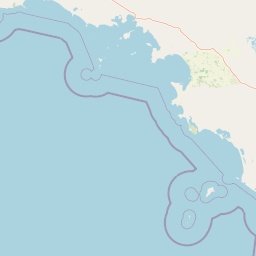
Why Cape Blanche Conservation Park stands out
Cape Blanche Conservation Park is best known for its role as a stronghold of breeding habitat for two large coastal raptors, the eastern osprey and the white-bellied sea-eagle. These fish-eating birds rely on undisturbed cliffs, headlands, and shoreline trees along the Eyre Peninsula's western coast, and the park was gazetted specifically to secure a representative stretch of such habitat within the South Australian reserve system. Beyond its raptor significance, the reserve is also valued for the persistence of specialised coastal flora, including the West Coast mintbush, and for the integrity of shoreline environments that continue to support threatened and migratory shorebirds such as the hooded plover, sooty oystercatcher, and sanderling. Together, these qualities define the park as a coastal, species-focused conservation reserve rather than a landscape-scale wilderness park.
Cape Blanche Conservation Park history and protected-area timeline
Cape Blanche Conservation Park is a relatively young protected area in the South Australian reserve system. It was proclaimed on 9 February 2012 under the National Parks and Wildlife Act 1972, the principal legislation governing the establishment and management of protected areas in South Australia.
The park's establishment was driven by conservation concerns specific to the western Eyre Peninsula. Proclamation documents of the time articulated explicit objectives: the protection of important breeding habitat for the eastern osprey and the white-bellied sea-eagle, the conservation of a diverse range of flora including the West Coast mintbush, and the safeguarding of habitat for threatened and migratory shorebirds such as the hooded plover, sooty oystercatcher, and sanderling.
Its inclusion in the international IUCN framework as a Category III protected area signals that, from inception, the reserve was conceived as a site of specific natural feature value rather than as a broad multipurpose landscape park. Management responsibility has rested with the South Australian Department for Environment and Water, the state agency responsible for biodiversity and protected-area stewardship.
Cape Blanche Conservation Park landscape and geographic character
Cape Blanche Conservation Park occupies a section of the western Eyre Peninsula coastline, a region shaped by long exposure to Southern Ocean weather systems and by the calcarenite and limestone geology that characterises much of this part of South Australia. The result is a coastline of alternating cliffed headlands, low rocky shores, sandy bays, and dune-backed beaches, often interspersed with flats of coastal scrub.
The terrain is generally low-lying in elevation terms, but visually expressive through its continuous interplay of landform and sea. Exposed rock platforms, weathered limestone outcrops, and wind-shaped coastal vegetation give the shoreline a rugged, undisturbed character. Inland of the immediate coast, the landscape transitions into more typical Eyre Peninsula vegetation patterns, including chenopod shrublands, low heath, and scattered patches of taller coastal scrub that provide structural diversity.
The cape itself, from which the park takes its name, forms a prominent coastal promontory within this otherwise long, linear stretch of shoreline. The surrounding seascape is open and wave-exposed, with no significant sheltering landforms between the park's coast and the open ocean, which contributes to the persistent maritime influence on the park's climate, vegetation, and wildlife.
Cape Blanche Conservation Park ecosystems, habitats, and plant life
The ecological identity of Cape Blanche Conservation Park is fundamentally coastal. Its habitats fall within the broader suite of Eyre Peninsula littoral environments, including cliff and headland vegetation, dune systems, samphire and succulent flats on saline or seasonally wet substrates, and patches of woody coastal scrub. These habitats support a flora that has evolved under salt spray, wind exposure, and nutrient-limited calcareous soils.
The park was specifically gazetted to protect a diverse range of flora, and the West Coast mintbush, Prostanthera calycina, is highlighted as a particular conservation focus. This species exemplifies the kind of regionally restricted coastal plant for which the western Eyre Peninsula is notable, and its presence reinforces the botanical significance of the habitats contained within the reserve.
Marine-adjacent habitats also play a key ecological role. Supratidal and intertidal zones provide feeding areas for shorebirds, while near-shore waters are used by fish-eating birds. The combination of undisturbed shoreline structure, varied coastal vegetation, and intact inshore marine conditions defines the reserve's ecological character.
Cape Blanche Conservation Park wildlife and species highlights
Wildlife is the central feature of Cape Blanche Conservation Park, and the species flagged at its proclamation remain the park's most prominent faunal attributes. The eastern osprey and the white-bellied sea-eagle, both large fish-eating raptors, are the species for whose breeding habitat the park was specifically protected. Both nest along the Eyre Peninsula coast, often utilising cliff ledges, headland trees, or elevated structures, and the park's protected status helps secure a continuity of undisturbed breeding sites.
Shorebird diversity is another key element of the reserve's wildlife profile. Hooded plover, a species of conservation concern in southern Australia due to its reliance on undisturbed ocean beaches for nesting, is among the threatened shorebirds highlighted in the proclamation. The sooty oystercatcher, a rocky-shore specialist, and the sanderling, a small migratory shorebird that uses broad sandy beaches, are similarly listed. Their inclusion underscores the importance of the park's beaches, rocky platforms, and tidal flats as functional habitat.
Beyond these flagged species, the park's mosaic of coastal habitats can be expected to support typical western Eyre Peninsula fauna, including small reptiles adapted to coastal heath, occasional land-based mammals, and a wider community of seabirds and migratory waders that use the South Australian coast as part of broader flyways.
Cape Blanche Conservation Park conservation status and protection priorities
Cape Blanche Conservation Park is a tightly purpose-built conservation reserve. Its proclamation under the National Parks and Wildlife Act 1972 is unusual in the precision of its stated objectives: rather than a general mandate to protect natural or scenic values, the park was specifically created to secure breeding habitat for two raptor species, conserve a defined suite of coastal flora, and protect habitat for threatened and migratory shorebirds.
This species-and-habitat focus aligns the park closely with modern conservation planning practice, where individual reserves are designed to fill identified gaps in habitat protection for particular taxa. The inclusion of a regionally significant plant species such as the West Coast mintbush reflects the recognition that the western Eyre Peninsula supports narrowly distributed coastal flora requiring explicit protection.
The park's international classification as an IUCN Category III protected area (natural monument or feature) further reinforces its conservation framing. This category is applied to areas containing specific natural features of outstanding or distinctive value, which in Cape Blanche's case corresponds to the combination of raptor breeding habitat, specialised coastal flora, and shorebird refuge along a relatively undisturbed stretch of South Australian coastline. Management by the Department for Environment and Water ensures that the reserve sits within the institutional framework of South Australian biodiversity policy.
Top sights and standout views in Cape Blanche Conservation Park
The defining highlights of Cape Blanche Conservation Park are concentrated along its coastline. The park contains breeding habitat for eastern osprey and white-bellied sea-eagle, two of the most conspicuous and ecologically significant raptor species of the southern Australian coast. The shoreline also retains habitat for threatened and migratory shorebirds, including the hooded plover, sooty oystercatcher, and sanderling, making the reserve a year-round and seasonal refuge of considerable conservation value.
Botanically, the park is notable for supporting a diverse range of coastal flora, with the West Coast mintbush standing out as a regionally significant species whose protection was highlighted at the time of proclamation. Combined with the relatively undisturbed condition of the park's cliffs, dunes, scrub, and inshore waters, these features make Cape Blanche a compact but ecologically rich addition to the Eyre Peninsula's protected-area network.
Best time to visit Cape Blanche Conservation Park
Cape Blanche Conservation Park's coastal setting means that visitation is shaped primarily by the maritime climate of the western Eyre Peninsula, which is characterised by mild, often windy conditions and relatively low rainfall. Spring and early summer typically bring more stable weather, active shorebird and raptor presence along the coastline, and flowering periods for many coastal plants, offering the most rewarding conditions for observing the park's ecological values.
Autumn can also provide good conditions, with cooler temperatures, continuing shorebird activity, and reduced summer wind intensity. Winter brings cooler temperatures and stronger frontal weather, but also a peak season for many migratory shorebirds returning to or passing along the southern Australian coast, which can be a meaningful period for shorebird observation. Visitors should generally expect that conditions along this exposed coastline can change quickly, and that the park's appeal lies in quiet natural observation rather than in developed visitor infrastructure.