Why Channel Islands National Park stands out
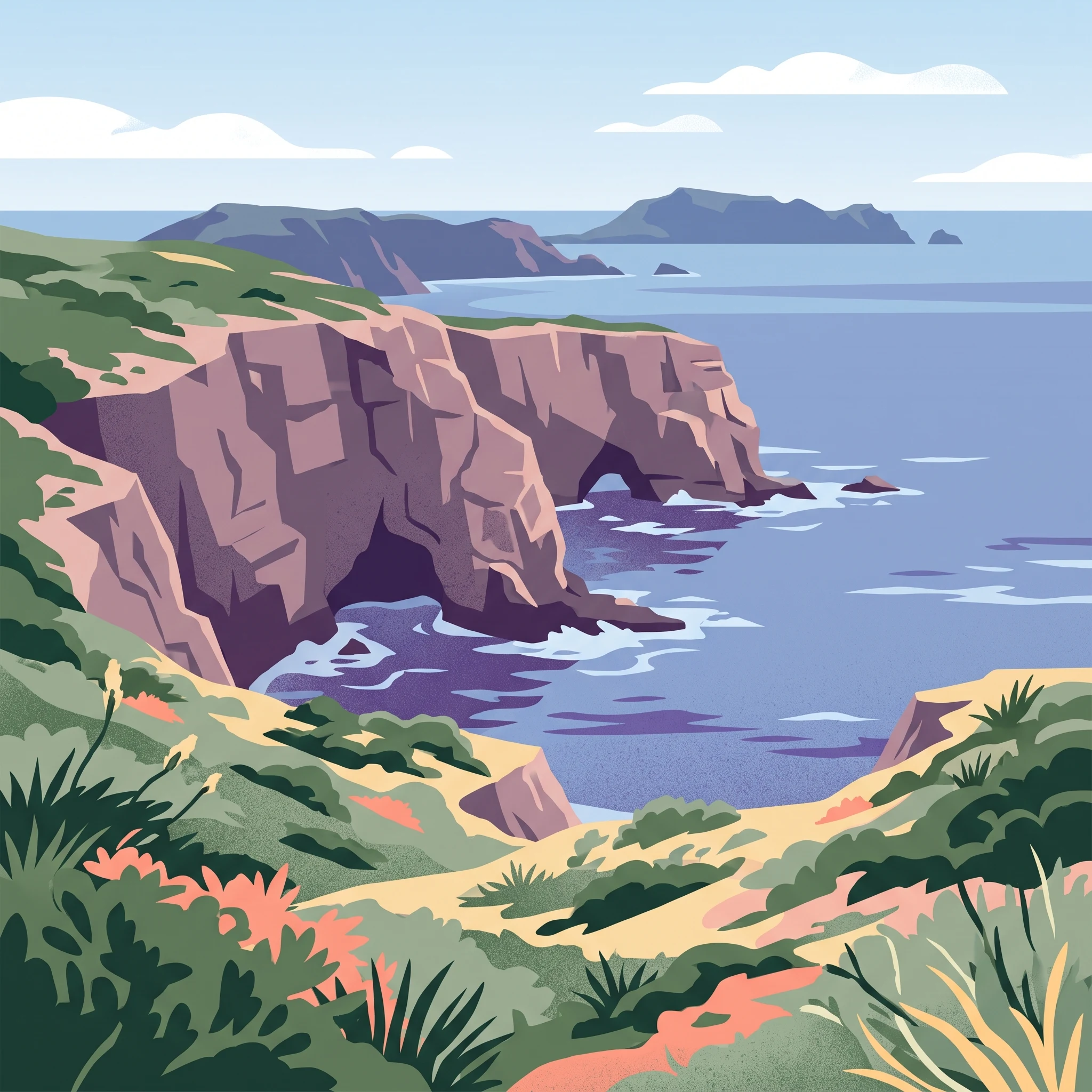
Channel Islands National Park is best known for its exceptional endemism, with 145 species found nowhere else on Earth, including the island fox and the island scrub jay. The islands preserve one of the richest archaeological records in North America, with sites spanning over 13,000 years of continuous human habitation that may represent evidence of early coastal migration into the Americas. The park features remarkable sea caves along its rocky shores, considered among the most complex and beautiful in North America, accessible by kayak and popular with divers. The islands also preserve a unique geological legacy including fossils of the extinct pygmy mammoth, descendant of Columbian mammoths that colonized the islands during the Late Pleistocene when lower sea levels connected the islands as a single landmass known as Santa Rosae.
Channel Islands National Park history and protected-area timeline
The human history of the Channel Islands extends far deeper than European contact, with archaeological evidence revealing continuous human occupation spanning at least 13,000 years. Excavations on the northern islands have uncovered artifacts from ancient Paleocoastal sites, including fire pits, stone tools, and butchery evidence showing interactions with now-extinct megafauna including mammoths. The discovery of Arlington Springs Man, dated to approximately 8,000 years BC, represents some of the oldest known human remains in North America. These findings have led scientists to hypothesize that the Channel Islands may preserve evidence of a coastal migration route following the North Pacific Rim from Northeast Asia into the Americas.
When European explorers arrived, the three northern Channel Islands were inhabited by an estimated 2,000 to 3,000 Chumash people, who maintained eleven villages on Santa Cruz Island, eight on Santa Rosa, and two on San Miguel. The Chumash developed sophisticated maritime skills, building plank canoes that allowed them to venture far offshore to hunt marine mammals and fish. Juan Rodríguez Cabrillo first observed the islands in 1542 during his exploration of the California coast, beginning the historic era that would eventually transform the islands.
In 1938, Anacapa and Santa Barbara islands were designated as a national monument. The modern park was established in 1980 when San Miguel, Santa Rosa, and Santa Cruz islands were combined with the existing monument to create Channel Islands National Park. The park was also designated as a UNESCO biosphere reserve in 1976, recognizing its significance for conservation and scientific research.
Channel Islands National Park landscape and geographic character
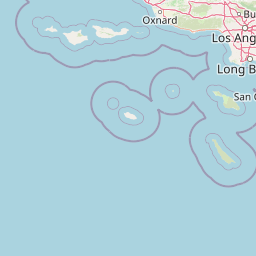
The Channel Islands present a dramatic variety of volcanic and sedimentary landscapes shaped by millions of years of geological processes and later modified by erosional forces and human activity. The islands align roughly east-west parallel to the Southern California mainland, forming a submerged mountain range that was once continuous with the Santa Monica Mountains on the mainland. During the Late Pleistocene, when sea levels were substantially lower, all five islands were connected as a single landmass known as Santa Rosae, explaining the distribution of flora and fauna across the archipelago.
Santa Cruz Island, the largest in the chain, features a rugged central mountain range with peaks reaching over 2,500 feet, deeply incised canyons, and dramatic sea cliffs along its northern shore. The islands geology is complex, with exposures of ancient schist, diorite, tonalite, and volcanic rocks dating from the Late Jurassic through the Miocene epoch. Marine sedimentary formations, some reaching thicknesses of 23,000 feet, record the deep geological history of the region. The volcanic rocks include distinctive pillow basalts from underwater eruptions and extensive volcanic breccias that document the islands volcanic past.
The landscape includes remarkable geological features such as the caliche forests on San Miguel Island, where calcium carbonate deposits have formed unusual spongy formations. Sea caves, particularly along the north coast of Anacapa and the shores of Santa Cruz Island, represent some of the most spectacular coastal formations on the Pacific coast. Beaches range from sandy coves to rocky shores, while the underwater terrain features reefs, kelp forests, and rocky bottoms supporting diverse marine communities.
Channel Islands National Park ecosystems, habitats, and plant life
The Channel Islands support extraordinary ecological diversity despite their relatively small land area, with over 2,000 species of plants and animals documented within the park. The islands represent a natural laboratory for studying evolution and island biogeography, having developed distinct endemic species through isolation from the mainland. The Mediterranean climate, characterized by warm, dry summers and mild, wet winters, supports a variety of habitats including coastal scrub, chaparral, grassland, pine forest, and marine environments.
The flora of the islands reflects both mainland connections and unique island adaptations. Invasive species, including non-native plants like purple vervain and European beach grass, have significantly altered island ecosystems and remain an ongoing management challenge. The marine environment surrounding the islands is exceptionally rich, supported by upwelling currents that bring nutrient-rich waters to the surface. Kelp forests dominate the subtidal zone, providing habitat for countless marine species, while the deeper waters support marine mammals including seals, sea lions, and the occasional blue whale.
The surrounding Channel Islands National Marine Sanctuary extends protection to the waters within six nautical miles of the islands, creating a comprehensive conservation framework that addresses both terrestrial and marine ecosystems. This dual protection recognizes that the islands and their waters form an integrated ecological system, with many species dependent on both environments for different stages of their life cycles.
Channel Islands National Park wildlife and species highlights
The Channel Islands have developed a distinctive faunal community through millions of years of isolation, resulting in remarkable levels of endemism. Only three land mammals are native to the islands, a testament to the challenges of crossing the oceanic gap from the mainland. The island fox is the most celebrated endemic, having evolved into a distinct species smaller than its mainland gray fox ancestor. The deer mouse is also native and serves as the islands most common small mammal, while the spotted skunk represents the third native land mammal species.
Birdlife on the islands is particularly noteworthy, with the island scrub jay found nowhere else on Earth. This species has adapted to the island environment and shows distinct behavioral differences from its mainland relatives. The islands serve as critical nesting habitat for seabirds including the brown pelican, as well as shorebirds and land birds. Marine mammals are abundant in the waters around the islands, with harbor seals and California sea lions commonly observed haul out on beaches and rocky shores.
The marine environment supports an extraordinary diversity of species, from tiny plankton to the endangered blue whale, the largest animal on Earth. The islands kelp forests and rocky reefs provide habitat for numerous fish species, invertebrates, and marine algae. Notably, the islands have been designated as critical habitat for the endangered California condor, though the birds no longer nest on the islands, they use them as feeding and roosting sites. The waters also support populations of dolphins, and the annual gray whale migration brings these massive cetaceans past the islands during their seasonal movements.
Channel Islands National Park conservation status and protection priorities
Channel Islands National Park represents a significant conservation achievement, protecting ecosystems and species that occur nowhere else on the planet. The parks designation as a UNESCO biosphere reserve in 1976 recognized its international importance for conservation, while the surrounding marine sanctuary extends protection to the oceanic environment. The park works in partnership with The Nature Conservancy to manage Santa Cruz Island, demonstrating effective collaboration between federal and private conservation organizations.
Conservation challenges include invasive species that have dramatically altered island ecosystems, with efforts underway to restore native habitats and remove non-native plants and animals. The 1969 Santa Barbara oil spill had catastrophic impacts on wildlife, killing thousands of seabirds and numerous marine mammals, and contributed to the establishment of the Environmental Protection Agency. Natural oil seeps continue to introduce petroleum into the marine environment, a legacy of the petroliferous Monterey Shale formation underlying much of the region.
The islands also face ongoing challenges from climate change, including rising sea levels that threaten low-lying coastal areas and potential shifts in species distributions as temperatures change. Conservation efforts focus on protecting endemic species, restoring degraded habitats, and managing visitor use to minimize impacts on sensitive resources. The parks location near the mainland presents both opportunities for public engagement and challenges in managing the effects of human activity on these fragile island ecosystems.
Channel Islands National Park cultural meaning and human context
The Channel Islands hold profound significance for understanding human history in the Americas, with archaeological evidence demonstrating continuous human occupation for over 13,000 years. The islands preserve some of the oldest known sites in North America, including artifacts from the Paleocoastal period that may represent evidence of early coastal migration from Asia. The Chumash people developed a sophisticated maritime culture on these islands, building plank canoes that allowed them to navigate the often-choppy waters between islands and to the mainland, and establishing villages that supported substantial populations.
The Chumash relationship with the islands extended beyond simple habitation to include complex interactions with the marine environment and integration of island resources into their cultural practices. They utilized the natural oil seeps for caulking and adhesives, gathered marine foods from the rich surrounding waters, and developed trade networks that connected island communities to mainland groups. The islands also hold evidence of later historical periods, including the era of European exploration and the subsequent ranching and agricultural use of the islands that transformed many landscapes before establishment of the park.
Today, the parks cultural resource management includes protection of archaeological sites, interpretation of Chumash history and culture, and preservation of historical structures including the Anacapa Island Lighthouse. The park works to present cultural resources in ways that respect indigenous perspectives while providing educational opportunities for visitors to understand the long human history of these islands.
Top sights and standout views in Channel Islands National Park
Channel Islands National Park offers visitors a rare opportunity to experience island wilderness so close to a major metropolitan area. The sea caves accessible by kayak represent one of the parks most distinctive features, with formations so complex and beautiful they are considered among the finest in North America. The islands provide exceptional opportunities for wildlife viewing, from endangered island foxes to massive blue whales, from nesting seabird colonies to playful sea lion congregations. The archaeological sites spanning 13,000 years offer tangible connections to the earliest human presence in the Americas, while the landscape itself preserves evidence of volcanic origins and Pleistocene connections to the mainland.
The contrast between the developed California mainland and these relatively undeveloped islands creates a powerful sense of remoteness and wildness despite their proximity to population centers. Visitors can hike through varied terrain, camp under star-filled skies, dive in waters teeming with marine life, or simply relax on pristine beaches. The park represents both a natural treasure and a cultural heritage site, where ecological and historical values intersect to create a destination of enduring significance.
Best time to visit Channel Islands National Park
The Channel Islands can be visited year-round, though each season offers distinct experiences and conditions. Summer months bring the highest visitation, with warm, dry weather and optimal conditions for hiking and camping, though ferry services may be crowded and island facilities operate at full capacity. The summer season also coincides with peak diving and kayaking conditions, with calm seas and clear underwater visibility in the protected waters around the islands.
Winter and spring offer remarkable wildlife viewing opportunities, as migrating gray whales pass by the islands during their annual journey along the coast. Wildflower displays bloom across the islands during spring, creating colorful displays across the chaparral and grassland habitats. While winter storms can bring challenging conditions and some facilities may have reduced services, the islands retain their beauty and the visitor center remains open. Autumn provides another excellent season for visiting, with typically sunny days, minimal winds, and clear ocean conditions ideal for diving and kayaking. The shoulder seasons often provide a balance of good weather, fewer crowds, and unique natural phenomena like migration events.