
Mori Atlas logo
Nature reserveRezerwat przyrody Cieszynianka

Examining the ecological boundaries and foothill woodland geography of this rare plant sanctuary

Rezerwat przyrody Cieszynianka: A Botanical Nature Reserve and Protected Landscape in Lesser Poland

(Rezerwat przyrody „Cieszynianka")

Rezerwat przyrody Cieszynianka sits within the Lesser Poland Voivodeship, acting as a crucial botanical refuge for the rare Cieszynianka wiosenna plant. The protected area features a compact 10-hectare beech and birch forest on the northern slopes near Mogilany, providing a distinct woodland microclimate within the surrounding foothills. Its geography highlights the importance of small, isolated protected zones in maintaining biodiversity across the rural landscapes of southern Poland.

floristic reservenature reservePolandLesser PolandMałopolskie voivodeshipfoothill forest
A flat vector-style illustration showing a forest clearing with fallen logs in the foreground and a tall waterfall cascading down a canyon wall in the background.

Rezerwat przyrody Cieszynianka

Nature reserve

Park overview

Structured park overview, official facts, and landscape profile for Cieszynianka Nature Reserve

Cieszynianka Nature Reserve park facts, protected area profile, and essential visitor context

Review the core facts for Cieszynianka Nature Reserve, including designation, size, terrain, visitor scale, habitats, and operating context in one park-focused overview.

About Cieszynianka Nature Reserve

Cieszynianka Nature Reserve is a compact floristic reserve in the Mogilany commune, just south of Kraków in southern Poland, dedicated to the protection of an isolated population of Cieszynianka wiosenna, a rare and visually delicate spring-flowering species. Although the reserve covers only about 10 hectares, its botanical importance is significant relative to its size, because it conserves one of the few foothill occurrences of this species in central European lowland contexts. The protected area is a clear example of how small, targeted nature reserves can maintain regional biodiversity even in densely populated and historically altered landscapes.

The reserve lies on the northern slopes of a hill rising above the Rzepnik stream, within a mixed beech-birch forest that includes patches of more diverse deciduous woodland. The forest is part of the foothill landscape characteristic of the transition between the Kraków uplands and the Skawinka valley corridor, an area that also connects with the Pogórze Wielickie and the broader Rów Skawiński mesoregion. Local infrastructure, including the old Kraków to Mogilany road and smaller country lanes, frames the forest and gives the reserve a strongly local, community-adjacent character.

Ecologically, the area lies within the Fagetalia phytosociological order, sharing characteristics with oak-hornbeam woodland communities typical of central European deciduous forests. The combination of slope position, deciduous canopy, foothill microclimate, and relatively undisturbed soil has allowed the cieszynianka population to persist here, isolated from its other, more typical mountain and sub-mountain stations. A 25-hectare buffer zone surrounds the core to protect the rare plant from edge effects and surrounding land use, reinforcing the reserve's function as a botanical sanctuary.

Quick facts and research context for Cieszynianka Nature Reserve

Cieszynianka Nature Reserve is a floristic (flora-focused) nature reserve in southern Poland, established in 1969 under a legal notice published in the Polish Monitor (Monitor Polski) of that year. It lies in the Małopolskie voivodeship, within the Kraków County and the Mogilany commune, near the Kraków to Mogilany road corridor.

The reserve is positioned at the northern edge of the foothills associated with the Rów Skawiński mesoregion (also linked to the Pogórze Wielickie area). Its 10.27-hectare core protects an isolated population of cieszynianka wiosenna growing within a beech-birch forest (typically classified as a variant of grąd forest communities and associated with oak-hornbeam phytosociological groupings). A 25.35-hectare buffer zone surrounds the core area to reduce disturbance to the protected plant population.

Protection and recognition

Examine terrestrial conservation status and documented recognition records for Rezerwat przyrody Cieszynianka.

Rezerwat przyrody Cieszynianka Protection Status and Designated Area Facts

Rezerwat przyrody Cieszynianka maintains documented terrestrial protection status within its regional conservation landscape. Official records compile management scope and available designation history for structured park analysis.

Protection details

Protection scope
Terrestrial
Transboundary protection
No
Buffer area
0.25 km²
Park context

Deeper park guide and search-rich context for Cieszynianka Nature Reserve

Cieszynianka Nature Reserve history, landscape, wildlife, and travel context

Explore Cieszynianka Nature Reserve through its history, landscape character, ecosystems, wildlife, conservation priorities, cultural context, and seasonal travel timing in a structured park guide built for atlas discovery and search intent.

Why Cieszynianka Nature Reserve stands out

Cieszynianka Nature Reserve is best known for preserving an outlying, island-like stand of Cieszynianka wiosenna, a delicate spring-flowering plant that is otherwise uncommon in lowland Poland. The reserve exists specifically to protect this single botanical treasure and the woodland habitat that supports it. The site's identity is closely tied to its small size and high botanical concentration. Rather than offering sweeping scenery or large-scale ecosystems, Cieszynianka is valued for the botanical rarity concentrated within a compact beech-birch forest on the slopes above Mogilany. The reserve demonstrates how a tiny area, when carefully selected, can serve as a critical refuge for rare plant species in heavily inhabited foothill landscapes.
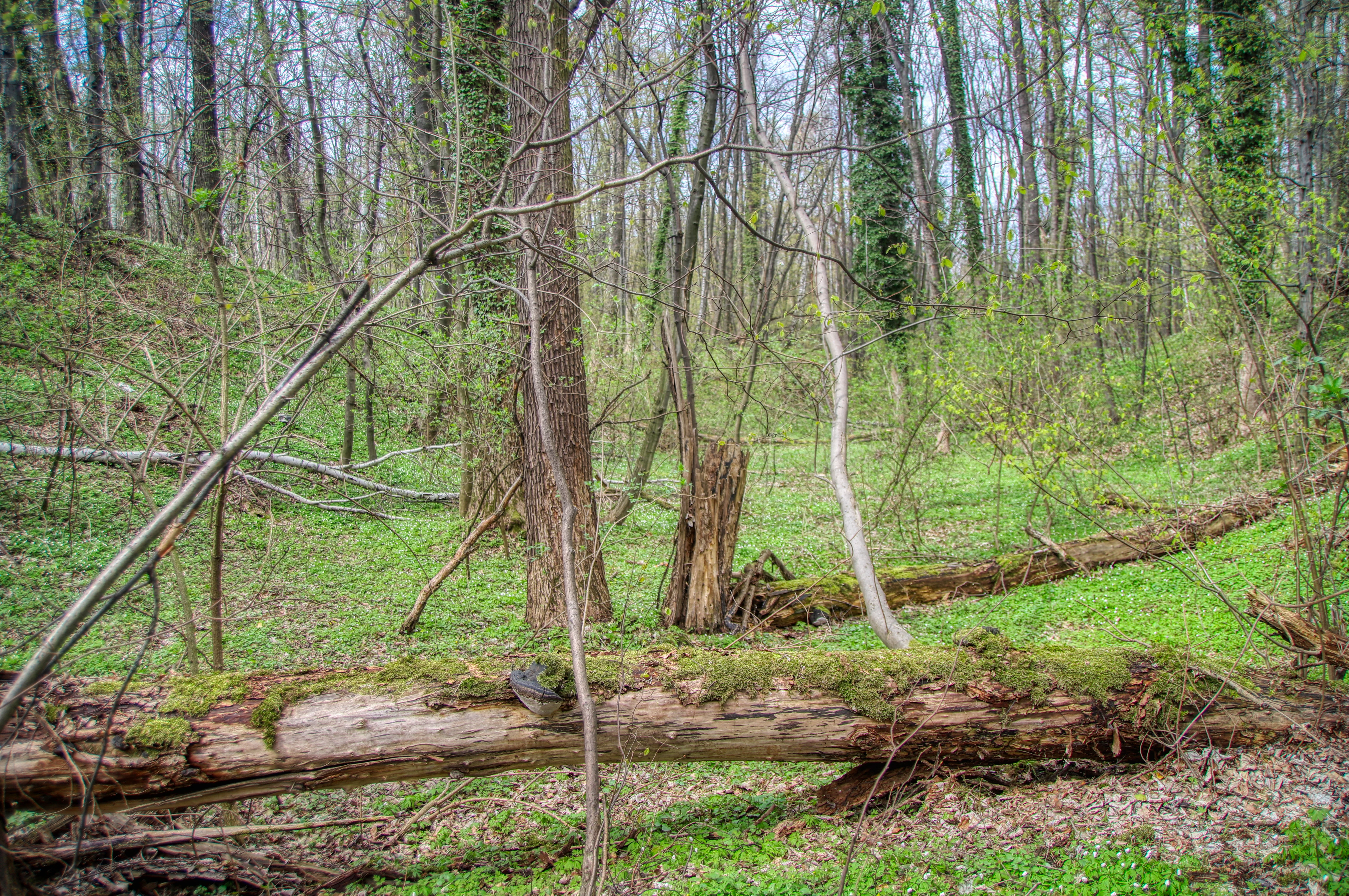
A dense, deciduous woodland scene with fallen logs covered in moss on the forest floor, surrounded by lush green undergrowth and mature trees with light budding foliage.
A view of the woodland habitat within the Cieszynianka nature reserve in Mogilany.

Cieszynianka Nature Reserve history and protected-area timeline

The Cieszynianka Nature Reserve was formally established in 1969 through an administrative act of the Polish People's Republic, recorded in the legal gazette Monitor Polski. Its creation was explicitly justified on botanical grounds: to protect a notable isolated population of Cieszynianka wiosenna growing in a beech and birch forest near Mogilany, a species deemed worthy of conservation due to its rarity in Polish lowland and foothill contexts.

The reserve's history reflects the broader Polish tradition of designating small, species-focused protected areas during the mid to late 20th century, when conservationists prioritized individual rare species and their immediate habitat over large-scale ecosystem preservation. Establishments of this kind typically resulted from local naturalist surveys and academic collaboration, in this case with documentation contributing to broader regional works such as Tadeusz Galarowski's 1976 monograph on Mogilany, published by the Polish Academy of Sciences.

Since its founding, the reserve has remained a floristic sanctuary, with its core area and protective buffer zone broadly retaining the same administrative boundaries. Its enduring purpose continues to be the long-term protection of the cieszynianka wiosenna population and the beech-birch forest community that supports it, rather than the provision of tourism opportunities or large-scale habitat management.

Cieszynianka Nature Reserve landscape and geographic character

The landscape of the Cieszynianka Nature Reserve is defined by the northern slopes of a single forested hill near Mogilany, just south of the city of Kraków. The terrain is gently sloped rather than rugged, with the forest descending toward the headwaters of the Rzepnik stream, a small watercourse that drains the surrounding landscape into the broader Skawinka river system.

Vegetation on the slope is dominated by a beech and birch forest, a relatively common but ecologically valuable forest type in the Polish foothills. The northern exposure, combined with the deciduous canopy and the soil conditions associated with this slope, creates a cool, sheltered microclimate suitable for moisture-loving understory plants. The forest sits at the interface between the more uplifted landscapes of the Pogórze Wielickie foothills (part of the Rów Skawiński mesoregion) and the historically more agricultural lowlands of the Kraków area.

Around the reserve, the land transitions quickly to a thinly populated cultural landscape shaped by small villages such as Chorowice, Kulerzów, and Buków, connected by older local roads. The original Kraków to Mogilany road passes along the eastern side of the hill, providing a clear sense of how the protected forest island sits within a working countryside. This contrast between protected woodland and surrounding settlement is one of the defining visual elements of the Cieszynianka landscape.

Cieszynianka Nature Reserve ecosystems, habitats, and plant life

Ecologically, the Cieszynianka reserve is a floristic sanctuary, which in Polish nature conservation terminology means its primary purpose is the protection of specific plant species and their habitats rather than broader landscape or animal communities. The dominant forest community on the protected slope is a beech and birch woodland, a deciduous forest type that is well represented across central Europe and known for its spring flora.

From a phytosociological perspective, the section of forest containing the densest concentrations of Cieszynianka wiosenna belongs to the Fagetalia order and shows characteristics of the oak-hornbeam (Querceto-Carpinetum) community. This places the reserve within the same broad ecological framework as many mature lowland and foothill forests of central Europe, while the particular microconditions of the slope allow a rare low-elevation population of cieszynianka to persist here.

The forest structure, deciduous leaf litter, slope humidity, and minimal direct human disturbance within the core zone combine to maintain the ecological conditions that allow this rare spring geophyte to thrive. The surrounding buffer zone further insulates the habitat from agricultural runoff, edge effects, and recreational pressure, reinforcing the reserve's role as a small but ecologically coherent botanical refuge.

Cieszynianka Nature Reserve wildlife and species highlights

The Cieszynianka reserve is designated primarily as a floristic reserve, with its protective focus on plant species rather than animal fauna. The source documentation emphasizes botanical significance and does not provide substantive details about specific mammal, bird, reptile, or insect populations living in the reserve.

The broader beech-birch forest habitat that surrounds the protected plant population would, in ecological terms, typically support common central European woodland species, including small mammals, woodland birds, and forest-floor invertebrates. However, the available source material does not enumerate or characterize any specific wildlife communities or species of conservation interest associated with Cieszynianka, and the reserve's value is overwhelmingly botanical rather than zoological.

Cieszynianka Nature Reserve conservation status and protection priorities

The conservation significance of the Cieszynianka Nature Reserve lies in its role as a long-term refuge for an isolated, disjunct population of Cieszynianka wiosenna in a region where the species is not otherwise abundant. By protecting roughly 10 hectares of suitable habitat and surrounding it with a more than 25-hectare buffer zone, the reserve aims to maintain the ecological conditions that allow this rare plant to reproduce and persist.

This type of floristic reserve is important in the wider Polish network of protected areas because it preserves genetic material and populations of species whose main distribution lies elsewhere, such as in mountain or sub-mountain habitats. The presence of such an outlying lowland population adds to our understanding of the species' ecological tolerances and offers a safeguard against local extinction should populations elsewhere decline.

The reserve's conservation model is small-scale and focused: rather than attempting to restore large ecosystems, Cieszynianka concentrates protection on a single botanical priority and the immediate forest community that supports it. This approach reflects the broader European tradition of preserving rare species through tightly targeted, small-area reserves within otherwise heavily used cultural landscapes.

Cieszynianka Nature Reserve cultural meaning and human context

The Cieszynianka reserve sits within a region with deep human history, embedded in the rural landscapes south of Kraków that have been shaped by centuries of agricultural and forestry activity. The nearby villages of Mogilany, Chorowice, Kulerzów, and Buków are small traditional communities whose lands have long included the forested hills that surround the reserve. The very fact that a tiny nature reserve survives here speaks to the cultural value Poles have historically placed on protecting distinctive natural features in their local landscapes, even amid active farming.

The reserve's establishment in 1969 also reflects the period's emphasis on scientific documentation of local flora and natural history. Works such as Tadeusz Galarowski's 1976 monograph on Mogilany, published under the auspices of the Polish Academy of Sciences, helped integrate the reserve and its rare species into the broader cultural and scientific identity of the region.

Today, the reserve remains a quiet cultural-natural landmark: a place where local communities, regional naturalists, and visitors can encounter a truly rare botanical spectacle in a setting deeply connected to the agrarian and forested landscape traditions of the Kraków region.

Top sights and standout views in Cieszynianka Nature Reserve

The standout feature of the Cieszynianka Nature Reserve is the protection of a rare, isolated population of Cieszynianka wiosenna, a delicate spring-flowering species that gives the reserve both its name and its primary reason for existence. The reserve's compact 10-hectare area, surrounded by a 25-hectare buffer zone, demonstrates a focused conservation strategy centered on a single botanical priority.

Set within a beech and birch forest on the northern slopes outside Mogilany, the reserve combines foothill forest scenery, deciduous woodland, and cultural landscape context near Kraków. Despite its modest size, Cieszynianka offers one of the clearest examples in the Małopolskie region of how small, well-placed floristic reserves can preserve rare species in otherwise heavily settled countryside.

Best time to visit Cieszynianka Nature Reserve

The reserve is most meaningful to visit in spring, when the Cieszynianka wiosenna plants are in bloom and the signature flora of the beech-birch forest is most visible. Spring is also when the wetland and forest-floor microhabitats supporting these plants are at their most visually distinctive, with fresh leaf litter and active undergrowth.

In broader terms, the beech-birch woodland is also pleasant during summer, when the dense deciduous canopy offers cool shade and the surrounding foothill countryside near Mogilany is fully green. Autumn brings typical central European forest colors, while winter reveals the bare structure of the deciduous forest on the southern Kraków foothills. As a botanical sanctuary rather than a high-traffic visitor site, the reserve is best appreciated by those with an interest in rare plants, forest ecology, and quiet foothill landscapes throughout the milder seasons.
Monthly climate preview

Long-term temperature ranges and monthly precipitation patterns sampled at park coordinates

Rezerwat przyrody Cieszynianka Climate Normals and Annual Weather by Month

Historical climate data for Rezerwat przyrody Cieszynianka maps recorded temperature fluctuations from sub-zero winter minimums to warm summer maximums alongside steady monthly precipitation. Detailed twelve-month records provide comprehensive monthly averages for analyzing long-term environmental conditions across the protected terrain.
Annual mean8 °C
-3 °C20 °C
Jan-3°
Feb-2°
Mar
Apr
May14°
Jun17°
Jul20°
Aug19°
Sep14°
Oct
Nov
Dec-2°
Warmest month
July

19.6 °C

Coolest month
January

-3.2 °C

Wettest month
July

3.5 mm/day

Driest month
December

1.3 mm/day

Park location guide

Geography guide, regional context, and park location map for Cieszynianka Nature Reserve

Cieszynianka Nature Reserve park geography, regions, and map view in Poland

Understand where Cieszynianka Nature Reserve sits in Poland through a broader geographic reading of the surrounding landscape, nearby location context, and its mapped position within the national park landscape.

How Cieszynianka Nature Reserve fits into Poland

Poland, officially the Republic of Poland, is a Central European country spanning from the Baltic Sea in the north to the Carpathian Mountains in the south. It borders Germany, Czech Republic, Slovakia, Ukraine, Belarus, Lithuania, and Kaliningrad Oblast. The country has a temperate climate, diverse landscapes, and is known for its rich history, cultural heritage, and strong economic position within the EU.

Wider geography shaping Cieszynianka Nature Reserve in Poland

Poland occupies 312,696 km2 in Central Europe, extending from the Baltic Sea coast in the north to the Sudetes and Carpathian Mountains in the south. It borders Germany to the west, Czech Republic and Slovakia to the south, Ukraine and Belarus to the east, and Lithuania and Kaliningrad Oblast to the northeast. The landscape includes lowland plains, uplands, and mountain ranges.

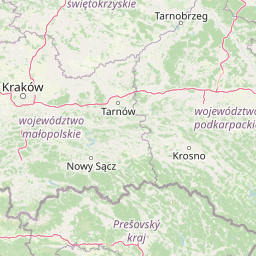
Map view of Cieszynianka Nature Reserve

Use this park location map to pinpoint Cieszynianka Nature Reserve in Poland, understand its exact geographic position, and read its mapped placement within the surrounding landscape more clearly.

Pigeon | © OpenStreetMap contributors

Location context for Cieszynianka Nature Reserve

Lesser Poland Voivodeship

Visual reference for beech woodland habitats and foothill terrain

Rezerwat przyrody Cieszynianka Photos and Forest Landscapes

Examine Rezerwat przyrody Cieszynianka through detailed imagery documenting its protected beech and birch canopy. Photographic records reveal the sheltered terrain and forest floor habitats characteristic of this southern Polish botanical sanctuary.

A dense, deciduous woodland scene with fallen logs covered in moss on the forest floor, surrounded by lush green undergrowth and mature trees with light budding foliage.

A close-up view of small yellow Hacquetia epipactis flowers blooming among green leaves and fallen brown autumn leaves in a forest.

Park atlas

Compare regional foothill reserves and surrounding protected landscapes

Explore Protected Areas and Parks Near Rezerwat przyrody Cieszynianka

Browse other protected areas and regional reserves located across the surrounding Małopolskie countryside. Comparing these neighboring habitats provides a broader geographic perspective on southern Polish woodland conservation.
A horizontal watercolor painting of a green meadow, wetland area, and a soft forest line against distant hills.
Nature reserveLesser Poland Voivodeship
About 5.8 km away#1 closest

Northwest

Skawiński obszar łąkowy Nature Reserve: Geography and Protected Landscape Atlas

Lesser Poland regional meadow habitat mapping.

The Skawiński obszar łąkowy nature reserve protects a mosaic of wet, variable-moisture meadows that support rare butterfly populations. Situated on the southern fringe of the Kraków region, this site represents a crucial example of traditional lowland grassland conservation within a busy urban corridor. Access geographic context and boundary information for this essential Lesser Poland protected area.

Area
0.441 km²
Established
2011
Relief
Lowland
Scope
Terrestrial
A pale, minimalist watercolor illustration depicting a soft, winding river valley surrounded by distant hills and coniferous forests.
Protected landscapeLesser Poland Voivodeship
About 9.9 km away#2 closest

North

Bielańsko-Tyniecki Park Krajobrazowy Protected Landscape and Regional Geography

Limestone terrain and Vistula valley river corridors in Lesser Poland

Bielańsko-Tyniecki Park Krajobrazowy anchors a complex protected landscape near Kraków, featuring dramatic limestone rock groups, ancient forest complexes, and extensive river meadows. This detailed overview maps its karst caves, Natura 2000 sites, and cultural heritage, documenting the rare overlap of upland ridges and alluvial floodplains within the Lesser Poland Voivodeship.

Area
63.591 km²
Established
1981
Relief
Upland
Climate
Temperate
Protected areaLesser Poland Voivodeship
About 15 km away#3 closest

Northwest

Rudniańskie Modraszki, Kajasówka: Protected Area Geography and Habitat Mapping

Lesser Poland Voivodeship, Southern Poland

Rudniańskie Modraszki, Kajasówka represents a core conservation zone defined by its rare xerothermic and molinia meadow habitats. Spanning the transition between ridge and depression landscapes, this area provides a structured look at how small-scale habitat protection supports essential butterfly populations within the diverse geography of southern Poland.

Area
4.25 km²
Established
2011
Relief
Upland
Scope
Terrestrial
A horizontal watercolor illustration showing a peaceful river flowing through a lush green valley with distant rolling hills and wild grasses in the foreground.
Nature reserveLesser Poland Voivodeship
About 18 km away#4 closest

Northwest

Rezerwat przyrody Dolina Mnikowska: A Karst Landscape Reserve in Lesser Poland

Mapped limestone gorge and forest protected area geography

Rezerwat przyrody Dolina Mnikowska features a striking limestone gorge and forest ecosystem within the Lesser Poland Voivodeship. This protected area offers a deep look into the karst topography, river-carved cliffs, and diverse habitat zones of the Garb Tenczyński upland region.

Area
0.209 km²
Established
1963
Relief
Upland
Climate
Temperate
Protected areaLesser Poland Voivodeship
About 19 km away#5 closest

South

Raba z Mszanką Protected Area: Atlas of Carpathian Riverine and Riparian Landscapes

Geographic map and habitat overview for southern Poland.

Raba z Mszanką serves as a significant protected corridor within the Lesser Poland Voivodeship. The site illustrates the ecological gradient of mountain stream environments, featuring shifting gravel bars, willow shrublands, and floodplain forests. This entry provides context on the riverine geography, including its role in sustaining populations of the Mediterranean barbel within the Carpathian foothills.

Area
2.493 km²
Scope
Terrestrial
Water
Major water bodies
A soft watercolor painting of a winding stream flowing through a green valley with light trees, under a pale pink and yellow sky.
Nature reservePoland
About 23 km away#6 closest

Northwest

Rezerwat przyrody Dolina Potoku Rudno: Nature Reserve and Protected Landscape Atlas

Geographic map and protected forest terrain in Lesser Poland

Situated in the Rudno Stream valley, this nature reserve offers a detailed look at preserved alder floodplain ecosystems and rocky gorge formations. The area provides a critical protected woodland link within the Kraków-Częstochowa Upland. Use the atlas data to examine the reserve boundaries, geological exposures, and regional landscape connections in Poland.

Area
0.959 km²
Established
2001
Relief
Upland
Climate
Temperate
Watercolor illustration showing green hills, scattered trees, and a light sky background
National parkLesser Poland Voivodeship
About 23 km away#7 closest

North

Ojców National Park: Karst Geography and Protected Landscape Atlas Entry

Explore the mapped terrain and unique geology of this national park.

Ojców National Park, situated in Lesser Poland Voivodeship, offers a concentrated display of dramatic karst topography. This protected national park is renowned for its towering limestone cliffs, intricate ravines, and over 400 caves, showcasing a unique Jurassic geology. As a vital protected area, its mapped boundaries encompass distinctive rock formations like Hercules' Club and the historic Trail of the Eagles' Nests, providing rich context for landscape discovery and atlas exploration.

Area
21.46 km²
Established
1956
IUCN
II
Relief
Upland
Watercolor painting of limestone rock formations surrounded by trees and green hills, rendered in a soft, panoramic landscape style.
National parkLesser Poland Voivodeship
About 23 km away#8 closest

North

Ojcowski Park Narodowy: A Geographic Guide to Poland's Compact Protected Landscape

Jurassic limestone formations and karst valleys in Lesser Poland

Ojcowski Park Narodowy occupies a unique place in the national park system of Poland, defined by its small footprint and high concentration of Jurassic geological features. The terrain includes vertical cliffs, ancient river valleys, and significant cave systems that provide critical habitats for bat populations. Use this mapping resource to understand the park's structural complexity, from its dry ravines to the historic cultural sites integrated into the limestone bedrock.

Area
21.46 km²
Established
1956
Visitors
400K annual
Relief
Upland

Common questions about visiting, size, designation, and location context for Cieszynianka Nature Reserve

Cieszynianka Nature Reserve FAQs for park facts, access, geography, and protected area context

Find quick answers about Cieszynianka Nature Reserve, including protected-area facts, park geography, trail and visitor context, and how the park fits into its surrounding country and regional landscape.
MoriAtlas Explorer

Continue Your Protected Areas Search Across the Global Atlas

Deepen your exploration by continuing the structured search for national parks and protected areas worldwide. Utilize the comprehensive filtering capabilities to compare different conservation landscapes and refine your understanding of global park geography. Discover more about the distribution and characteristics of protected natural areas.

Global natural geography