Why Dębina Nature Reserve stands out
Dębina is best known for preserving a small, representative stand of Central European oak-hornbeam forest, a habitat type shaped by centuries of lowland woodland dynamics. The reserve's pedunculate oak-dominated canopy, mixed with beech, hornbeam, small-leaved linden, and Scots pine, together with characteristic understory species such as bulbous coralroot and Hepatica nobilis, makes it a valuable reference site for studying intact deciduous woodland communities in western Poland.
Dębina Nature Reserve history and protected-area timeline
Dębina was established on 11 December 1995 by an order of the Minister of Environmental Protection, Natural Resources, and Forestry, recognizing the area as a nature reserve. The legal basis for the designation was published in the Polish Monitor of 1996, formalizing the site's protected status. The reserve was created to preserve, for scientific and educational purposes, a fragment of Central European oak-hornbeam forest, a woodland type whose original extent across Polish lowlands has been significantly reduced.
From its establishment onward, the reserve has been administered by the Kłodawa Forest District, and its management has followed the active protection framework typical of small Polish forest reserves. This approach recognized that simply setting aside land is not always sufficient to maintain ecological quality, and that targeted interventions may be required to preserve the structure and species composition of the woodland.
Dębina Nature Reserve landscape and geographic character
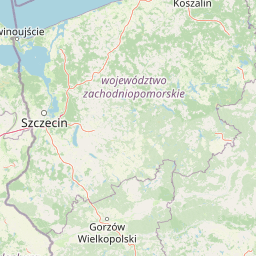
Dębina lies in the lowland landscape of the Równina Gorzowska, a mesoregion of gently undulating glacial plains in western Poland. The terrain is typical of the region: broad, low-relief surfaces shaped by Pleistocene glacial processes, with predominantly sandy and loamy soils that historically supported extensive deciduous and mixed forest cover.
The reserve itself is a compact woodland fragment rather than a visually dramatic landscape. Its character is defined by the internal structure of the forest: vertical stratification among the canopy, understory, and ground layer, clear seasonal changes in light penetration and foliage color, and the gradual ecological transitions between the wooded area and surrounding managed forests or open land outside the reserve.
Dębina Nature Reserve ecosystems, habitats, and plant life
The defining ecological feature of Dębina is its Central European oak-hornbeam woodland, in Polish known as grąd środkowoeuropejski. This community is associated with fertile, well-drained lowland soils and supports a biodiverse mix of tree species, understory shrubs, and spring-flowering herbaceous plants.
Pedunculate oak forms the dominant canopy layer, with beech, hornbeam, small-leaved linden, and Scots pine contributing to the mix. The presence of beech and hornbeam is particularly notable, as both are characteristic components of mature Central European deciduous forests and contribute to the structural complexity of the woodland. The rich herb layer includes woodland indicators such as bulbous coralroot and Hepatica nobilis, species that flourish under stable, shaded forest conditions and are sensitive to disturbance.
The reserve's ecological value extends beyond its tree composition. The combination of intact soil processes, multi-layered vegetation structure, and characteristic understory flora means the site functions as a small-scale analogue for the kind of lowland deciduous woodland that once covered much of the region. Within the broader context of the Równina Gorzowska, where most forests have been shaped by forestry operations, such remnants are ecologically significant reference points.
Dębina Nature Reserve wildlife and species highlights
The source material is consistent in describing Dębina primarily as a botanical and forest-habitat reserve. Specific animal species are not enumerated. Woodland birds, small mammals typical of lowland deciduous forests, and forest-dwelling invertebrates associated with mature oak-hornbeam stands would generally be expected in such habitat, but the available source content does not support detailed wildlife claims.
Dębina Nature Reserve conservation status and protection priorities
Dębina's conservation significance lies in its protection of a small but ecologically representative fragment of Central European oak-hornbeam forest, a habitat type that has been substantially reduced across the Polish lowlands. The reserve provides a reference site for scientific research into forest community composition, succession, and understory dynamics, and supports educational use by allowing direct observation of a relatively intact deciduous woodland.
The reserve is managed under active protection, meaning that conservation activities may include measures such as controlling invasive species, maintaining natural regeneration, or removing trees to mimic natural disturbance patterns. This approach reflects the recognition that simply fencing off an area is often insufficient to maintain the structural and species diversity characteristic of mature Central European forests.
At the regional scale, Dębina contributes to the broader network of small forest reserves across the Lubuskie Voivodeship and the Równina Gorzowska mesoregion. Together these reserves form a set of reference points for the original forest character of the area, helping to anchor conservation efforts in ecologically meaningful baselines.
Dębina Nature Reserve cultural meaning and human context
The name Dębina derives from the Polish word dąb, meaning oak, reflecting the strong presence of oak trees that has shaped local forest identity for generations. In the regional context of western Poland, where forestry has long been part of the rural economy, small deciduous forest patches such as Dębina carry traditional as well as ecological significance, representing the type of woodland that has historically been associated with the area's rural landscapes. No deeper indigenous or historical cultural context is recorded in the available source.
Top sights and standout views in Dębina Nature Reserve
Dębina's main highlight is its role as a living reference site for Central European oak-hornbeam woodland in a region where such forests have become rare. The presence of mature pedunculate oak, mixed beech and hornbeam, and characteristic understory plants like bulbous coralroot and Hepatica nobilis gives the reserve a layered, ecologically authentic forest structure despite its compact size. Managed under active conservation, it offers a durable benchmark for lowland deciduous forest ecology in western Poland.
Best time to visit Dębina Nature Reserve
Like most Central European deciduous forest reserves, Dębina has its strongest seasonal character in spring, when the herb layer comes alive with flowering understory plants and the canopy is still open enough to allow light to reach the forest floor. Late spring through early summer is also a good period for observing the structural complexity of the woodland, while autumn offers a vivid display of canopy color as the oaks, beeches, and lindens change. The reserve is small and primarily intended for low-impact ecological and educational visits rather than extensive recreational use.