Why Dingley Dell Conservation Park stands out
Dingley Dell Conservation Park is best known as the preserved home and surrounds of the colonial poet Adam Lindsay Gordon, a figure regarded as one of the most influential Australian poets of the 19th century and a horseman whose work shaped the literary identity of early South Australia. The park's identity is therefore tied as much to cultural memory and heritage tourism as to its modest natural features. It also stands out for being a particularly small but historically meaningful reserve within South Australia's protected-area system. The combination of restored 19th-century cottage architecture, blue gum woodland, and easy access from the small coastal town of Port MacDonnell gives the park a distinctive nostalgic character that differs from the wilder, larger national parks found elsewhere in the Limestone Coast.
Dingley Dell Conservation Park history and protected-area timeline
The history of Dingley Dell Conservation Park begins with the residence of the poet Adam Lindsay Gordon on the property between 1864 and 1866. Gordon, whose life and writing are entwined with the development of South Australia's colonial identity, occupied the cottage that still stands on the land and lent the property a cultural significance that survived long after his departure.
The modern protected status of the site dates to 1922, when the Government of South Australia purchased the property at the request of the Dingley Dell Restoration Committee. On 1 January 1922 it was proclaimed as a national pleasure resort under the National Pleasure Resorts Act 1914, placing it under the management of the South Australian Tourist Bureau and effectively transforming a former private home into a publicly accessible heritage site.
For half a century the property operated under this designation. Then, on 27 April 1972, the proclamation of the National Parks and Wildlife Act 1972 repealed the earlier pleasure-resort statutes and many other conservation-related acts. Under the new act the property was renamed Dingley Dell Conservation Park, aligning it with South Australia's broader conservation-park framework and bringing it under the governance of what is now the Department for Environment and Water.
In 1980, the park's heritage values received additional recognition. The Register of the National Estate listed the conservation park that year, and the cottage itself was placed on the South Australian Heritage Register on 24 July 1980 under the name Dingley Dell Museum. Management of the museum and associated visitor offerings was subsequently taken on by a commercial operator, a structure that still shapes the visitor experience today.
Dingley Dell Conservation Park landscape and geographic character
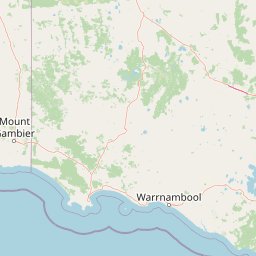
Dingley Dell Conservation Park is a small, flat tract of land typical of the gentle rural terrain of south-eastern South Australia. It sits only a few kilometres inland from the Southern Ocean coast, between Port MacDonnell and the larger regional centre of Mount Gambier, in a region where the surrounding countryside is dominated by grazing land, fence lines, and quiet local roads.
The land itself is defined less by dramatic landforms than by its enclosure. Boundaries are fenced and adjoined to grazing country on two sides and to roads on the other two, giving the reserve the character of a preserved clearing carved out of an otherwise pastoral landscape. There are no cliffs, peaks, or coastlines within the park, and the experience of the landscape is one of open woodland, modest topography, and closeness to farm country.
Within the property, the dominant impression is that of a sheltered, small-scale woodland setting around the restored cottage. Open areas for picnicking and short walking behind the cottage open onto a backdrop of mature eucalypts and isolated wattles, while the broader region beyond the fences carries the older rural geometry of paddocks, roads, and the limestone-framed farmland that gives the Limestone Coast its broader geographical identity.
Dingley Dell Conservation Park ecosystems, habitats, and plant life
Ecologically, Dingley Dell Conservation Park is a small but functional fragment of the native woodland that once extended more broadly across the south-east of South Australia. The vegetation is described as an open woodland of South Australian blue gum, a hardy eucalypt that defines much of the region's surviving tree cover and gives the park its characteristic pale-trunked canopy.
Beneath and beside the blue gum overstorey, isolated stands of additional native species contribute to the understorey and shrub layer. These include blackwood, a moisture-loving wattle species capable of forming small groves; golden wattle, Australia's national floral emblem and a familiar component of South Australian bushland; coastal bearded-heath, a low shrub suited to the region's mild maritime climate; and native box, a spiny shrub that adds structural diversity around the woodland margins.
The park does not display the more spectacular ecological features of the wider Limestone Coast: there are no wetlands, caves, or volcanic formations within its boundaries. Its ecological value lies instead in retaining a patch of locally indigenous vegetation within a heavily modified agricultural landscape, providing habitat continuity amid surrounding cleared land and serving as a small-scale refuge for the woodland species typical of the region.
Dingley Dell Conservation Park wildlife and species highlights
The wildlife profile of Dingley Dell Conservation Park is modest in scale and shaped by the park's small size, its wooded vegetation, and its position within a long-settled rural district. The reserve does not support the larger mammal populations or the migratory bird concentrations associated with bigger national parks in the region, and detailed species lists for the property are not broadly documented.
What the park does offer is woodland habitat of a type that supports the common smaller fauna typical of South Australian blue gum forests. Such habitat typically provides shelter and forage for a range of common bush birds, insectivores, small reptiles, and invertebrates that persist in even small remnants of native vegetation. The surrounding farmland context means that visitors may also commonly observe typical rural-edge species, while the park itself functions primarily as a quiet refuge rather than a wildlife spectacle.
The woodland design laid out around the cottage, with mature trees, scattered shrubs, and open grassy areas, also makes the reserve a pleasant site for low-intensity nature observation. Walking the short track behind the cottage gives visitors close views of the understorey and its associated birdsong, an experience that complements the heritage focus of the park rather than competing with it.
Dingley Dell Conservation Park conservation status and protection priorities
From a conservation perspective, Dingley Dell Conservation Park is less significant as an ecological reserve and more significant as a small, formally protected fragment of native vegetation within a heavily cleared agricultural matrix. Its blue gum woodland, with its scattered understorey of blackwood, golden wattle, coastal bearded-heath, and native box, provides a modest but real contribution to maintaining local habitat continuity in a region where much of the original woodland cover has long been converted to pasture.
The park's formal protection has strengthened over time. Originally gazetted in 1922 under the National Pleasure Resorts Act 1914 as a place for public recreation, it was reclassified in 1972 under the National Parks and Wildlife Act 1972 as a conservation park, aligning it with the modern South Australian system of reserved lands. The Register of the National Estate listed the property in 1980, recognising both its natural and cultural values, while the cottage itself was added to the South Australian Heritage Register the same year under the name Dingley Dell Museum.
As of 2014, the conservation park had not been assigned an IUCN protected-area category, which reflects its relatively small scale and its mixed natural and cultural role. Its conservation significance today rests on its combined value as a heritage site, a preserved woodland fragment, and an enduring reminder of one of South Australia's most important colonial poets.
Dingley Dell Conservation Park cultural meaning and human context
Dingley Dell Conservation Park occupies a distinctive place in South Australian cultural memory because of its direct connection to Adam Lindsay Gordon, the English-born poet, horseman, and colonial figure who lived at the property in the 1860s. Gordon is widely regarded as one of the foundational voices of Australian poetry in the 19th century, and the years he spent at Dingley Dell form a key chapter in his biography and in the literary self-image of the Limestone Coast.
Honouring that history was explicit in the creation of the reserve. The Dingley Dell Restoration Committee campaigned for the property to be acquired by the Government of South Australia, and the 1922 purchase reflects an early community effort to preserve a significant site associated with a major literary figure rather than a typical natural landscape. The cottage has since been restored and operates as a museum, sustaining an active tradition of public remembrance around Gordon's life and work.
The broader cultural context is one of small communities and pastoral life that has shaped south-eastern South Australia for generations. Grazing land, fence lines, and quiet local roads surround the reserve, situating the heritage experience within a working rural landscape. This combination of literary commemoration, modest local identity, and preserved rural scenery continues to define how the park is understood by residents of Port MacDonnell, the wider Limestone Coast, and visitors interested in Gordon's legacy.
Top sights and standout views in Dingley Dell Conservation Park
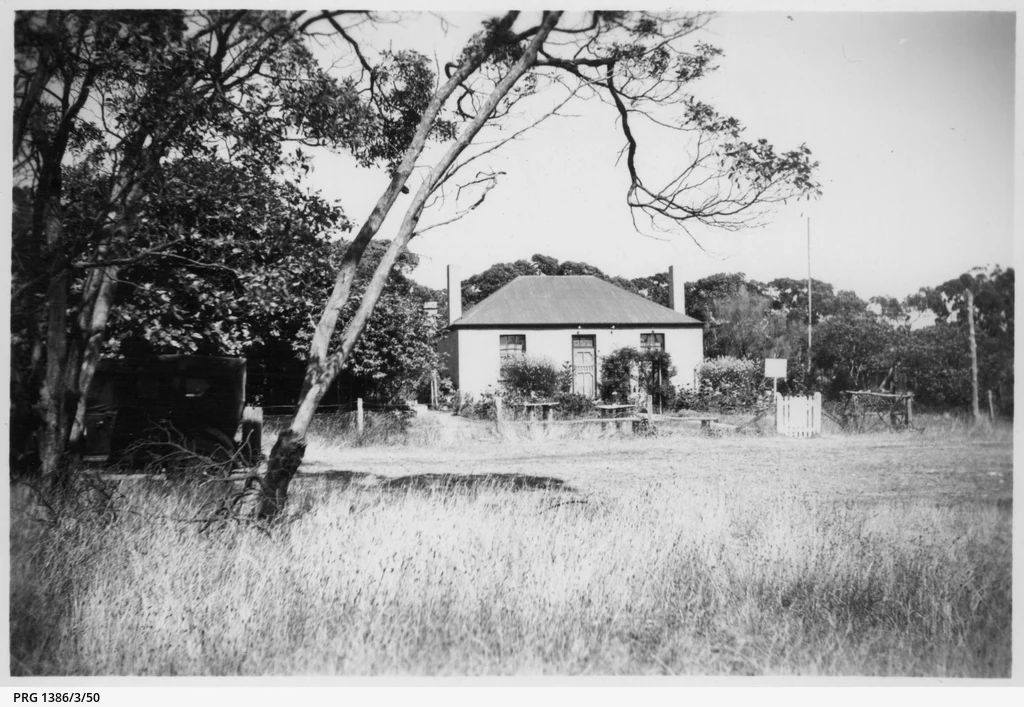
Among the most distinctive features of Dingley Dell Conservation Park is the restored cottage of Adam Lindsay Gordon, which stands at the heart of the property and now operates as the Dingley Dell Museum under commercial management. A small walking track behind the cottage extends into the surrounding woodland, offering a quiet complement to the cultural visit and a glimpse of the park's native vegetation.
Picnic facilities and basic visitor amenities, including toilets and a caretaker residence, make the reserve a convenient stop for visitors exploring the Port MacDonnell area. Its small scale, fenced boundaries, and proximity to farmland give it an intimate, contained atmosphere that contrasts with the larger, wilder reserves of the Limestone Coast, while its blue gum woodland and scattered wattles anchor it firmly within the ecological character of the region.
The park's strongest point of distinction, however, remains the layered combination of literary heritage, restored 19th-century architecture, and a preserved woodland setting within an active agricultural landscape. Few protected areas of comparable size combine these elements so directly, and it is this cultural and ecological interaction that defines the visitor experience at Dingley Dell.
Best time to visit Dingley Dell Conservation Park
Dingley Dell Conservation Park's appeal is largely tied to its cultural heritage rather than to dramatic seasonal transformations in its landscape. Because the park's main attraction is the restored cottage museum and its associated memorabilia, the property can be visited productively throughout much of the year, with indoor content providing continuity regardless of weather.
That said, the broader south-eastern South Australian climate offers the most pleasant conditions in the milder months of spring and early autumn, when temperatures are generally cooler, the blue gum woodland is visually active, and the picnic facilities and short walking track behind the cottage can be enjoyed comfortably. Summer in the Limestone Coast can be warm and exposed, while winter conditions are typically mild but can bring wet weather that affects outdoor areas.
For visitors combining Dingley Dell with the surrounding region, including the coast at Port MacDonnell and the broader Limestone Coast scenery, spring tends to offer the most balanced experience, with flowering native shrubs and active birdlife in the surrounding farmland complementing the heritage focus of the park itself.