Mori Atlas logo
Nature reserveRezerwat przyrody Dolina Osy

Examining the glacially shaped river valley terrain and protected habitats in north-central Poland.

Rezerwat przyrody Dolina Osy Nature Reserve: A Detailed Geographic Atlas of Osa Valley Landscapes

Rezerwat przyrody Dolina Osy encompasses a significant section of the Osa River valley, preserved for its ecological value and distinctive post-glacial terrain. Situated within the Chełmińskie Lakeland of the Kuyavian-Pomeranian Voivodeship, this protected area spans hundreds of hectares of riverine habitats and surrounding moraine slopes. The geography highlights a mosaic of wetland corridors and woodland patches, providing a detailed look at the natural landscape evolution defining this mid-northern Polish region.

river valleyglacial landscapeChełmińskie Lakelandlandscape reservebirdlifeprotected flora

Rezerwat przyrody Dolina Osy

Nature reserve

Park overview

Structured park overview, official facts, and landscape profile for Dolina Osy Nature Reserve

Dolina Osy Nature Reserve park facts, protected area profile, and essential visitor context

Review the core facts for Dolina Osy Nature Reserve, including designation, size, terrain, visitor scale, habitats, and operating context in one park-focused overview.

About Dolina Osy Nature Reserve

Dolina Osy Nature Reserve is one of the more distinctive river-valley reserves of north-central Poland, dedicated to protecting an ecologically rich segment of the Osa River within the wider Chełmińskie Lakeland. Established in 1994, the reserve concentrates on the stretch of the Osa River between the village of Przesławice and the settlement of Rogóźno-Zamek, an area that captures the essential character of the region's glacially influenced river valleys.

The reserve is situated in the Kuyavian-Pomeranian Voivodeship, within Grudziądz County, and extends across parts of the gminas Rogóźno, Gruta, and Łasin. The broader setting of the Chełmińskie Lakeland gives the area its distinctive topography, with rolling post-glacial terrain, lakes, and broad valleys that shape both the hydrology of the Osa River and the distribution of habitats along its banks. The result is a landscape where river, wetland, and adjacent dry-ground communities meet within a relatively compact area.

From an ecological perspective, Dolina Osy is valued for the diversity of plant species concentrated along the valley and for the richness of the bird community that depends on these habitats. Notable flora include wild garlic, Turk's cap lily, mezereon, and broad-leaved harebell, species that often indicate longer-established, semi-natural woodland and river-edge habitats. Their presence helps frame the reserve as a refuge for characteristic valley flora that has receded elsewhere in managed Polish lowlands.

The reserve is protected under a combination of strict, active, and landscape conservation regimes, reflecting a deliberate approach to balancing habitat preservation with the maintenance of broader landscape values. Two natural monuments within the reserve, named Adam and Ewa, mark particularly significant individual features of the protected landscape. Together, these elements make Dolina Osy a representative example of how Poland integrates river-valley ecology, regional landscape identity, and formal conservation practice within a single protected area.

For visitors and researchers, the reserve offers an instructive view of north-central Polish river-valley ecosystems, with the Osa River acting as the central organizing feature of both habitat pattern and cultural-natural heritage.

Quick facts and research context for Dolina Osy Nature Reserve

Dolina Osy Nature Reserve is a landscape reserve created in 1994 in the Kuyavian-Pomeranian Voivodeship. It sits on the Chełmińskie Lakeland, a glacial mesoregion defined by rolling moraine terrain, numerous lakes, and broad river valleys typical of northern Poland.

The reserve covers about 668 hectares within Grudziądz County, spanning parts of three gminas, with its core area focused on the Osa River valley between Przesławice and Rogóźno-Zamek. The reserve is governed by strict, active, and landscape protection regimes and protects notable plant species such as wild garlic, Turk's cap lily, mezereon, and broad-leaved harebell, along with a rich bird fauna. Two named natural monuments called Adam and Ewa are also located within the reserve.

Protection and recognition

Documented terrestrial protection scope and international recognition data

Rezerwat przyrody Dolina Osy Protection Status and Conservation Records

Rezerwat przyrody Dolina Osy maintains a documented terrestrial protection scope within the regional conservation network. Structured facts outline the official designation framework and international recognition history associated with the reserve.

Protection details

Protection scope
Terrestrial
Transboundary protection
No
Park context

Deeper park guide and search-rich context for Dolina Osy Nature Reserve

Dolina Osy Nature Reserve history, landscape, wildlife, and travel context

Explore Dolina Osy Nature Reserve through its history, landscape character, ecosystems, wildlife, conservation priorities, cultural context, and seasonal travel timing in a structured park guide built for atlas discovery and search intent.

Why Dolina Osy Nature Reserve stands out

Dolina Osy is best known for protecting the most natural section of the Osa River valley and the rich lowland birdlife associated with it. The reserve stands out for combining riverine and wetland habitats with adjacent glacial landforms of the Chełmińskie Lakeland. It is also recognized for its characteristic plant species, including wild garlic, Turk's cap lily, mezereon, and broad-leaved harebell, which give the valley a distinctive botanical character. Two named natural monuments, Adam and Ewa, add to the reserve's identity as a landscape of both ecological and cultural-natural importance.
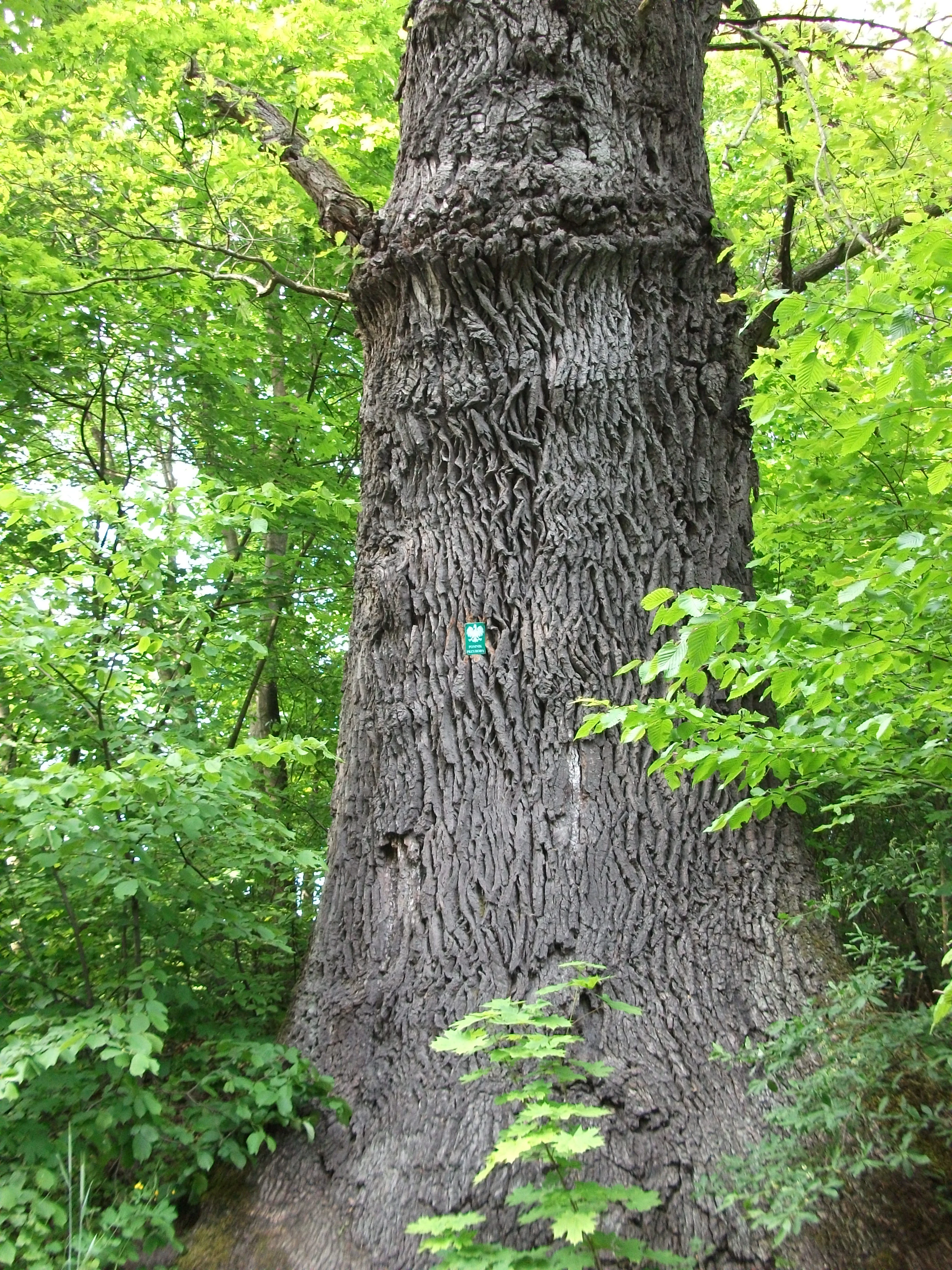
A close-up view of the thick, textured bark of an old, large oak tree in a forest, featuring a small green plaque indicating its status as a nature monument.
The trunk of one of the Adam and Ewa nature monument trees in Dolina Osy Nature Reserve.

Dolina Osy Nature Reserve history and protected-area timeline

Dolina Osy Nature Reserve was formally established in 1994 through a regulation published in the Polish legal gazette, marking an official recognition of the Osa River valley's ecological and landscape value. Its creation reflected growing attention to protecting representative stretches of Polish lowland river valleys within the broader national conservation framework.

The reserve's legal status as a landscape reserve placed it among Polish protected areas designed to safeguard not only individual species but also broader habitat complexes and scenic qualities. From its establishment onward, the area has been managed under a combination of strict, active, and landscape protection regimes, allowing for both preservation of sensitive features and stewardship of the wider valley environment.

While the reserve itself is relatively recent as a formal entity, the landscape it encompasses has long been shaped by natural processes associated with the Chełmińskie Lakeland and by human presence in the surrounding villages. The preservation of natural monuments within the reserve, including the prominent features Adam and Ewa, suggests a long-standing recognition of particular landscape elements as worthy of protection. As part of the regional conservation network of the Kuyavian-Pomeranian Voivodeship, Dolina Osy contributes to the broader effort to maintain ecological continuity and landscape identity across the lake district of northern Poland.

Dolina Osy Nature Reserve landscape and geographic character

The landscape of Dolina Osy Nature Reserve is defined by the valley of the Osa River as it winds through the Chełmińskie Lakeland, one of the characteristic glacial mesoregions of northern Poland. The terrain expresses the classic post-glacial landforms of the region, with gently rolling moraine uplands flanking a broad valley where the river meanders between Przesławice and Rogóźno-Zamek.

Within the reserve, the valley floor hosts river channels, wet bottomlands, and transitional habitats between aquatic and terrestrial environments. The valley walls and adjacent slopes carry features typical of the surrounding lake district, including remnant glacial deposits, varied soil patterns, and a mosaic of woodland, shrub, and meadow patches. The visual rhythm of the landscape is shaped by this alternation between riverine low ground and the higher ground of the lakeland plateau.

The river itself is the most prominent landscape element, organizing both the visual scene and the ecological structure of the protected area. Its course creates natural corridors of moisture-loving vegetation, while the adjacent slopes add drier plant communities that together form a layered habitat profile. The reserve's landscape thus reads as a continuous interplay between the river, its valley, and the wider Chełmińskie Lakeland setting, offering a representative image of glacially shaped north-central Polish terrain.
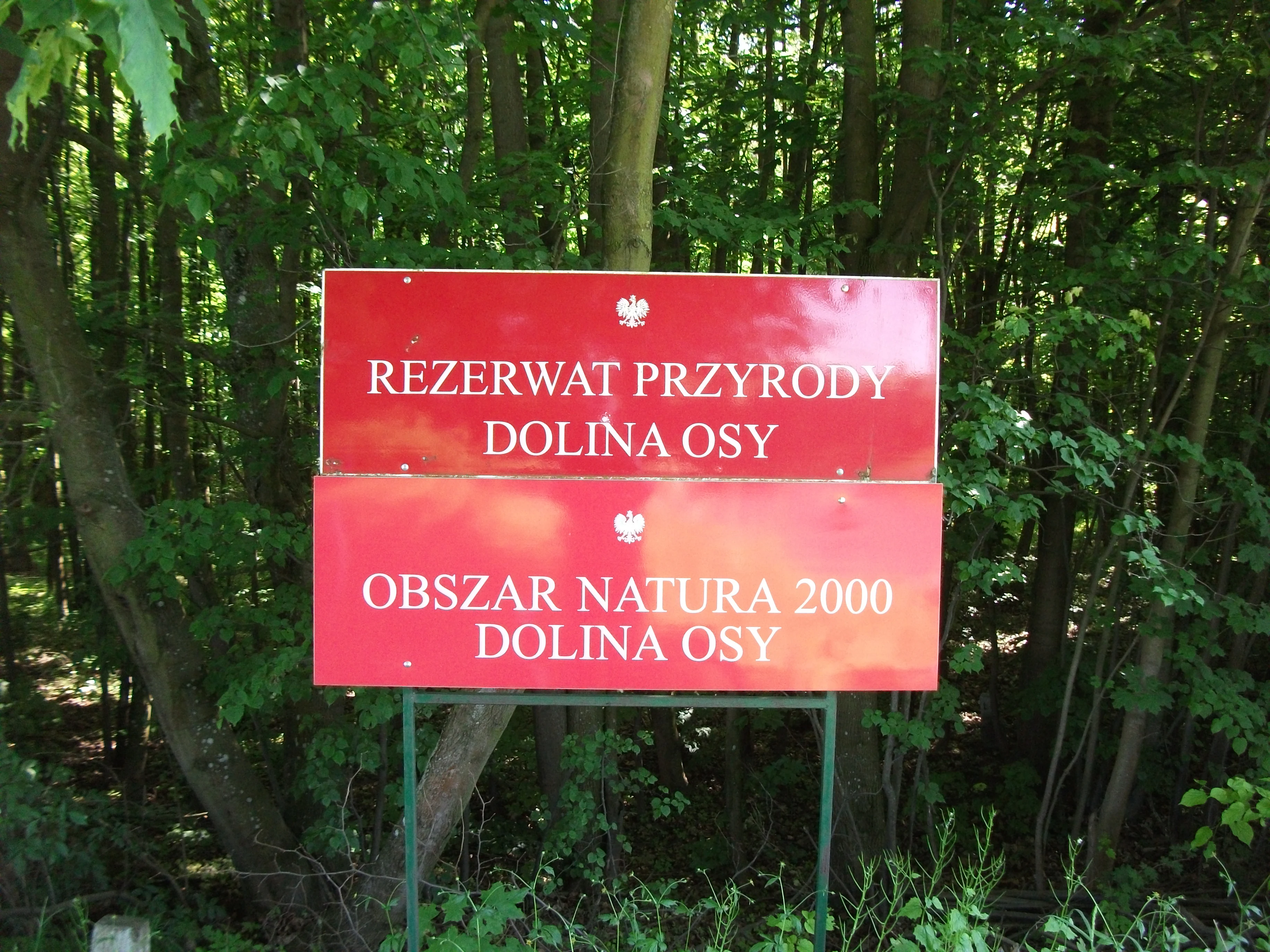
A red rectangular sign with white Polish text identifying the site as Rezerwat przyrody Dolina Osy and Obszar Natura 2000 Dolina Osy, set against a background of green forest trees.
Information sign for the Dolina Osy Nature Reserve and Natura 2000 site.

Dolina Osy Nature Reserve ecosystems, habitats, and plant life

Ecologically, Dolina Osy belongs to the river-valley habitat complexes typical of the Polish lowland lake districts. The reserve's nature is shaped by the closeness of water-related habitats and the dry-ground communities of the surrounding moraine landscape, producing a layered mosaic of plant and animal life.

Within the valley, riverine and wetland habitats support moisture-loving plant species and the animals that depend on them, while adjacent slopes and ridges contribute woodland and meadow communities typical of glacial lowlands. This combination of wet and dry habitats within a relatively compact area is central to the reserve's ecological value, allowing species from different ecological groups to coexist in proximity.

The Chełmińskie Lakeland context adds further ecological breadth. The reserve is embedded in a region defined by lakes, moraines, and a network of valleys, which together sustain diverse populations of plants, fungi, insects, and birds. The protected status, applied through strict, active, and landscape conservation regimes, reflects an effort to maintain these ecological relationships over time rather than focusing solely on individual species.

Dolina Osy Nature Reserve wildlife and species highlights

Wildlife in Dolina Osy Nature Reserve is closely linked to the riverine and valley habitats of the Osa River. The reserve is recognized for hosting numerous bird species that rely on the mosaic of water, wetland, woodland, and open habitats found within the valley. The structural diversity of the landscape translates directly into feeding, shelter, and breeding opportunities for a wide range of avian species.

The presence of mature and semi-natural vegetation along the valley, including woodland patches and shrubby margins, supports many resident and migratory birds typical of north-central Polish river valleys. Wetland and water-associated species find habitat in the river channel and adjacent wet ground, while birds of woodland edges and open country are supported by the diverse interface habitats along the valley margins.

Beyond birds, the reserve's mosaic of habitats supports a typical fauna of lowland river valleys in this region, including small mammals, amphibians, and invertebrates associated with both wet and dry environments. While specific mammal or reptile records are not the focus of available sources, the overall ecological setting indicates a wildlife community consistent with the broader Chełmińskie Lakeland. The reserve's combined protection regimes help maintain the conditions under which these wildlife communities persist.

Dolina Osy Nature Reserve conservation status and protection priorities

Dolina Osy Nature Reserve plays an important role in the conservation network of the Kuyavian-Pomeranian Voivodeship by protecting a representative section of the Osa River valley and its associated habitats. Its designation as a landscape reserve reflects the Polish approach of safeguarding not only individual species but also habitat complexes and the broader scenic and ecological character of a region.

The reserve's layered protection system is itself a conservation statement. By combining strict, active, and landscape forms of protection, the management framework acknowledges that the valley hosts sensitive features that require undisturbed conditions while also recognizing the need to manage wider landscape patterns. This integrated approach is characteristic of how Poland handles river-valley reserves in glacially shaped lake districts.

The site's flora, including wild garlic, Turk's cap lily, mezereon, and broad-leaved harebell, indicates the presence of longer-established semi-natural plant communities whose persistence requires active habitat protection. The reserve's birdlife adds further conservation significance, providing habitat for species associated with lowland river valleys. Together, the reserve's plant and animal assets, along with its named natural monuments Adam and Ewa, contribute to both local and regional conservation goals.

Dolina Osy Nature Reserve cultural meaning and human context

The cultural context of Dolina Osy Nature Reserve is rooted in the relationship between the villages of the surrounding Chełmińskie Lakeland and the Osa River valley. Settlements such as Przesławice and Rogóźno-Zamek have historically been linked to the valley both as a corridor through the region and as a source of natural resources, shaping local land use and settlement patterns.

The reserve's named natural monuments, Adam and Ewa, reflect a tradition in Polish conservation of assigning personal or symbolic names to distinctive landscape features, suggesting local cultural attachment to particular trees, rock formations, or other natural elements. This naming practice illustrates the integration of cultural memory and natural heritage in how Polish protected areas are perceived by surrounding communities.

At a regional level, the reserve sits within a landscape that has long been cultivated, settled, and traversed. Its conservation status reflects an attempt to balance the cultural-natural identity of the lake district with the preservation of ecological values, allowing future generations to encounter both the natural character of the Osa valley and its place within the broader regional heritage of northern Poland.

Top sights and standout views in Dolina Osy Nature Reserve

The reserve's defining feature is the ecologically rich stretch of the Osa River valley between Przesławice and Rogóźno-Zamek, protected as the most valuable natural segment of the river's course. This valley sits within the Chełmińskie Lakeland, giving it the classic post-glacial landforms of the region as a backdrop.

Notable plant species such as wild garlic, Turk's cap lily, mezereon, and broad-leaved harebell give the valley its botanical identity, while a diverse bird fauna reflects the mosaic of wetland, woodland, and open habitats present. The presence of two natural monuments, Adam and Ewa, and the layered protection regime combining strict, active, and landscape conservation add further distinction to the reserve within the regional network.

Best time to visit Dolina Osy Nature Reserve

The most atmospheric time to experience the Osa River valley is during the growing season, when the valley's plant communities, including wild garlic and Turk's cap lily, are in active development and the surrounding woodlands and meadows are at their fullest. Late spring and early summer typically highlight both the floral richness and the activity of valley birdlife, offering the most complete sense of the reserve's habitat mosaic.

Outside this peak period, the broader Chełmińskie Lakeland setting provides year-round landscape interest. Wet conditions along the valley floor can make some areas more difficult to access during wetter seasons, and winter brings a quieter, more subdued character to the river and its surroundings. Visitors generally find the reserve most rewarding when seasonality permits observation of the plant and bird communities that define its identity.

Monthly climate preview

Long term temperature and precipitation measurements for the reserve coordinate

Rezerwat przyrody Dolina Osy Climate Normals and Weather by Month

Representative coordinate records show sustained subzero winter averages alongside warmer summer maximums paired with steady year round precipitation. Examining the complete monthly profile provides deeper insight into long term climate variations across the protected landscape.
Annual mean8 °C
-3 °C19 °C
Jan-3°
Feb-2°
Mar
Apr
May13°
Jun17°
Jul19°
Aug19°
Sep14°
Oct
Nov
Dec-1°
Warmest month
July

19.4 °C

Coolest month
January

-3.2 °C

Wettest month
July

2.6 mm/day

Driest month
April

1.3 mm/day

Park location guide

Geography guide, regional context, and park location map for Dolina Osy Nature Reserve

Dolina Osy Nature Reserve park geography, regions, and map view in Poland

Understand where Dolina Osy Nature Reserve sits in Poland through a broader geographic reading of the surrounding landscape, nearby location context, and its mapped position within the national park landscape.

How Dolina Osy Nature Reserve fits into Poland

Poland, officially the Republic of Poland, is a Central European country spanning from the Baltic Sea in the north to the Carpathian Mountains in the south. It borders Germany, Czech Republic, Slovakia, Ukraine, Belarus, Lithuania, and Kaliningrad Oblast. The country has a temperate climate, diverse landscapes, and is known for its rich history, cultural heritage, and strong economic position within the EU.

Wider geography shaping Dolina Osy Nature Reserve in Poland

Poland occupies 312,696 km2 in Central Europe, extending from the Baltic Sea coast in the north to the Sudetes and Carpathian Mountains in the south. It borders Germany to the west, Czech Republic and Slovakia to the south, Ukraine and Belarus to the east, and Lithuania and Kaliningrad Oblast to the northeast. The landscape includes lowland plains, uplands, and mountain ranges.

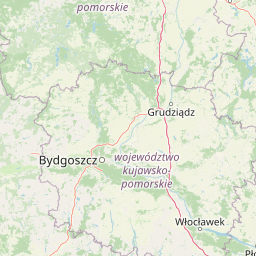
Map view of Dolina Osy Nature Reserve

Use this park location map to pinpoint Dolina Osy Nature Reserve in Poland, understand its exact geographic position, and read its mapped placement within the surrounding landscape more clearly.

Pigeon | © OpenStreetMap contributors

Location context for Dolina Osy Nature Reserve

Kuyavian-Pomeranian Voivodeship

Visualizing the river valley terrain, glacial landforms, and habitats of the reserve

Rezerwat przyrody Dolina Osy Photos and Landscape Scenery

Photographs of Rezerwat przyrody Dolina Osy reveal the winding course of the Osa River and the surrounding post-glacial lakeland terrain. Visual documentation of the valley floor and adjacent slopes helps researchers examine habitat mosaics and protected scenery across the region.

A close-up view of the thick, textured bark of an old, large oak tree in a forest, featuring a small green plaque indicating its status as a nature monument.

A rectangular red sign with white text reading Rezerwat przyrody Dolina Osy mounted on two wooden posts in a green, wooded area.

A red rectangular sign with white Polish text identifying the site as Rezerwat przyrody Dolina Osy and Obszar Natura 2000 Dolina Osy, set against a background of green forest trees.

Park atlas

Compare regional glacial terrain and river valley protected areas across northern Poland

Parks Near Rezerwat przyrody Dolina Osy and Surrounding Protected Landscapes

Browse other protected areas near Rezerwat przyrody Dolina Osy to examine similar river valley terrain and glacial lake district habitats. Extending the geographic comparison reveals broader ecological patterns across the surrounding Chełmińskie Lakeland regional network.
A wide watercolor illustration showing a calm lake with a forested shoreline and distant hills under a pale sky, with reeds in the foreground.
Protected landscapeKuyavian-Pomeranian Voivodeship
About 20 km away#1 closest

Southeast

Brodnicki Park Krajobrazowy: Protected Landscape and Post-Glacial Terrain in Northern Poland

Mapped lake districts and glacial tunnel valleys

Brodnicki Park Krajobrazowy preserves a textbook young-glacial landscape in the Kuyavian-Pomeranian Voivodeship. The terrain features rolling moraine hills and dense chains of lakes linked by slow streams, creating a significant ecological corridor. This protected area offers deep insights into the region's complex hydrological and forest history, spanning across classic lowland meadows, peat bogs, and mature oak-pine woodlands.

Area
166.85 km²
Established
1985
Relief
Lowland
Climate
Temperate
Watercolor painting of a wide, soft-focus river valley landscape with gentle hills, green vegetation, and a winding waterway.
Protected landscapeKuyavian-Pomeranian Voivodeship
About 22 km away#2 closest

Southwest

Chełmiński Park Krajobrazowy: Geographic Overview of Protected Lands in Kuyavian-Pomeranian

Glacial moraine terrain and Vistula valley protected landscapes

Chełmiński Park Krajobrazowy preserves a compact, high-contrast landscape where glacial moraine hills meet the active river corridors of the Lower Vistula. The area is defined by its five distinct nature reserves that safeguard unique slope habitats, island-like floodplain forests, and post-glacial lake basins, offering an essential reference for studying the geomorphology of the Polish lowlands.

Area
223.36 km²
Established
1998
Scope
Terrestrial
Water
Major water bodies
Nature reserveKuyavian-Pomeranian Voivodeship
About 25 km away#3 closest

Southeast

Rezerwat przyrody Mieliwo Nature Reserve: Protected Forest and Glacial Valley Geography

A scientific forest study site within the Brodnica Lake District landscape

This protected forest reserve in the Kuyavian-Pomeranian Voivodeship is defined by its position on a high glacial slope above Lake Mieliwo. It remains a key reference point for studying beech forest stands at the northern edge of their range, contributing to the regional conservation of the Brodnica Lake District and its post-glacial valley network.

Area
0.117 km²
Established
1958
Relief
Upland
Scope
Terrestrial
Nature reserveWarmian-Masurian Voivodeship
About 33 km away#4 closest

East

Rezerwat przyrody Jezioro Mścin: Protected Wetland Landscapes and Regional Geography

Nature reserve habitat in the Brodnica Lake District

Rezerwat przyrody Jezioro Mścin serves as a primary example of successful wetland restoration for biodiversity conservation. Situated in the Warmian-Masurian Voivodeship, this faunistic reserve integrates open water, marsh, and forest edges to support waterfowl and migratory bird populations within a broader regional network of protected Polish landscapes.

Area
0.499 km²
Established
2024
Relief
Lowland
Climate
Temperate
Nature reservePomeranian Voivodeship
About 34 km away#5 closest

Northwest

Rezerwat przyrody Jezioro Udzierz Nature Reserve Geographic and Ecological Overview

Wetland habitat mosaic in the Pomeranian Voivodeship

Rezerwat przyrody Jezioro Udzierz protects a compact yet biodiverse wetland mosaic centered on Lake Udzierz. Located in the heart of the Bory Tucholskie forest, the reserve integrates open water, reedbeds, peatlands, and wet meadows into a single, cohesive ecological unit. This detailed view examines the reserve's protected status, landscape composition, and its vital role as a refuge for bird species within the wider geography of northern Poland.

Area
2.299 km²
Established
2000
Relief
Lowland
Climate
Temperate
Protected areaKujawsko-Pomorskie Voivodeship
About 34 km away#6 closest

Southwest

Solecka Dolina Wisły: Mapping the Middle Vistula River Valley Protected Landscapes

Protected riverine habitats in Kujawsko-Pomorskie Voivodeship

The Solecka Dolina Wisły protected area captures the ecological structure of the Vistula River valley. From active sandy bars in the river channel to oak-hornbeam woodlands on the upper valley slopes, the site offers a detailed look at lowland riverine geography, flood-plain dynamics, and xerothermic grassland habitats within the Polish landscape.

Area
70.301 km²
Established
2009
Relief
Lowland
Scope
Terrestrial
Protected landscapeKuyavian-Pomeranian Voivodeship
About 36 km away#7 closest

West

Wdecki Park Krajobrazowy: Protected Landscape Atlas and Regional Geography

Forest and river basin terrain in Poland

Examine the geographic foundation of Wdecki Park Krajobrazowy, a protected landscape characterized by the Wda River drainage, glacial erratics, and extensive pine forests. The area supports a rich variety of wetland flora, mires, and managed reservoirs such as the Żur, making it a significant conservation landmark within the wider Bory Tucholskie region of northern Poland.

Area
191.77 km²
Established
1993
Relief
Lowland
Climate
Temperate
A minimalist watercolor painting showing a calm lake or wetland surrounded by soft green trees and gentle hills under a light sky.
Protected areaKuyavian-Pomeranian Voivodeship
About 37 km away#8 closest

West

Sandr Wdy Protected Area: Glacial Geography and Wetland Habitats in Northern Poland

An essential reference area for Bory Tucholskie forest ecology.

Sandr Wdy is a distinctive Natura 2000 protected area shaped by post-glacial processes. The landscape features a flat outwash plain punctuated by lake basins, river valleys, and diverse mire systems. With multiple strict nature reserves integrated into its boundaries, the site provides a comprehensive view of how hydrological and soil conditions influence habitat distribution within the broader forest landscape of Poland.

Area
63.21 km²
Established
2011
Relief
Lowland
Climate
Temperate

Common questions about visiting, size, designation, and location context for Dolina Osy Nature Reserve

Dolina Osy Nature Reserve FAQs for park facts, access, geography, and protected area context

Find quick answers about Dolina Osy Nature Reserve, including protected-area facts, park geography, trail and visitor context, and how the park fits into its surrounding country and regional landscape.
MoriAtlas Explorer

Continue Your Protected Areas Search Across the Global Atlas

Deepen your exploration by continuing the structured search for national parks and protected areas worldwide. Utilize the comprehensive filtering capabilities to compare different conservation landscapes and refine your understanding of global park geography. Discover more about the distribution and characteristics of protected natural areas.

Global natural geography