
Why Dolina Racławki Nature Reserve stands out
Dolina Racławki is best known for its dense, near-continuous cover of beech forest clinging to a dramatic limestone valley. The reserve is recognized as one of the most valuable woodland sites of the Kraków-Częstochowa Jura, where Carpathian, thermophilous, and acidophilous beech communities grow side by side along with oak-hornbeam and alder forests. This layered woodland mosaic makes the valley a benchmark for forest diversity in the region. The reserve is equally well known for its karst and geological character, defined by Carboniferous, Devonian, and Upper Jurassic limestones that create sheer rock walls, rock shelters, and small caves. Into this limestone setting fits its celebrated botanical highlight: a thriving population of Cypripedium calceolus, the lady's slipper orchid, considered the finest among Polish orchid sites in this part of the country.
Dolina Racławki Nature Reserve history and protected-area timeline
Dolina Racławki was formally established as a nature reserve in 1962 under the Polish legal notice recorded in the official journal of that year. At the time of its creation it covered a much smaller area than today, but even in this early form it was recognized as a particularly valuable example of a forested limestone valley within the broader Jurassic landscape northwest of Kraków.
The reserve's defining moment came in 1990, when its boundaries were significantly expanded. Following this enlargement, Dolina Racławki became the largest nature reserve in the Małopolskie voivodeship, a status it still holds. The enlargement effectively crowned decades of growing appreciation for the valley as a forest, geological, and botanical reference site for the entire Jura region.
In the decades since, the reserve has become an anchor of the larger Dolinki Krakowskie Landscape Park and was incorporated into the European Natura 2000 network as part of the Dolinki Jurajskie site. These successive layers of regional and international designation reflect a continuous strengthening of conservation attention rather than a single dramatic founding event, and they explain why the valley today operates simultaneously as a national landscape reserve, a component of a regional park, and a Natura 2000 area.
Dolina Racławki Nature Reserve landscape and geographic character
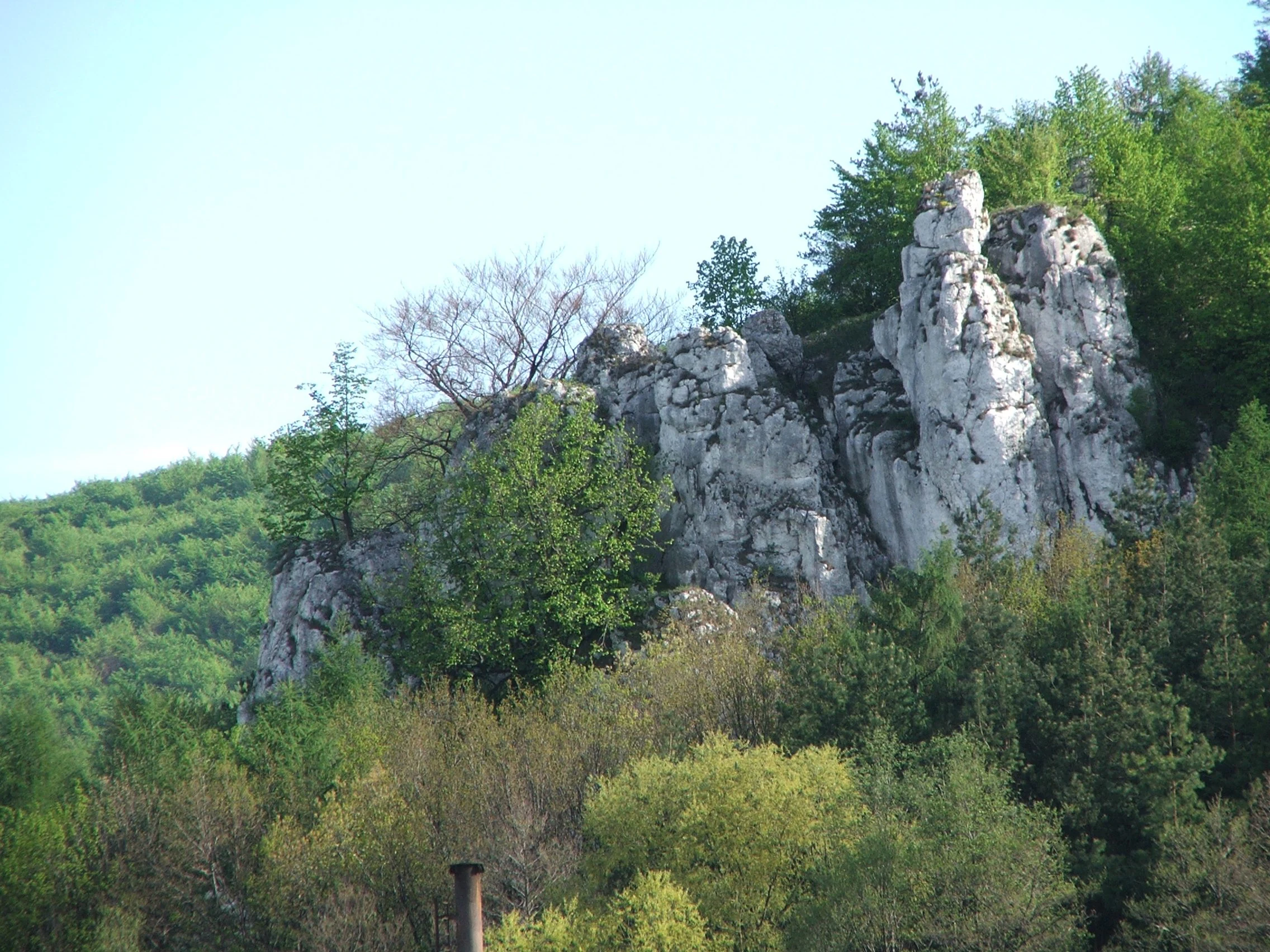
The landscape of Dolina Racławki is that of a deeply cut, forested Jurassic valley on the Kraków-Częstochowa Upland. The Racławka stream has carved a meandering course through bedrock, producing a long, narrow valley floor flanked by steep, often near-vertical slopes. In its upper and narrower reaches the valley functions almost like a gorge, while closer to Dubie the slopes open out and the limestone cliff scenery becomes the visual signature of the place.
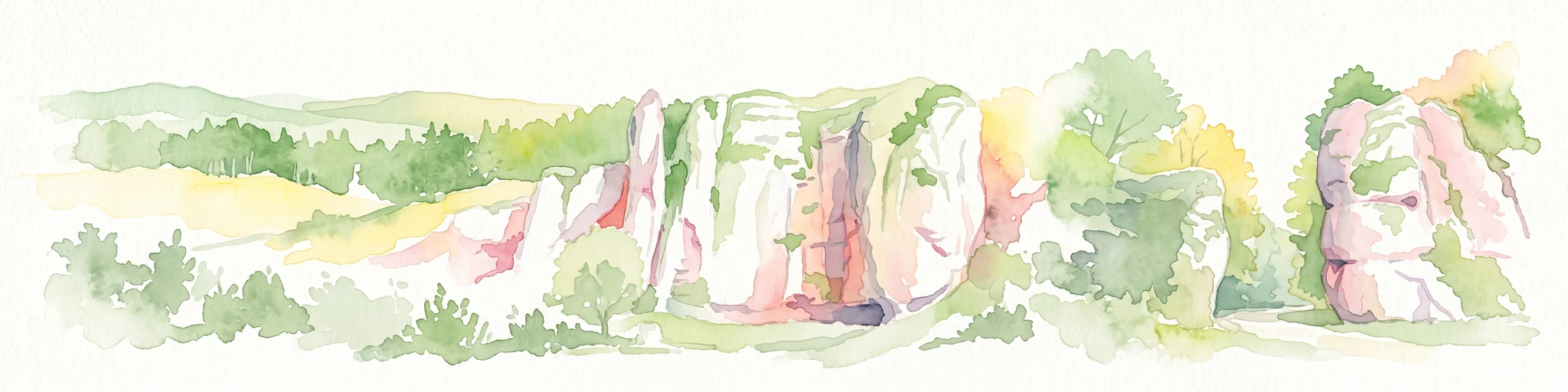
Geologically, the valley is a textbook example of layered Jurassic and pre-Jurassic limestone. Lower elevations expose Carboniferous limestone, while the middle and upper slopes are built from Upper Jurassic limestone, with Devonian limestone appearing in some sections as well. This geological layering is not merely academic; it is directly visible in the resistant rock walls that crown the valley, producing the dramatic cliffs named in the reserve's rock inventories: Opalona, Skałka z Nyżą, the Łom Hrabski area, and the Skały nad Boiskiem group, as well as cliffs in the side wąwóz Żarski.
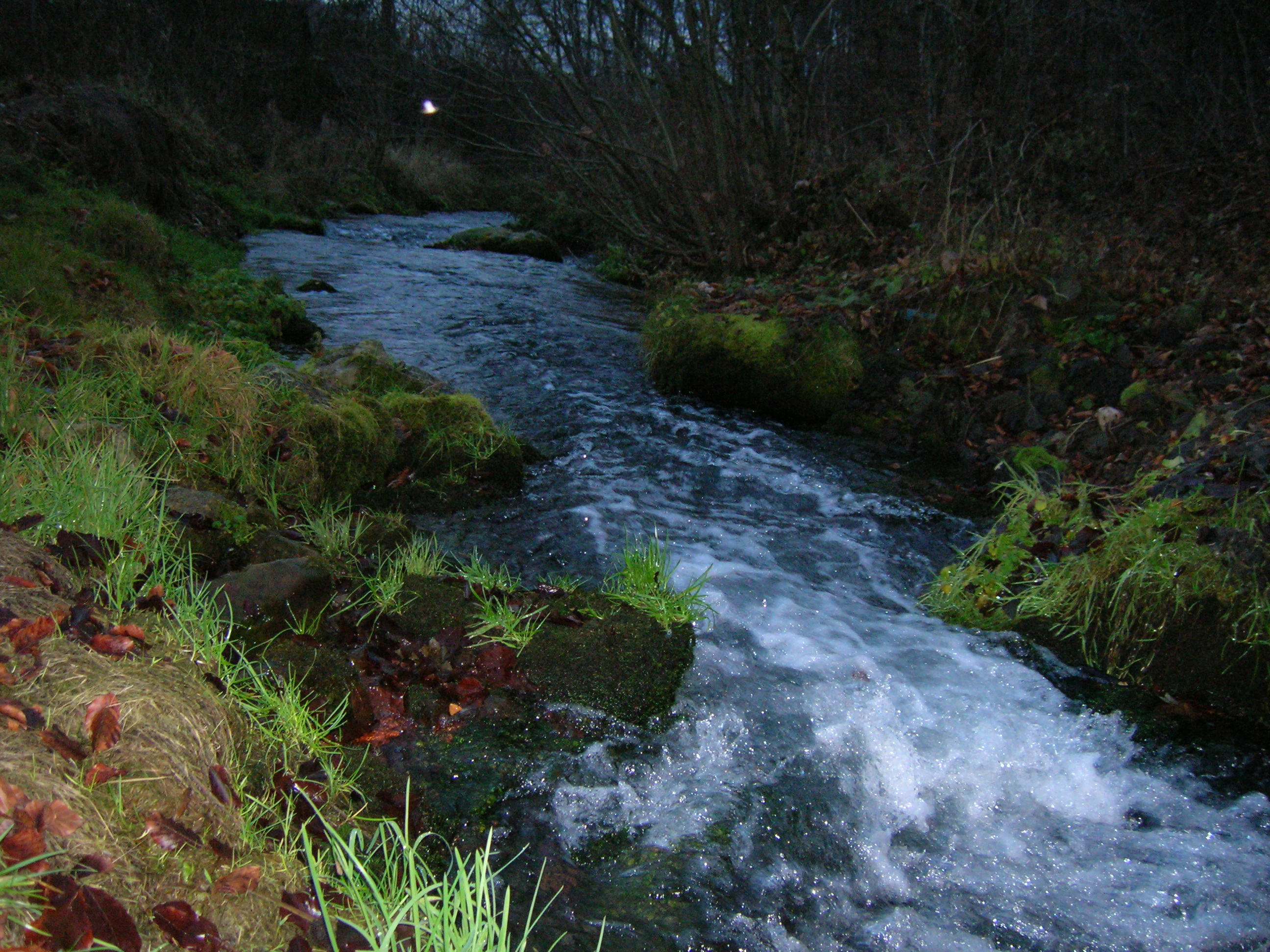
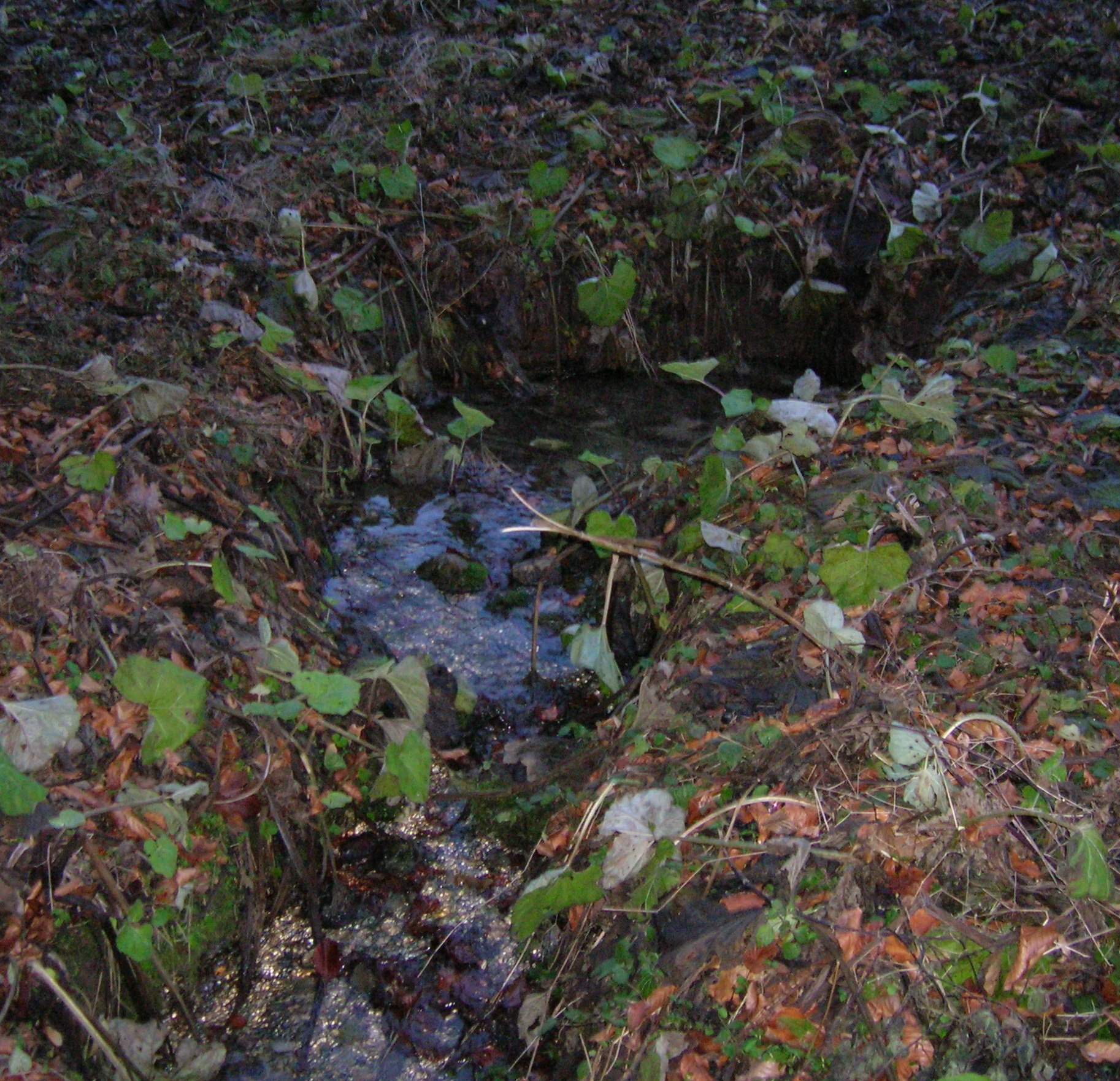
The karst character of the valley is expressed not only at the surface but underground. The reserve holds a remarkable concentration of caves and rock shelters, including Jaskinia Racławicka, Jaskinia Beczkowa, Jaskinia Żarska, Jaskinia Żarska Górna, Jaskinia bez Nazwy, and a series of Żarskie rock shelters numbered from first to fourth plus a smaller one. Water also shapes the scenery visibly at ground level. The Racławka is a fast, relatively abundant stream that cuts small gorges, scours out basin-like hollows, and forms modest waterfalls and cascades. Powerful karst springs feed it, including Źródło Bażana near the entrance to the Stradlina gorge and Źródło Dubie near the valley's exit at Dubie. At the valley's mouth the limestone scenery is interrupted by the working presence of the Kopalnia Odkrywkowa Dolomitu Dubie, a dolomite open-pit mine that has carved directly into the western slope of the valley.
Dolina Racławki Nature Reserve ecosystems, habitats, and plant life
The nature of Dolina Racławki is dominated by mature, semi-natural deciduous forest, which covers nearly the entire reserve and represents the principal reason for its long-term protection. The forest system is unusually varied for such a compact area, because the steep topography, different limestone substrates, and shifting soil chemistry create strongly contrasting site conditions along the valley's length.
Beech forest is the defining element. Three distinct beech communities occur within the reserve: Carpathian fertile beech forest on richer soils, thermophilous beech forest on warmer, often south-facing rocky slopes, and acidophilous beech forest on poorer, more acidic substrates. This juxtaposition of three beech types in a single small valley is one of the most frequently cited ecological features of the site and makes Dolina Racławki a reference area for forest typology in the Jura.
Alongside the beechwoods grow oak-hornbeam forests, particularly on more stable and nutrient-rich soils, which add another classic Central European forest type to the mosaic. The Racławka itself is bordered by alder-dominated riparian woodland, creating a narrow band of wet forest that contrasts with the drier slope communities above. Combined, these forest types give the valley a layered, multi-toned landscape in spring, summer, and autumn.
Beneath this forest canopy, the reserve supports a notable protected flora. Twenty-seven protected plant species are recorded, anchored by one of the most celebrated orchid populations in the region: a healthy occurrence of Cypripedium calceolus, the lady's slipper orchid, considered the most striking of the Polish orchids and a flagship species for forest conservation. Other protected species recorded here include sword-leaved helleborine, broad-leaved helleborine, deadly nightshade, clubmoss, coralroot orchid, snowdrop, and common columbine, signaling a rich understory and a strong conservation interest below the tree line.
Dolina Racławki Nature Reserve wildlife and species highlights
Dolina Racławki is fundamentally a forest reserve, and its wildlife profile is shaped by the depth and continuity of its beech- and hornbeam-dominated woodland and by the cold-water Racławka stream running through its center. Mature deciduous forest of this kind in the Jura is widely recognized for supporting typical Central European woodland fauna, including forest-specialist birds, bats using caves and rock shelters, and small mammals tied to undisturbed forest floor habitat and karst features.
The valley's cliffs, caves, and rock shelters create a particularly important habitat component for cave-dwelling and crevice-using species, even though detailed wildlife inventories are not the focus of the reserve's public profile. The Racławka itself, with its clean water, pools, and small waterfalls, supports aquatic invertebrates and provides a structural element that sustains amphibians, dragonflies, and stream-side birdlife along the narrow corridor running the length of the reserve.
While the reserve's primary conservation fame rests on its flora rather than on charismatic megafauna, the combination of dense forest, karst structures, and an intact stream corridor means Dolina Racławki functions as a connective wildlife habitat within the broader Dolinki Krakowskie Landscape Park, supporting the everyday forest fauna that defines the Jura woodlands.
Dolina Racławki Nature Reserve conservation status and protection priorities
Dolina Racławki has long been recognized as one of the most important forest reserves in the Kraków-Częstochowa Upland. Its conservation value rests on a rare combination of high forest cover, exceptional forest type diversity, intact karst geology, and a strong concentration of protected plant species, all packed into a compact valley. Together these qualities justify its status as a landscape reserve and its position as the largest nature reserve in the Małopolskie voivodeship.
The reserve is a core element of the wider Dolinki Krakowskie Landscape Park, meaning its territory is protected at the regional level as part of a managed landscape system rather than as a strictly isolated sanctuary. It is also fully included within the Natura 2000 site Dolinki Jurajskie, which gives the valley European-level recognition and ties its protection to the broader European ecological network designed to preserve habitats and species of community interest.
Within the reserve itself, additional protection is conferred by formally designated natural monuments. Three mature trees, including beeches and a lime, are individually protected as natural monuments, recognizing them as individual living components of the surrounding cultural-natural landscape. The protection regime is described as partial, balancing the need to maintain natural processes with the realities of managing a valley crossed by public hiking and educational trails.
Dolina Racławki Nature Reserve cultural meaning and human context
Dolina Racławki sits in a small-valley landscape that has shaped local life for centuries, with villages such as Paczółtowice, Dubie, Dębnik, Żary, and Szklary anchoring the valley's edges. These villages historically combined agriculture with small-scale extraction of limestone and dolomite, a heritage still visible today in the form of old quarries such as Łom Hrabski and the still-active Kopalnia Odkrywkowa Dolomitu Dubie, which incises the western slope of the valley near its mouth.
The reserve carries cultural meaning both as a piece of regional heritage for residents of the Kraków area and as a long-standing destination for hikers, students, and nature enthusiasts from the city. Educational trails run by the reserve use the valley as an outdoor classroom for forest ecology and geology, embedding the landscape in the everyday recreational and educational life of the region. Mature trees marked as natural monuments further tie the valley to local traditions of recognizing exceptional individual trees as parts of communal landscape memory.
Top sights and standout views in Dolina Racławki Nature Reserve
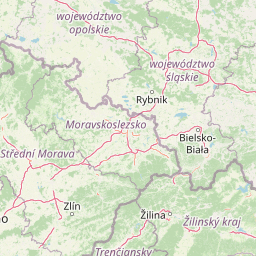
Dolina Racławki's standout features are the way it concentrates so many classic Jurassic characters into a single small valley: continuous beech forest of three different types, dramatic limestone cliffs named as individual rock landmarks, a network of caves and rock shelters, and a botanical reputation anchored by one of the most important lady's slipper orchid populations in Poland. These elements are arranged along a single, walkable valley that begins in the karst springs near Paczółtowice and ends at the cliffed exit at Dubie.
Equally distinctive is the reserve's layered conservation status. It is simultaneously a national landscape reserve, the largest nature reserve in its voivodeship, a core element of a regional landscape park, and part of a Natura 2000 site, which means that the visit experience is also a journey through one of the most heavily protected forest corridors of the Kraków-Częstochowa Upland.
Best time to visit Dolina Racławki Nature Reserve
The character of a visit to Dolina Racławki changes meaningfully with the seasons. Spring is when the reserve feels most botanically alive, when the forest floor comes into flower and the famous orchid populations, along with other protected herbs such as snowdrops and columbines, are most visible against the otherwise still leafless beech canopy.
Summer offers the most complete sense of the forest, with the full leaf canopy creating cooling shade along the valley floor and the stream-side alder galleries contrasting with the bright beech slopes above; this is also when water levels in the Racławka tend to be most attractive for viewing pools, cascades, and the karst springs. Autumn emphasizes the broader landscape context, with the limestone cliffs standing out more sharply against thinning and colorful foliage. Winter exposure is generally quieter, but leafless conditions reveal the valley's rock architecture, cave entrances, and rock shelters more clearly than at any other time of year.