Mori Atlas logo
Nature reserveRezerwat przyrody Dolina Stradanki

Geographic analysis of the Stradanka river valley and its nested beech woodland terrain

Rezerwat przyrody Dolina Stradanki: Protected River Valley and Forest Landscapes

Rezerwat przyrody Dolina Stradanki preserves a compact, coherent valley forest ecosystem within the Warmian-Masurian Voivodeship. The protected area features a complex network of lateral valleys and slopes shaped by glacial landforms, centered around the meandering course of the Stradanka river. This site serves as a vital corridor for avifauna and rare plant species, anchoring the broader protection framework of the Elbląg Upland Landscape Park.

forest reservebeech forestriver valleyside valleysElbląg UplandWarmian-Masurian Voivodeship
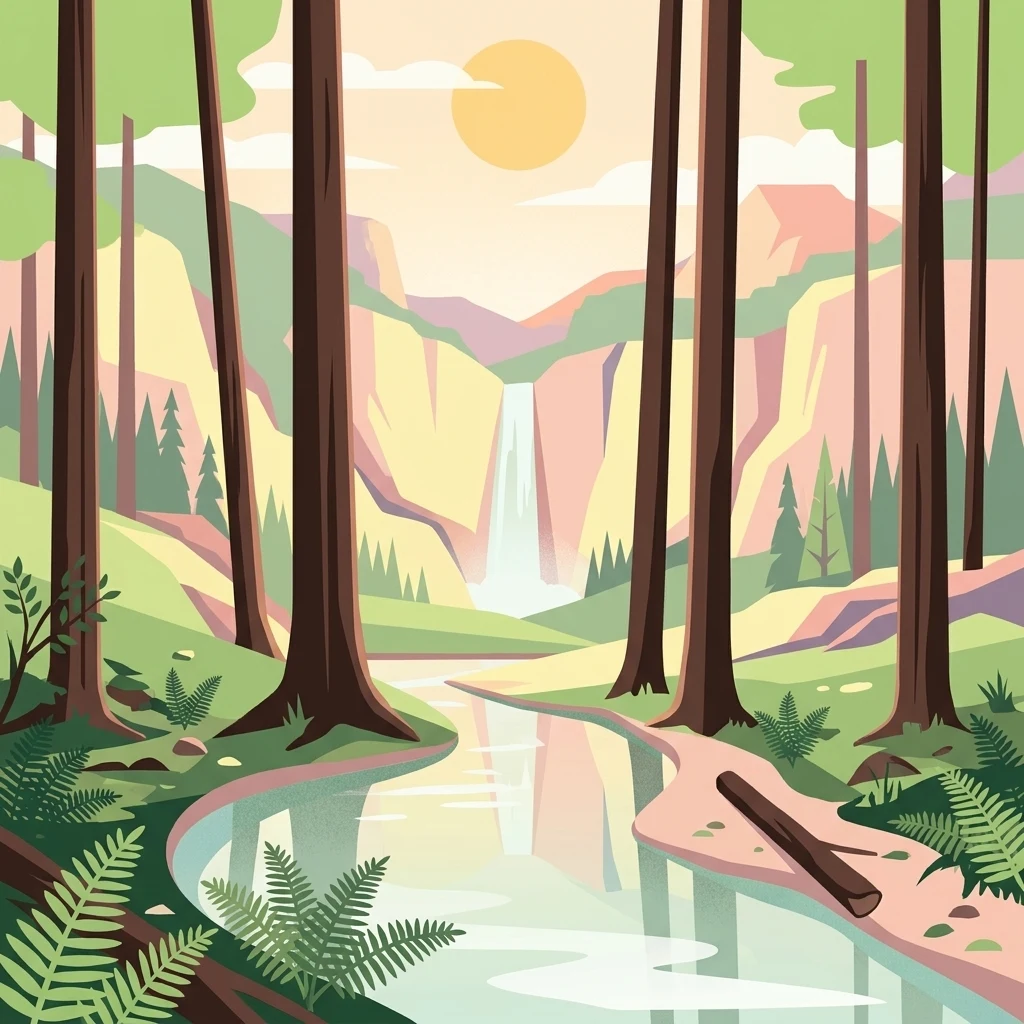
A flat-design digital illustration showing a calm river flowing through a lush forest towards a distant waterfall nestled between high canyon walls under a soft sunset.

Rezerwat przyrody Dolina Stradanki

Nature reserve

Park overview

Structured park overview, official facts, and landscape profile for Dolina Stradanki Nature Reserve

Dolina Stradanki Nature Reserve park facts, protected area profile, and essential visitor context

Review the core facts for Dolina Stradanki Nature Reserve, including designation, size, terrain, visitor scale, habitats, and operating context in one park-focused overview.

About Dolina Stradanki Nature Reserve

Dolina Stradanki Nature Reserve protects one of the more distinctive valley-forest landscapes of the Elbląg Upland in northern Poland. Located in the Warmian-Masurian Voivodeship and administered through the Elbląg Forest District, the reserve spans roughly 121 hectares along the Stradanka River in Gmina Tolkmicko. Its position inside the Elbląg Upland Landscape Park and the park's protective buffer zone places it within a wider network of landscape-level protections that characterize this part of the historic Prussian and later Polish countryside.

At its core, the reserve safeguards a coherent picture of a small river valley: the meandering course of the Stradanka, the side valleys that branch off from it, and the slopes that rise along the valley edges. These landforms give the site an unusually layered character for its size, alternating steeper wooded slopes with flatter valley bottom habitat. The combination of valley hydrology and surrounding woodland shapes both the scenery and the ecological conditions within the reserve.

The forest that defines the reserve is predominantly beech, which gives the valley a distinctive visual and ecological identity. Beech woodland of this kind is a recognized habitat of high conservation value in Poland, and the Dolina Stradanki reserve was explicitly created to maintain both the landscape mosaic of the Stradanka valley and the biological richness associated with its forests. This includes rare and legally protected plant species as well as animal life, with birds highlighted as a particularly important element of the reserve's natural value.

Beyond its local importance, Dolina Stradanki contributes to the broader identity of the Elbląg Upland as a region defined by moraine hills, valley systems, and forest cover. The reserve functions as a concentrated protection site within this larger landscape, preserving the integrity of a valley-forest ecosystem that is increasingly rare in heavily altered lowland Poland.

Quick facts and research context for Dolina Stradanki Nature Reserve

Dolina Stradanki is a forest nature reserve (rezerwat leśny) in the Warmian-Masurian Voivodeship of northern Poland, located within Gmina Tolkmicko and managed through the Elbląg Forest District. It was legally established in 2006 by a regulation of the voivode of Warmian-Masurian Voivodeship, with a current area of about 121 hectares. The reserve sits within the Elbląg Upland Landscape Park and its buffer zone, protecting the Stradanka River valley, its side valleys, and the surrounding beech forest habitat, with particular emphasis on rare species and birdlife.

Protection and recognition

Examine terrestrial protection status and documented conservation frameworks

Rezerwat przyrody Dolina Stradanki Protection Status and Official Designation Records

Rezerwat przyrody Dolina Stradanki maintains documented terrestrial protection status within established regional conservation frameworks. Official records organize active management scope and verified designation data for structured analysis.

Protection details

Protection scope
Terrestrial
Park context

Deeper park guide and search-rich context for Dolina Stradanki Nature Reserve

Dolina Stradanki Nature Reserve history, landscape, wildlife, and travel context

Explore Dolina Stradanki Nature Reserve through its history, landscape character, ecosystems, wildlife, conservation priorities, cultural context, and seasonal travel timing in a structured park guide built for atlas discovery and search intent.

Why Dolina Stradanki Nature Reserve stands out

The reserve is best known for preserving the unique landscape of the Stradanka River valley, with a network of lateral valleys and slopes clothed in beech forest. It combines a distinctive geomorphological setting with valuable beech woodland habitat and is recognized especially for its avifauna and the presence of rare, protected plant and animal species. Equally important is the reserve's role within the larger Elbląg Upland Landscape Park, where it functions as a focal protected patch that links valley-forest ecosystems to the wider landscape protection framework of the region.
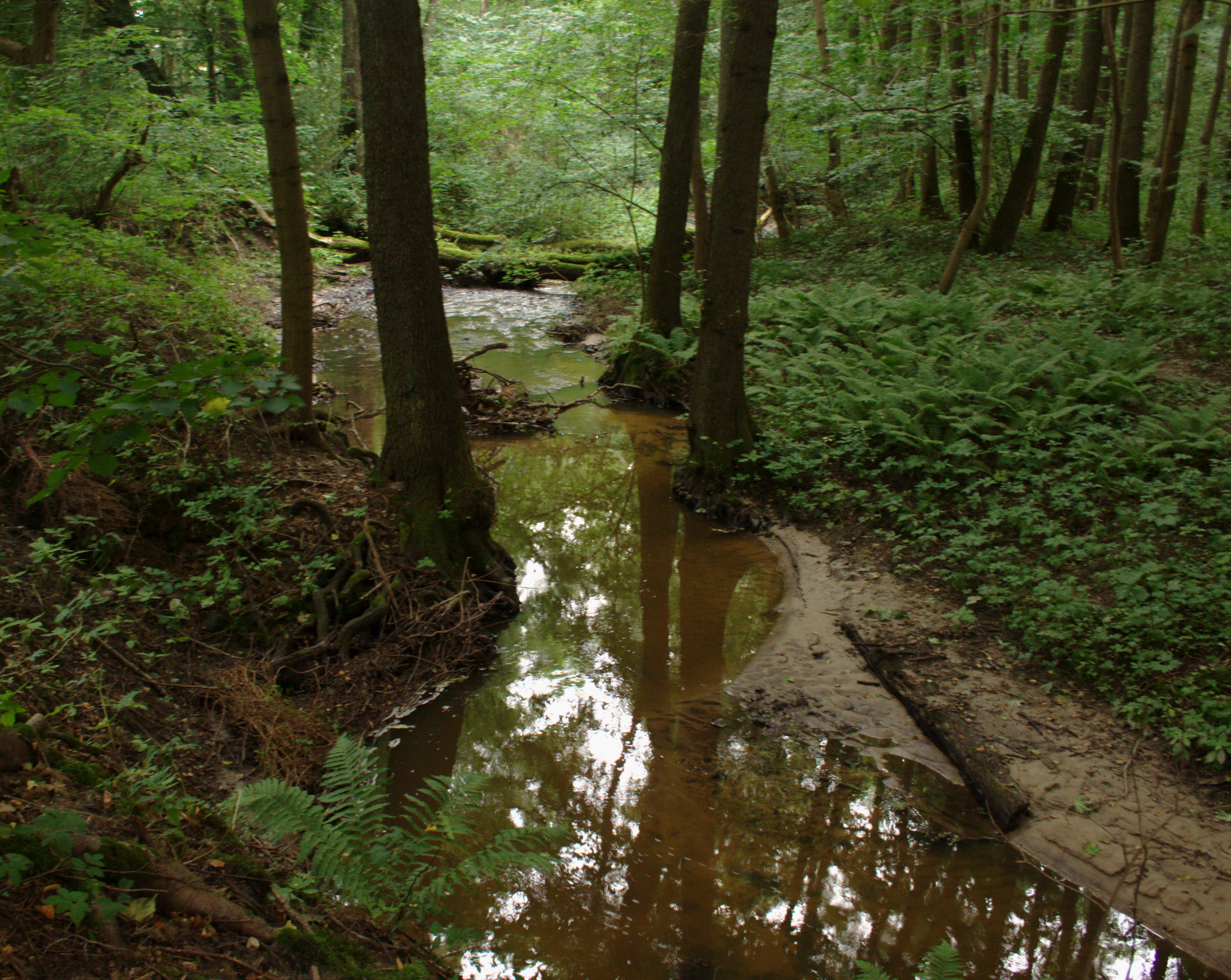
A small, quiet stream flows through a dense forest; trees and ferns line the muddy banks, and fallen logs are visible in the background.
The Stradanka stream flowing through the forest within the Dolina Stradanki Nature Reserve.

Dolina Stradanki Nature Reserve history and protected-area timeline

Dolina Stradanki was established as a formal nature reserve in 2006 through Regulation No. 56 of the Voivode of the Warmian-Masurian Voivodeship, dated 28 December 2006. The founding regulation designated the area as a forest nature reserve, with the stated objective of preserving the unique landscape of the Stradanka River, its network of side valleys, and the beech forest covering these landforms, while also protecting rare and legally protected species of plants and animals, particularly birds.

The founding area cited in the original legal act was slightly smaller than the reserve's current extent, with the regulation listing 119.86 hectares while later measurements place the reserve at approximately 121.09 hectares. Its location within the Elbląg Upland Landscape Park and its protective buffer zone reflects the integration of the reserve into a regional landscape protection framework that had been developing in this part of northern Poland.

Dolina Stradanki Nature Reserve landscape and geographic character

The defining landscape of Dolina Stradanki is the valley of the Stradanka River, which threads through the reserve and gives the protected area its name. Rather than a uniform block of woodland, the terrain is shaped by the interplay between the river and the surrounding upland, with the slopes descending into the valley along its meandering course.

A key feature is the network of side valleys that branch off from the main Stradanka valley. These lateral valleys add complexity to the relief, producing a sequence of ridges, hollows, and valley-floor flats within a relatively compact area. This mosaic of slopes and bottoms is typical of the broader Elbląg Upland, where glacial and postglacial processes have produced a finely dissected terrain of moraine hills and drainage lines.

The valley setting also governs hydrology and soils within the reserve. Water movement along the Stradanka and its tributaries shapes moisture conditions across the valley floors, while the steeper surrounding slopes remain drier and more exposed. Together these conditions create the physical template on which the reserve's beech forest and other habitats are arranged, producing the scenic character that the reserve was designated to protect.

Dolina Stradanki Nature Reserve ecosystems, habitats, and plant life

Ecologically, Dolina Stradanki is dominated by beech forest established on the slopes and valley sides of the Stradanka drainage. Beech woodland of this type is recognized in Poland as a habitat of high conservation value, both for its structural role as a mature broadleaf forest and for the specialist species it supports in the understory and along its edges.

The reserve protects a habitat mosaic rather than a single uniform forest type. Steeper, drier slopes tend to support beech-dominated stands, while the valley floors and side valleys create more sheltered, sometimes moister conditions where plant communities can differ from those on the slopes. This combination of microhabitats, set against the backdrop of a managed broader forest district, gives the reserve a layered ecological character despite its modest size.

The site was explicitly designated to maintain this habitat mosaic alongside its rare and protected flora. While the available documentation does not enumerate the full species list, the protection purpose explicitly emphasizes botanical rarity as a core justification for the reserve, alongside landscape and faunal values. The integration of valley hydrology, mature beech forest, and connected side-valley habitats makes the reserve a coherent example of valley-forest ecology within the Elbląg Upland.

Dolina Stradanki Nature Reserve wildlife and species highlights

Wildlife is a central part of Dolina Stradanki's identity, and the reserve's founding regulation specifically highlights fauna, with particular stress on the birdlife of the Stradanka valley. The protected status explicitly references rare and legally protected animal species, with avifauna named as a primary focus of conservation effort.

The combination of mature beech forest, side-valley woodland, and open or semi-open valley floor habitats creates conditions that support a varied bird assemblage. Forest-breeding species associated with broadleaf and mixed woodland, as well as species tied to riverside and valley-bottom habitats, can find suitable niches within the relatively short distances that the reserve spans.

Beyond birds, the reserve's mosaic of habitats supports other protected animal groups typical of Polish lowland and upland forests. Detailed modern inventories are not laid out in the available source, so the wildlife picture is best summarized as a forest-and-valley fauna of conservation interest, with birds standing out as the flagship group highlighted in the reserve's founding purpose.

Dolina Stradanki Nature Reserve conservation status and protection priorities

From a conservation perspective, Dolina Stradanki represents a compact but well-justified protected area focused on a single coherent ecosystem: the Stradanka river valley with its beech forest and surrounding species. Its establishment reflects a deliberate conservation choice to safeguard an unusually intact valley landscape within an agricultural and historically forested region where such coherent units are increasingly rare.

The reserve is nested within the Elbląg Upland Landscape Park and its buffer zone, which provides additional landscape-scale protection surrounding the core reserve. This layering means that the strict legal reserve status at the core is reinforced by broader landscape protections in the surrounding area, improving long-term resilience for forest and valley habitats.

The reserve's founding objectives explicitly bundle together landscape, forest, and species protection, recognizing that the Stradanka valley's ecological value depends on maintaining both the physical setting and the biological communities it supports. By combining habitat, rare species, and avifauna objectives in a single legal act, the reserve functions as a multi-target conservation site rather than a single-issue designation.

Top sights and standout views in Dolina Stradanki Nature Reserve

Dolina Stradanki stands out for the tight integration of its defining features: a unique river-valley landscape, a network of side valleys, mature beech forest, and an avifauna recognized in the reserve's founding purpose. Within just over a hundred hectares, it concentrates a recognizable valley-forest ecosystem that anchors part of the broader Elbląg Upland Landscape Park.

Its combination of legal protection at three nested levels (the reserve itself, the surrounding landscape park, and the park's buffer zone) gives the site a robust framework for long-term conservation. This makes Dolina Stradanki not just a scenic woodland, but a deliberate conservation unit designed around landscape integrity, forest habitat, and species protection.
Monthly climate preview

Long-term representative coordinate measurements for temperature and precipitation rhythms

Rezerwat przyrody Dolina Stradanki Climate Normals and Annual Weather Patterns

Rezerwat przyrody Dolina Stradanki exhibits measured long-term temperature swings alongside steady daily precipitation rates across a twelve-month climatology cycle. Accessing the complete monthly profile provides deeper comparative data for analyzing long-term meteorological normals at this location.
Annual mean9 °C
0 °C19 °C
Jan
Feb
Mar
Apr
May11°
Jun15°
Jul18°
Aug19°
Sep15°
Oct10°
Nov
Dec
Warmest month
August

18.8 °C

Coolest month
January

0.4 °C

Wettest month
November

2.4 mm/day

Driest month
April

1.3 mm/day

Park location guide

Geography guide, regional context, and park location map for Dolina Stradanki Nature Reserve

Dolina Stradanki Nature Reserve park geography, regions, and map view in Poland

Understand where Dolina Stradanki Nature Reserve sits in Poland through a broader geographic reading of the surrounding landscape, nearby location context, and its mapped position within the national park landscape.

How Dolina Stradanki Nature Reserve fits into Poland

Poland, officially the Republic of Poland, is a Central European country spanning from the Baltic Sea in the north to the Carpathian Mountains in the south. It borders Germany, Czech Republic, Slovakia, Ukraine, Belarus, Lithuania, and Kaliningrad Oblast. The country has a temperate climate, diverse landscapes, and is known for its rich history, cultural heritage, and strong economic position within the EU.

Wider geography shaping Dolina Stradanki Nature Reserve in Poland

Poland occupies 312,696 km2 in Central Europe, extending from the Baltic Sea coast in the north to the Sudetes and Carpathian Mountains in the south. It borders Germany to the west, Czech Republic and Slovakia to the south, Ukraine and Belarus to the east, and Lithuania and Kaliningrad Oblast to the northeast. The landscape includes lowland plains, uplands, and mountain ranges.

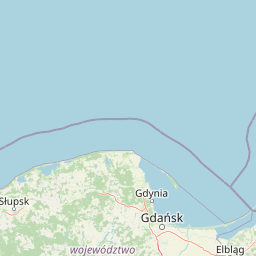
Map view of Dolina Stradanki Nature Reserve

Use this park location map to pinpoint Dolina Stradanki Nature Reserve in Poland, understand its exact geographic position, and read its mapped placement within the surrounding landscape more clearly.

Pigeon | © OpenStreetMap contributors

Location context for Dolina Stradanki Nature Reserve

Warmian-Masurian Voivodeship

Visualizing the river valley terrain, beech forest habitats, and glacial landforms of the reserve

Rezerwat przyrody Dolina Stradanki Photos and Protected Landscape Scenery

Visual documentation reveals the intricate river valley terrain, side slopes, and mature beech forest habitats that define the protected landscape. Examining these field photographs provides a clearer understanding of the geomorphological structure and forest ecosystem preserved within the regional upland park network.

A small, quiet stream flows through a dense forest; trees and ferns line the muddy banks, and fallen logs are visible in the background.

Park atlas

Compare regional forest reserves and protected areas across the Elblag Upland.

Parks Near Rezerwat przyrody Dolina Stradanki and Surrounding Protected Landscapes

Visitors exploring Rezerwat przyrody Dolina Stradanki can browse adjacent forest reserves and protected river valleys throughout the surrounding region. Expanding the geographic comparison reveals broader ecological patterns and connected conservation corridors across the local terrain.
Protected landscapeWarmian-Masurian Voivodeship
Mapped location lies within the park boundary#1 closest

Southwest

Park Krajobrazowy Wysoczyzny Elbląskiej: Mapping Upland Terrain and Protected Forest Zones

Geography of a distinctive morainic plateau in northern Poland

Investigate the natural landscape of Park Krajobrazowy Wysoczyzny Elbląskiej, a protected area in the Warmian-Masurian Voivodeship. Focus on the interplay between stream valleys, morainic ridges, and rare plant communities. This mapping resource details the ecological significance of the upland terrain and its transition toward coastal lowland borders.

Area
137.32 km²
Established
1985
Relief
Upland
Climate
Temperate
Protected landscapePoland
About 14 km away#2 closest

West

Zalew Wiślany i Mierzeja Wiślana Protected Landscape and Vistula Coastal Geography

A coastal mosaic of lagoon waters, sand dunes, and bog forests

Understand the physical landscape of Zalew Wiślany i Mierzeja Wiślana, featuring an aquatic environment where three quarters of the territory consists of brackish water. Trace the geography of the Vistula Sandspit as it transitions through dune successions, pine-birch woodlands, and sensitive estuarine meadows along the Polish coast.

Area
408.623 km²
Relief
Lowland
Climate
Temperate
Scope
Mixed
A soft watercolor painting of a marshy coastal landscape with tall grasses, calm water, and distant dunes under a bright, clear sky.
Nature reservePomeranian Voivodeship
About 40 km away#3 closest

West

Rezerwat przyrody Mewia Łacha: Protected Coastal Geography and Vistula Estuary Map

Dynamic Baltic sandbars and migratory bird habitat in Pomerania

Rezerwat przyrody Mewia Łacha occupies a vital coastal strip where river discharge meets the Gulf of Gdańsk. This nature reserve serves as an essential site for migratory waterfowl and nesting terns, defined by its shifting sandbars, dune slacks, and brackish pools. It stands as a key example of the varied estuarine geography found within the Pomeranian Voivodeship.

Area
1.505 km²
Established
1991
Relief
Lowland
Climate
Temperate
A wide panoramic watercolor illustration showing a pastoral landscape with green rolling hills, a winding river, scattered trees, and a soft sky with pink and yellow hues.
Protected areaPomeranian Voivodeship
About 59 km away#4 closest

West

Twierdza Wisłoujście Protected Area: Coastal Geography and Historical Mapping in Gdańsk

A historic Baltic fortification and vital ecological site in Pomeranian Voivodeship.

Explore the layered masonry and water-influenced landscape of Twierdza Wisłoujście, a coastal fortress established on the delta of the Vistula River. This site bridges the history of maritime defense and modern ecological conservation as a designated Natura 2000 area. Examine how shifting river channels and centuries of construction define the current defensive perimeters and moated surroundings within the Pomeranian Voivodeship.

Established
1482
Relief
Lowland
Climate
Temperate
Access
Easy access
Nature reserveGdańsk
About 61 km away#5 closest

West

Zbiornik Wody Stara Orunia: A Protected Industrial Heritage Site and Nature Reserve in Gdańsk

Historic brick architecture meeting urban bat conservation zones

Built in 1869, this historic underground reservoir in the Orunia district of Gdańsk combines rare Prussian engineering with a vital role as a Natura 2000 protected habitat. The site serves as a key component of the regional water trail, offering a look into the complex relationship between industrial infrastructure, urban landscape development, and the protection of essential wildlife hibernation cycles.

Area
0.001 km²
Established
1869
Relief
Upland
Climate
Temperate
Nature reservePomeranian Voivodeship
About 67 km away#6 closest

West

Dolina Strzyży Nature Reserve Protected Forest and Stream Valley Geography

Natural riparian forest in Pomeranian Voivodeship

Explore the geographic profile of Dolina Strzyży Nature Reserve, a protected valley woodland in the Pomeranian Voivodeship of Poland. This reserve maintains dense oak-hornbeam habitats and stream-side ecosystems, functioning as a vital green connection between urban Gdańsk and the expansive Trójmiejski Park Krajobrazowy, preserving historic forest remnants.

Area
0.385 km²
Established
2007
Relief
Upland
Climate
Temperate
Nature reservePomeranian Voivodeship
About 68 km away#7 closest

West

Dolina Kłodawy Nature Reserve: Geography and Botanical Protected Areas in Pomeranian Voivodeship

Glacial river gorge landscapes in Northern Poland

This protected area centers on a 1.6 kilometer section of the Kłodawa stream, showcasing complex forest ecosystems including ash-alder woodlands and oak-hornbeam slopes. The site remains a vital reference for regional botanical geography, highlighting how glacial moraine hills create unique habitats for rare plants within the Pomeranian Voivodeship landscape.

Area
0.104 km²
Established
1999
Relief
Lowland
Climate
Temperate
Protected landscapePomeranian Voivodeship
About 70 km away#8 closest

West

Trójmiejski Park Krajobrazowy: Protected Landscape and Glacial Geography in Pomerania

Exploring the forested moraine upland near the Baltic coast

Covering nearly 20,000 hectares, Trójmiejski Park Krajobrazowy forms an essential green belt along the Kashubian moraine. Its terrain is defined by dramatic erosion, including 80-meter deep ravines and extensive pine-beech forests that host rare relic plant species and protected peatland habitats.

Area
199.3 km²
Established
1979
Relief
Upland
Climate
Temperate

Common questions about visiting, size, designation, and location context for Dolina Stradanki Nature Reserve

Dolina Stradanki Nature Reserve FAQs for park facts, access, geography, and protected area context

Find quick answers about Dolina Stradanki Nature Reserve, including protected-area facts, park geography, trail and visitor context, and how the park fits into its surrounding country and regional landscape.
MoriAtlas Explorer

Continue Your Protected Areas Search Across the Global Atlas

Deepen your exploration by continuing the structured search for national parks and protected areas worldwide. Utilize the comprehensive filtering capabilities to compare different conservation landscapes and refine your understanding of global park geography. Discover more about the distribution and characteristics of protected natural areas.

Global natural geography