Mori Atlas logo
Nature reserveDolina Strzyży Nature Reserve

Examine the mapped boundaries and riparian terrain of this remnant forest habitat in northern Poland

Dolina Strzyży Nature Reserve: A Protected Oak-Hornbeam Forest Valley in Pomeranian Voivodeship

Dolina Strzyży Nature Reserve preserves a vital corridor of riparian floodplain and oak-hornbeam forest along the Strzyża stream valley. Located within the urban context of Gdańsk in the Pomeranian Voivodeship, this protected area serves as a critical link to the broader wooded terrain of the nearby Tri-City Landscape Park. The reserve features a varied micro-topography, protecting rare plant species within its natural valley depression, and acts as an essential buffer of native woodland against the surrounding cityscape.

forest reserveurban nature reserveriparian forestoak-hornbeam forestfloodplain habitatstream valley

Dolina Strzyży Nature Reserve

Nature reserve

Park overview

Structured park overview, official facts, and landscape profile for Dolina Strzyży Nature Reserve

Dolina Strzyży Nature Reserve park facts, protected area profile, and essential visitor context

Review the core facts for Dolina Strzyży Nature Reserve, including designation, size, terrain, visitor scale, habitats, and operating context in one park-focused overview.

About Dolina Strzyży Nature Reserve

Dolina Strzyży Nature Reserve is a compact protected forest area set within the city of Gdańsk, in the Pomeranian region of northern Poland. With an area of about 38.5 hectares, it occupies a portion of the Brętowo district and sits along the southern margin of the Trójmiejski Park Krajobrazowy, the broad landscape park that links the forest lands of Gdańsk, Sopot, and Gdynia.

The reserve takes its name from the small stream Strzyża, whose valley shapes both the terrain and the ecological character of the protected area. The conservation aim is to maintain the natural mosaic of floodplain forests and oak-hornbeam woodland that has developed in this valley, together with the protected and rare plant species associated with these habitats. By focusing protection on a specific river-valley ecosystem rather than on a broader general landscape, the reserve adds a finer-grained level of ecological safeguarding on top of the surrounding landscape park.

Although small, the reserve plays a meaningful role in the regional ecological network. It acts as a refugium where the original forest structure has been retained against the pressure of surrounding suburban development, and it serves as a connective element between the urban neighborhoods and the larger forested uplands of the Tri-City Landscape Park. The surrounding buffer zone further insulates the core reserve, limiting the encroachment of new construction and helping maintain the forest character of the immediate neighborhood.

Quick facts and research context for Dolina Strzyży Nature Reserve

Dolina Strzyży is a forest nature reserve of roughly 38.5 hectares located in the Brętowo district of Gdańsk, on the southern edge of the Trójmiejski Park Krajobrazowy. It was created in 2007 by regional administrative decision and is surrounded by an additional protective buffer zone of about 39 hectares.

The reserve was carved out of the earlier Dolina Strzyży landscape protection area established in 2001, and is dedicated specifically to conserving riparian and oak-hornbeam forests along the Strzyża stream. It is managed by Nadleśnictwo Gdańsk, the Gdańsk Forest District, and is crossed by both the Kartuski and Skarszewski tourist trails.

Protection and recognition

Examine terrestrial protection metrics and official conservation records.

Dolina Strzyży Nature Reserve Protection Status and Governance Framework

Dolina Strzyży Nature Reserve maintains a documented terrestrial protection scope without supplementary international recognition sources. Review structured governance records and designation parameters associated with the protected area.

Protection details

Protection scope
Terrestrial
Transboundary protection
No
Buffer area
0.39 km²
Park context

Deeper park guide and search-rich context for Dolina Strzyży Nature Reserve

Dolina Strzyży Nature Reserve history, landscape, wildlife, and travel context

Explore Dolina Strzyży Nature Reserve through its history, landscape character, ecosystems, wildlife, conservation priorities, cultural context, and seasonal travel timing in a structured park guide built for atlas discovery and search intent.

Why Dolina Strzyży Nature Reserve stands out

Dolina Strzyży is best known for the preservation of natural floodplain and oak-hornbeam forests within the valley of the Strzyża stream, right at the edge of one of northern Poland's largest cities. The reserve illustrates how a small, carefully delimited patch of valley woodland can survive inside an urban fabric, providing habitat continuity with the larger wooded landscape of the Tri-City region to the north. It is also recognized as one of the youngest forest reserves in the Gdańsk area, formally created in 2007 but emerging from a longer conservation history that began with the earlier 2001 landscape protection designation of the broader Dolina Strzyży area.
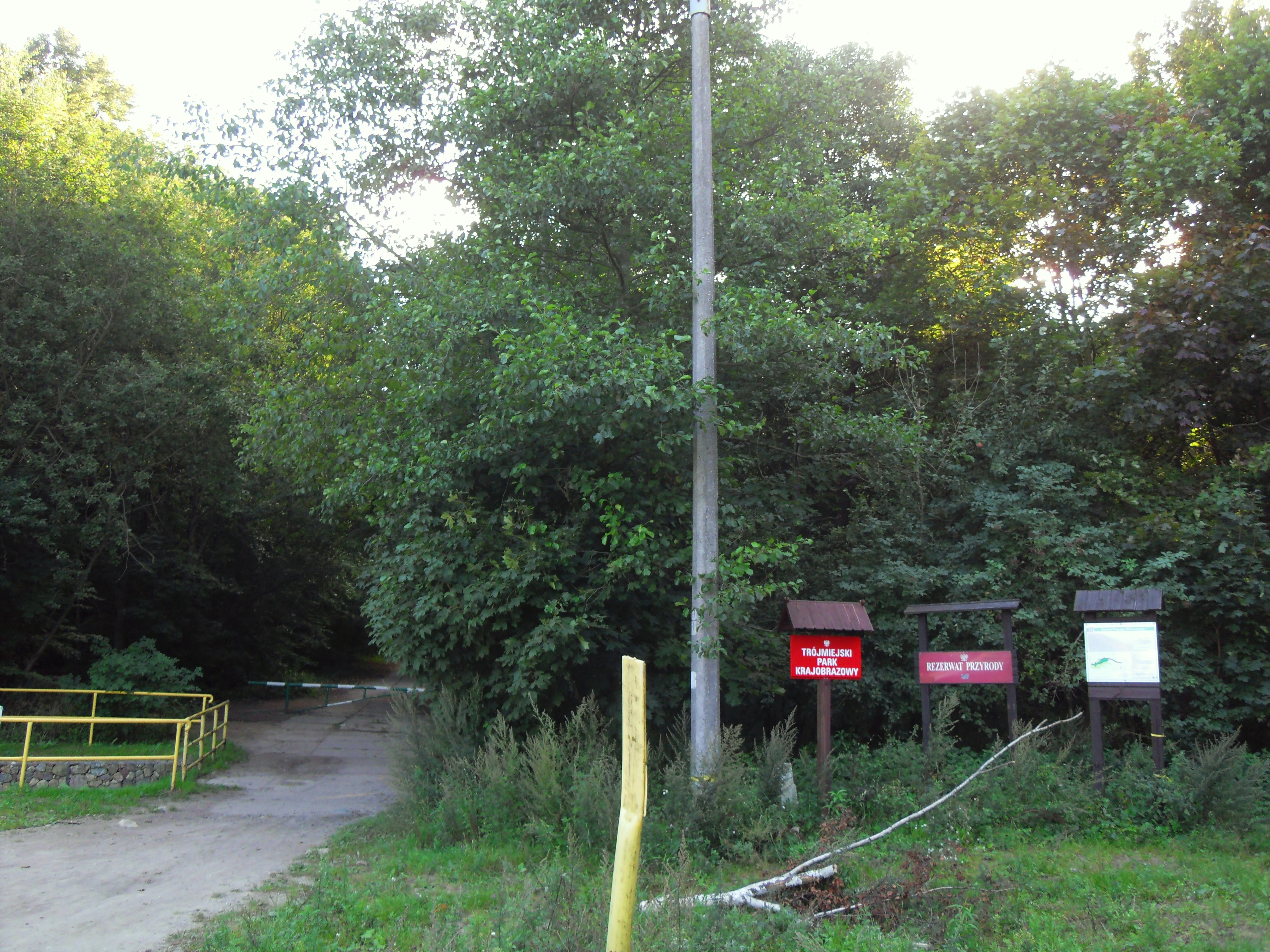
A dirt path leading into a dense green forest, marked by a cluster of information signs on the right side and a yellow metal railing on the left.
Information signs at the entrance of Dolina Strzyży Nature Reserve in Gdańsk.

Dolina Strzyży Nature Reserve history and protected-area timeline

The origins of the reserve reach back to 2001, when the broader Dolina Strzyży area of about 381 hectares was designated as a landscape protection complex under Polish nature conservation law. This earlier designation aimed to safeguard the valley of the Strzyża stream from further urban development.

Within that broader landscape protection area, the core forest stretch most worthy of stricter preservation was formally separated and elevated to full nature reserve status in 2007. The reserve was created by administrative decision in the Pomeranian Voivodeship, with its formal notice published in the official regional journal. Since that time, the reserve has been administered by the Gdańsk Forest District under the supervision of the regional environmental protection authority, continuing the long-running effort to preserve a piece of natural valley forest within the city of Gdańsk.

Dolina Strzyży Nature Reserve landscape and geographic character

The reserve occupies the valley of the small stream Strzyża, a watercourse that has carved a modest but ecologically significant depression into the surrounding morainic landscape typical of the Gdańsk region. The valley floor and its lower slopes support riparian woodland, while slightly higher and drier ground carries segments of more upland forest, producing a varied micro-topography within a small area.

Although the entire reserve falls inside the administrative limits of Gdańsk, its visual character remains distinctly wooded. The surrounding neighborhoods, including Matemblewo and Niedźwiednik, were formerly part of the same forest landscape and were developed only after earlier deforestation, so the reserve effectively serves as a small remnant of the original forest valley embedded in a now-built-up setting.

Dolina Strzyży Nature Reserve ecosystems, habitats, and plant life

The vegetation of Dolina Strzyży is dominated by two characteristic forest community types of the Polish lowlands. Along the stream and on the periodically flooded parts of the valley floor, the reserve protects riparian floodplain forests, which in Polish ecology are referred to as lasy łęgowe. These communities are adapted to fluctuating water levels and host moisture-loving tree species and ground flora.

On slightly elevated, better-drained ground, the reserve includes oak-hornbeam forest communities, locally known as grądy. Together, the riparian and oak-hornbeam forests create a small but well-defined gradient of habitats that together support populations of protected and rare plant species. The combination of wet valley forest and drier upland forest within a single small reserve gives the area unusually high ecological diversity for its size.

Dolina Strzyży Nature Reserve wildlife and species highlights

The native source material describes the reserve primarily in terms of its forest communities and rare plant species rather than its fauna. Consequently, detailed wildlife information is limited in the available source. The reserve's ecological structure, with continuous canopy, riparian habitat along the stream, and relatively undisturbed forest floor, would be expected to support typical woodland and streamside species of the Pomeranian lowlands, but specific animal records cannot be reliably drawn from the provided material.

Dolina Strzyży Nature Reserve conservation status and protection priorities

Dolina Strzyży is significant primarily as a small but ecologically well-defined forest reserve. Created in 2007 within the city of Gdańsk, it reinforces the protection already provided by the neighboring Trójmiejski Park Krajobrazowy by applying stricter reserve-level safeguards to a particularly valuable portion of the Strzyża stream valley. Its dedication to the conservation of floodplain and oak-hornbeam forests aligns it with broader efforts in Polish nature conservation to preserve lowland valley ecosystems that are otherwise vulnerable to drainage, urbanization, and forest fragmentation.

The reserve is also surrounded by a designated buffer zone of about 39 hectares, which helps shield the core area from further development and maintains its ecological coherence. Combined with neighboring housing estates that emerged from earlier forest clearing, the reserve and its surroundings form a small mosaic of still-forested and formerly forested land typical of the Tri-City landscape.

Dolina Strzyży Nature Reserve cultural meaning and human context

The reserve lies at the interface between the natural wooded landscape of the Tri-City region and the densely built environment of Gdańsk. Two adjacent neighborhoods, Matemblewo and Niedźwiednik, were developed on land previously covered by forest and shrubs, and the reserve now functions as a green buffer intended to protect them from further expansion into the remaining woodland.

The area is also part of the regional cultural landscape of Pomerania, and the Kashubian name Lasë w Dolëzné Strzëżë reflects the broader Kashubian heritage of northern Poland. The reserve is crossed by two traditional long-distance tourist routes, the Kartuski Trail and the Skarszewski Trail, which link it to the wider network of regional hiking and pilgrimage paths used by residents of the Tri-City area.

Top sights and standout views in Dolina Strzyży Nature Reserve

Highlights of Dolina Strzyży Nature Reserve include its compact but ecologically dense mosaic of riparian floodplain forest and oak-hornbeam forest along the Strzyża stream, its position directly on the edge of the Trójmiejski Park Krajobrazowy, and its role as one of the youngest forest reserves in the Gdańsk area. The reserve's location inside the city of Gdańsk, surrounded by a protective buffer zone, also makes it an interesting example of integrating strict nature protection with an urban environment.

The reserve additionally benefits from its location along the Kartuski and Skarszewski tourist trails, allowing visitors to experience a small fragment of natural valley forest as part of the broader cultural and recreational landscape of the Tri-City region.

Best time to visit Dolina Strzyży Nature Reserve

The reserve is a temperate lowland forest area, so spring and early summer generally bring the most active vegetation, flowering understory plants, and fresh green canopy. Late spring into early summer is typically the most colorful period for observing the forest communities along the stream. Autumn offers a different appeal, with the changing colors of the deciduous canopy dominated by floodplain and oak-hornbeam species.

The reserve's trails form part of regional long-distance hiking routes, so the experience depends largely on weather and seasonal forest conditions rather than on strict access windows. Visitors should keep in mind that the area is a protected nature reserve, with typical considerations around staying on marked paths and minimizing disturbance to the forest.

Monthly climate preview

Long-term representative point measurements of annual temperature and precipitation rhythm

Dolina Strzyży Nature Reserve Climate Normals and Monthly Weather Patterns

Representative coordinate records outline the measured annual temperature and precipitation rhythm across twelve months at Dolina Strzyży Nature Reserve. Detailed monthly climate profiles provide deeper analytical context for long-term meteorological normals at a single reference point.
Annual mean8 °C
0 °C18 °C
Jan
Feb
Mar
Apr
May11°
Jun15°
Jul18°
Aug18°
Sep14°
Oct
Nov
Dec
Warmest month
August

18.3 °C

Coolest month
January

-0.5 °C

Wettest month
July

2.5 mm/day

Driest month
April

1.3 mm/day

Park location guide

Geography guide, regional context, and park location map for Dolina Strzyży Nature Reserve

Dolina Strzyży Nature Reserve park geography, regions, and map view in Poland

Understand where Dolina Strzyży Nature Reserve sits in Poland through a broader geographic reading of the surrounding landscape, nearby location context, and its mapped position within the national park landscape.

How Dolina Strzyży Nature Reserve fits into Poland

Poland, officially the Republic of Poland, is a Central European country spanning from the Baltic Sea in the north to the Carpathian Mountains in the south. It borders Germany, Czech Republic, Slovakia, Ukraine, Belarus, Lithuania, and Kaliningrad Oblast. The country has a temperate climate, diverse landscapes, and is known for its rich history, cultural heritage, and strong economic position within the EU.

Wider geography shaping Dolina Strzyży Nature Reserve in Poland

Poland occupies 312,696 km2 in Central Europe, extending from the Baltic Sea coast in the north to the Sudetes and Carpathian Mountains in the south. It borders Germany to the west, Czech Republic and Slovakia to the south, Ukraine and Belarus to the east, and Lithuania and Kaliningrad Oblast to the northeast. The landscape includes lowland plains, uplands, and mountain ranges.

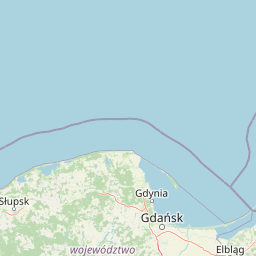
Map view of Dolina Strzyży Nature Reserve

Use this park location map to pinpoint Dolina Strzyży Nature Reserve in Poland, understand its exact geographic position, and read its mapped placement within the surrounding landscape more clearly.

Pigeon | © OpenStreetMap contributors

Location context for Dolina Strzyży Nature Reserve

Pomeranian Voivodeship

Visualizing riparian forest habitats, stream valleys, and protected terrain in northern Poland.

Dolina Strzyży Nature Reserve Photos and Landscape Scenery

Examine detailed photographs documenting the protected floodplain and oak-hornbeam forest communities within Dolina Strzyży Nature Reserve. Visual records reveal the complex terrain and woodland character preserved along the Strzyża stream valley.

A dirt path leading into a dense green forest, marked by a cluster of information signs on the right side and a yellow metal railing on the left.

Park atlas

Compare adjacent lowland forests, stream valleys, and protected landscapes

Parks Near Dolina Strzyży Nature Reserve and Regional Protected Areas

Browse other parks near Dolina Strzyży Nature Reserve to examine similar riparian woodlands and urban forest remnants across the surrounding Pomeranian region. Comparing adjacent protected areas reveals broader geographic patterns in local stream valleys and lowland conservation landscapes.
Nature reserveGdańsk
About 7.5 km away#1 closest

Southeast

Zbiornik Wody Stara Orunia: A Protected Industrial Heritage Site and Nature Reserve in Gdańsk

Historic brick architecture meeting urban bat conservation zones

Built in 1869, this historic underground reservoir in the Orunia district of Gdańsk combines rare Prussian engineering with a vital role as a Natura 2000 protected habitat. The site serves as a key component of the regional water trail, offering a look into the complex relationship between industrial infrastructure, urban landscape development, and the protection of essential wildlife hibernation cycles.

Area
0.001 km²
Established
1869
Relief
Upland
Climate
Temperate
Protected landscapePomeranian Voivodeship
About 7.9 km away#2 closest

North

Trójmiejski Park Krajobrazowy: Protected Landscape and Glacial Geography in Pomerania

Exploring the forested moraine upland near the Baltic coast

Covering nearly 20,000 hectares, Trójmiejski Park Krajobrazowy forms an essential green belt along the Kashubian moraine. Its terrain is defined by dramatic erosion, including 80-meter deep ravines and extensive pine-beech forests that host rare relic plant species and protected peatland habitats.

Area
199.3 km²
Established
1979
Relief
Upland
Climate
Temperate
A wide panoramic watercolor illustration showing a pastoral landscape with green rolling hills, a winding river, scattered trees, and a soft sky with pink and yellow hues.
Protected areaPomeranian Voivodeship
About 9.9 km away#3 closest

East

Twierdza Wisłoujście Protected Area: Coastal Geography and Historical Mapping in Gdańsk

A historic Baltic fortification and vital ecological site in Pomeranian Voivodeship.

Explore the layered masonry and water-influenced landscape of Twierdza Wisłoujście, a coastal fortress established on the delta of the Vistula River. This site bridges the history of maritime defense and modern ecological conservation as a designated Natura 2000 area. Examine how shifting river channels and centuries of construction define the current defensive perimeters and moated surroundings within the Pomeranian Voivodeship.

Established
1482
Relief
Lowland
Climate
Temperate
Access
Easy access
A horizontal watercolor illustration showing a gentle river landscape with soft green meadows, trees, and rolling hills in the background.
Nature reservePomeranian Voivodeship
About 14 km away#4 closest

North

Kacze Łęgi Nature Reserve: Mapped Protected Woodland and River Valley Geography

Riparian floodplain forest in the Pomeranian Voivodeship of Poland

Kacze Łęgi functions as a crucial nature reserve that maintains an unusually well-preserved fragment of elm and alder floodplain forest. Nestled along the Kacza River valley in Gdynia, this site offers a concentrated look at the original vegetation of Baltic river valleys. It remains a key component of the regional protected landscape, providing a deep study of moisture-loving woodland within the larger context of the Pomeranian coastal lowlands.

Area
0.09 km²
Established
1983
Relief
Lowland
Scope
Terrestrial
Nature reservePomeranian Voivodeship
About 19 km away#5 closest

South

Dolina Kłodawy Nature Reserve: Geography and Botanical Protected Areas in Pomeranian Voivodeship

Glacial river gorge landscapes in Northern Poland

This protected area centers on a 1.6 kilometer section of the Kłodawa stream, showcasing complex forest ecosystems including ash-alder woodlands and oak-hornbeam slopes. The site remains a vital reference for regional botanical geography, highlighting how glacial moraine hills create unique habitats for rare plants within the Pomeranian Voivodeship landscape.

Area
0.104 km²
Established
1999
Relief
Lowland
Climate
Temperate
A soft watercolor painting of a marshy coastal landscape with tall grasses, calm water, and distant dunes under a bright, clear sky.
Nature reservePomeranian Voivodeship
About 27 km away#6 closest

East

Rezerwat przyrody Mewia Łacha: Protected Coastal Geography and Vistula Estuary Map

Dynamic Baltic sandbars and migratory bird habitat in Pomerania

Rezerwat przyrody Mewia Łacha occupies a vital coastal strip where river discharge meets the Gulf of Gdańsk. This nature reserve serves as an essential site for migratory waterfowl and nesting terns, defined by its shifting sandbars, dune slacks, and brackish pools. It stands as a key example of the varied estuarine geography found within the Pomeranian Voivodeship.

Area
1.505 km²
Established
1991
Relief
Lowland
Climate
Temperate
Nature reservePomeranian Voivodeship
About 29 km away#7 closest

North

Mechelińskie Łąki Nature Reserve: Coastal Geography and Protected Baltic Wetland Atlas

Pomeranian Voivodeship coastal dune and marsh landscape exploration

Investigate the protected topography of Mechelińskie Łąki Nature Reserve, where saline meadows meet the Baltic shoreline of Puck Bay. This faunistic reserve preserves an essential mosaic of dunes, marshes, and reedbeds in northern Poland, serving as a significant habitat for nesting shorebirds and rare amphibian species within the Pomeranian Voivodeship.

Area
1.135 km²
Established
2000
Relief
Lowland
Climate
Temperate
Nature reservePomeranian Voivodeship
About 38 km away#8 closest

West

Rezerwat przyrody Jezioro Turzycowe: Wetland Protected Area in Pomeranian Voivodeship

Kashubian Lake District bog forest and dystrophic lake atlas

Rezerwat przyrody Jezioro Turzycowe protects a concentrated mosaic of post-glacial wetland environments, including a dystrophic lake and raised bog habitats. This nature reserve offers deep insight into the specific hydrological and botanical conditions defining northern Polish wilderness corridors.

Area
0.114 km²
Established
1959
Relief
Upland
Climate
Temperate

Common questions about visiting, size, designation, and location context for Dolina Strzyży Nature Reserve

Dolina Strzyży Nature Reserve FAQs for park facts, access, geography, and protected area context

Find quick answers about Dolina Strzyży Nature Reserve, including protected-area facts, park geography, trail and visitor context, and how the park fits into its surrounding country and regional landscape.
MoriAtlas Explorer

Continue Your Protected Areas Search Across the Global Atlas

Deepen your exploration by continuing the structured search for national parks and protected areas worldwide. Utilize the comprehensive filtering capabilities to compare different conservation landscapes and refine your understanding of global park geography. Discover more about the distribution and characteristics of protected natural areas.

Global natural geography