Why Dolina Zgniłej Strugi Nature Reserve stands out
The reserve is best known for protecting one of the largest populations of blunt-flowered rush (Juncus subnodulosus) on the Polish side of Western Pomerania, together with a rich mosaic of alkaline peatland and spring-mire habitats. It also stands out for its naturally meandering lowland river course, a rare feature of ecological value in a landscape shaped by historical drainage and forestry. Its combination of transitional mires, calcareous spring mires, bog woodlands, riparian forests and relict mire vegetation makes it a textbook example of peatland ecosystem complexity. The presence of multiple protected habitat types under the EU Habitats Directive on a relatively compact area is another defining trait of the reserve.
Dolina Zgniłej Strugi Nature Reserve history and protected-area timeline
The concept of protecting the Zgniła Struga valley emerged well before formal designation. The earliest recorded suggestion appears in a 2003 environmental evaluation of the gmina of Bobolice prepared by the Biuro Konserwacji Przyrody in Szczecin, which flagged the area's peatland habitats as worthy of enhanced protection. Between 2013 and 2014, a more detailed preliminary natural documentation was produced, setting out the foundations for what would eventually become the reserve.
The decisive step was taken on 24 December 2024, when the Regional Director for Environmental Protection in Szczecin issued an order establishing the reserve under the name Rezerwat przyrody Dolina Zgniłej Strugi. The move formed part of the broader national initiative 100 rezerwatów na 100-lecie Lasów Państwowych, which aims to mark one hundred years of Poland's State Forests through the creation of one hundred new nature reserves across the country. At the time of its establishment, the reserve did not yet have a dedicated protection plan or specific conservation tasks defined, leaving these stages of management to be developed after designation.
Dolina Zgniłej Strugi Nature Reserve landscape and geographic character
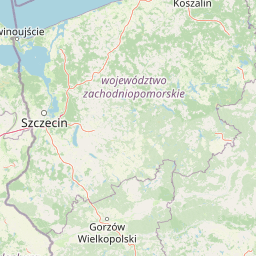
The reserve occupies a section of the Wysoczyzna Polanowska, a glacially shaped upland in the central part of the West Pomeranian Voivodeship. The terrain follows the valley of the Zgniła Struga, a small lowland river that meanders naturally before joining the larger Radew further downstream. The result is a long, narrow valley floor threaded by water, fringed by spring-fed seepage zones and flanked by gentle morainic slopes that are still forested in many places.
Because of the spring mires along the river, the valley shows the classic features of a spring landscape: wet meadows, soft, water-saturated peat deposits, riparian woodland, and a network of tiny groundwater-fed channels. Where the peat mires are most active, the ground is dominated by alkaline sedge and brown-moss communities that give the area its distinctive open, boggy character. Elsewhere, bog birch and bog pine stands occupy higher, drier peat domes, while willow, alder and ash forests stand along the active floodplain.
The river itself retains a natural, curving course, unusual in a region where historical melioration schemes have straightened many lowland streams. This combination of sinuous riverway, spring outflows and adjacent peatland makes the valley visually quiet and ecologically expressive: a continuous gradient from open water through marsh to forested peat dome, all within a relatively compact area.
Dolina Zgniłej Strugi Nature Reserve ecosystems, habitats, and plant life
The reserve protects a remarkable mosaic of peatland, wetland and forest ecosystems unusually rich for this part of Poland. Among the most ecologically distinctive habitats are transitional mires and quaking bogs with vegetation of the Scheuchzerio-Caricetea type, alongside calcareous, spring-fed mires characterised by sedge and brown-moss communities. These alkaline habitats are increasingly rare in the lowlands and host much of the reserve's special flora.
Bog birch and bog pine boreal forests occupy parts of the area where peat layers are thicker and drier, lending a distinctly northern feel. Together with riparian willow, poplar, alder and ash floodplain forests, as well as spring alder woods, they create a layered vegetation pattern that reflects subtle shifts in groundwater and surface water conditions. Lowland river vegetation, including communities with water-crowfoot species, occupies the active channel of the Zgniła Struga.
Of the five or more Habitats Directive habitat types represented, the alkaline mire communities and the riparian floodplain forests are especially important. They support species such as blunt-flowered rush, marsh lousewort, Fen orchid, spotted orchid, grass-of-Parnassus, leathery grape-fern, crowberry, crested wood-fern, alpine pondweed, hare's-tail cottongrass, Warnstorf's sphagnum, blunt-leaved sphagnum, and alder buckthorn, creating a flora with strong relict character amid a wider landscape shaped by former drainage and forestry.
Dolina Zgniłej Strugi Nature Reserve wildlife and species highlights
While most attention on the reserve focuses on its botanical richness, the habitat mosaic also provides important conditions for mire- and wetland-associated fauna. The transitional and calcareous mires, the bog woodlands and the riparian corridors of the Zgniła Struga together create a complex of microhabitats used by amphibians, invertebrates, and wetland birds. The river's partly natural, meandering course provides refuges for aquatic life in a much-modified regional river system.
Dolina Zgniłej Strugi Nature Reserve conservation status and protection priorities
From a conservation perspective, Dolina Zgniłej Strugi is significant because it locks in formal protection for a set of habitats that are vulnerable, declining, or already rare at both national and EU levels. By bringing together at least five Habitats Directive habitat types in one compact site, it strengthens the Natura 2000 site Dolina Radwi, Chocieli i Chotli, to which it is nested, and reinforces the ecological integrity of the broader Radew valley system.
The reserve's alkaline and transitional peatlands in particular are of high conservation interest, both for their botanical relict flora and for the carbon, hydrological and climate-regulation functions of intact peat. However, these same habitats face clear threats. The most pressing are disturbance of the hydrological regime by historical drainage, ongoing succession of woody vegetation and expansion of aggressive understorey species, and the potential impacts of drought and forestry operations on the peatland's water balance.
Because the reserve at the time of its establishment in December 2024 did not yet have a detailed protection plan or assigned conservation tasks, much of its future conservation value will depend on how quickly these management instruments are developed. The site offers the chance to design active, hydrology-focused conservation for alkaline mires in a Polish lowland context, an opportunity that is regionally important.
Dolina Zgniłej Strugi Nature Reserve cultural meaning and human context
The reserve does not have a strong documented cultural narrative of its own, but it sits within a landscape that has been shaped by centuries of forest management, small-scale agriculture, and historical drainage of wetlands for pasture and forestry. Its creation under the 100 rezerwatów na 100-lecie Lasów Państwowych initiative ties it symbolically to the long-running role of Poland's State Forests in regional land management and, more recently, in conservation-oriented forestry and habitat restoration.
Top sights and standout views in Dolina Zgniłej Strugi Nature Reserve
A compact but ecologically dense peatland reserve on the Wysoczyzna Polanowska, protecting alkaline spring mires, transitional bogs, bog woodlands, and a naturally meandering lowland river. Its alkaline mire flora, including one of the largest blunt-flowered rush populations in Western Pomerania, gives it clear regional conservation significance, while its position within the Natura 2000 site Dolina Radwi, Chocieli i Chotli strengthens the wider ecological network of the Radew river basin.
Best time to visit Dolina Zgniłej Strugi Nature Reserve
Because the reserve's value lies in its peatland vegetation and wetland character, late spring through early autumn is generally when the mire flora, bog woodland structure and bird activity are most expressive. Drier years and warmer months make the wet ground easier to traverse, though access may still be limited by the soft peat. Winter can emphasise the openness of the mires and the shape of the river valley, but visitor access is best treated as limited and dependent on local conditions.