Why Dwesa Nature Reserve stands out
The reserve is best known for protecting one of South Africa's last significant coastal scarp forests, a narrow strip of evergreen woodland clinging to the rivers and slopes that run down toward the Indian Ocean. This forest type is among the country's most threatened habitats, having been reduced by agricultural expansion, grazing pressure, and historical wood harvesting. Equally distinctive is the reserve's combination of terrestrial and marine protection. The onshore forest and grassland mosaics sit alongside an offshore marine protected area, allowing the same park unit to conserve both rare coastal woodland ecosystems and the nearshore ocean environment. The area is also recognized as a strong birding destination, with the recorded species list reflecting the diversity created by forest, grassland, estuarine, and marine environments converging in one place.
Dwesa Nature Reserve history and protected-area timeline
The origin of Dwesa Nature Reserve lies in two separate forest reserves created in the late 1920s. The Cwebe Forest Reserve was established in October 1927, followed by the Dwesa Forest Reserve in June 1928. Both were initially conceived as measures to protect one of the last known coastal forests in South Africa, a habitat type that was being degraded by farming, grazing, and wood extraction in surrounding areas.
In 1975, the two reserves were formally merged under the combined Dwesa-Cwebe Nature Reserve designation, unifying their management and creating a larger protected landscape. This consolidation marked a turning point, transforming what had been two narrow forest-focused reserves into a broader coastal conservation unit combining forest, grassland, and shoreline. The marine component was later added through the creation of the Dwesa-Cwebe Marine Protected Area, extending protection into the offshore environment.
The reserve also carries a more contested human history. Before becoming formally protected, the land was held and used by local farmers, and the conversion of these lands into a nature reserve shaped subsequent debates in South African politics about land ownership, rural livelihoods, and environmental sustainability. These discussions continue to inform how the reserve is governed and how its benefits and responsibilities are distributed among neighboring communities.
Dwesa Nature Reserve landscape and geographic character
Dwesa Nature Reserve occupies a striking interface between land and sea. Inland, the terrain descends from the rolling pastoral landscapes of the former Transkei toward the coast through a series of river valleys and forested gorges. These valleys have carved narrow corridors of shade and moisture into the surrounding grasslands, and they shelter the coastal scarp forest that is the reserve's most celebrated feature.
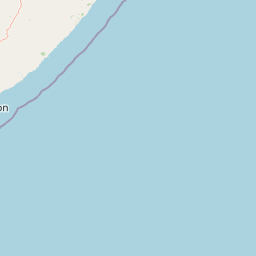
The coastal edge of the reserve is shaped by the Indian Ocean. Cliffs, headlands, coves, and broad sandy beaches alternate along the shoreline, and the reserve's location directly on the ocean gives it an unusually dramatic sense of openness for a forest-protected area. From elevated viewpoints such as Kobole Point, the landscape opens up into wide ocean panoramas that contrast sharply with the enclosed, leafy character of the forest interior.
Between the forest valleys and the ocean lies a transitional zone of grasslands, coastal thicket, and small estuarine systems, where freshwater meets the sea. This varied topography, ranging from sheltered forest floor to exposed cliff edge, gives Dwesa-Cwebe its distinctive visual rhythm and supports the wide range of habitats that underpin its ecological richness.
Dwesa Nature Reserve ecosystems, habitats, and plant life
Ecologically, Dwesa Nature Reserve is defined by the survival of coastal scarp forest, an evergreen forest type restricted to humid pockets along the eastern South African coast. This forest is structured around tall trees, dense understory layers, and a shaded interior microclimate that supports forest-specific birds, insects, and plants. Because scarp forest patches have been heavily reduced by land conversion, the reserve's role in preserving a representative example of this habitat is ecologically significant.
Beyond the forest, the reserve encompasses mosaics of coastal grassland, thicket, and small wetlands, each contributing different ecological conditions. The river valleys that cut through the reserve carry freshwater into the reserve's estuarine areas, creating transition zones where freshwater and marine influences meet.
The marine protected area that extends the reserve seaward adds a further ecological dimension. The nearshore zone supports reef, sandy-bottom, and open-water environments, broadening the reserve's biodiversity profile well beyond what the terrestrial forests alone could sustain. Together, these varied habitats explain why a relatively compact reserve can support such a wide range of species.
Dwesa Nature Reserve wildlife and species highlights
Dwesa Nature Reserve is particularly noted for its birdlife, with roughly 290 bird species recorded within the park. This exceptional diversity reflects the reserve's habitat variety: forest specialists thrive in the shaded scarp woodlands, grassland species occupy the open pastoral slopes, waterbirds use the rivers and estuarine fringes, and seabirds and shorebirds are found along the coast and over the adjacent ocean.
The combination of forest, grassland, wetland, and marine habitats makes the reserve an attractive destination for birders, as bird activity shifts markedly from one habitat to the next within short distances. Raptors, forest birds, and migrant species all contribute to the reserve's checklist.
Marine life associated with the offshore marine protected area adds another layer to the wildlife profile. Although the marine component is primarily framed in conservation terms, it reinforces the reserve's identity as a place where ocean and land-based species are protected within a single management framework.
Dwesa Nature Reserve conservation status and protection priorities
The conservation case for Dwesa Nature Reserve centers on the protection of coastal scarp forest, a habitat type that has become increasingly rare along South Africa's eastern coast. By safeguarding a substantial example of this forest and the surrounding coastal landscape, the reserve helps maintain ecological processes and species populations that would otherwise face ongoing pressure from land conversion.
The addition of the Dwesa-Cwebe Marine Protected Area significantly expanded this conservation role. Marine protected areas along the Wild Coast are important for maintaining fish populations, supporting biodiversity in nearshore reef and other marine habitats, and providing reference sites for marine ecological research. Linking marine protection to an existing terrestrial reserve creates a more comprehensive conservation unit than either could offer alone.
Beyond habitat protection, the reserve also represents an important case study in the intersection of conservation, land rights, and rural development in South Africa. Because the land was previously used by local farmers, debates about land ownership and environmental sustainability have shaped both the reserve's governance and its relationship with surrounding communities, adding a social dimension to its conservation story.
Dwesa Nature Reserve cultural meaning and human context
Dwesa Nature Reserve sits within a region shaped by long-established rural communities and by the legacy of the former Transkei homeland. The coastal landscapes around the reserve carry strong cultural associations for local inhabitants, and the area has historically been marked by pastoral land use, small-scale farming, and close ties between communities and natural resources.
The reserve's creation on land that was previously farmed has made it a focal point in wider South African discussions about land restitution, rights, and the relationship between conservation areas and neighboring populations. These discussions continue to influence how the reserve is managed and how its benefits flow to local people.
The reserve also reflects the broader cultural identity of the Wild Coast, a region known in South Africa for its rural character, traditional homesteads, and relatively undeveloped shoreline. Dwesa-Cwebe is thus as much a part of a cultural landscape as it is a purely natural one.
Top sights and standout views in Dwesa Nature Reserve
A standout feature of Dwesa Nature Reserve is the survival of a substantial tract of coastal scarp forest, a vanishing habitat type that gives the reserve an outsized ecological significance relative to its size. The combination of forest, grassland, estuarine, and marine environments in a single protected area is also distinctive, allowing visitors and researchers to move between dramatically different habitats within one reserve.
The reserve's bird checklist of roughly 290 species is a clear highlight, reflecting the diversity of habitats packed into the area. Equally notable is the visual contrast between the shaded, enclosed forest interior and the open, panoramic ocean vistas available from viewpoints such as Kobole Point, making the reserve as scen memorable as it is ecologically valuable.
Best time to visit Dwesa Nature Reserve
As a coastal reserve with mild, humid conditions year-round, Dwesa Nature Reserve is broadly accessible across the seasons. The warmer summer months tend to bring lush conditions in the forest and active birdlife, while the milder winter period can offer calmer oceans and clearer visibility along the coast.
Seasonal rainfall patterns on the Wild Coast can influence both forest atmosphere and river flows, with wetter periods heightening the lushness of the scarp forest and drier periods making hiking and beach exploration easier. Because the reserve's appeal lies as much in scenery and birding as in any single seasonal event, visitors with flexible timing can find rewarding experiences across much of the year.